Mountain Goat Hunting in Kokpek Gorge: Ibex Guide for Zailiyskiy Alatau
 libre
libre
Mountain goat hunting is the pursuit of alpine-dwelling animals — true mountain goats, ibex, and the various wild goat species of the genus Capra — across the steepest and most remote terrain that big game hunting offers. It combines demanding physical effort, long-distance marksmanship or careful spot-and-stalk archery, and tightly regulated tags that often take years to draw. This guide covers how to find and book a hunt, where mountain goats live across North America and Central Asia, how the animal behaves, what gear and weapons you need, and what an all-inclusive guided package costs — framed by a classic ibex hunt in the Kokpek Gorge of Kazakhstan's Zailiyskiy Alatau.
Hunting for Ibex in the Kokpek Gorge
Hunting for ibex in the mountains near the Kokpek Gorge in the Zailiyskiy Alatau opens in late fall, when the first frosts push the herds down toward the valleys and the animals begin to move more predictably.

The Kokpek Gorge Landscape
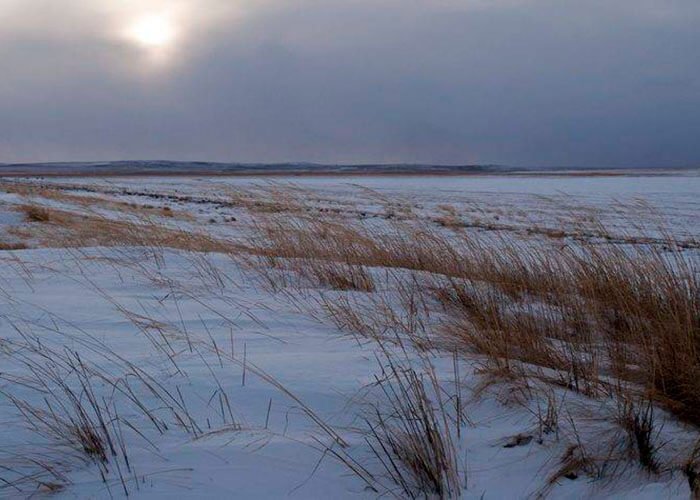
The Kokpek Gorge cuts the Syugatinsky ridge of the Zailiyskiy Alatau exactly from north to south. The road running along the gorge rises to the pass, where high rocks clench it closely on either side like a narrow corridor. There is always a draught in the Kokpek Gorge — pleasant in summer and unbearable in winter. The mountain river behaves strangely here: it disappears at the beginning of the gorge and, ten kilometers later at the far end, emerges from the ground turbulent and talkative, as if happy to have broken out of its underground captivity. At the end the gorge widens its walls a little.
Here, in a picturesque corner of the Kokpek Gorge at the very end of the Zailiyskiy ridge of the Tien-Shan (more information: Pamir-Tyanynskiy speleological country), stands a white cordon house with a red flag fluttering above the roof, among poplars planted by the careful hand of the gamekeeper twenty years ago.
Nature and Wildlife of the Alatau
The Alatau alpine zone teems with life right up to the first snows. The last grasshoppers and mares, which had survived the early frosts in the green grass near the water, were still chirping near the creek. On the cliffs, puffins cried out and mountain buntings tsked all around. With each step the trail became steeper, and the tiring ascent up the Burunsai seemed to have no end. Before the last, steepest pitch we sat down to rest.
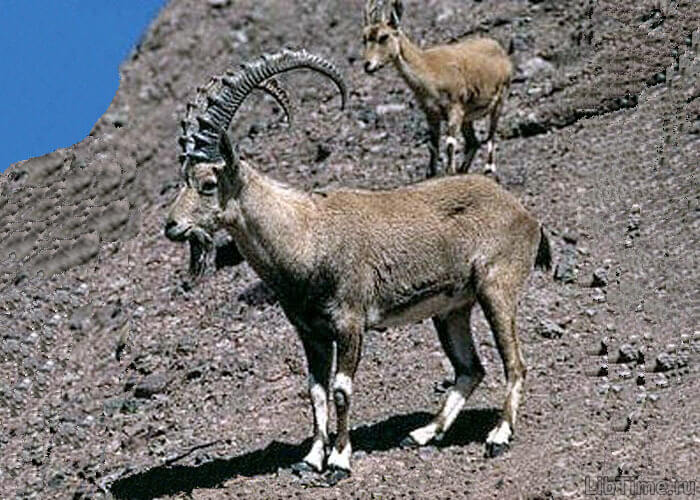
From the pass itself the whole Sugatinskaya valley opened up at a great distance, and yellow spots — herds of mountain goats — could be seen scattered across it. This open, broken country, where animals can spot a hunter from a kilometer away, is exactly the terrain that defines mountain goat hunting everywhere it is practiced.
The Hunt with Mushket the Dog
Mushket was a twelve-year-old mongrel that accompanied his master everywhere. With his black back and yellow sides he resembled a hound, and on a mountain goat hunt he showed all the qualities of a hound dog.

At the pass the huntsman fixed a decoy on the rocks — the head of a female tek mounted on a stick. The head towered above the stones while the non-existent body hid behind them, visible from afar to the keen eyes of mountain goats. Then came the single word that transformed the dog: "Search!" At that command the weight of years seemed to fall from Mushket's shoulders. He jumped up, wagging his tail, squealing impatiently, and with great bounds rushed off in the direction his master pointed, beyond the pass.
Using a Hound Dog to Drive Mountain Goats
Driving mountain goats with a trained hound is an old Central Asian technique in which a single dog circles wide behind a herd and pushes the animals back toward a waiting hunter, much as a shepherd dog works livestock. After more than an hour of silence broken only by alpine jackdaws, the gamekeeper's muffled word — "Driven!" — announced the result: three goats trotting quietly toward the pass, stopping every few steps to look back, with Mushket trailing far behind on the trail.
What makes a good driving dog is judgment, not speed. When the goats broke downhill off the path, Mushket rushed to cut them off, blocked their way, and turned them back onto the trail that ran straight to the hunters, barking loudly as if to warn the guns. He acted like a real shepherd dog. Three mountain goats then galloped onto the pass within easy range — and a premature, careless shot kicked up a fountain of dust in front of the lead bearded billy. The goats sprang aside and vanished. Mushket, who had pushed them so perfectly, wrinkled his nose, flashed his teeth, and ran home with his tail down. As the huntsman explained, the dog takes offense at a miss: kill a goat and he brings another, but botch the shot and the hunt is over. It is a fitting lesson — in mountain goat hunting, the stalk is often the easy part, and the shot is what counts.
Understanding the Mountain Goat
The mountain goat is a sure-footed alpine herbivore built for vertical terrain that defeats almost every predator. Knowing how the animal is classified, where it lives, how to tell a billy from a nanny, and how it moves through the season is the foundation of every successful hunt, whether you are after a Rocky Mountain Goat in Colorado or an ibex in the Tien-Shan.
Biological Classification as a Goat-Antelope
The North American mountain goat (Oreamnos americanus), often called the Rocky Mountain Goat, is not a true goat but a goat-antelope, more closely related to the chamois and the European goat-antelopes than to the wild goats of the genus Capra. True wild goats — including the ibex of the Kokpek Gorge, the Kri-Kri hybrid ibex, and the various species hunters pursue across Eurasia — belong to Capra. The naturalist Douglas Chadwick captured the animal's strangeness in his classic study A Beast the Color of Winter: The Mountain Goat Observed. The distinction matters to hunters because it shapes trophy scoring (Boone and Crockett records North American mountain goats by combined horn measurements) and because billies and nannies of the goat-antelope look far more alike than the sexes of bighorn sheep or other Capra species.
Alpine Habitat and Elevation Ranges
Mountain goats live at the top of the world, typically between 8,000 and 13,000 feet in summer on the cliffs, ledges, and alpine meadows above treeline. Their habitat overlaps in places with bighorn sheep, with which they compete for grazing and mineral licks, but goats favor steeper, rockier escape terrain that few other animals can use. Their splayed, two-toed feet have hard outer shells and soft, gripping inner pads — a built-in climbing system that lets them stand on ledges barely wider than a hand. They visit mineral licks for sodium, dust and bed on exposed ridges to shed parasites and catch the wind, and water from snowmelt and high seeps. In winter they survive brutal cold with a dense wool undercoat beneath long guard hairs, dropping to wind-scoured slopes where forage stays exposed.
Billy Versus Nanny: Identifying Your Target
Telling a billy (male) from a nanny (female) is the single hardest field-judgment skill in mountain goat hunting, because both sexes carry horns and look superficially identical at distance. Mature billies tend to show thicker horn bases that curve in a steady arc, a heavier and more "blocky" body, dirtier pantaloons on the hind legs from urinating during the rut, and a solitary or trailing habit. Nannies usually have thinner horns that rise straighter before a sharper hook at the tip, travel in groups with kids, and squat to urinate. Many states and provinces ask hunters to avoid taking nannies to protect herd reproduction, so spending time behind a spotting scope before committing to a stalk is an ethical as well as a legal priority.
Billy Trailing and Mating Behavior
During the late-fall rut, billies trail nannies for days, which concentrates mature males in predictable areas and makes the breeding season a prized window for hunters. A rutting billy digs rutting pits, paws and dusts, scent-marks, and follows receptive nannies while displaying low-stretch postures to rivals — mountain goats communicate far more through posture and threat display than through open combat, since a fall on cliffs is lethal. This same calendar drove the late-fall opening of the Kokpek Gorge ibex season, when the animals move and gather. Daily, goats feed heavily in the cool of early morning and late afternoon, bed on high ledges through midday, and shift downslope as temperatures drop.
Where to Hunt Mountain Goats
Mountain goats can be hunted across the high country of North America — Alaska, British Columbia, and a handful of Lower 48 western states — as well as in the mountains of Central Asia for ibex and related wild goats. Where you hunt determines whether you need to draw a tag, whether a guide is legally required, and what a trip will cost. Outfitter directories let you filter hunts by US state and Canadian province; the regions below are the core destinations.
Alaska Guided Mountain Goat Hunts and Registration Hunts
Alaska offers the most accessible mountain goat hunting in North America, combining drawing hunts with over-the-counter registration hunts in many units, especially in Southeast Alaska and on Kodiak Island. Southeast Alaska's coastal mountains hold dense goat populations reachable by boat, while Kodiak Island pairs goat hunting with the chance of encountering brown bear. Non-residents must hunt with a registered guide or a qualifying relative. Outfitters such as Barela's Alaskan Outfitters and AEI Outfitter run goat hunts here, often by fly-in or boat-based access, and weather is the defining variable: hunts in September and October bring rain, fog, snow, and temperatures that swing from mild to freezing within hours.
British Columbia Guided Mountain Goat Hunts
British Columbia holds the largest mountain goat population in the world and is the premier destination for trophy goat hunting in Canada. Non-residents are legally required to hunt with a licensed guide-outfitter, and seasons typically run from late summer into fall. Adjacent areas of Alberta and the Yukon offer further opportunities, and many British Columbia outfitters build combination hunts pairing mountain goat with Stone Sheep, mountain caribou, moose, elk, or black bear. The province's deep wilderness and consistent trophy quality keep it at the top of most serious goat hunters' lists.
Colorado Mountain Goat Hunting Overview
Colorado offers some of the best mountain goat hunting in the Lower 48, but every tag is draw-only through a preference point system, and demand far outstrips supply. Hunters accumulate preference points over many years before drawing a unit such as Game Management Units G-2 or G-3 in the Collegiate Peaks Wilderness Area, the Continental Divide country, and the Gunnison National Forest, managed in part by the United States Forest Service. Both residents and non-residents may apply. Once drawn, a Colorado goat tag is typically a once-in-a-lifetime opportunity, so most successful applicants treat the hunt as the culmination of a decade of point-building.
Hunting in Kazakhstan and the Tien-Shan
Kazakhstan's Tien-Shan mountains, including the Zailiyskiy Alatau and the Kokpek Gorge, are a classic international destination for hunting mid-Asian ibex and other wild goats of the genus Capra. Seasons open in late fall to coincide with the rut and the downward movement of the herds, exactly as in the account above. Hunts here are guided by local outfitters and gamekeepers who know the gorges and passes intimately, sometimes still using traditional driving techniques with a hound. For hunters who have already taken North American goats, the Tien-Shan ibex offers a genuinely different animal in spectacular, lesser-traveled country — and a meaningful addition to a global mountain hunting résumé alongside chamois in Europe or tur in the Caucasus.
Tags, Applications, and Eligibility
A mountain goat tag in most of North America must be drawn through a state or provincial lottery, and the application strategy is a multi-year project rather than a single decision. Each jurisdiction runs its own draw, hunt codes, deadlines, and point system, so understanding the rules where you intend to apply is the first practical step toward ever standing on a goat mountain.
Application Deadlines and Process
Most western states set mountain goat application deadlines in the spring — commonly between March and June — for fall hunts, with results posted in late spring or early summer. The general process is the same across jurisdictions:
- Buy the required base hunting license for the state or province.
- Submit the controlled-hunt or draw application for the specific goat hunt code and unit before the deadline.
- Pay the application fee and, if successful, the tag fee — many states refund the tag fee if you are not drawn.
- Check draw results through the agency's online portal; states such as Idaho through the Idaho Department of Fish and Game notify applicants by email and online posting.
Idaho, Montana, Wyoming, Utah, Nevada, and Washington (managed historically by the Washington Game Department) each run controlled goat hunts, and Olympic National Park goats in Washington were managed through removal rather than public hunting. Non-residents face stricter quotas and, in several states, a guide requirement.
Application Strategy and Long-Term Planning
Because mountain goat tags are scarce and often once-in-a-lifetime, the smart approach is to build points in several states at once and apply every year for decades. Utah and Colorado use preference or bonus point systems where points accumulate toward better draw odds, while other states use random draws weighted by points. A sensible long-term plan includes:
- Buying points annually in multiple states even in years you cannot hunt.
- Treating Alaska and British Columbia as nearer-term options, since they offer guided or registration hunts without a decade-long draw wait.
- Budgeting for the eventual tag, guide, and travel costs well before you draw.
- Getting into climbing-grade physical condition in the years leading up to the hunt, not the month before.
Weapon-Specific Seasons and Eligibility
Many jurisdictions set weapon-specific seasons for mountain goats, with separate windows or hunt codes for rifle, archery, and sometimes muzzleloader hunters. Colorado, for example, structures certain goat seasons around weapon type, so an archery tag and a rifle tag can carry different dates and different units. Legal weapons for mountain goats typically include centerfire rifles, archery equipment, muzzleloaders, and in some places crossbows, while shotguns are generally reserved for small and upland game. Always confirm the legal methods printed on your specific tag, because eligibility is defined by the hunt code, not by general state rules.
Archery Versus Rifle Hunting Specifications
Choosing between rifle and archery for mountain goats is a trade-off between range and challenge in unforgiving terrain. Rifle hunters favor flat-shooting cartridges such as the 28 Nosler or accurate 6.5-caliber rounds that hold energy at the long distances open goat country often demands, with shots frequently taken from 200 to 400 yards across canyons. Archery hunters accept a far harder task: closing to within 40 or 50 yards on an animal living on cliffs, which makes the stalk and the steadiness of the shot decisive. Whatever the weapon, shot placement matters enormously — a goat hit imperfectly can fall or run into terrain where it cannot be recovered, so ethical hunters wait for a broadside, stable shot on stable footing.
Guided Hunt Packages and Pricing
A guided mountain goat hunt is the standard way most hunters take the animal, and pricing varies widely by destination, access method, and whether the hunt is combined with other species. In several jurisdictions a licensed guide is not just convenient but legally mandatory for non-residents, which shapes how packages are built and priced.
All-Inclusive Hunting Packages
Most reputable outfitters sell all-inclusive mountain goat packages that bundle the major costs into one price. A typical package covers:
- Professional guide and packing services for the duration of the hunt.
- Base camp and spike camp lodging, plus meals and freeze-dried provisions in the backcountry.
- Fly-in, boat, or pack-stock access to the hunting area.
- Field care of the trophy, including caping and meat packing.
Not included, as a rule, are the tag or license fee, taxidermy, trophy shipping, travel to the staging town, and gratuities. Customary guide gratuities run roughly 10 to 15 percent of the hunt cost, split among the guide and packers.
Alaskan Mountain Goat Hunting Package Pricing
Guided mountain goat hunts in Alaska generally range from about $10,000 to $20,000 for a one-on-one hunt, with the total depending on access and add-ons. Fly-in and boat-based Southeast Alaska and Kodiak Island hunts sit toward the higher end because of aircraft and vessel costs. Combination hunts that add brown bear, black bear, Sitka blacktail deer, or moose raise the price further but spread the cost of travel across multiple species. Across North America, a standalone mountain goat hunt typically falls in the $8,000 to $20,000 band, while a Tien-Shan ibex hunt in Kazakhstan is often priced comparably once travel and trophy fees are included.
Cancellation Deals and Outfitter Specials
Cancellation hunts are the best way to hunt mountain goats below standard pricing, arising when a booked client backs out and an outfitter needs to fill a confirmed slot on short notice. Hunters who can travel on flexible dates sometimes save thousands on these last-minute openings. Off-peak season specials, youth hunt discounts, and corporate group bookings are other ways outfitters discount, and watching outfitter newsletters or community forums where hunters share leads can surface these deals before they are advertised widely.
Camp and Logistics
Mountain goat hunting is logistically demanding because the animals live where roads and vehicles cannot reach, so the hunt is built around getting hunters high into remote terrain and getting a heavy trophy and meat back out. Camp structure and access method define the daily rhythm of the trip.
Base Camp and Spike Camp Logistics
Most goat hunts use a two-tier camp system: a comfortable base camp at lower elevation and lightweight spike camps placed high near the goats. Base camp serves as the staging point with fuel, food stores, and shelter, while spike camps let hunters stay in the alpine for several days at a time rather than burning energy climbing in and out daily. Pack-in and pack-out logistics — by horse, plane, boat, or human backpack — are planned around the weight of a successful harvest, since a mountain goat's hide, horns, and meat make for a heavy load down steep, dangerous ground.
Boat-Based and Fly-In Hunting Experiences
In Alaska and coastal British Columbia, boats and bush planes are the primary way into goat country. Boat-based hunts in Southeast Alaska use a vessel as a floating base camp, motoring along fjords and putting hunters ashore to climb the coastal mountains, with the boat offering warm bunks and dry storage between climbs. Fly-in hunts drop hunters at a high lake or strip and rely on the aircraft to return for pickup and to haul out meat — a method that makes weather windows critical, since a socked-in valley can ground a plane for days.
Camp Setup and Amenities
Backcountry goat camps are spare by necessity, prioritizing weight and weather protection over comfort. A typical spike camp includes a four-season tent or floorless shelter, sleeping systems rated for freezing nights, a small stove, and freeze-dried meals supplemented by what can be packed in. Quality mountain gear from makers such as Exo Mtn Gear (load-hauling packs) and Sitka (technical clothing) is standard among serious goat hunters, and resources like the Goat Prep Series and the Hunt Backcountry Podcast — featuring voices such as Mark Huelsing and Steve Speck — cover camp craft and conditioning in depth. Base camps offer more: real bunks, hot meals, drying space for soaked clothing, and a place to recover between forays high.
Alternative Big Game Hunting Opportunities
Mountain goat country overlaps the range of many other big game species, so most hunters build their goat trip as part of a broader hunt or return for other animals in the same region. Combination and species-specific options let a single expensive trip into the high country deliver more than one opportunity.
Bear Encounters and Additional Species
Hunters in goat country routinely encounter and pursue other big game, and many outfitters sell combo tags. Alaska and British Columbia pair mountain goat with brown bear, black bear, grizzly bear, moose, caribou, mountain caribou, and Sitka blacktail deer, while Lower 48 goat units also hold elk, mule deer, bighorn sheep, mountain lion, and pronghorn. Natural predators a hunter may see in goat range include the wolf, mountain lion, grizzly bear, and golden eagle, which takes kids. Farther afield, outfitter directories list everything from sheep and elk in the Western States to buffalo and plains game in Africa and desert sheep in Mexico, plus upland game, waterfowl, turkey, and fishing add-ons for non-hunting days or family members.
Archery-Specific Hunting Expeditions
Dedicated archery expeditions for mountain goats and other mountain game are a distinct, more challenging discipline that some outfitters specialize in. These hunts demand close-range stalking, advanced fitness, and patience to wait out a stable shot, and they often run during early seasons when goats are still high. Archery hunters frequently combine a goat tag with archery elk, mule deer, or chamois-style spot-and-stalk hunts elsewhere, treating the bow as a lifelong skill-building pursuit rather than a one-time trophy hunt. The same ethical standard applies with more force on archery hunts: pass any shot that risks a wounded animal disappearing over a cliff.
For more articles on travel, nature, and the outdoors, browse the Travel and Fishing sections, or return to the main page.