Moon Milk in Caves: The Enigmatic Calcareous Formation Explained
 libre
libre
Moonmilk is a soft, white, colloidal cave deposit made primarily of fine calcium carbonate crystals that resembles wet lime dough, cream cheese, or curdled milk.

What Is Moonmilk? Definition and Appearance
Moonmilk is a non-crystalline-looking, plastic to pasty cave deposit composed of microscopic carbonate fibres saturated with water. It belongs to the broad family of speleothems — mineral deposits formed in limestone and karst caves — but unlike hard stalactites and stalagmites, moonmilk stays soft and moist while in place. When fresh, it can be squeezed like wet clay; when it dries, it becomes a light, crumbly, chalk-like powder.
Physical Characteristics: Colloid Structure and Texture
The defining physical property of moonmilk is its colloidal structure: a network of needle-like carbonate crystals only nanometres to micrometres across, holding a large volume of water between them. This is why the same deposit can feel like lime dough, sour-cream paste, or stone milk depending on its water content. Wet moonmilk may be up to 90 percent water by weight, which gives it the smooth, yielding texture that early observers compared to milk products.
Color and Visual Identification in Caves
Moonmilk is almost always white or off-white, though traces of clay, iron, or organic matter can tint it cream, grey, or pale yellow. In a cave it appears as a soft coating spread across walls and ceilings rather than as a dripping structure, and it often glistens because of its high moisture. This combination — a pale, matte, spreadable film in a damp, shaded recess — is the simplest way to identify moonmilk visually and distinguish it from harder flowstone.
How Moonmilk Forms in Caves
Moonmilk forms where mineral-rich water emerges slowly from fine cracks in cave rock and deposits calcium carbonate under low-evaporation conditions. The process is gradual and favours stable, humid, cool cave microclimates. Whether the precipitation is driven by chemistry alone or assisted by living microbes is the central question in moonmilk research, and current evidence points to a combination of both.
Water Seepage and Cracks in Cave Walls
The starting point for moonmilk is water seeping through narrow cracks in cave walls and vaults. As this water passes through limestone, it dissolves calcium carbonate and carries it into the cave as dissolved calcium and bicarbonate ions. Where the seepage is slow and spread over a wide surface rather than dripping from a single point, the carbonate is laid down as a diffuse, soft film instead of a hard, layered speleothem.
Role of Weak Evaporation and Rock Liquefaction
Weak evaporation is essential to moonmilk because it lets carbonate accumulate without the deposit ever drying into solid stone. In areas of high humidity and gentle air movement, water leaves the seepage just slowly enough to keep precipitating crystals while the mass stays saturated. Early descriptions noted that the seeping water appears to "liquefy" the rock surface, producing the lime-dough or sour-cream-like mass of white colour that characterises moonmilk.
Calcium Carbonate Precipitation Pathways
Calcium carbonate (CaCO₃) precipitates into moonmilk by several pathways, which is why the deposit's mineralogy varies between caves. The main routes are:
- Degassing of CO₂: as seepage water loses carbon dioxide to cave air, dissolved bicarbonate converts to carbonate and calcite precipitates.
- Evaporative concentration: slow evaporation raises ion concentrations until carbonate minerals come out of solution.
- Microbial carbonate precipitation (MCP): bacterial metabolism raises local pH and supplies nucleation surfaces, driving CaCO₃ to crystallise around microbial cells.
These pathways often act together, and the balance between abiotic chemistry and biologically induced precipitation differs from one formation to the next.
Chemical Composition of Moonmilk
Moonmilk is chemically dominated by calcium carbonate but includes a range of carbonate minerals and a measurable organic fraction. The exact mineral mix depends on the host rock and water chemistry, so different caves yield moonmilk with distinct compositions. Analysis of these components is central to understanding how each deposit formed.
Calcite Moonmilk and Organic Content
Calcite is the most common mineral in moonmilk, typically present as fine fibrous or needle crystals. Calcite moonmilk also contains organic matter — microbial cells, filaments, and the residues of their metabolism — which is a key reason biological hypotheses are taken seriously. The presence of cell-derived organics woven through the crystal network distinguishes moonmilk from purely abiotic flowstone of the same mineral.
Brushite and Other Carbonate Variants
Beyond calcite, moonmilk can be built from other carbonate and phosphate minerals depending on local conditions. Brushite moonmilk, a calcium phosphate variant, has been documented at Kartchner Caverns State Park, while magnesium-rich caves can produce hydromagnesite, huntite, and hydrocalcite. Aragonite, a different crystal form of calcium carbonate, also appears in some moonmilk deposits. This mineral diversity reflects the chemistry of the seepage water and any biological activity at the site.
Crystal Morphology and Nano-Fiber Structure
Under a microscope, moonmilk is revealed as a felt of nanometre-scale carbonate fibres rather than the blocky crystals of ordinary calcite. Scanning electron microscopy (SEM) of moonmilk shows long, thin needles and fibre bundles, frequently coating or radiating from microbial filaments. This nano-fibre morphology traps water and gives moonmilk its colloidal, pasty behaviour, and the close association between fibres and microbial cells is itself evidence cited in the bacterial origin debate.
Microbiological Origins and Bacterial Hypotheses
A leading hypothesis is that microbes actively help build moonmilk through microbial carbonate precipitation, rather than the deposit being purely chemical. Cave moonmilk hosts dense, diverse bacterial communities, and many of these microbes carry metabolic and genetic traits that favour calcium carbonate formation. The debate between heterotrophic (microbe-driven) and abiotic origins remains open, but biological involvement is now widely supported.
Cave Microbiome and Hypogean Environments
Caves are extreme, nutrient-poor hypogean (underground) environments, yet they support surprisingly rich microbiomes adapted to darkness, stable temperatures, and limited organic carbon. The geomicrobiology of these systems links microbial diversity to moisture: wetter cave surfaces, including moonmilk, tend to harbour more diverse communities. Studying these subterranean microbiomes places moonmilk within the wider field of extreme-environment microbiology and cave ecology.
Actinobacteria and Cave Slime Bacteria
Actinobacteria, including filamentous Actinomycetes such as Streptomyces, are among the most abundant microbes in moonmilk and other cave slime deposits. Research by Marta Maciejewska, Sébastien Rigali and colleagues at the University of Liège and the Luxembourg Institute of Science and Technology has shown that moonmilk-dwelling Streptomyces carry genetic predispositions for biomineralization, meaning their genomes encode pathways that promote carbonate precipitation. Other filamentous bacteria contribute similarly, building the fibrous network that defines moonmilk. The bacterium Macromonas bipunctata has also been associated with carbonate deposition in cave settings.
Bacterial Cell Walls as Crystal Nucleation Sites
Bacterial cell walls act as nucleation sites where calcium carbonate crystals begin to grow. The negatively charged surfaces of microbial cells attract calcium ions, concentrating them until carbonate crystals form directly on the cell. SEM imaging of bacterial–mineral interactions in moonmilk repeatedly shows mineralised filaments, where crystals have sheathed the original microbe — direct visual support for biologically induced biomineralization.
Calcium Ion Transport Mechanisms
Microbes influence carbonate precipitation partly by moving calcium ions across their membranes to maintain internal homeostasis. Calcium transport systems such as the ChaA antiporter expel calcium from the cell, raising local calcium concentrations at the cell surface and favouring CaCO₃ deposition. Several nitrogen-based metabolic pathways also raise pH and supply carbonate, including:
- Ureolysis: breakdown of urea produces ammonia, alkalinising the surroundings and driving carbonate precipitation.
- Ammonification: microbial release of ammonia from organic nitrogen similarly raises pH.
- Dissimilatory nitrate reduction to ammonia (DNRA): this anaerobic pathway generates ammonia that promotes alkaline conditions.
Together, calcium ion transport and these heterotrophic nitrogen pathways create the alkaline, calcium-rich microenvironment in which moonmilk crystallises.
Where Moonmilk Is Found Around the World
Moonmilk occurs in limestone and karst caves worldwide, from Eastern Europe to North America. It is most commonly found in cool, humid caves where slow seepage and weak evaporation persist year-round. Several caves are especially well known for their moonmilk and for the research conducted on it.
Caves in Ukraine, Russia, Crimea, the Urals and Caucasus
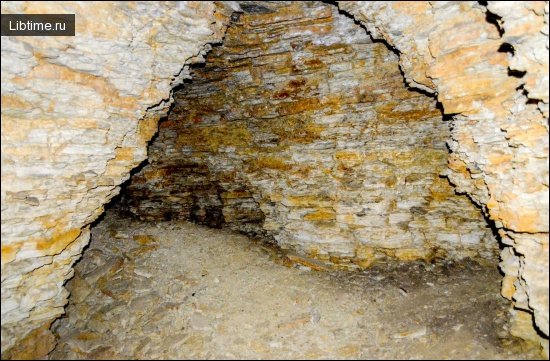
This rare and not fully explained phenomenon of nature is recorded in the Red Cave (Crimea), the Kizelovskaya Cave (Urals), the Anakopiyskaya Cave (Caucasus), and other caves across Ukraine and Russia. In these formations moonmilk coats the walls and vaults wherever water emerges from narrow cracks under low evaporation. Their study has long contributed to the wider understanding of how moonmilk develops in karst systems.
Kartchner Caverns and Notable International Sites
Moonmilk is documented at a number of internationally significant caves. Notable sites include:
- Kartchner Caverns State Park (Arizona, USA), known for its brushite moonmilk and its protected Big Room.
- Grotte des Collemboles (the "Springtail Cave") in Belgium, a focus of Streptomyces moonmilk research.
- Mondmilchloch on Pilatus Mountain in Switzerland, a classic historical moonmilk locality whose name literally means "moonmilk hole."
- Charlottenhöhle and Schulerloch in Germany, alongside the Bergmilchkammer ("rock-milk chamber") that records the deposit in its very name.
- Wind Cave National Park and Oregon Caves National Monument in the USA, where the National Park Service manages cave deposits.
The German and Swiss names — including Mannlimilch and Bergmilch — preserve the long European tradition of recognising this substance.
History of Moonmilk Research
Moonmilk has been described and used by humans for centuries, long before its microbiology was understood. Its history runs from early naturalists through folk medicine and cosmetics, and the etymology of its name reflects old beliefs about its origin. This cultural record is part of why moonmilk remains a topic of enduring fascination.
Conrad Gesner and Early Descriptions
The Swiss naturalist Conrad Gesner (also spelled Conrad Gessner) gave one of the earliest scientific descriptions of moonmilk in the sixteenth century, associating it with the Mondmilchloch cave on Pilatus Mountain. The name "moonmilk" itself grew from the historical misconception that the substance was deposited by rays of the moon entering the cave. This folklore, preserved in regional names like Mannlimilch, shaped how the deposit was understood for generations.
Ancient Cosmetic and Medicinal Uses in China and Europe
Moonmilk was historically used as a medical remedy and cosmetic across Europe and Asia. In medieval Europe it was applied to wounds, given to livestock, and taken for ailments because of its fine, absorbent, lime-rich nature, and it was mined from caves for these purposes. Ancient cosmetic applications are recorded in China, where powdered cave carbonates served as skin preparations. These traditional pharmaceutical uses long predate any understanding of moonmilk's chemistry or microbiology.
Studying Moonmilk: Sampling and Analysis Methods
Researchers study moonmilk by combining careful field sampling with mineralogical and molecular laboratory analysis. Because the deposits are fragile and easily contaminated, pristine sample collection in these extreme environments is a methodological challenge in its own right. The resulting data link mineral structure to microbial communities.
Cave Sampling Techniques
Cave sampling for moonmilk requires sterile tools and protective protocols to avoid introducing surface microbes or human DNA into the sample. Investigators collect small amounts of moonmilk into sterile containers, record moisture and location, and preserve material for both microscopy and genetic work. Scanning electron microscopy is then used to examine crystal morphology and bacterial–mineral interactions, while in vitro experiments assess how isolated microbes transform carbonate.
DNA Extraction and Clone Library Construction
Identifying moonmilk microbes relies on DNA extraction followed by molecular analysis such as clone library construction. DNA is extracted directly from the deposit, target genes are amplified, and clone libraries are built and sequenced to catalogue the bacterial diversity present. This approach revealed the dominance of Actinobacteria and the genetic biomineralization traits of cave Streptomyces, and it underpins efforts to use cave microbes for archaeological reconstruction and for understanding Actinobacteria phylogenetics in hypogean settings.
Conservation and Cave Preservation
Moonmilk and its microbial communities are vulnerable to human disturbance, making conservation a priority in show caves. Visitor traffic introduces lint, organic matter, and exotic organisms that alter the delicate cave ecosystem. Managing access while protecting these deposits is an active concern for parks and cave authorities.
Impact of Visitor Trails on Cave Slime Bacteria
Cave slime bacteria measurably decline near visitor trails, where human activity changes the microenvironment. Foot traffic deposits lint and skin-borne microbes, transferring elements of the human microbiome onto cave surfaces and creating rounded vermiculations and other disturbance features. Water used for dust control and lint deposited from clothing add organic carbon that can shift the native microbial balance away from the communities that build moonmilk.
Balancing Tourism Access with Speleothem Protection
Cave managers balance visitor access with speleothem protection through trail design, lint management, and restoration. Practical strategies include:
- Routing trails away from active moonmilk and limiting how close visitors approach.
- Installing lint and organic-deposition control systems and regular cleaning regimes.
- Filtering water used in caves to reduce added organics.
- Restoring cave entrances and disturbed surfaces, sometimes guided by speleothem analysis.
At sites such as Kartchner Caverns State Park, Wind Cave National Park, and Oregon Caves National Monument, the National Park Service and state agencies apply these resource-management approaches so that tourism and the survival of fragile deposits like moonmilk can coexist.