Maximovich Cave: Exploring the Kyzyl-Yarovskaya Wonder by the Inzer River in Russia
 libre
libre
Maksimovich Cave (Kyzyl-Yarovskaya) is a 1,250-metre karst cave formed in Lower Paleozoic limestones on the right bank of the Inzer River, near the village of Kyzyl-Yar in the Republic of Bashkortostan, Russia. The cave consists of horizontal and vertical cavities confined to tectonic fractures, holds 16 grottoes, underground lakes, and rich calcite formations, and stays at a near-constant temperature of around 6°C year-round.

Maksimovich Cave is named in honour of George A. Maximovich, the geologist who founded the Soviet school of geological karstology — the science of how water dissolves soluble rock to create caves. The cave is a destination for speleology enthusiasts and a notable example of karst development in the southern Ural region.
Location and How to Get There
Maksimovich Cave sits on the right bank of the Inzer River, close to the village of Kyzyl-Yar in Bashkortostan, Russia. The cave's entrance opens onto the river valley, and its lakes lie at roughly the same level as the Inzer itself, reflecting the close hydrological link between the river and the cave system.
Right Bank of the Inzer River
The right bank of the Inzer River forms the geological setting for Maksimovich Cave. The Inzer cuts through Lower Paleozoic limestone in this stretch, exposing the soluble rock that groundwater has dissolved over geological time to hollow out the cave. The river level governs the level of the cave's underground lakes, so seasonal changes in the Inzer are mirrored below ground.
Directions from the Village of Kyzyl-Yar
Reaching Maksimovich Cave starts from the village of Kyzyl-Yar, the nearest settlement to the cave entrance. Visitors typically approach along the Inzer River valley and then follow foot trails to the cave mouth on the right bank. Because the cave lies in undeveloped terrain rather than at a managed tourist site, there is no formal parking area, signage, or visitor centre, and local guides familiar with the river crossing and approach paths are the most reliable way to find the entrance.
Geological Formation and Features
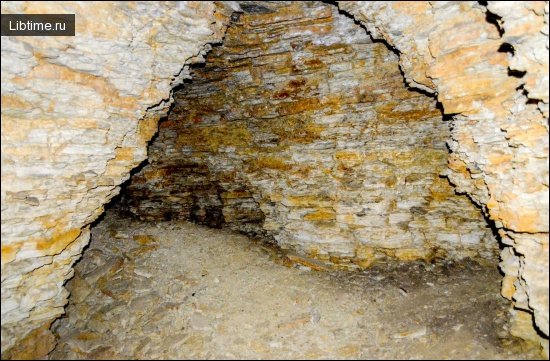
Maksimovich Cave formed through karst processes, in which slightly acidic groundwater dissolves limestone along lines of weakness in the rock. The cave's shape and direction were dictated by tectonic fractures, and its mixed horizontal and vertical passages record the way water exploited those fractures over time.
Lower Paleozoic Limestones
The host rock of Maksimovich Cave is Lower Paleozoic limestone, a carbonate rock laid down hundreds of millions of years ago. Limestone is highly susceptible to karstification: rainwater and river water charged with carbon dioxide become mildly acidic and slowly dissolve the calcium carbonate, enlarging cracks into passages and chambers. This solubility is what makes the limestone of the Inzer's right bank capable of hosting a cave of this size.
Tectonic Fractures and Cave Structure
Maksimovich Cave is confined to tectonic fractures of northwestern and northeastern strike. These two fracture orientations acted as the plumbing for groundwater, channelling dissolution along their lines and giving the cave its overall pattern of intersecting passages. The result is a network of horizontal and vertical cavities rather than a single straight tunnel.
Cave Length and Layout
The total surveyed length of Maksimovich Cave is 1,250 metres, combining both horizontal galleries and vertical drops. Within this length the cave contains 16 separate grottoes, connected by passages of varying width and height. The mix of level corridors and vertical sections means exploring the full system requires both walking and climbing or descending between levels.
Grottoes Inside the Cave
Maksimovich Cave holds 16 grottoes, the chambers that punctuate its passages. They vary widely in size, from tight pockets to the large Cosmonauts' Grotto, and several contain distinctive features such as lakes and calcite formations.
The Cosmonauts' Grotto
The Cosmonauts' Grotto is the largest chamber in Maksimovich Cave, measuring 50 metres long, 10 metres wide, and 10 metres high. Its scale makes it the centrepiece of the cave and the most striking single space within the system, offering an open underground hall amid the narrower connecting passages.
The Provalny Grotto and Cave Pearls
The Provalny Grotto is notable for its cave pearls, smooth concretions of calcium carbonate that form when dripping water coats a grain of sand or rock fragment in successive layers of calcite, much as an oyster builds a pearl. The presence of cave pearls in the Provalny Grotto signals the slow, steady drip conditions needed for these rare formations to develop.
Underground Lakes
Maksimovich Cave contains underground lakes that sit at approximately the same level as the Inzer River, confirming that the cave water and the river are part of one connected system. The largest lake covers an area of about 220 square metres. These pools rise and fall with the river, and their clarity and stillness are a defining feature of the cave's lower levels.
Cave Formations and Calcite Deposits
Calcite deposits are widespread throughout Maksimovich Cave, the natural outcome of mineral-laden water moving through limestone. As water dissolves carbonate from the host rock and later re-deposits it, it builds an array of speleothems — the collective name for cave formations such as flowstone, crusts, and pearls.
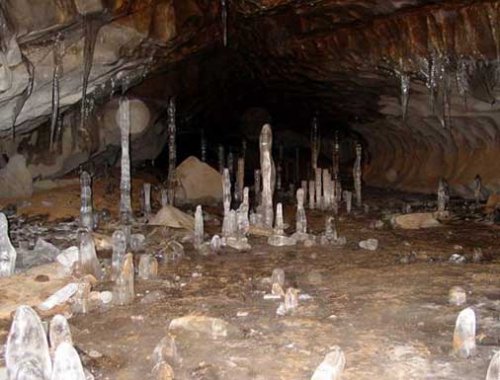
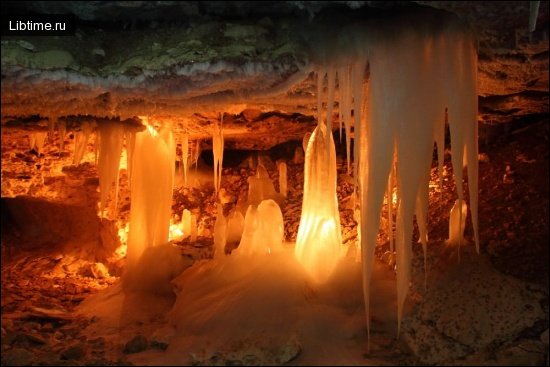
The cave's calcite features include extensive crustal deposits along walls and floors, sometimes described as calcite "abscesses," alongside the cave pearls of the Provalny Grotto. Each formation is a record of water chemistry and flow: where water sheets across a surface it leaves flowstone, where it drips it builds pendant or pearl formations, and where it pools it can deposit rims and shelves of calcite.
Cave Temperature and Climate
The air temperature inside Maksimovich Cave holds at about 6°C, staying cool and stable regardless of the season outside. This steadiness is typical of caves, where the surrounding rock buffers the interior from surface weather, so the chambers remain cold even during a warm summer above ground.
What to Wear When Visiting
Because Maksimovich Cave stays near 6°C, visitors should dress for cold, damp conditions even in summer. Recommended clothing and gear include:
- Warm layers — a fleece or insulating jacket over a base layer.
- Sturdy, non-slip footwear suitable for wet rock and uneven ground.
- A waterproof or quick-drying outer layer, since cave surfaces and air are humid.
- Gloves and a hat to stay comfortable over a long visit.
- A reliable headlamp or torch, as the cave has no lighting.
Visiting the Cave
Visiting Maksimovich Cave is an undeveloped, wild-cave experience rather than a guided commercial tour. There is no visitor infrastructure at the site, so anyone planning a trip should treat it as a caving expedition requiring preparation, proper equipment, and ideally a knowledgeable local guide.
Accessibility and Physical Requirements
Maksimovich Cave is not accessible for casual or mobility-limited visitors, because its layout combines horizontal galleries with vertical sections that require climbing and descending. Exploring the full 1,250-metre system demands a reasonable level of fitness, surefootedness on wet limestone, and comfort in tight or steep passages. The cold air, damp surfaces, and total darkness add to the physical demands of a visit.
Cave Tours and Scheduling
There is no fixed commercial tour schedule or ticket office for Maksimovich Cave; access is arranged informally, usually through local speleology groups or guides who know the Inzer River approach. Group trips are organised by experienced cavers rather than sold as timed tours, and the best conditions depend on the season and on river levels, which affect both the approach and the underground lakes. Anyone interested in organised caving content can also explore our wider speleology and travel sections for context and trip ideas.
Who Was Maksimovich? Naming and History
Maksimovich Cave is named after George A. Maximovich, a Soviet geologist regarded as the founder of the national school of geological karstology. His research into karst — the dissolution of soluble rocks and the cave systems it produces — shaped the study of caves across the Soviet Union, and naming the Kyzyl-Yarovskaya cave in his honour reflects his standing in the field.
Academic and Geological Background
George A. Maximovich built his career at Perm State University in the city of Perm, where he led work in dynamic geology and hydrogeology and helped establish institutional research into karst and speleology. He is associated with the development of karstology as a formal discipline and with publications and scientific monographs that became reference points for later cave researchers. His legacy connects the academic study of karst processes with the practical exploration of caves such as Maksimovich Cave, and his name endures both in the cave that bears it and in the research tradition he founded.
Alternative Caves and Attractions Nearby
Travellers drawn to Maksimovich Cave may also be interested in other caves and karst attractions, both in the surrounding region and further afield. The southern Ural area around the Inzer River contains numerous karst caves typical of its limestone geology, making it a rich region for speleology more broadly.
For comparison, well-known show caves elsewhere illustrate how managed cave tourism differs from the wild experience at Maksimovich Cave:
- Mammoth Cave National Park in Kentucky — the world's longest known cave system, with extensive guided tours from Cave City near I-65 Exit 53.
- Crystal Onyx Cave, also near Cave City, Kentucky, known for its onyx-like calcite formations.
- Moqui Cave in Southern Utah — a roadside attraction displaying Native American artifacts, dinosaur tracks, and fluorescent minerals that glow under ultraviolet light.
These sites show the range of cave experiences worldwide, from the raw, fracture-controlled passages of Maksimovich Cave to fully developed tourist caves with lighting, walkways, and ticketed schedules.
References and Further Reading
Maksimovich Cave appears in speleological surveys of the Inzer River region that document its length, grottoes, and calcite formations. Readers wanting to go deeper into the science behind it can follow the study of karstology established by George A. Maximovich and continued through Soviet and Russian research institutions devoted to karst and cave exploration.
For more articles on caves, exploration, and the natural world, browse our speleology section, explore related travel and astronomy features, or return to the homepage to discover further reading across science, nature, and life.