Bolshaya Kurmanaevskaya Cave: Exploring the Gypsum Karst Caves Near Ufa, Russia
 libre
libre
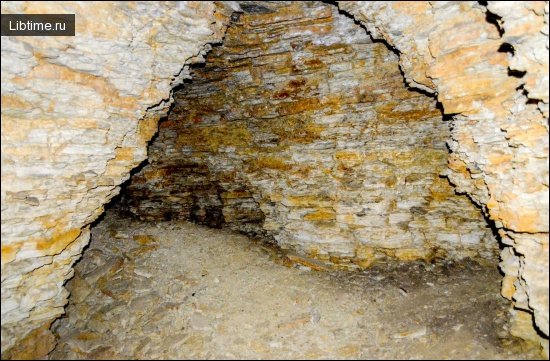
Bolshaya Kurmanaevskaya Cave is a gypsum karst cave on the right bank of the Aurgazy River, on the eastern edge of the village of Kurmanaevo in the Karmaskalinskiy rayon of Bashkiria, roughly 60 km south of the city of Ufa. The cave is a corridor-type system more than 500 metres long, formed in Lower Permian gypsum, with a chain of small grottoes linked by narrow passages, shallow underground lakes, and a constant interior temperature of about 5°C. It ranks among the notable natural landmarks of Bashkortostan and is one of several karst caves documented across the Middle Volga province.

Location and Geography
Bolshaya Kurmanaevskaya Cave sits at the eastern outskirts of Kurmanaevo, a village in the Karmaskalinskiy rayon of Bashkiria (Bashkortostan), Russia. The entrance opens on the right bank of the Aurgazy River, a setting that places the cave within the broader belt of gypsum karst landscapes that stretches across the region between the Ural Mountains and the Volga basin. Its position about 60 km south of Ufa makes it one of the more accessible cave sites among the natural attractions of the Karmaskalinskiy district.
How to Get There from Ufa
Reaching Bolshaya Kurmanaevskaya Cave from Ufa means travelling roughly 60 km south toward the village of Kurmanaevo. The most reliable route is by car along the regional roads heading south out of the city, after which the cave entrance can be located on foot near the right bank of the Aurgazy River at the village's eastern edge. Because the cave is not a developed tourist attraction with formal signage, visitors typically rely on GPS coordinates and local directions rather than marked trails, and confirming the route with regional tourism resources before setting out is sensible.
The Aurgazy River Setting
The Aurgazy River shapes the immediate environment of the cave and is central to its formation. Flowing water along and beneath the right bank has fed the karst processes that dissolved the soft gypsum bedrock over geological time. The river's proximity also explains the shallow underground lakes inside the cave, where the local water table reaches the passage floors. This close relationship between surface water and subterranean voids is typical of gypsum karst regions throughout Bashkiria.
Geological Formation
Bolshaya Kurmanaevskaya Cave formed in gypsum of the Lower Permian, a soft, water-soluble rock that dissolves readily when groundwater moves through it. This solubility is what allows extensive cave systems to develop in gypsum far more quickly than in harder limestone. The cave's relatively thin roof — nowhere more than 5–7 metres thick — reflects the shallow depth at which these gypsum beds lie beneath the surface near the Aurgazy River.
Lower Permian Gypsum Origins
The Lower Permian gypsum that hosts the cave was laid down hundreds of millions of years ago in an evaporite environment, where ancient shallow seas dried and left thick mineral deposits. Gypsum karst differs markedly from the limestone karst that produces caves such as the famous painted caverns of France and Spain; gypsum is more soluble and mechanically weaker, so passages tend to be shorter-lived and roofs more prone to collapse. This geological character defines both the structure and the fragility of Bolshaya Kurmanaevskaya Cave.
Karst Processes in the Region
Karst processes across the Middle Volga and southern Ural foothills have created a landscape of caves, sinkholes, and underground watercourses wherever soluble gypsum or limestone lies near the surface. Water percolating through joints and fractures gradually widens them into corridors and grottoes, a process that continues actively where rivers like the Aurgazy maintain a steady flow. The same dissolution mechanisms that shaped Bolshaya Kurmanaevskaya Cave are responsible for other caves of the region, and they distinguish gypsum karst from the limestone cave types found elsewhere in Russia and abroad.
Cave Structure and Layout
Bolshaya Kurmanaevskaya Cave belongs to the corridor type, meaning it consists of linear passages rather than large open chambers. Several small grottoes are connected by narrow passages, giving the cave a chain-like layout that visitors move through in sequence. The total surveyed length exceeds 500 metres, making it one of the more substantial gypsum caves in its part of Bashkiria.
Corridor-Type Passages and Grottoes
The corridor-type structure of Bolshaya Kurmanaevskaya Cave links a series of modest grottoes through constricted passages. Each grotto opens out slightly before the route narrows again, a rhythm characteristic of gypsum caves where dissolution follows fracture lines in the rock. The grottoes themselves reach heights of up to 2–3 metres, enough to stand in but never forming the vast halls associated with large limestone systems.
Cave Dimensions and Measurements
- Total length: more than 500 metres of mapped passage.
- Grotto height: up to 2–3 metres in the larger chambers.
- Roof thickness: no more than 5–7 metres between the passages and the surface.
- Underground lake depth: small lakes up to about 1 metre deep.
These measurements place Bolshaya Kurmanaevskaya Cave among the larger gypsum caves of the area while underlining its shallow, near-surface character.
Underground Lakes
Small underground lakes occupy parts of the cave floor, reaching depths of about 1 metre. These lakes form where the passages intersect the local water table fed by the Aurgazy River, and their still, cold water is a defining feature of the cave's interior. Their shallow depth means they are more a matter of careful footing than a barrier to passage, but they keep the lower sections damp and contribute to the cave's stable, cool microclimate.
Cave Entrance Description
The entrance to Bolshaya Kurmanaevskaya Cave lies on the right bank of the Aurgazy River at the eastern outskirts of Kurmanaevo. Set into the gypsum exposure near the riverbank, it gives directly onto the corridor passages without any built infrastructure or formal gate. Because the surrounding gypsum is soft and the roof thin, the area around the entrance can be unstable, and the opening's modest size is easy to miss without precise directions.
Climate and Conditions Inside the Cave
The air temperature inside Bolshaya Kurmanaevskaya Cave holds steady at around 5°C year-round, far cooler than summer surface temperatures in Bashkiria. This stable chill is typical of caves, where the surrounding rock buffers seasonal swings. Combined with the damp from the underground lakes and the river, the interior stays cold and humid, so visitors should expect a consistently cool, wet environment regardless of the weather outside.
Wildlife and Bat Colonies
Like many caves in the southern Urals and Middle Volga region, gypsum caves of this type can shelter bat colonies that roost in the dark, temperature-stable interior. Bats are sensitive to disturbance, particularly during hibernation, so any wildlife present in Bolshaya Kurmanaevskaya Cave should be observed quietly and left undisturbed. The cool, humid microclimate also supports small invertebrate life adapted to subterranean conditions, part of the limited but distinctive biodiversity found in such caves.
Other Karst Caves of the Middle Volga Province
Bolshaya Kurmanaevskaya Cave is one of several karst caves in the Middle Volga province, a region where soluble gypsum and limestone have produced numerous underground systems. These caves vary widely in length and accessibility, and several have been altered or lost as river levels and reservoirs changed the local hydrology over the twentieth century.
Devichya Cave and Sukhaya Cave
Among the larger karst caves of the Middle Volga province were Devichya Cave, about 250 metres long, and Sukhaya Cave, roughly 70 metres long. Both were once accessible features of the regional cave inventory, comparable in type to Bolshaya Kurmanaevskaya Cave though differing in scale. Their histories illustrate how vulnerable shallow karst systems are to changes in surface water levels.
Impact of the Kuibyshev Reservoir
The creation of the Kuibyshev Reservoir flooded both Devichya Cave and Sukhaya Cave, placing them underwater and removing them from public access. The reservoir, one of the largest artificial bodies of water in the Volga system, raised water levels across a broad area and submerged low-lying cave entrances. This loss highlights why surviving caves such as Bolshaya Kurmanaevskaya, situated above the reservoir's reach along the Aurgazy River, remain valuable records of the region's karst landscape.
Water Bodies of Bashkiria
Bashkiria is rich in rivers, lakes, and karst water features, and the underground lakes of Bolshaya Kurmanaevskaya Cave belong to this wider hydrological setting. Rivers such as the Aurgazy, the Ay, and others drain the region between the Ural Mountains and the Volga, feeding both surface water bodies and the groundwater that carves the caves. This abundance of water makes Bashkiria a focus for water tourism and nature travel, with cave lakes forming one of the more unusual elements of the region's waterscape.
Archaeological Research and Findings
Caves throughout Bashkiria and the southern Urals have long attracted archaeological research, and the broader region preserves traces of prehistoric human activity. While Bolshaya Kurmanaevskaya Cave is primarily a geological and natural site, the documentation of caves in the Karmaskalinskiy district contributes to the regional record of natural monuments. Careful survey and recording — noting passage dimensions, lake depths, and roof thickness — form the basis of how such caves are catalogued and protected as natural landmarks of Bashkortostan.
Visiting the Cave: Accessibility and Safety
Visiting Bolshaya Kurmanaevskaya Cave requires preparation, as it has no developed facilities, lighting, or guided infrastructure. The thin gypsum roof, narrow passages, shallow lakes, and cold, damp conditions all call for caution and proper equipment.
- Clothing: warm, waterproof layers suited to a constant 5°C and wet floors.
- Footwear: sturdy, grippy boots for muddy, uneven, and occasionally submerged ground.
- Lighting: reliable headlamps plus backup light sources, since the cave is entirely dark.
- Safety: a helmet for the low grottoes, and ideally travelling in a group with someone aware of your plans.
Because gypsum is mechanically weak and the roof thin, visitors should avoid disturbing the rock and treat any sign of instability as a reason to turn back. Respecting wildlife, especially roosting bats, and leaving the cave as found preserves it for future visitors and for the ongoing documentation of the region's natural monuments.