Karst Caves of the Eastern Carpathians: A Guide to Ukraine's Underground Wonders
 libre
libre
The Carpathian Mountains hold one of Central Europe's richest concentrations of karst caves, spread across a 250 km arc of limestone ranges that stretch from Ukraine into Slovakia, Poland, and Romania. These caves range from shallow decorated grottoes in the Uholka river basin to deep alpine shafts in the Tatra Mountains, and they preserve a geological and archaeological record running from the Miocene through the Pleistocene and into the Palaeolithic human past.
Speleological areas and provinces of the Carpathians
Carpathian caves are organised into distinct speleological areas defined by geology, relief, and the rivers that drain them. The broad division separates the wooded eastern ranges of Ukraine from the higher, more intensely karstified western ranges along the Polish and Slovak border. Each area carries its own cave-forming history and its own catalogue of explored systems.
The Eastern (Wooded) Carpathians
The Eastern, or Wooded Carpathians, located in Ukraine, are distinguished as a speleological area subdivided into three provinces. The forested relief and gentler limestone exposures here produce caves that are typically shorter and shallower than those of the high western ranges, but they are abundant and well decorated. The wooded cover and dense river network shape both the surface karst features and the underground flow pathways that carved the passages.
Central Carpathian speleological province
The Central Carpathian speleological province contains the most widely studied Carpathian karst caves and mines, covering a mountain range that extends in a southeastern direction for 250 km.

Alpine-type karst phenomena in the Western Carpathians
The Western Carpathians, and above all the Tatra Mountains shared by Poland and Slovakia, host alpine-type karst — a high-relief karst landscape where steep gradients, snowmelt, and frost shattering drive rapid cave development. Alpine-type karst differs from the lowland karst of the eastern foothills in its deep vertical shafts, its strong control by tectonic fracturing, and the influence of former glaciers. Polish researchers including Jerzy Głazek and Piotr Migoń have documented how this glaciokarst terrain combines surface features such as karren and dolines with extensive underground systems.
Glaciokarst terrain in the Tatra Mountains records the interplay between karst dissolution and glacial erosion. Surface karst features — sinkholes, limestone pavements, and blind valleys — sit above multi-level cave systems whose upper galleries were abandoned as valleys deepened. The contrast between surface and underground karst features is one of the clearest signals geomorphologists use to reconstruct the geomorphic evolution of these glaciated areas.
Geology and cave formation in the Carpathians
Carpathian cave formation, or speleogenesis, is controlled by the region's limestone bedrock, its fold-and-thrust tectonic structure, and a long climatic history reaching back to the Miocene. Karst morphology here reflects three main controls: the solubility and purity of the host rock, the fracture pattern imposed by tectonics, and the flow of groundwater along those fractures. Understanding these controls explains why some valleys hold dense cave clusters while neighbouring rocks of different composition hold none.
Marbleized limestones of the Upper Jurassic
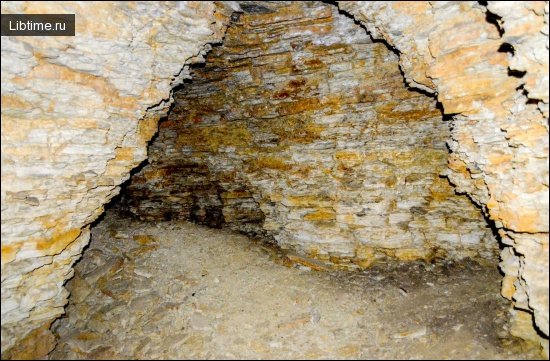
The grey, dense marbleized limestones of the Upper Jurassic form the principal host rock for the decorated caves of the Uholka basin (more information: Cave Formation). These limestones were partly recrystallised under pressure, giving them the hard, marble-like texture that allows steep cliff faces and stable cave roofs. Their purity favours clean dissolution, which in turn produces the abundant flowstone and dripstone decoration for which these caves are known.
Cave evolution and formation processes
Cave evolution in the Carpathians follows the standard speleogenetic sequence, modified by the region's strong relief. Dissolution begins along fractures and bedding planes in the saturated (phreatic) zone, then accelerates as passages enlarge and conduct more water. As rivers cut their valleys deeper, the water table drops, and former phreatic passages are left in the vadose zone where streams incise canyon-like floors. In glaciated parts of the Western Carpathians, proglacial vadose cave formation adds a further layer: meltwater from receding glaciers fed aggressive, sediment-laden flows that opened proglacial caves along the ice margins.
Glacial influence on cave development is most evident in the Tatra Mountains, where Pleistocene ice repeatedly advanced and retreated. The relationship between tectonics and cave development is equally important — the fold-and-thrust setting of the Carpathians created the fracture networks that groundwater later exploited, so cave passages frequently follow the strike of folds and the trace of thrust faults.
Cave passage morphology and multi-level systems
Carpathian caves commonly display multi-level passage morphology, with stacked galleries that record successive positions of the water table as valleys deepened. The highest, oldest passages tend to be relict and dry; lower levels may still carry active streams. Passage shapes carry their own history: rounded, elliptical cross-sections indicate phreatic dissolution under full water, while keyhole and canyon profiles record later vadose downcutting. Mapping these underground flow pathways and hydrology lets speleologists reconstruct how each system grew.
Notable caves of the Carpathians
The most studied Carpathian caves cluster in the Uholka river basin of the Central Carpathian province, where 23 decorated caves were catalogued in the limestone cliffs around Mount Dragovsky Menchul. The largest and most distinctive of these are described below, ranging from a vertical karst mine to a series of horizontal decorated galleries.
Druzhba Cave (vertical karst mine)
Druzhba Cave is a vertical karst mine that begins with a 21-metre-deep sinkhole leading into a complex system of vertical and horizontal passages. The total length of the cave's horizontal galleries exceeds 220 metres, and its depth reaches 46 metres. Its vertical entrance shaft and branching layout make Druzhba the structurally most complex cave in the Uholka group.
White Wall Caves
White Wall Caves measure about 101 metres in length, making them the longest of the named horizontal caves in the cluster. The name reflects the pale flowstone draperies that coat the passage walls.
Milk Stone Cave
Milk Stone Cave runs roughly 92 metres long. It is named for its milky-white calcite formations, a product of clean dissolution in the pure Upper Jurassic limestone.
Ridge Cave
Ridge Cave extends about 71 metres and takes its name from its position within the limestone ridge above the Uholka valley.
Caves of the Uholka river basin
The Uholka river basin, drained by the Malaya and Velika Uholka rivers, holds the densest concentration of decorated caves in the Ukrainian Carpathians. All 23 catalogued caves sit in high cliffs of marbleized Upper Jurassic limestone, and most are richly ornamented with flowstone, stalactites, and stalagmites. The basin's combination of pure limestone, steep relief, and reliable water supply created near-ideal conditions for both dissolution and mineral deposition.
Deepest caves in the Carpathian range
The deepest caves in the Carpathian range lie in the Tatra Mountains, where the Wielka Śnieżna Caves System is the deepest in Poland. The Wielka Śnieżna system descends more than 800 metres and extends for over 20 kilometres of mapped passages, making it the flagship of Polish speleological research. Its depth comes from the alpine-type karst setting: a high massif, steep hydraulic gradients, and deep tectonic fracturing that let water sink rapidly through the rock.
Polish speleologists have steadily extended the known length and depth of the Wielka Śnieżna Caves System through decades of exploration and diving, and recent structural studies by researchers such as Jacek Szczygieł of the University of Silesia have linked the system's geometry to the fold-and-thrust architecture of the Tatra Mountains. The Tatra caves remain an active frontier, with new connections between separate shafts periodically merging into the main system.
Cave decoration and mineral formations
The decoration of Carpathian caves consists chiefly of calcite speleothems deposited from dripping and flowing water. Common formations include:
- flowstone sheets and draperies coating walls and floors,
- stalactites hanging from the ceiling and stalagmites rising from the floor,
- columns where the two meet,
- rimstone pools and milky-white calcite crusts such as those in Milk Stone Cave.
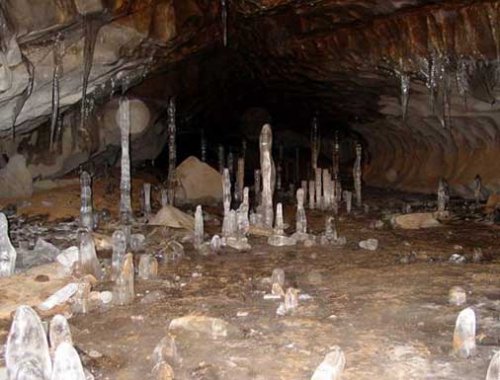
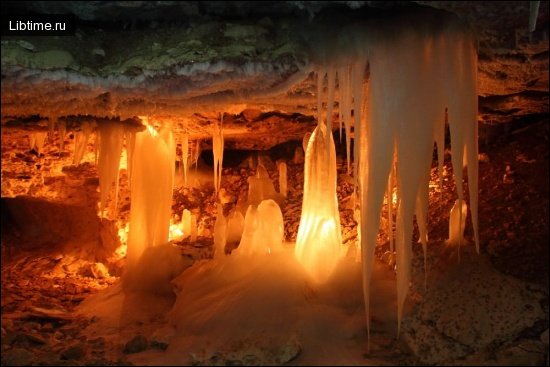
These mineral formations grow because the pure Upper Jurassic limestone dissolves readily in slightly acidic water and then re-precipitates calcite when the water degasses carbon dioxide on entering the cave. The richness of decoration in the Uholka caves is a direct consequence of the limestone's purity and the steady drip-water supply through the overlying cliffs.
Archaeology and early human presence in the Carpathians
The Carpathian caves preserve an important record of Palaeolithic human activity, including stone artefacts, animal bone, and in places hominin remains. Palaeolithic cave archaeology in the Carpathian Mountains complements the famous open-air sites of the surrounding plains and links the region to the broader story of how early humans spread across Europe. Caves are especially valuable because their stable temperature and sheltered sediments preserve material that would weather away in the open.
Early human migration and settlement patterns in Europe
Early human migration into Europe routed repeatedly along the river valleys and mountain corridors of the Carpathian region, and the caves record episodes of settlement by both Neanderthals and anatomically modern humans. Settlement patterns shifted with the climate of the Pleistocene: during colder phases groups concentrated in sheltered valleys, while warmer phases opened higher ground. Nearby open-air Palaeolithic sites such as Româneşti in Romania show how cave occupation fits into a wider landscape of early human activity, including the striking mammoth-bone constructions documented at some Palaeolithic sites further east.
Archaeological survey and excavation methodology
Archaeological work in Carpathian caves follows a staged methodology: systematic survey to locate promising sediment-filled cave mouths, test trenching to read the stratigraphy, and careful open-area excavation of the most productive layers. The pioneering surveys of Abbé Breuil established the framework for reading Palaeolithic cave stratigraphy across Europe, and modern projects build on it with fine-grained recording of every artefact's position. Research led by Dr Wei Chu has applied this approach to Carpathian and neighbouring sites, supported by funding from the Gerda Henkel Stiftung, whose grants underwrite much of the excavation planning. Fieldwork has at times been disrupted by war in the region, forcing teams to reschedule excavation seasons and prioritise the most threatened sites.
Bone and ancient DNA preservation in cave sites
Bone and ancient DNA survive far better in caves than at open-air sites, which is why Carpathian caves are prized for biomolecular research. The cool, stable, and often alkaline conditions of limestone caves slow the chemical breakdown of bone collagen and protect DNA from heat and ultraviolet degradation. Open-air sites, exposed to wetting, drying, and frost, rarely yield usable ancient DNA, whereas cave sediments can preserve genetic material from both animals and hominins for tens of thousands of years. Recovering ancient DNA from cave bone — and increasingly from cave sediment itself — has transformed the study of Neanderthals and early modern humans.
Association between human fossils and artefacts
The scientific value of a cave site depends heavily on the secure association between human fossils and the artefacts found with them. When skeletal remains lie in the same undisturbed layer as stone tools, the two can be linked to the same population and dated together; where later processes have mixed layers — for example Roman material settling into Palaeolithic deposits — that association breaks down. Careful stratigraphic excavation is therefore essential to distinguish genuine Palaeolithic assemblages from later intrusions and to tie human fossils reliably to their cultural context.
Visiting the caves: access and restrictions
Access to Carpathian caves ranges from open tourist routes to strictly protected scientific reserves, and visitors should check the rules for each site before travelling. The decorated caves of the Uholka basin lie within protected forest land, and the deep alpine systems of the Tatra Mountains carry the tightest restrictions because of their fragility and the technical hazards of vertical caving.
- Many of the deepest caves, including the Wielka Śnieżna Caves System, are closed to casual visitors and accessible only with permits for research or organised caving.
- Decorated caves are vulnerable to damage from touching formations and to lighting that encourages algae, so guided access and fixed routes are common.
- Active archaeological sites are off-limits during excavation to protect the stratigraphy.
- Mountain weather and flooding can close cave entrances seasonally, particularly in the high Tatra Mountains.
For broader background on cave science and exploration, see our Speleology section, and for trip planning across the wider region the Travel articles offer practical context.
References and further reading
The geology and archaeology of the Carpathian caves are documented in peer-reviewed work and in accessible summaries. Structural and geomorphic studies of the Tatra Mountains by Jacek Szczygieł, Jerzy Głazek, Piotr Migoń, Jan Rudnicki, and Kacper Jancewicz appear in journals published by Springer Nature and are often shared on ResearchGate. Archaeological projects directed by Dr Wei Chu and funded by the Gerda Henkel Stiftung have produced reports on Palaeolithic caves and open-air sites such as Româneşti.
To continue exploring related topics on this site, browse the main articles index, search the archive through the Search page, or visit the Astronomy and Travel sections for more science and nature writing. Questions and contact details are available via the Contact us page.