Bolshaya Oreshnaya Cave: World's Longest Conglomerate Cave in Siberia
 libre
libre
Bolshaya Oreshnaya Cave is a vast conglomerate cave on the left bank of the Taizhny Bajei River in Russia's Krasnoyarsk Krai, lying about 3 km southeast of the village of Oreshnoye. It is recognised as one of the longest conglomerate caves in the world, with a mapped length of 8,500 m and a probable total extent exceeding 11 km.
Where is Bolshaya Oreshnaya Cave located?
Bolshaya Oreshnaya Cave sits on the left bank of the Taizhny Bajei River, roughly 3 km southeast of the village of Oreshnoye in the Manskiy District of Krasnoyarsk Krai, Russia. The cave entrance opens into a slope above the river valley, making it accessible to organised caving groups exploring the Eastern Sayan foothills.
How was the cave formed?
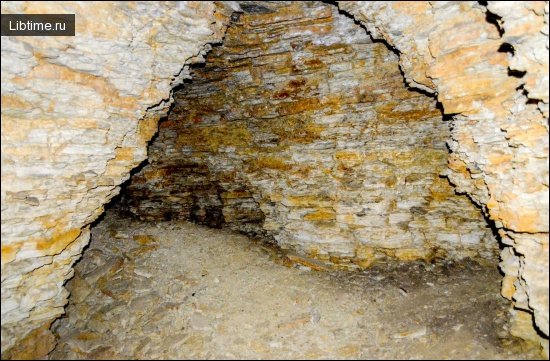
Bolshaya Oreshnaya Cave is a complex system of horizontal and inclined passages developed along cracks in Ordovician carbonate conglomerates. Unlike most large caves, which form in pure limestone, this cave was dissolved out of cemented conglomerate — a rock made of rounded pebbles bound by a carbonate matrix — which makes it one of the world's most extensive caves of its kind. The passages follow the network of fractures in the rock, branching into a maze that spreads across three distinct levels, or floors.

What do the grottoes and passages look like inside?
The grottoes inside Bolshaya Oreshnaya Cave are mostly small, with the largest covering about 2,400 m². Despite their modest size, they connect into a sprawling labyrinth across the cave's three floors. The floor of the grottoes and passages is covered with clay, pebbles and broken pieces of rock, and in places the clay deposits exceed 1 m in thickness — a feature that makes movement through the lower galleries slow and muddy.
Water is present throughout the system. A stream with a flow rate of 2.5 l/sec runs through the Kamenny Grotto, and small lakes have been found in the lowest parts of the cave. These bodies of water sit in the deepest galleries, where the network reaches its furthest extent below the surface.
What formations can be seen in the cave?
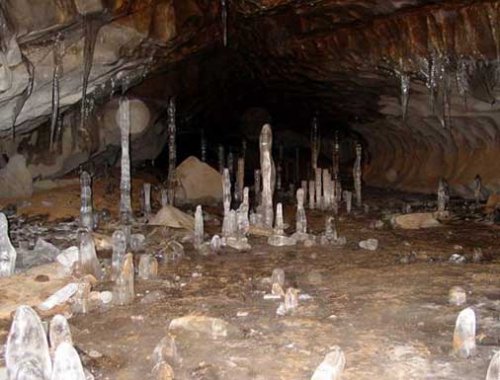
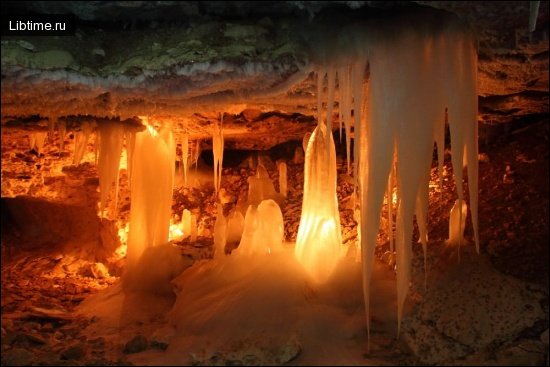
Bolshaya Oreshnaya Cave holds a range of secondary mineral formations despite being a conglomerate cave. Beautiful stalactites, stalagmites and translucent draperies have been found in the grottoes Skazka, Teatralny and Zvezdny.

- Stalactites — mineral deposits hanging from the ceiling, formed by dripping water.
- Stalagmites — upward-growing deposits built on the cave floor beneath the drips.
- Translucent draperies — thin, curtain-like sheets of calcite.
- Moon milk — a soft, white, paste-like carbonate deposit found in the anteroom.
How long and how deep is Bolshaya Oreshnaya Cave?
Bolshaya Oreshnaya Cave is mapped for 8,500 m, although its total length is apparently more than 11 km, which would place it among the longest conglomerate caves on Earth. The maximum depth of the cave is 160 m, and its total volume is around 120,000 m³. Its key surveyed figures are:
- Mapped length: 8,500 m
- Estimated total length: more than 11 km
- Maximum depth: 160 m
- Volume: 120,000 m³
- Largest grotto area: 2,400 m²
The cave plan and its named grottoes
The structure of Bolshaya Oreshnaya Cave was surveyed and mapped by Zh.L. Tsykina and R.A. Tsykin, whose plan and section document the major grottoes and their connections across the three floors.

The numbered features on the survey plan correspond to the principal grottoes and the cave entrance:
- 1 — entrance
- 2 — Rucheyny grotto
- 3 — Grandiose grotto
- 4 — Bell grotto
- 5 — Ozerny grotto
- 6 — Tale grotto
- 7 — Column grotto
- 8 — Kamenny grotto
For more articles on caves and the science of exploring them, browse our Speleology section, or read about related outdoor pursuits in Travel.