Why Trees Shed Their Leaves in Winter: The Science Behind Autumn Leaf Fall
 libre
libre
Trees shed their leaves before winter because leaf drop is a biologically useful adaptation that helps certain perennial plants survive cold seasons. By dropping foliage, a tree protects its branches from the weight of snow, stops losing water it cannot replace from frozen soil, and conserves energy through a dormant period. This page explains why deciduous trees lose leaves in autumn, how the abscission layer forms, why leaves change color, how evergreens differ, and which species keep their leaves through winter.

Why do trees drop their leaves for winter?
Deciduous trees drop their leaves for winter to avoid two specific dangers: physical damage from snow load on a full canopy, and fatal water loss at a time when frozen ground prevents roots from absorbing replacement moisture. Leaf fall is, in short, a survival strategy refined over millions of years that lets a tree pass the cold season in a low-cost, low-risk state and then start the new growing year with fresh foliage.
Several questions follow naturally from watching the seasons change in a forest or park. Why don't all trees and shrubs lose their leaves in autumn? Why does the process run differently for different species — different timing, different colors? And why do some trees show signs of leaf fall when autumn still seems far off? The answers lie in each species' particular adaptation to its climate, which the sections below unpack one at a time.
Leaf fall as a seasonal phenomenon
Leaf fall is a seasonal phenomenon driven chiefly by the approach of winter, the time of year least favorable to active plant life. It is also the glory of autumn: forests, parks, and individual trees and shrubs glow in shades of yellow, orange, and violet. Against that bouquet of color, the strict bluish-green of spruces and the soft plumes of pines stand out all the more clearly.
For some reason different species shed more heavily on different days — two days ago all the paths were covered with maple leaves, yesterday they were buried under lemon-colored linden leaves, and today the crimson, black-veined leaves of aspens began to fall. K. Paustovsky
How climate change shaped leaf fall
The temperate climate of central Europe, with its warm and cold seasons, is thought to have been preceded by a warm, even hot climate. Cooling came slowly, so seasonality emerged gradually rather than all at once. This slow, multi-million-year shift is what shaped the modern plant world of the temperate zone and developed the adaptations plants now use to survive winter; leaf fall is one of those adaptations for enduring the cold.
Ice ages and the formation of seasonality
The ice ages in Europe were the period of greatest cooling, after which the climate began moving toward its present state, with warming arriving in waves. Because these changes unfolded across enormous spans of time, plants had room to evolve responses to recurring cold rather than being killed outright by it. You can read more in How life began in the ancient eras of the Earth. The recurring, predictable severity of winter is precisely what made an "annual shutdown" like leaf fall worth evolving.
What does a tree gain by shedding its leaves?
A tree gains real, measurable protection by shedding its leaves: it avoids broken branches, halts wasteful water loss, and rids itself of a leaf that has accumulated harmful substances over the summer. The benefit is easiest to see by walking a familiar summer trail in the depths of winter after heavy snowfalls. The path has changed completely.
In early autumn, when the mushroom pickers walked through for mushrooms, the trail was wide and unobstructed. In winter, obstacle after obstacle appears: a young birch bent to the ground under a layer of snow, blocking the way; a flexible rowan arched across the path, its snow-covered crown needing to be freed.
In places, tall young trees lean their tops together to form a true arch, and large trees carry whole pillows of snow. Flake by flake it settles on the branches of birches, aspens, and oaks and on the springy paws of spruces, pressing them downward. Sometimes a branch bent under the snow drops its fluffy clumps and springs straight again, suddenly freed of the load.
Protection from snow weight and branch breakage
Shedding leaves protects a tree from snow load that would otherwise snap its branches. You can also see broken limbs along the trail — and you can imagine how the forest would look if birches and aspens, lindens and maples kept their leaves into winter. Occasionally something like this is visible when early snow falls on branches that still hold their leaves: a great many trees end up broken and maimed. A bare crown sheds snow; a leafy one catches and holds it.
The leaf as an organ of evaporation
A tree that kept its leaves into winter would also suffer for a second reason: the leaf is not only an organ of nutrition but an organ of evaporation, and roots cannot draw water from frozen ground. A mature birch evaporates about 40 liters of water a day, and the tallest tree in the world — the Australian eucalyptus — over 500 liters. In the marshy parts of Transcaucasia, such as the Rioni valley, planting eucalyptus dried out malarial swamps and turned them into healthy land fit for valuable subtropical crops. A tree that cannot stop this water loss in winter, yet cannot replace the water, would dry out and die.
Energy efficiency and the winter dormancy of plants
Dropping leaves lets a deciduous tree enter dormancy and conserve energy and water through the months when photosynthesis would yield little return anyway. With short days and a frozen water supply, keeping a full, metabolically active canopy would cost more than it produces. Losing the leaves is not a loss at all: over the summer the leaf wears out, its value as an assimilating organ declines, microscopic fungi colonize and destroy it, and insects damage it. Most importantly, harmful substances build up in the leaf over the summer that hinder its work.

A plant draws soil water together with dissolved minerals but evaporates the water in pure form. The minerals delivered to the leaf are not fully used, and part of them is deposited in leaf cells, degrading the green laboratory's performance. Careful analysis has shown that by the time of leaf fall a leaf holds twice as many minerals as it did in early summer — another reason the worn-out leaf is best discarded.
Fallen leaves also benefit the forest: broken down by fungi and bacteria, they fertilize the soil. One experiment makes the point. In a forest, part of the area was cleared each year of forest litter (leaves, twigs, bits of bark, and so on). Wood growth on that plot began to decline, and after ten years it had fallen 10–11% compared with the part of the forest left uncleared. The leaf's value continues after it falls.
As for the carbohydrates lost during leaf fall, that loss is minor for the tree, which produces them in abundance. The most valuable organic substance — proteins, along with some others — is evacuated from the leaf into the stem and roots before the leaf falls; see The composition of plant cells. In losing its leaves a plant does not suffer, and it is plainly better off starting the new year with young foliage than wintering with the old.
How does leaf fall actually work — the abscission layer
Leaf fall works through the formation of an abscission layer, a thin zone of corky cells at the base of the leaf stalk that severs the leaf cleanly from the branch. This abscission zone begins forming in summer, long before the leaf drops, and it is what lets the leaf separate without leaving an open wound on the tree.
How the abscission (corky) layer forms
The abscission layer is a separating layer that, in autumn, splits the tissues of leaf and tree apart at the petiole. Pull a leaf from a branch in summer, at the height of its life, and examine the break under a magnifying glass: you will see a gaping wound. But lift a freshly fallen leaf during autumn leaf fall and look at where the petiole detached from the branch, and the surface is perfectly smooth — and the matching scar on the branch is smooth too. That smoothness is the abscission layer at work, sealing the tree as the leaf lets go.
This is also why the dry leaves of a broken branch do not fall off, and why the leaves on a birch or maple besom (broom) stay attached: an abscission layer never had a chance to form there. Try growing a small deciduous tree indoors. However well you tend it, autumn comes and the leaves drop, because an abscission layer has formed between leaf and twig. The mechanism is hereditary, an adaptation fixed over the species' evolutionary history.
The dying and detachment of the leaf
The leaf dies and detaches as the abscission zone matures and ordinary metabolism in the leaf winds down, and the timing is governed by environmental signals — chiefly shortening day length and falling temperature. Plant hormones coordinate the process: declining levels of the growth hormone auxin in the leaf, together with rising ethylene, trigger the cells of the abscission zone to weaken and the leaf to fall. Useful substances move out of the leaf into stem and root during this period, leaving an aging organ ready to be released.
Sudden hard frosts change the course of leaf fall by speeding the death of leaves: a rapid temperature drop kills still-living leaf tissue and disrupts the normal sequence of changes, so the orderly withdrawal of nutrients and the usual color development do not fully occur. Plants respond to the smallest differences in conditions — two trees of the same species growing in slightly different microclimates (affected by elevation, humidity, wind shelter, and light) will shed at different rates and times.
Why do leaves change color in autumn?
Leaves change color in autumn because the green pigment chlorophyll breaks down, unmasking other pigments that were present all along and producing new compounds as metabolism slows. A leaf is an assimilating organ in which the complex process of photosynthesis takes place, involving many substances and chemical changes. Besides chlorophyll, a leaf contains other colored compounds; in the growing season the green of chlorophyll covers — or "fixes" — these other pigments, keeping them invisible. By autumn, the ordinary processes change radically.
Chlorophyll breakdown and the appearance of autumn colors
Chlorophyll forms under the action of sunlight and is an essential participant in photosynthesis. In autumn a striking reversal occurs: under sunlight the chlorophyll is destroyed, new substances form, and the change shows up as a change in leaf color. As chlorophyll breaks down, the transparent skin of the leaf reveals what was hidden in summer. It is at this time that a range of substances useful to the plant move from leaf into stem and root, and the various physiological processes underway register in the leaf's coloring.
Because each species has its own characteristics developed over its lifetime, the variety of autumn colors is enormous. Watch leaf fall year after year and you can easily notice how it differs among woody plants and from year to year. If autumn is overcast, with no sunny days, the leaf stays on the tree longer and changes color less; such autumns are far less vivid — no crimson on aspens and maples, with yellow dominating the forest. Bright sunny days, by contrast, deepen the color, probably because strong light accelerates the destruction of chlorophyll.
The pigments behind yellow, orange, and crimson
The yellows and oranges of autumn come from pigments already present in the leaf and merely unmasked when chlorophyll fades, while the crimson and purple tones arise from compounds formed as autumn metabolism shifts. The dying maple leaf turns orange and golden-crimson, and the old maple is especially handsome then. It is rivaled by the modest aspen, normally inconspicuous, which flares as a bright crimson patch among the other trees.
Many trees and shrubs take on various shades of yellow: larches turn straw-yellow, lindens a dull uniform yellow, and birches a mottled yellow from uneven yellowing. The small trees and shrubs of the understory can be remarkable — viburnum stands out in violet of varying intensity, spindle bushes turn pale pink, and the scarlet leaves of rowan seem to help berry-loving birds spot the branches hung with orange clusters from afar. The green of chlorophyll explains why leaves are green in the first place; see Why plants are green.
Evergreens: how conifers survive winter
Conifers survive winter by keeping needle-shaped leaves built to shed snow and almost completely stop water loss, so they can stay green and even photosynthesize on mild days year round. Even so, the strong, flexible branches of some conifers do not always withstand the weight of accumulated snow and can break.

Needle structure and adaptations
The needle is an evergreen leaf engineered against water loss: it has far less surface area than the broad leaf of a oak, maple, or aspen, and its stomata — the pores through which evaporation occurs — are sunk deep in the leaf tissue, so the tree can close them for winter and shut evaporation off almost entirely. Such trees as spruce, pine, fir, and cedar stay green through winter precisely because their needle-leaves are protected by an impermeable waxy cuticle and closeable stomata. Deciduous trees can regulate evaporation only to a degree and lack this level of adaptation.
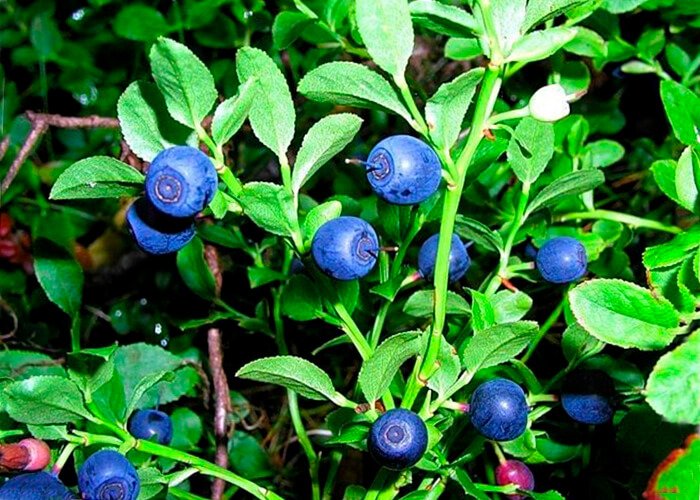
Not every conifer keeps its needles: the larch sheds its soft needles every autumn. Whether a tree loses its leaves depends on whether it can halt evaporation when cold arrives — more on this in Transpiration in plants. The same water-sealing trait is shared by some evergreen broadleaf shrubs of bogs and forests — bilberry, lingonberry, bog rosemary, cranberry, and others. In the far north and tundra, low evergreens outnumber leaf-shedding plants, because the short summer makes renewing leaves each spring unfavorable, so evergreen plants came to dominate there.
Deciduous and evergreen trees: what is the difference?
The difference between deciduous and evergreen trees is that deciduous trees drop all their leaves at once before an unfavorable season and grow a fresh set later, while evergreens shed and replace leaves gradually and so are never bare. No perennial plant keeps its foliage literally forever; the contrast is one of timing. This holds in temperate, cold, and hot lands alike.
Comparing the advantages and disadvantages
Each strategy carries its own trade-offs, summarized below.
- Deciduous advantage: shedding clears out leaves loaded with accumulated minerals and wear, prevents snow-load breakage, and stops winter water loss; the cost is rebuilding a whole canopy each spring.
- Evergreen advantage: retained, well-protected needles allow photosynthesis whenever conditions permit and spare the plant from rebuilding its foliage, a real benefit where summers are short; the cost is greater vulnerability to snow load and the need for water-sealing structures.
- Gradual renewal in evergreens: spruce needles live about seven years, so a mature spruce loses roughly a seventh of its needles each year, while pine needles live only two or three years, giving pines a more noticeable needle drop.
Anyone who gathered saffron milk caps in a young pine stand will have noticed dried pine needles mixed in with the mushrooms — this late-summer shedding is the pine's most significant leaf drop, and brushing a branch sends yellowed needles to the ground. Broadleaf evergreens renew their foliage the same way: a palm pushes out new leaves at the top while the lower ones continually die and dry.

Differences in habitat and climate
Whether a plant keeps or sheds its leaves depends above all on the environment it lives in. In warm regions without a dry season, trees and shrubs usually stay evergreen year round but still continually replace their leaves; travelers report that even in moist tropics without drought some trees lose all their leaves at once and stand in fresh foliage within a week or two — making leaf fall's role as a way of discarding accumulated excess substances especially clear. In deserts, plants such as saxaul and sand acacia have tiny leaves or none, sometimes reduced to scales or thorns, and the black saxaul even drops its thin assimilating twigs in the heat — a true twig-fall that is biologically equivalent to the leaf fall of our trees.
In the far north, leaf fall is barely noticeable. Winter arrives quickly after a short summer, and many dwarf, low shrubs and herbaceous plants go under the snow still green, some even with flower buds; northern plants have developed great cold-hardiness and resume growth in spring after wintering beneath the snow.

Wherever leaf fall is observed, none compares in beauty with that of temperate lands — our golden autumn. Our autumn is the most resplendent in the world because it is the longest: nature prepares unhurriedly for the transition from summer to the cold season when active life subsides, and each species has its own pattern, so the succession of autumn scenes follows a characteristic order.
Marcescence: trees that keep their leaves in winter
Marcescence is the retention of dead, dried leaves on a tree through winter instead of shedding them in autumn, and it is most common on young trees and the lower branches of certain species. The term comes from the Latin for "withering." In the regions where this is studied, marcescence is most often seen on beech and several oaks, and it can also be triggered or intensified by an early frost that kills the leaf before the abscission layer has fully formed.
What marcescence is and which trees show it
Marcescence is the persistence of withered leaves on otherwise deciduous trees, typically because the abscission layer never completes its development before the leaf dies. The phenomenon is concentrated on sexually immature trees and on the juvenile, lower portions of mature trees — saplings and the bottom branches keep their brown leaves while the upper crown drops them. Common marcescent trees include beech (Fagus grandifolia), several oaks, and understory species such as blue beech / hornbeam (also called musclewood) and hop-hornbeam / ironwood, while hickory and some others may show it to a lesser degree.
Why marcescence persists is debated, and several hypotheses have been proposed:
- Predation deterrent: a cloak of dry, low-nutrition leaves may discourage deer and other animals from browsing the tender buds and twigs beneath them.
- Wildlife shelter: retained leaves trap snow and provide cover, with persistent fruits and the sheltered structure benefiting some wildlife.
- Nutrient retention: holding leaves until spring and dropping them onto the ground just as growth begins may deliver decomposing leaf litter and nutrients exactly when the tree can use them.
- Water and microclimate: the dead leaves may help conserve moisture or buffer the buds against winter conditions on poor, dry, or exposed sites.
Leaf persistence in beech and oak
Beech and oak are the classic marcescent trees, holding bleached, papery leaves through the coldest months and finally releasing them in spring as new growth pushes the old leaves off. Among oaks, the pin oak (Quercus palustris) is well known for winter leaf retention, while the white oak and swamp white oak show their own distribution and behavior across their ranges. The dead leaves typically rattle on the tree until the buds swell in spring, when fresh expansion forces the marcescent leaves to finally drop — the timing of that spring leaf drop, rather than an autumn one, is the signature of a marcescent species.
How early frosts affect leaf retention
Early, rapid frosts increase leaf retention by killing the leaf before the abscission zone has finished forming, so the dead leaf stays clamped to the branch instead of separating cleanly. This is the same mechanism seen in the so-called "winter oak," whose autumn frosts often catch the tree before it is ready for leaf fall: frost kills the leaves and the tree stands nearly all winter in browned foliage. Such a tree evidently came from places with longer summers and later leaf fall, whereas a "summer oak" sheds on time, before the frosts, and stands bare; the valuable substances that the winter type fails to withdraw in time are, in the summer type, safely stored in branches and trunk.

Interestingly, experiments on extending oak's range northward show the later-leafing, later-shedding type has the better chance of establishing there. The summer oak leafs out early and so its young spring leaves are often killed by late spring frosts, while the winter oak, leafing later, escapes that harm — a reminder that the timing of leaf change can act as a sensitive indicator of local climate, and that nitrogen-rich conditions and fertilizer that delay dormancy can leave a tree exposed when cold arrives.
The role of leaf fall in the forest ecosystem
Leaf fall sustains the forest ecosystem by recycling nutrients into the soil, supporting wildlife, and helping maintain a balance among many tree species. The fallen canopy is not waste but the raw material of next year's growth, and the mix of leaf-shedding and evergreen species shapes the habitat for everything that lives among them.
Tree diversity and ecosystem balance
A diversity of deciduous and evergreen trees keeps a forest ecosystem in balance by spreading out leaf fall, nutrient release, and shelter across the year rather than concentrating it. Decomposing leaves feed the soil, as the litter-clearing experiment above demonstrated, and the steady contribution of fallen leaves to soil nutrients underpins the nutrient cycling on which the whole stand depends. Different species shed at different times and renew at different rates, so the system never empties or floods all at once.
Protection from wind and from browsing animals
Retained winter foliage and dense evergreen cover protect both the tree and the wider community from wind and from browsing animals. Marcescent leaves on beech and oak saplings may shield buds from deer, while evergreen stands break the wind and trap snow that insulates the ground. Even bare deciduous trees offer wildlife habitat — nesting sites and perches stand out clearly once the leaves are gone — so the seasonal stripping of the canopy is itself part of how the habitat functions.
The aesthetic and habitat value of winter foliage
Winter foliage and the bare winter forest both carry aesthetic and habitat value: marcescent leaves add color and rustle to an otherwise stark landscape, persistent fruits feed birds, and the open structure of leafless trees reveals nests and shelters. Watching these seasonal changes is a rewarding nature activity for all ages — collecting and identifying leaves, keeping a seasonal tree journal, observing when local species drop and refoliate, and even role-playing the parts of a tree are good ways for children to learn how forests work through the year.
Winter tree care and maintenance
Winter tree care centers on preparing trees before the cold, protecting them from snow and browsing, and timing pruning and feeding so they are not pushed into vulnerable growth. A few practical points carry most of the value:
- Support spring buds, not autumn growth: avoid heavy nitrogen fertilizer late in the season, since it can delay dormancy and leave new growth exposed to frost.
- Guard against snow and wind: young and flexible trees benefit from staking or wrapping where snow load would otherwise bend or break them.
- Protect against deer browsing: fencing or guards shield bark and buds where browsing pressure is high.
- Let dormancy do its work: cuttings taken in autumn or early winter will not open because the plant's required rest period is unfinished, whereas branches cut in January–February and placed in water leaf out and even flower — dormancy is physiological, not absolute.
- Plant in the right zone: field-grown nursery trees should be matched to local climate; abrupt change beyond a species' tolerance simply kills it, while gradual acclimatization within limits can let a plant thrive in a harsher climate.
At the same time the abscission layer forms, the tree lays down next year's buds and already determines whether each will be a leaf or flower bud; the buds then rest until spring.

The question of why trees shed their leaves is not only interesting but of real practical importance for acclimatizing plants — deliberately moving them into places with markedly different physical and geographic conditions, particularly a different seasonal temperature regime. For more on plants, science, and the natural world, browse our Nature and Astronomy sections.