Water Scorpion: Habitat, Bite, Life Cycle, and Fascinating Facts
 libre
libre
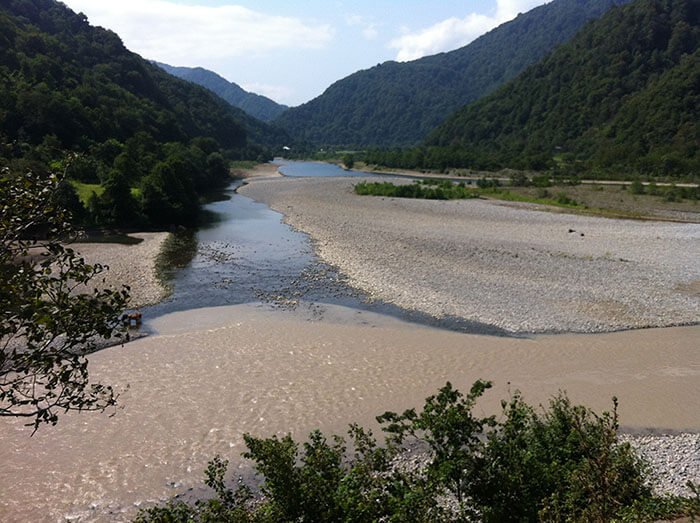
The water scorpion is a predatory aquatic bug, around 2 cm long, that ambushes prey while hanging head-down beneath the surface and breathing through a long tail-like tube. Despite the alarming name, the water scorpion is not a true scorpion and is harmless to people. It can be found in the floodplain of a spring in the second half of September, when these insects gather in numbers before winter.

Water scorpion: a general description
The water scorpion is a flattened, greyish-brown aquatic insect roughly 2 cm long or a little more, named for its pincer-like front legs and its slender tail rather than any link to land scorpions. It belongs to the true bugs and lives in still and slow freshwater, where it lurks among submerged plants and hunts smaller creatures. The forelegs grasp prey like claws, while the middle and hind pairs are used for walking and slow movement through the water.
Two very different body shapes share the common name. The broad, leaf-shaped forms belong to the genus Nepa (for example Nepa cinerea in Europe and Nepa apiculata in North America), while the long, twig-thin forms belong to Ranatra, often called water stick insects. Both carry the same hallmark traits: raptorial front legs, a piercing beak, and a breathing tube at the rear.
Taxonomy and classification
Water scorpions form the family Nepidae within the true bugs, order Hemiptera and suborder Heteroptera. As Heteroptera they share the defining feature of the group — forewings hardened at the base and membranous at the tip — and a piercing-sucking beak instead of jaws. They are close relatives of other aquatic bugs such as giant water bugs, backswimmers and water striders, and more distant cousins of the terrestrial assassin bugs.
The family Nepidae is usually split into two subfamilies that match the two body plans:
- Nepinae — the broad, oval-bodied water scorpions, including the genera Nepa and Laccotrephes.
- Ranatrinae — the elongated, stick-like forms, dominated by the genus Ranatra.
Notable species across these groups include Nepa cinerea, Nepa apiculata, the eyeless cave-adapted Nepa anophthalma, the Brown Water Scorpion (Ranatra fusca), Ranatra chinensis, and various Ranatra spp. distributed worldwide. The genus name Nepa is itself the Latin word for scorpion, which is where the common name ultimately comes from.
Appearance and body structure
A water scorpion has a flat, broad or narrow body depending on genus, a small head bearing a short pointed beak, large forward-facing eyes, and a pair of grasping front legs folded ready to strike. The most distinctive structure is the long thin tube projecting from the rear of the abdomen, which gives the insect its scorpion-like silhouette even though it is a breathing siphon, not a sting. In the broad Nepa forms the body resembles a dead leaf; in Ranatra it looks like a floating twig or stick insect.
Colour and visual features
Water scorpions are coloured in dull greys and browns that blend with mud, leaf litter and submerged stems, making them hard to spot against the bottom of a pond. The folded forewings — the leathery hemelytra that cover the back — share this drab tone, but hidden beneath them lie membranous flight wings that in Nepa show a greyish-pink shade. This muted camouflage is the foundation of the insect's ambush lifestyle, since it can sit motionless and effectively disappear among vegetation.
The breathing tube and how respiration works
The "tail" of a water scorpion is a respiratory siphon: a tube formed from two grooved filaments that, pressed together, channel air from the surface down to spiracles at the tip of the abdomen. The insect hangs head-down just below the surface film, pushes only the tip of this snorkel into the air, and draws oxygen while keeping its body hidden. It does not breathe water; it carries air to a film trapped under the wings, in much the same way a diver carries a tank of gas.
This trapped air layer functions like a physical gill, a natural version of scuba technology that lets the insect remain submerged with a stored air supply. With a reserve of air held against the body, a water scorpion can leave the surface and rest or hunt on the bottom for a time before returning to renew it. In summer the insect usually stays close to the surface to keep the siphon in contact with the air.
Raptorial forelegs and the beak
The head is armed with a short but strong, sharp beak (rostrum) that this predator drives into captured prey — mosquito larvae such as bloodworm bloodworm, small tadpoles and similar creatures. With the same beak it then sucks the prey dry. The front legs are raptorial: jackknife-like limbs whose segments snap shut to pin and hold struggling victims while the beak does its work.
Feeding is external digestion. The water scorpion injects saliva loaded with enzymes through the beak, which liquefies the soft tissues of the prey, and then draws the dissolved contents back up like sipping through a straw. The hardened forewings, or hemelytra, fold flat over the back during all of this and protect the membranous flight wings underneath.
Key features for identification
To tell a water scorpion apart from other pond invertebrates, look for this combination of traits:
- A long, thin breathing tube extending from the rear — the single most reliable clue.
- Pincer-like front legs held folded in front of the body.
- A flattened, drab grey-brown body, either leaf-shaped (Nepa) or stick-thin (Ranatra).
- A small head with a pointed beak and prominent eyes.
- Slow, deliberate movement rather than the rapid darting of swimming bugs.
Nymphs look like small wingless adults and already show the grasping forelegs, though their breathing tube is proportionally shorter and develops fully with maturity.
How a water scorpion differs from a true scorpion
A water scorpion is an insect, not an arachnid, and shares nothing but a passing resemblance with true scorpions. The "tail" carries no sting or venom — it is a breathing tube. The "pincers" are modified front legs for grabbing prey, not chelicerae or pedipalps. Water scorpions have six legs, antennae and wings, whereas true scorpions have eight legs, no antennae, no wings, and a venomous stinger. The shared name comes only from the broad body and tail-like appendage.
Comparison with similar aquatic insects
Among water bugs, the water scorpion is most easily confused with the larger giant water bugs, which also have raptorial forelegs and a piercing beak but are bulkier, stronger swimmers, and lack the long thin respiratory siphon. Backswimmers and water striders are unrelated in habit: backswimmers swim upside down rowing with oar-like legs, while water striders skate across the surface film. The table below summarises the differences.
| Insect | Body | Movement | Breathing/feeding clue |
|---|---|---|---|
| Water scorpion (Nepidae) | Flat, leaf- or stick-shaped | Slow crawling, weak swimmer | Long tail siphon; raptorial legs |
| Giant water bugs | Large, broad, oval | Active swimmer | Short breathing strap; raptorial legs |
| Backswimmers | Streamlined, boat-shaped | Swims on its back | Air bubble on underside |
| Water striders | Slender, long-legged | Skates on surface | Lives on the surface film |
Habitat and distribution
Water scorpions live in still and slow-moving fresh water, favouring shallow margins thick with submerged and emergent vegetation where they can ambush prey and reach the surface to breathe. Ponds, ditches, marshes, the edges of lakes, and slow streams are typical homes, and they tolerate weedy, muddy conditions that many insects avoid. Because they are poor swimmers, they stay close to plant stems and the bottom rather than open water.
Geographic distribution
Water scorpions occur on most continents, with the family Nepidae represented across Europe, Asia, the Americas, Africa and Australia. Nepa cinerea is the common European species; Nepa apiculata and Ranatra fusca are widespread in North America, from the Northeast and the Champlain Basin to Missouri, Maine and beyond. Distinct genera mark different regions — Laccotrephes across the Old World tropics, and endemic forms such as Goondnomdanepa in Australia.
In Britain and Northern Ireland the species is locally common in suitable wetlands. Recording schemes such as NatureSpot document its status in Leicestershire and Rutland, where observers including David Nicholls, Graham Calow, James Calow and Barry Clough have logged sightings at sites such as Broughton Astley, Higham-on-the-Hill and Gil Brook. North American occurrences are catalogued by Bug Guide and by extension educators including Kate Redmond of the UWM Field Station.
Water-body preferences
The insect prefers warm, sheltered, vegetated water with a soft bottom of mud and leaf litter, which both hides it and supports the small prey it depends on. Garden wildlife ponds readily attract water scorpions once plants establish, and the species is a welcome sign of a maturing pond ecosystem. Organisations such as The Wildlife Trusts, the RHS, Wild About Gardens, Pond Informer and Vine House Farm encourage creating and maintaining wildlife ponds precisely because they support invertebrates of this kind.
Lifestyle and behaviour
Water scorpions are sit-and-wait predators that spend most of their time motionless, clinging to vegetation with the breathing siphon raised to the surface. They are slow, clumsy swimmers and rely on stealth rather than speed. Though chiefly aquatic, adults can fly, and they take to the air mainly at night to disperse between water bodies — a habit that lets them colonise new ponds and escape drying habitats.
Ambush hunting and camouflage
The hunting strategy is pure ambush: the water scorpion hangs still among stems, its drab body indistinguishable from a leaf or twig, and waits for prey to wander within reach of its folded forelegs. When a victim comes close, the raptorial legs snap shut with a sudden grab, the beak is driven in, and the struggle is over quickly. This combination of camouflage and a lightning strike makes a slow-moving insect an effective predator without ever giving chase.
Diet and feeding
Water scorpions are carnivores that eat whatever small aquatic animals they can seize and pierce, including mosquito and other insect larvae, water fleas, small crustaceans, tadpoles and even tiny fish or fish fry. Prey is grasped with the front legs, stabbed with the beak, injected with digestive saliva, and sucked dry. By preying heavily on mosquito larvae, water scorpions help limit populations of biting insects in their wetlands.
Seasonal behaviour and overwintering
In summer water scorpions keep near the surface, but as autumn arrives they move down and pass the cold months on the bottom of the water body. In the example that opens this page, water scorpions from many floodplain pools fly together to a spring that does not freeze, gathering there to overwinter. Through winter their metabolism slows and they remain largely inactive at depth until warmth returns in spring, becoming active again to feed and breed.
Life cycle: from egg to adult
Water scorpions develop by incomplete metamorphosis, passing through egg and nymph stages directly into the winged adult, with no pupal phase. The sequence runs as follows:
- Eggs: the female lays eggs in spring or summer, inserting them into the stems of aquatic plants or floating debris. The eggs bear several thread-like respiratory filaments that project into the water and supply oxygen.
- Nymphs: wingless young hatch resembling miniature adults, already equipped with grasping forelegs and a short breathing tube, and begin hunting small prey at once.
- Moulting: nymphs grow through a series of moults, typically five instars, the wing pads and the siphon lengthening at each stage.
- Adult: the final moult produces the fully winged adult capable of flight and reproduction.
The whole cycle generally takes a single year, with adults often overwintering and breeding the following season, giving an adult lifespan that can extend across roughly a year or more.
Ecological role in freshwater systems
As mid-level predators, water scorpions help regulate populations of insect larvae and other small invertebrates, contributing to the balance of pond and wetland food webs. They are in turn prey for larger animals — fish, amphibians, water birds and predatory invertebrates — so they pass energy upward through the ecosystem. Their presence is also a useful indicator of a healthy, well-vegetated freshwater habitat, which is why aquatic ecologists such as J. Reese Voshell Jr. and Declan McCabe treat the family as part of the standard picture of pond life.
Is the water scorpion dangerous to humans?
The water scorpion is harmless to people: it has no sting and no medically significant venom, and the tail that looks threatening is only a breathing tube. If handled roughly it can deliver a defensive jab with its piercing beak, which may sting briefly like a pinprick but causes no lasting harm. The sensible approach is simply to observe it or move it gently with a net rather than grip it, and it will quickly settle once left alone.
Evolution and the fossil record
Water scorpions are an ancient lineage with a fossil record stretching back tens of millions of years, showing that the body plan of raptorial legs and a breathing siphon has changed little over deep time. Extinct relatives such as Araripenepa from the Cretaceous Crato Formation of Brazil preserve these features in detail, confirming an early origin for the family Nepidae. Despite the shared name, this history is entirely separate from that of true scorpions and from the long-extinct eurypterids, or "sea scorpions," with which they are sometimes loosely compared.
Water scorpions in education and culture
Water scorpions are popular subjects in entomology teaching because they are easy to find, distinctive to identify, and demonstrate predation, camouflage and aquatic respiration in one animal. Students collecting and preserving specimens for museum collections often start with pond bugs like these, guided by extension resources from organisations such as Cooperative Extension and university field stations. The Brown Water Scorpion even lends its scientific name, Ranatra fusca, to an award in the Odyssey of the Mind creative-problem-solving competition. Research into the insects of the Northeast — including work supported by Vermont EPSCoR and the National Science Foundation at institutions such as Saint Michael's College, with contributors like Scott Lewins — keeps adding to what is known about their ecology, while popular naturalists from Edwin Way Teale onward and outlets like Northern Woodlands magazine and the Wisconsin Department of Natural Resources help bring them to a wider audience.