Varieties of Forest: Types, Classification, and Key Examples
 libre
libre
Forests are commonly grouped into types according to the dominant trees, the understory beneath them, and the soil and climate that support them — a classification that began with everyday folk names and was later placed on a scientific footing. The earliest distinctions between forest varieties came from observations made by ordinary people, while the practical, scientifically developed division of forests into types was the work of G. F. Morozov, the founder of forest science, together with other forestry researchers.

What are the basics of forest classification?
Forest classification rests on the principal species of trees that make up the stand, together with the lower-growing trees of the understory, the shrubs, and the most characteristic grasses, mosses, and lichens of a given forest. Each forest type usually corresponds to particular soil conditions as well, so the vegetation and the ground beneath it are read together as a single ecological signature.
How was the study of forest types developed, and what did G. F. Morozov contribute?
G. F. Morozov gave the study of forest types its scientific structure, transforming scattered folk observations into a coherent doctrine of the forest as a living community. He argued that a forest is not merely a collection of trees but an interdependent system whose composition reflects climate, soil, and the mutual influence of its plants. His central idea — that forests "flow through time" — remains one of the most enduring contributions to forest ecology, and it underlies the modern understanding of forest succession.
How are the forests of central Russia divided?
The forests of the central belt of European Russia have long been divided into three groups: krasnolesye (coniferous forests), chernolesye (deciduous forests), and mixed forests made up of both coniferous and deciduous trees. This threefold split is the oldest practical scheme in the region and still frames how local forests are described.
What distinguishes krasnolesye, chernolesye, and mixed forests?
Krasnolesye refers to coniferous stands dominated by pine and spruce, prized for their straight, durable timber, while chernolesye covers broadleaved deciduous trees that shed their leaves each autumn. Mixed forests combine the two, blending the evergreen canopy of conifers with the seasonal rhythm of deciduous trees and supporting a wider range of understory life than either pure type.
What do the old Russian names bor, suborь, ramen, and sogra mean?
From the tree species growing on the various northern soils came old Russian names for forest varieties: bor, suborь, ramen, sogra, krasnaya ramen, and others. These names encode soil and moisture conditions as much as species:
- Bor — a pine forest on sandy, usually elevated or hilly ground;
- ramen — predominantly a spruce forest on clay or loamy soils;
- sogra — a damp pine forest mixed with spruce, birch, and other trees.
How is pine forest subdivided?
Pine forests are themselves subdivided according to the ground vegetation and timber quality, distinctions peasants noticed long ago and which still map neatly onto soil moisture.

What are bor-yagodnik, sogra, and myandovaya pine?
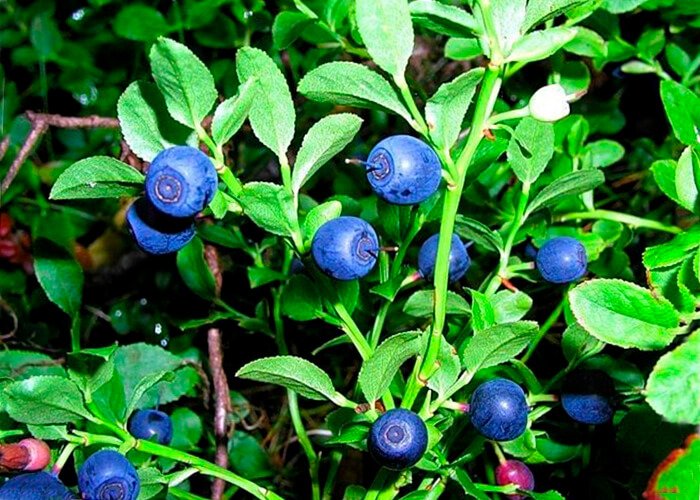
- The best structural (kondovaya) pine, with strong, slightly reddish wood, grows in the bor-yagodnik — a pine stand with abundant berry shrubs below, especially bilberry.
- In the sogra, the pine has a tapering trunk that thins quickly toward the top and is therefore poorly suited to construction. This myandovaya pine is coarse-grained, with insufficiently durable wood.
Where does the most resinous pine grow — the bor-belomoshnik?
The most resinous pine grows in the bor-belomoshnik, where the ground beneath the trees is carpeted with light-gray reindeer lichen. The dry, lichen-covered floor signals nutrient-poor, freely drained sand, and the trees respond with dense, resin-rich wood.
What are the principal forest types?
Many forest types are now widely recognized by names that combine the dominant tree with its characteristic ground cover, including:
- bor-belomoshnik (or lichen pine forest);
- sosnyak-brusnichnik (pine with lingonberry below);
- bor-chernichnik (pine with bilberry);
- elnik-kislichnik (spruce with wood-sorrel grass);
- oak-maple-goutweed stand (oak with maple in the understory and goutweed, an umbellifer herb, on the ground).

Where do the folk names of forest types come from?
Most names of these forest types were created by ordinary people who read the land through its plants. The naming reflects practical knowledge — which ground cover predicts good timber, which predicts boggy soil — accumulated over generations of living and working in the forest.
What principles underlie classification by vegetation composition?
Forest classification by vegetation rests on the main species of tree that forms the forest, together with the understory trees beneath it (the lower-growing ones), the shrubs, and the grasses, mosses, and lichens most characteristic of that forest. Because each combination of plants thrives only under particular soil and moisture conditions, the vegetation type doubles as a reliable indicator of the site itself, which is why this system has proved so durable in field forestry.
How are forests classified by layers?
The complex relationships among the plants that make up a forest are determined above all by how those plants are arranged in vertical layers, or strata. This layering controls light, temperature, and humidity inside the forest, and learning to read it is essential to understanding how forest plants interact.
What are the three main forest layers?
A forest has three principal layers:
- the upper layer, composed of tall, full-stemmed trees;
- the middle layer, of low trees and shrubs growing under the canopy of the large trees;
- the lower layer, the living forest floor: grasses, small low shrubs (lingonberry, raspberry), and mosses and lichens.
Some foresters treat a single layer — the understory, for instance — as several (two or three) strata, since the understory may consist of low trees beneath the main canopy and shrubs growing below those. The lower layer likewise sometimes splits into separate strata.
How does canopy structure control light penetration?
Light availability changes dramatically from the top of the canopy to the forest floor, and this gradient shapes which plants can live where. The tall trees of the upper layer hold their crowns directly in bright sunlight; less light reaches the understory; and the plants of the lower layer must usually make do with weak, diffuse light. Shade tolerance therefore increases from the highest tier to the lowest. Light conditions for the lower layer also differ greatly between forests, depending on tree density, the composition of the understory, and whether the canopy trees are light-demanding or shade-tolerant.
Why is oak forest the clearest example of complex layering?
The most complex forest in the central belt of European Russia is the oak forest, where five or six layers can often be distinguished: oak at the top, low trees beneath it, then shrubs, then tall grasses rising above a layer of low herbaceous plants and mosses. The relationships among organisms in an oak grove are therefore far more intricate and varied than in a bor-belomoshnik, which often has just two layers — pines above and a sparse carpet of lichens and rare grasses below.

How do living conditions differ between forest layers?
Each forest layer has its own microclimate, even when the layers differ only slightly in height. Conditions in every stratum vary in temperature, humidity, light, wind strength, and many other factors, so each layer of any stand carries its own distinct set of climatic conditions. The difference in illumination is especially pronounced, which is why shade-loving plants concentrate near the floor while light-demanding species reach for the canopy.
How does animal life distribute across forest layers?
Forest animals are often tied to a particular layer — the many birds that nest in the forest being a clear example, with different species favoring the canopy, the shrub layer, or the ground. Because layering varies from forest to forest, so does the range of animal habitats: a richly stratified oak grove offers far more niches than a two-layered lichen pine forest.
How does one type of forest change into another?
Forests, in Morozov's words,
flow through time,
meaning that one type gradually gives way to another. The plants making up any forest type alter their own living conditions through their life activity; the composition shifts, some species disappear and others appear, and a new type of forest community slowly emerges. Each forest variety also corresponds to its own different kinds of mushrooms.
Natural disturbances — fire, mass outbreaks of pests, and the like — often destroy a forest and drive the replacement of one forest community by another, or by a non-forest community such as a bog or meadow.

A meadow can be the result of one forest community replacing another forest or non-forest community. A bor-chernichnik (bilberry pine forest) may gradually pass into a bor-brusnichnik (lingonberry pine forest). This shift in the ground-layer plants — bilberry giving way to lingonberry — signals a change in the forest's living conditions, above all a change in the moisture of the soil layer.
The appearance of green mosses, then haircap moss, and finally white sphagnum moss points to further waterlogging of the forest. This is the first indicator of change. Shifts in the upper layer follow those below but happen far more slowly: only over a long time can a tall pine forest, through waterlogging, turn into pine-on-bog.
With the death of pine in such a forest, a qualitatively new community — a moss bog — arises in place of the forest community. The same pine often still lives here (stunted, of the bog form), but it is no longer the dominant, leading plant it was in the bor.

What are coniferous forests and how do conifers adapt?
Coniferous forests are dominated by needle-leaved, mostly evergreen trees such as pine, spruce, fir, and larch, and they form the bulk of the world's evergreen coniferous forests across the cold and temperate north. These trees are built for harsh, nutrient-poor, often cold or dry conditions, which is why they thrive where broadleaved species struggle.
How do coniferous trees adapt to their environment?
Conifers carry several adaptations that suit them to severe climates:
- narrow, waxy needles that lose little water and shed snow easily;
- a conical crown that prevents heavy snow from breaking branches;
- evergreen foliage that lets photosynthesis resume the moment conditions allow, without waiting to grow new leaves;
- resin that protects against insects, fungi, and freezing damage.
The Norway Spruce, widely planted across Europe, illustrates these traits, and managed stands such as the Niepołomice Forest in Poland have long served as study sites for conifer growth and physiology.
What are boreal forests (the taiga)?
Boreal forests, also called the taiga, form the vast belt of cold-climate coniferous forest stretching across the far north of Europe, Asia, and North America. The taiga is the largest land biome on Earth and a cornerstone of the planet's coniferous forest cover, ringing the globe just below the Arctic tundra.
What are the climate and conditions of boreal forests?
Boreal forests endure long, very cold winters and short, cool summers, with a brief growing season of only a few frost-free months. Precipitation is moderate, much of it falling as snow, and soils are generally acidic, thin, and slow to decompose because of the cold. These conditions favor hardy conifers over broadleaved trees across most of the biome.
What are the types of taiga and the role of permafrost?
The taiga ranges from closed-canopy forests in its warmer southern reaches to open, sparse "lichen woodland" near the tundra edge, where trees stand far apart over a carpet of lichen. Much of the boreal zone sits over permafrost — permanently frozen ground — which blocks drainage, promotes waterlogging, and limits how deep roots can grow. Across regions such as Alberta in Canada, this combination of permafrost and poor drainage produces extensive peatlands within the forest.
What vegetation and wildlife characterize the taiga?
Taiga vegetation is dominated by spruce, pine, fir, and larch, with an understory of mosses, lichens, and cold-hardy shrubs such as bilberry and lingonberry. Its wildlife includes moose, caribou, brown bears, wolves, lynx, snowshoe hares, and a wealth of migratory birds that arrive for the brief, insect-rich summer. Protected expanses such as Jasper National Park in the Canadian Rockies preserve large tracts of this ecosystem.
How do species adapt to boreal forest conditions?
Boreal species survive the cold through specialized adaptations: many mammals grow thick fur and a winter coat, some hibernate, and others, like the snowshoe hare, turn white for camouflage against snow. Trees tolerate freezing through resin, needle leaves, and the conical form described above, while migratory birds simply avoid winter altogether by leaving. This tight fit between organism and climate makes the taiga one of the clearest demonstrations of ecological adaptation.
What are deciduous and broadleaved temperate forests?
Temperate forests grow in the mid-latitude zones of the Eastern United States, Europe, China, and similar regions with four distinct seasons, moderate rainfall, and fertile soils. Temperate Coniferous Forests also occur in mild, wet regions such as the Pacific Northwest, but the classic temperate forest is the deciduous broadleaf type, whose trees drop their leaves each autumn and regrow them in spring.
Temperate deciduous forests are defined by a clear seasonal rhythm and a growing season of roughly five to seven months. Their characteristics include:
- a leaf cycle of spring budburst, summer canopy, autumn color, and winter dormancy;
- rich, deep soils built up from decomposing leaf litter;
- a layered structure of canopy, understory, shrub, and herb layers;
- wildlife such as deer, foxes, squirrels, songbirds, and a host of insects.
Historically these forests covered much of Europe and the Eastern United States but were heavily cleared for agriculture — a process pushed in medieval Europe under rulers such as Charlemagne. In the Great Lakes region, the beech-maple forest is a signature temperate community, while the southern Appalachian Smoky Mountains hold some of the most species-rich temperate forest in the world.
How are temperate forests distributed across Pennsylvania and the eastern US?
Pennsylvania's mild, humid climate and varied soils support a mosaic of temperate forest types, from oak-hickory stands on warm, dry slopes to northern hardwood forests of beech, maple, and birch at higher, cooler elevations. The state's geology shapes its forests in striking ways: the Ridge and Valley and Allegheny Front regions carry distinct assemblages, shale and limestone barrens host drought-tolerant communities, and rare serpentinite-rock soils produce specialized "serpentine barren" forests. Along the Delaware River and on the Atlantic Coastal Plain, swamp forests and coastal-plain species occupy wetter ground, while mesophytic forests of mixed hardwoods fill sheltered, moist valleys.
How did chestnut blight reshape these forests?
The American chestnut was once a dominant canopy tree across the eastern US, but the introduced fungal disease known as chestnut blight wiped out billions of trees in the early twentieth century, fundamentally reshaping Pennsylvania's forests. Oak and hickory expanded to fill the gap, permanently altering the hardwood species mix and demonstrating how a single pathogen can rewrite an entire forest community.
What native species characterize Michigan's forests?
Michigan is roughly half forested, with conifers and northern hardwoods concentrated in the Upper Peninsula and beech-maple and oak-hickory forests more common in the Lower Peninsula near Lake Michigan and Lake Erie. Native trees include sugar maple, American beech, eastern white pine, red oak, and quaking aspen. Forestry guidance from Michigan State University Extension, Michigan Technological University, the Michigan Society of American Foresters, and specialists such as Bill Cook, Leefers, and Dickmann documents these native species and the best management practices that sustain them.
What are tropical rainforests?
Tropical rainforests grow in the warm, wet equatorial belt and hold the greatest concentration of biodiversity on Earth. Tropical Forests as a whole — including evergreen rainforest, tropical moist forest, and tropical dry forest — span the Amazon rainforest, the Congo Basin Forest, the forests of Madagascar, and Southeast Asia, and together they store enormous amounts of carbon and shelter a majority of the world's land species.
Tropical rainforest is defined by year-round warmth, very high rainfall, and dense, layered structure:
- extraordinary species richness, with thousands of tree species and countless insects, birds, and mammals;
- a tall closed canopy with emergent giant trees, beneath which little light reaches the floor;
- surprisingly poor, thin soils, with nutrients held in the living biomass and recycled rapidly through fast decomposition;
- high primary productivity and biomass per hectare.
Tropical moist forests experience a wetter and a slightly drier season, while tropical dry forests endure a long dry period that drives many trees to shed their leaves — a striking adaptation to seasonal drought. Coastal mangrove forests, with their stilt roots and salt tolerance, fringe tropical shores and protect coastlines from erosion. Field research organizations such as Operation Wallacea, run by the Wallacea Trust, mount expeditions to sites like Madagascar's Ranomafana National Park to monitor this biodiversity.
What makes cloud forests unique?
Cloud forests are montane tropical forests that sit in a near-constant belt of cloud and mist, usually on mountain slopes at altitudes where moisture condenses against the cooler air. Montane Forests change with elevation, and cloud forests occupy the band where persistent fog drips directly onto leaves, supporting dense growths of mosses, ferns, and epiphytes found nowhere else. Their unique combination of cool temperatures, saturated air, and altitude makes them both extraordinarily rich and especially vulnerable to a warming climate.
How do forests regulate rainfall?
Forests, and tropical rainforests above all, recycle moisture back into the atmosphere through transpiration, generating much of their own rainfall. In the Amazon, water from the Solimões River and its tributaries evaporates and is repeatedly recycled by the forest, so that the trees effectively maintain the rainfall they depend on — a feedback loop that large-scale Deforestation can break, drying the region and threatening the whole system.
How are the world's forests distributed geographically?
Forests follow latitude and climate in broad bands across the Earth: tropical forests near the equator, temperate forests in the mid-latitudes, and boreal forests in the cold far north, with Subtropical Forests and Mediterranean Forests filling the transitions. This biogeographic pattern reflects how temperature and rainfall set the limits for tree growth.
Mediterranean Forests, found around the Mediterranean and in similar climates, are adapted to hot, dry summers and mild, wet winters, with tough, drought-resistant evergreen leaves and frequent fire-adapted shrublands. Open-canopy forest types and savannas grade between dense forest and grassland where rainfall is too low or seasonal for a closed canopy. Mapping these distributions, and tracing how forests evolved, reveals the deep history of vegetation on land.
What is the evolutionary history of forests?
Forests evolved over hundreds of millions of years, from the first land plants of the Silurian Period to the diverse biomes of today. Early tree-like plants such as Calamophyton and the more advanced Archaeopteris appeared during the Paleozoic and built the first true forests; by the Triassic Period and Cretaceous Period, conifers and later flowering plants spread, sharing Cretaceous landscapes with dinosaurs such as Tyrannosaurus rex. The Pleistocene Ice Ages then repeatedly pushed forests toward the equator and back, shaping the distributions we see now. Paleontology resources from the University of California Museum of Paleontology (UCMP) at UC Berkeley and the California Academy of Sciences document this long record.
How do forests interact with climate, and how do they adapt?
Forests both shape and respond to climate, regulating water, moderating temperature, and storing vast amounts of carbon while also adjusting to changing conditions. Their physiological ecology — how trees use water, light, and nutrients — determines their productivity and their resilience, a field advanced by researchers such as Joe Landsberg and Richard Waring and published by houses including Springer Nature and Island Press.
How do forests store carbon?
Forests are among the planet's largest carbon stores, locking carbon in their wood, leaves, roots, and soils through photosynthesis. This carbon sequestration makes forests central to climate regulation: as trees grow they pull carbon dioxide out of the atmosphere, and intact forests hold that carbon for decades to centuries, which is why protecting and expanding them is a key climate strategy.
How does carbon storage differ between forest types?
Different forest biomes store carbon in different ways and amounts. Tropical rainforests hold most of their carbon in dense aboveground biomass, while boreal forests store enormous quantities below ground in cold, peaty, slowly decomposing soils — making boreal soils one of the world's biggest terrestrial carbon reservoirs. Temperate forests fall between the two, balancing biomass and soil carbon. This is why disturbing boreal peat or clearing tropical forest releases such large quantities of stored carbon.
How does climate change affect forest resources?
Climate change is altering forests through shifting temperatures, changing rainfall, more frequent droughts, larger wildfires, and expanding pest outbreaks. These pressures move species ranges, stress trees adapted to former conditions, and threaten the carbon and water services forests provide. Adaptation — both natural and through forest management — is increasingly central to keeping forests healthy, and new monitoring tools, including satellite remote sensing and platforms such as The Grove and the data products of Global Forest Watch, allow change to be tracked in near real time.
How are forests defined administratively and legally?
Beyond ecology, forests are also defined administratively and legally, through land-use and land-cover classifications and statutes that govern how forested land is managed. The Food and Agriculture Organization (FAO) sets the most widely used international definition — broadly, land with a minimum tree cover, height, and area — and reports global figures through its Global Forest Resources Assessment 2025, while bodies such as the United States Department of Agriculture and the IUCN apply their own legal and conservation categories.
National and state laws add further definitions and protections. In the United States, the Federal Clean Water Act of 1972 protects forested wetlands and riparian buffers, and Michigan's Michigan Natural Resources and Environmental Protection Act of 1994 governs forest and wetland use at the state level, including the wetland protection regulations that shape how swamp and riparian forests can be altered.
What threatens forests, and what is deforestation?
Deforestation — the permanent clearing of forest for other uses — is the greatest threat to the world's forests, driving biodiversity loss, carbon emissions, and disrupted water cycles. Global assessments show that tropical forests in particular continue to be lost at high rates, with consequences ranging from species extinction to regional drying and climate feedbacks. Organizations including the World Resources Institute, the Millennium Ecosystem Assessment, and analysts such as Meaghan Weeden and Emily Wilkinson document these trends and their costs to human well-being and ecosystem services.
Which commodities drive deforestation?
A handful of commodities drive most tropical deforestation, as forest is cleared to make way for their production:
- cattle ranching, the single largest driver in the Amazon;
- soy, much of it grown for animal feed;
- palm oil, especially in Southeast Asia;
- timber and pulpwood, including from forest plantations;
- mining and infrastructure that open previously remote forest.
Reducing this pressure means changing how these commodities are produced and sourced, alongside restoration goals such as the Bonn Challenge, which aims to bring hundreds of millions of hectares of degraded land back into forest, supported by reforestation groups like One Tree Planted.
What threats face boreal forests?
Boreal forests face mounting threats from logging, oil and gas development, and intensifying wildfires driven by climate change. Clearing or burning boreal forest is especially damaging because it releases carbon stored in deep peat soils that took thousands of years to accumulate. Old-growth boreal stands such as the Tongass forest are also targets for industrial logging, putting both biodiversity and a globally important carbon store at risk.
What is community-based forest management?
Community-based forest management gives local and Indigenous communities the rights and responsibility to manage nearby forests, and it has proven one of the most effective ways to slow deforestation. When the people who live in and depend on a forest control its use, they have a direct stake in keeping it intact, balancing timber, food, and ecosystem services over the long term. This approach increasingly anchors future forest conservation strategies alongside protected areas, restoration targets, and the technological monitoring that now tracks forest change worldwide.