Sweet Flag (Acorus Calamus): Description, Photo, and Uses of the Calamus Swamp Plant
 libre
libre
Calamus (Acorus calamus), also called sweet flag or marsh calamus, is a tall perennial wetland herb that grows along riverbanks and especially in floodplain water bodies. This page describes the plant and shows photographs so you can recognize it among other riverside vegetation.

Calamus: plant description and photo
Calamus is a perennial that reaches up to about one and a half metres in height and forms dense stands in shallow water and along wet shores. The plant is easily identified by its sword-shaped leaves, its flattened flowering stem, and the small cone-like spadix, all rising from a thick, branching rhizome anchored firmly in the bottom sediment.
Botanical description of calamus
The botanical structure of calamus combines a stout underground rhizome, narrow upright leaves, and a leaf-like flowering stem, all adapted to life rooted in waterlogged ground. Each part carries the aromatic essential oil that gives the plant its characteristic spicy scent when cut.
The rhizome of calamus
The rhizome of calamus is fairly thick, long and branching, serving as both the plant's anchor and its food store. Its upper side bears scars left by fallen leaves, while the lower side carries numerous adventitious roots that fix the plant securely into the bottom mud. Older sections of the rhizome are red on the outside and the younger parts are green; when cut, the rhizome releases a spicy aroma produced by its essential oil and reveals a high starch content.
Leaves and stem
From the tip of the rhizome rises a fan of long, narrow, sword-shaped leaves that also contain the essential oil — the scent becomes noticeable when a leaf is cut or rubbed between the fingers. Alongside the leaves grows a long flowering stem that is strongly flattened and closely resembles a leaf: it is sharply edged along one side and grooved along the other. At its top sits a small, conical spadix with a blunt tip, and a short leaf attached at the base appears to continue the line of the stem.
Air passages and adaptation to the aquatic environment
Calamus is adapted to standing in water through internal air passages that run the length of its stem and leaves. Under a hand lens, a cross-section of the stem and leaves clearly shows the openings of these air channels, through which air reaches the rhizome and the roots below the waterline. The system is so open that you can blow bubbles of air through a cut piece of leaf into water, which illustrates how the submerged organs receive oxygen.
Flowers of calamus
Calamus was introduced from the East, and in our climate it flowers but does not set fruit. If the spadix is cut lengthwise, you can see numerous tiny flowers seated on its white, thickened axis. Each flower has a single green pistil surrounded by six stamens with pale-brown anthers.

Propagation of calamus
Calamus reproduces by its rhizomes rather than by seed. The above-ground organs die back in autumn, but the rhizomes live on for many years. In winter they freeze into the shoreline ice, and in spring the moving ice floes often tear them from the bottom and carry them downriver. When the floodwater recedes, some ice floes carrying rhizomes are left stranded in the floodplain along the banks; once the ice melts, the rhizomes take root in the moist soil and spread into new stands.
Where calamus grows: habitats
Calamus grows in shallow, still or slow-moving fresh water, favouring the margins of rivers, ponds and marshes where its roots stay permanently wet. It spreads readily wherever flowing water can transport its rhizomes and deposit them on damp ground.
Floodplain water bodies and riverbanks
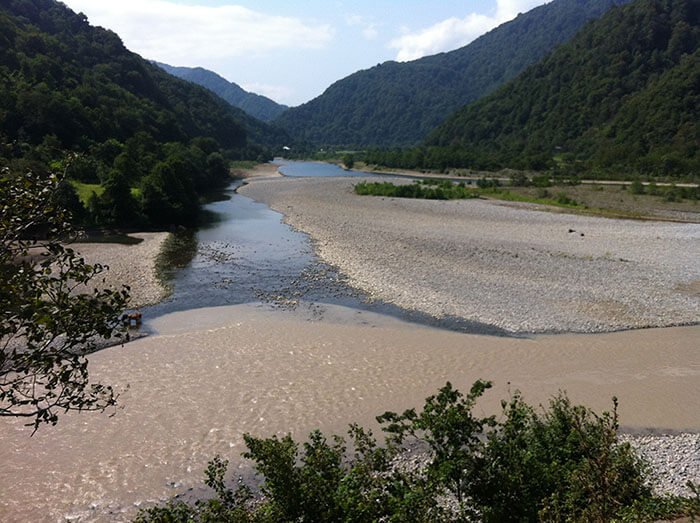
Floodplain water bodies and gently sloping riverbanks are the classic habitat for calamus, because spring floods both disperse the rhizomes and leave them on saturated silt where they re-root easily. Along such shores the plant forms broad colonies in the shallows, mixing with reeds and sedges at the water's edge.
Marshes and waterlogged ground
Marshes and waterlogged depressions also support calamus, where the constantly soft, oxygen-poor soil suits its air-conducting tissues. In these wetland sites the plant can dominate large patches, its sword-shaped leaves standing well above the surrounding low vegetation.
How to tell calamus apart from similar plants
Calamus is most reliably distinguished from look-alike riverside plants by smell and by the structure of its flowering stem. Several wetland species — reeds, irises and bur-reeds — have similar narrow, upright leaves, but only calamus combines them with the following features:
- A strong, spicy aroma released when a leaf or piece of rhizome is cut or rubbed.
- A flattened, leaf-like flowering stem that is sharp along one edge and grooved along the other.
- A small, oblique, cone-shaped spadix emerging from the side of the stem rather than a showy flower.
- A red-skinned older rhizome that is green at the growing tips and packed with starch inside.
When in doubt, crush a fragment of leaf: the warm, aromatic scent immediately separates calamus from the odourless leaves of irises and reeds.
Uses of calamus
Calamus is valued chiefly as a medicinal plant and as a source of aromatic essential oil. Both the rhizome and the oil extracted from it have long-standing uses, though the rhizome is the part most often gathered.
Calamus in folk medicine
In folk medicine the rhizome of calamus is used as a remedy for heartburn: when heartburn is severe, people simply chew a small piece of the root. The same bitter, aromatic rhizome has traditionally been taken to stimulate appetite and digestion, which is why it appears in many old herbal preparations.
Use of calamus essential oil
The essential oil distilled from calamus rhizomes is used in the cosmetics industry and as a flavouring in confectionery. Its warm, spicy character makes it a valued aromatic ingredient, and the oil concentrates the same fragrance that you notice on a freshly cut leaf.
Timing and rules for harvesting calamus
Calamus is harvested for its rhizomes, which are dug after the growing season once they have accumulated the most oil and starch. The exact collection dates for calamus are given in the calendar for gathering medicinal plants.
Harvesting and drying the rhizomes
Rhizomes are lifted from the mud, washed, freed of roots and leaf remains, and split lengthwise before drying so they dry evenly. To preserve the aromatic oil:
- Dry the split pieces in a shaded, well-ventilated place rather than in direct heat.
- Keep drying temperatures low, since high heat drives off the volatile essential oil.
- Store the finished rhizome in closed containers to retain the spicy scent.
How to photograph calamus in the wild
Photographing calamus successfully means working at the water's edge to capture both the upright sword-shaped leaves and the distinctive spadix in their natural setting. Because the plant grows in reflective shallow water, careful attention to light and composition turns an ordinary record shot into an attractive image.
Choosing the time and light for shooting
The best light for calamus comes at dawn or in the soft hours before sunset, when low-angle sun rakes across the leaves and the water surface is usually calmest. Overcast skies also work well, giving even illumination that reveals the green-and-red colouring of exposed rhizomes and avoids harsh shadows between the dense leaves.
Composition when shooting waterside plants
When composing waterside plants like calamus, use the still water as a mirror and place the spadix or a leaf cluster off-centre for a balanced frame. A few practical pointers:
- Get low, close to the water line, so reflections of the leaves double the composition.
- Include surrounding reeds or open water to show the plant's natural floodplain habitat.
- Move in close for a detail shot of the cone-shaped spadix to document the identifying feature.
- Watch the background so bright sky or clutter does not overpower the slender leaves.
Photo gallery of calamus
The photographs on this page show calamus in its natural riverside and marsh habitat, from full stands of sword-shaped leaves to close views of the rhizome and spadix. Together with the description above, the images make it easier to recognise calamus among the many grasses and herbs that crowd the water's edge.