Logging Rules: Understanding Forest Management and Timber Harvesting
 libre
libre
Logging rules are the legal and technical requirements that govern how, where, and how much timber may be cut — and they exist to balance harvesting wood against keeping the forest healthy and renewable. Many people do not know these rules and oppose any intervention in the life of the forest at all.

What are logging rules and why is cutting forest controversial?
Logging rules combine harvesting practice, reforestation duty, worker safety, and transport law into one framework that lets timber be removed without destroying the stand that produced it. The controversy is easy to picture: great giant trees stand healthy, powerful, and pleasing to the eye. Then a person comes, fells them, hauls them away, and where a mighty grove stood there is now bare ground. Voices of protest are often raised — that this is real barbarism, that we should not be doing it.
The century-old pine forest and the natural aging of trees
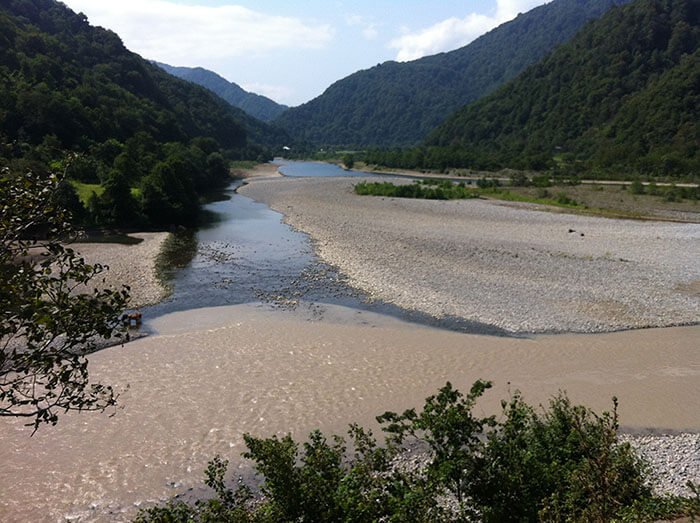
The opponents of cutting are not always right, and a closer look at a century-old pine forest explains why. On a riverbank a century-old pine forest rustles, and beneath its canopy the undergrowth — the forest of the future presses close. The young growth has no way to compete with its powerful parents for light and soil nutrition. Yet the lifespan of those parents draws nearer to its finish line with each passing year. This natural aging is the starting point for nearly every harvesting decision.
Why are sick and old trees cut down?
Sick and old trees are cut because, once they begin to die, they stop bearing seed and become a source of infection that endangers the rest of the stand. Dead crowns appear, the trees weaken, and they no longer have the strength to fruit. Pests and diseases of every kind attack them. Being diseased themselves, they spread the contagion to neighbouring trees.

The benefit of sanitary felling for the stand
Sanitary felling protects a stand even along rivers and lakes, where the impulse to preserve large trees is strongest. Do we have the right to cut diseased, overgrown trees in such places? Yes — felling sick trees is necessary even on riverbanks. From cutting these old and diseased trees we gain two things: we protect the stand from infection by pests and disease, and we give the undergrowth more light and soil nutrition, thereby helping a new young forest emerge.
Cutting young trees and the needs of the economy
Young trees, far short of their age limit and in the full bloom of life, are also cut — and that felling arises from need rather than curiosity. It is rightly said that forestry is the child of necessity, though the saying holds for more than forestry alone. We mine ore, coal, and minerals out of need too, not for amusement.
The forest as a renewable resource
The forest differs from every mineral resource in one decisive way: it renews itself. Coal, oil reserves (more on this: Natural energy carriers), and iron ore (more on this: Ferrous and non-ferrous metals and their ores) do not regenerate. We can take them only once and no more. With the forest, the situation is entirely different, and this is its most valuable property.
The forest regenerates. Any organized logging operation is at the same time a renewal. It is precisely on this that the permanence of use rests. No mineral has such a property. But this natural property of the stand we can either strengthen or weaken — everything depends on how we behave in the forest.
The exploitation task and the silvicultural task of felling
Every harvest carries two tasks at once: an exploitation task and a silvicultural task. The exploitation task is to take timber for the needs of the economy as efficiently as possible, with the least expenditure of money and effort. The silvicultural task — perhaps no less important — is to regenerate the stand and preserve and improve the soil-protective, water-protective, and sanitary-hygienic qualities of the forest. In other words: however much you took, return as much, and of even better quality. That principle is the heart of logging rules.
What you need to know before cutting forest
Before felling a single tree you face three questions — how to cut, how much to cut, and where — and in an organized operation none of them is answered at random.

How, how much, and where to cut
Cutting today demands real knowledge, because the goal is not merely to extract wood. The second goal — to regenerate the timber stand of better quality than the one removed — shapes which trees are marked, the order of felling, and the exit paths a sawyer plans before the saw touches wood. Modern frameworks such as the Oregon Forest Practices Act, administered by the Oregon Department of Forestry, formalize these decisions through tree marking and selection, residual-damage limits, and Notification of Operations requirements filed before harvest begins. Most US states require a forest practice plan or harvest notification, and reforestation timelines and minimum tree-density standards bind the landowner to re-establish growth — often within one to two years of harvest, with stocking measured by seedlings per acre.
Limits on clearcut size and spacing
Clearcut harvests are capped in size and spaced apart so that bare openings regenerate before adjacent ones are cut. State forest practice rules typically limit a single clearcut to roughly 120 acres and require spacing between openings until the first unit reaches a defined "free to grow" stage. Stream and riparian buffers must be left standing to protect water quality, fish, and amphibian habitat, while snags and down logs are retained for wildlife. In Oregon, the Private Forest Accord strengthened riparian protections, widening buffers along fish-bearing streams to safeguard salmon and other aquatic species.
Identifying and managing danger trees
Danger trees — dead, leaning, broken, or rot-weakened stems that could fall on workers — must be identified and either felled before other work begins or clearly avoided. Pre-emptive felling of these hazards is a core overhead-hazard control under federal logging rules. Crews also watch for landslide risk on steep hillsides, where saturated ground and unstable slopes can fail; steep-slope harvesting is restricted or requires engineered methods in many state plans. Storm-damaged timber adds its own hazards: bent, spring-loaded, and tangled stems demand extra caution and revised felling sequences.
Safety requirements for logging operations
Logging safety in the United States is governed primarily by OSHA's logging standard, 29 CFR 1910.266, which the Occupational Safety and Health Administration enforces for one of the most dangerous occupations tracked by the Bureau of Labor Statistics. State Plan states layer their own rules on top — for example Washington State's WAC 296-54-507 and Idaho's program through the Idaho Industrial Commission. Employers must run a documented safety and health program, hold regular safety meetings, and maintain records of training and incidents. Hazard communication programs, including Safety Data Sheets (SDS) for fuels and oils and protections against bloodborne pathogens during first aid, round out the written requirements.
Personal protective equipment: requirements and standards
Personal Protective Equipment is mandatory for every logging worker and must meet recognized consensus standards. The OSHA logging standard requires head, eye, and hearing protection along with leg protection for chain saw operators.
- Head protection meeting ANSI standards published with the International Safety Equipment Association (ISEA).
- Eye and face protection against flying chips and debris.
- Hearing protection for occupational noise exposure, supported by a hearing conservation program where noise exceeds OSHA action levels.
- Chain saw leg protection (chaps or pads) and cut-resistant foot protection.
- High-visibility clothing and gloves suited to the task.
Working safely with a chain saw
Safe chain saw use is the single most regulated manual task in logging, because the chain saw causes a large share of cutting injuries. Operators must inspect the saw, keep the chain brake functional, fuel it away from ignition sources, and never cut above shoulder height. During tree felling, every worker plans a clear exit path at roughly 45 degrees away from the intended fall direction, and worker spacing keeps no one within two tree lengths of a tree being felled. Manufacturer instructions and the ANSI chain saw standards define guarding, handling, and maintenance practices.
Brake-system requirements for equipment
Off-road logging machines such as log skidders and forklifts must have service, parking, and emergency brake systems capable of holding the machine on the steepest grade it operates on. The OSHA standard requires that brakes be maintained and tested, and that any machine with a defect affecting safe operation be taken out of service until repaired. Equipment maintenance and repair must follow lockout/tagout procedures so a machine cannot start while a worker services it.
Access systems for off-road machines
Off-road machines must provide safe access systems — steps, ladders, handholds, and walkways — so operators can mount and dismount without falling. The Society of Automotive Engineers (SAE) standard SAE J386 defines operator restraint and access requirements, and machines must carry rollover protective structures (ROPS) and falling-object protective structures (FOPS). Combined ROPS/FOPS cabs protect operators from both tip-overs and falling limbs, and seat belts must be worn whenever the machine is in operation.
Working in adverse weather conditions
Work must be adjusted or suspended when weather creates a hazard the crew cannot safely control. The OSHA logging standard requires that operations stop during electrical storms, high winds that could cause uncontrolled tree fall, heavy rain reducing footing and visibility, and other conditions that endanger workers. Weather safety protocols should be written into the safety program, with clear authority for any worker to halt work when conditions deteriorate.
Safety in tree trimming and arboriculture
Arboriculture and tree-trimming crews face fall hazards and overhead lines that logging-style felling does not, and they follow ANSI tree-care safety practices in addition to OSHA rules. Companies such as Davey Tree formalize fall-hazard prevention, climbing-line inspection, and electrical clearance training. Fall protection, head and eye protection, and chain saw discipline carry over directly from logging into urban and roadside tree work.
Emergency care and fire-suppression equipment
Every logging site must stock first-aid and fire-suppression equipment and have trained personnel on hand. OSHA requires a first-aid kit appropriate to the crew size, at least one worker trained in first aid and CPR at each site, and protection against bloodborne pathogens during emergency care. Fire extinguishers must be carried on each machine and at fueling points, with sizes matched to the fuels in use.
Employer and worker responsibilities
Logging safety law assigns clear duties to both employers and workers, and on multi-employer sites OSHA's citation policy can hold more than one company accountable. Subcontracting does not erase responsibility — the controlling employer remains accountable for hazards it could correct, and workers injured in logging accidents may have rights to workers' compensation and, in some cases, legal claims.
Employer responsibility for a safe work environment
The employer must provide a workplace free of recognized hazards, supply and pay for required PPE, train every worker, and maintain machines, and these duties cannot be delegated away. Building a genuine workplace safety culture — where reporting hazards is encouraged and substance-abuse policies are enforced to prevent worker intoxication on the job — is the practical expression of that responsibility. Violation penalties under OSHA range from thousands of dollars per serious violation to far higher sums for willful or repeated breaches.
Worker responsibilities for following safety rules
Workers must use the PPE provided, follow safe felling and equipment procedures, maintain housekeeping in the work area, and keep safe spacing from other workers. Employees are also bound by job-site substance-abuse policies and must report defects and hazards they observe. Safe conduct is a shared obligation: an employer's program only works when each worker follows it.
Staff training and documentation
Employers must train each employee in the hazards and safe practices of their assigned work before the work begins and document that training. Logging equipment operators need task-specific training on the machines they run, and refresher training is required when a new hazard or method is introduced or when an employee's performance shows a gap. Records must show who was trained, when, and on what — and these training records are among the first documents OSHA reviews after an incident.
Restrictions on child labor in logging
Federal Child Labor Laws under the Fair Labor Standards Act prohibit anyone under 18 from most logging and sawmilling work, which is classified as a hazardous occupation. The US Department of Labor (US DOL), through the heritage of its Bureau of Labor Standards, enforces these limits, and state programs add their own restrictions. Operating chain saws, skidders, and other powered logging machinery is off-limits to minors regardless of parental consent.
Legal and transport requirements
Hauling logs is regulated as commercial trucking, so log trailers must be registered and tagged, drivers must follow hours-of-service rules, and forest products often qualify for special weight allowances. Requirements differ between intrastate and interstate commerce, and several states publish their own forest-product transport rules through agencies such as the North Carolina Department of Transportation (NCDOT) and the North Carolina Forest Service.
Log-truck registration and timber transport
Log trucks operating in commerce must carry DOT registration appropriate to whether they run intrastate or interstate, along with Unified Carrier Registration (UCR) and fuel-tax credentials for multi-state operation. North Carolina, through the North Carolina General Assembly and NCDOT, grants weight exemptions for forest products and publishes the NC Commercial Trucking Dashboard; oversized and overweight permits, load flagging and lighting requirements, bridge weight limits, and light-traffic-road designations all apply. Drivers should verify each load against mill delivery records to track tonnage and payment.
Electronic logging devices (ELDs): requirements and exemptions
The Federal Motor Carrier Safety Administration (FMCSA) mandates Electronic Log Devices (ELDs) to record hours of service for most commercial drivers, but several exemptions reach logging fleets. ELDs replace paper logs, reduce hours-of-service violations, and give fleets a management tool for tracking equipment and routes. Where an operation qualifies for an exemption, the ELD can be configured for exempt status, though paper-log alternatives remain available in limited cases. FMCSA rules also prohibit commercial-driver harassment through ELD data, and CFR 395.28 addresses special driving categories.
The 100 air-mile radius exemption
Drivers who operate within a 100 air-mile radius of their work-reporting location and return within 12 hours are exempt from keeping detailed logs, including ELDs, under FMCSA rules — an exemption that covers many short-haul log runs to a local mill. Minnesota offers further relief: the Minnesota State Patrol Commercial Vehicle Enforcement Division recognizes state exemptions for certain logging trucks from ELD requirements. Owner-operators and dual-use vehicles must check carefully which category they fall into, since the exemption depends on radius, return time, and the type of commerce.
Consultation and technical support
Landowners do not have to navigate logging rules alone — certified foresters and free state advisory services can plan a harvest, value the timber, and oversee long-term stewardship. Working with a professional forester helps with the timber sale process, tree marking, reforestation planning, tax and harvest-tax obligations, and wood marketing. Organizations such as the Society of American Foresters and the Association of Consulting Foresters maintain directories of certified foresters, while Oregon State University and the Association of Oregon Loggers provide training and technical assistance. State agencies including the North Carolina Forest Service publish forest inventory and analysis data through NC Forest Inventory and Analysis (FIA) to inform planning.
How to choose a logging contractor
Choose a logging contractor on documented references, proper insurance, a written contract, and equipment matched to your site — never on price alone. The right professional protects both your timber value and your residual stand.
- Verify references and job history on comparable sites.
- Confirm liability insurance and workers' compensation coverage.
- Require a written contract covering price, hauling costs, equipment setup and moving costs, and cleanup of slash.
- Check that the equipment fits your terrain — steep ground, wet soils, or selective harvest each call for different machines.
- Confirm the contractor handles required notifications, road building and repairs, and reforestation responsibilities, and ask how subcontracting accountability is managed.
A good contractor also follows logging safety checklists and keeps training and safety-meeting records — evidence of the same safety culture that protects workers, your land, and your investment in the forest of the future.