Incredible Facts About the Natural World: Animals, Octopuses, and Ancient Wonders
 libre
libre
The natural world is full of astonishing facts — from octopuses that hold "hands" with their partners to fish whose blood stays liquid below freezing. This collection of incredible nature facts spans animal behavior, marine life, deep-sea exploration, conservation science, and the planet itself, drawing on research highlighted by organizations such as Natural World Facts, the Department of Conservation, and WWF UK.

Incredible Facts About the Natural World
Some of the most memorable nature facts are the ones that overturn what we assume about everyday animals. A mole can dig a tunnel 70–80 meters long in a single night, a penguin can leap more than one and a half meters into the air, and tigers have striped skin, not just striped fur. These quick truths are a doorway into the deeper, stranger biology that follows on this page.
Nature also breaks records in ways that defy intuition. The longest recorded elephant tusks measured roughly 3 meters; a chameleon's tongue can be twice the length of its body; and although a camel carries a hump, its spine is perfectly straight. Record-breaking animals like the blue whale — the largest animal that has ever lived — and the cheetah, the fastest land sprinter, anchor the scale of what evolution has produced.
Amazing Facts About Octopuses
Octopuses display courtship, jealousy, and devotion that look surprisingly familiar. These marine mollusks flirt, guard their partners, and even hold onto one another with their tentacles, making them one of the most behaviorally complex invertebrates in the oceans.
Octopus Mating Displays and Courtship Behavior
Male octopuses are loyal, attentive partners that guard a female after fertilizing her. For several days a male will defend the female's den and attack any rival that drifts too close to his chosen mate. Competing males respond with deception: some disguise themselves as females and swim in a "feminine" style, hoping the guarding male lowers his vigilance long enough for them to slip past. This rivalry through mimicry is one of the clearest examples of strategy in animal mating displays.
Octopus Intelligence and Problem-Solving
Octopus intelligence rivals that of many vertebrates, despite the animal having no backbone. Octopuses open jars, escape enclosures, use coconut shells as portable shelters, and learn by observation — abilities that place them alongside crows, dolphins, and elephants among the planet's notable problem-solvers. Much of an octopus's nervous system is distributed through its arms, so each limb can taste, touch, and partly "decide" on its own, a form of distributed cognition unlike anything in mammals.
Animal Communication Methods
Animals communicate through sound, color, scent, electricity, and vibration, often in channels humans cannot perceive without instruments. Communication carries messages about territory, danger, identity, and readiness to mate, and it is one of the richest fields in wildlife behavior and biology.
How Animals Use Sound, Color, and Scent to Communicate
- Whales sing across entire ocean basins, with low-frequency calls travelling for hundreds of kilometers underwater.
- Dolphins use signature whistles that function almost like names, identifying individuals within a pod.
- Honey Bees perform a "waggle dance" that encodes the direction and distance of food relative to the sun.
- Dung Beetles orient by polarized light and even the Milky Way, navigating in a straight line away from competitors.
- Elephants send low-frequency rumbles through the ground that other elephants detect through their feet.
- Manakins and many birds combine bright color with mechanical sound — some snap their wings to produce sharp courtship clicks.
Chemical signals matter just as much. Ants lay scent trails and never sleep through the night the way mammals do, working in continuous shifts, while many mammals mark territory with secretions that broadcast status and reproductive condition to rivals and potential mates.
Animal Sensory Systems
Many animals sense the world through abilities far beyond human perception, including echolocation, electroreception, magnetic navigation, and ultraviolet vision. These sensory systems let species hunt in darkness, migrate across oceans, and detect prey hidden from sight.
Surprising Animal Senses Beyond Human Perception
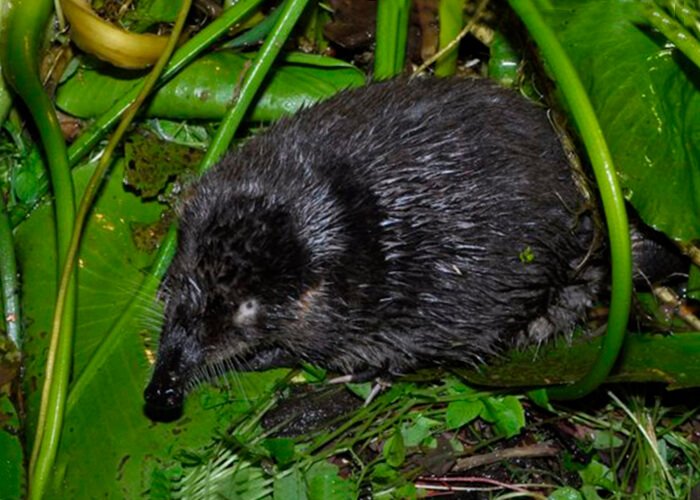
- The water shrew is among the few venomous mammals and hunts using touch-sensitive whiskers underwater; some shrews even use a simple form of echolocation.
- Sharks and rays detect the faint electric fields of hidden prey through specialized receptors in their snouts.
- Pit vipers and many a snake sense infrared heat, "seeing" warm prey in total darkness.
- Barn Owls locate mice by sound alone, their asymmetrical ear openings pinpointing a rustle within a fraction of a degree.
- Marine turtles and many birds read Earth's magnetic field to navigate thousands of kilometers of open ocean.
Even physiology hides surprises: Antarctic fish carry blood that can drop to around −1.7 °C thanks to natural antifreeze proteins, polar bears are predominantly left-handed, and the garfish (sarcophagus-boned "sargan") has bright green bones.
Predator and Prey: Hunting Behaviors in the Wild
Predator-prey relationships drive some of the most dramatic adaptations in nature, from ambush to pursuit to chemical warfare. Each hunting strategy is matched by an equally inventive defense, producing the evolutionary "arms race" visible across every ecosystem.
Lions and Cheetahs hunt by stealth and speed on the savanna, Orcas coordinate group attacks at sea, and the Pistol Shrimp stuns prey with a snapping claw that fires a bubble hot enough to flash a shock wave. Great White Sharks and Sixgill sharks patrol very different depths of the oceans, while the venom of a king cobra can subdue prey far larger than itself. On the defensive side, the exploding ant ruptures its own body to release a sticky toxin, and meerkat sentries post lookouts so the group can forage in relative safety.
Mating Displays and Reproduction in the Animal Kingdom
Reproductive behavior across the animal kingdom ranges from elaborate dances to delayed pregnancies and lifelong pair bonds. Mating displays advertise health and genes, while parental strategies determine how many offspring survive.
Bird Mating, Relationships, and Nesting Facts
Birds show some of the most varied courtship and nesting strategies of any group. Puffins reunite with the same partner across breeding seasons, while the Hihi (also called the stitchbird) of Aotearoa New Zealand is known for unusual face-to-face mating, a behavior documented by the Department of Conservation. Many birds are cavity nesters: species such as owls and small woodland birds readily occupy hollows, nest boxes, and even outhouses, exploiting any sheltered cavity. Ducks illustrate how closely related species diverge — the Mallard and the Gadwall share wetlands yet differ sharply in display and plumage.
Bat Pregnancy and Mating Timing
Some bats control the timing of pregnancy to match food availability, a strategy called delayed development or delayed fertilization. New Zealand's pekapeka and many temperate bat species mate in autumn but postpone fertilization or embryo growth until spring, so pups are born when insects are abundant. This decoupling of mating from birth is one of the most striking examples of a unique animal lifecycle, allowing a tiny mammal to survive winters when prey disappears.
Unbelievable Facts About Mammals
Mammals combine record-breaking organs, strange diets, and unexpected anatomy. The giraffe has the largest heart of any land animal, a whale's heart beats only about nine times per minute, and the jackal carries one more pair of chromosomes than either the wolf or the domestic dog.
- Marsupials defy expectation: the Swamp wallaby can be permanently pregnant, carrying a new embryo before the previous joey leaves the pouch, and a Kangaroo, Wombat, and Koala each show specialized digestion for tough plant diets.
- Some herbivores occasionally consume carrion or bone to obtain minerals, blurring the line between herbivore and scavenger.
- Wombats produce cube-shaped droppings, an oddity among animal feces that helps the dung stay in place as a territorial marker.
- Sloths descend from the tree canopy only about once a week to defecate.
- Manatees and other marine mammals nurse their young underwater, a feat of marine mammal reproduction and lactation.
- Ferrets sleep up to twenty hours a day, while rats endure long stretches without drinking water better than most animals.
Fascinating Facts About Birds
Birds pack extraordinary feats into small bodies, from flightless oddities to record-setting endurance. A penguin can spring more than one and a half meters into the air to leave the water, while owls such as the Long-eared Owl hunt in near-total darkness using sound.
New Zealand's Kiwi is a standout among bird species facts: it has dense, marrow-filled bones unlike the hollow bones of most birds, an adaptation to its flightless, ground-dwelling life. Antarctic seabirds tell their own story — Emperor penguins, Adélie penguins, and Gentoo Penguins each breed under brutal cold, with Emperor penguins incubating eggs through the polar winter on their feet. Boiling an ostrich egg solid, by contrast, takes about four hours, a reminder of how scale changes everything in the bird world.
Strange and Wonderful Fish and Marine Life
The oceans hold animals that seem to break the rules of biology, including walking sharks, transparent-headed fish, and giants riddled with parasites. Marine life facts reveal both the diversity of the seas and how much remains unexplored.
- Epaulette sharks can walk across exposed reef on their fins, surviving low oxygen as they move between tide pools.
- The barreleye fish has a transparent head, looking up through its own skull with tubular, light-gathering eyes.
- The Mola mola, or ocean sunfish, is the heaviest bony fish and can host more than forty species of parasites at once.
- The bootlace worm is among the longest animals on Earth, stretching far beyond the length of a blue whale.
- Sponges are animals without organs whose cells can be separated and will reassemble themselves — extraordinary cellular regeneration.
- Coral reefs are living structures built by colonies of tiny animals; the Great Barrier Reef and the Coral Triangle around Indonesia, Malaysia, and the Pacific hold the planet's richest marine biodiversity.
Bioluminescence in Deep Sea Organisms
Bioluminescence — light produced by living organisms — is the dominant form of illumination in the deep sea. In the twilight zone (the mesopelagic) and the midnight zone (the bathypelagic), creatures including the anglerfish, deep-sea jellyfish, and many cephalopods generate their own light to lure prey, find mates, or vanish through counter-illumination. Each day, vast numbers of animals perform diel vertical migration, rising toward the surface at night and sinking by day in the largest animal movement on the planet. When large animals die, whale falls and marine snow carry nutrients downward, feeding food chains around hydrothermal vents and chemosynthetic oases where life runs on chemicals rather than sunlight. Researchers using remotely operated vehicles such as SuBastian aboard the RV Falkor, operated by the Schmidt Ocean Institute, continue to film these habitats in 4K, expanding the reach of deep-sea documentary filmmaking and conservation.
Insects and Their Astonishing Abilities
Insects achieve feats of navigation, defense, and stamina that outclass far larger animals. A wasp can fly 300 kilometers without rest, and over its lifetime an adult frog may eat up to three tonnes of insects — a measure of how abundant its prey must be.
Defense is where insects and their relatives turn truly inventive. The Yellow-spotted millipede releases cyanide-laced chemicals that smell of almonds to deter predators, while Bees and Termites coordinate colony-wide responses to threats. Water striders exploit surface tension to walk on water, their water-repellent legs distributing weight so they never break the film, and Dung Beetles navigate by celestial cues to roll their prizes in a perfectly straight line. Ants, working ceaselessly through the night, keep their colonies running while most of the animal world sleeps.
Wildlife of the Arctic and Antarctic
Polar wildlife survives extremes of cold, ice, and darkness through specialized bodies and behavior. Polar bears and Arctic foxes dominate the far north, while Antarctica belongs to penguins, seals, and the small crustacean that feeds nearly everything else.
Antarctic krill form the foundation of the Southern Ocean food web, supporting Whales, seals, and seabirds in staggering numbers. Fur seals, Walrus, and a host of other species rely on sea ice that scientists now monitor closely. The British Antarctic Survey and the European Space Agency track the Antarctic ice sheet with satellites such as CryoSat, ICESat-2, and Sentinel-1, measuring how a warming climate thins the ice that polar animals depend on.
Animals of the Amazon Rainforest
The Amazon rainforest holds the greatest concentration of species on land, with thousands of plants, birds, and mammals living in dense, layered habitat. Amazon rainforest facts consistently rank it among Earth's most important biodiversity strongholds and a critical store of carbon.
Jaguars hunt along the rivers, while the neighboring Pantanal wetland concentrates wildlife into one of the best places on Earth to see large animals. The rainforest's plants are as remarkable as its animals: the Giant Water Lily grows pads strong enough to support a child, and carnivorous pitcher plants like Nepenthes lowii trap insects — and, in some cases, gather nutrients from the droppings of the mountain treeshrew that visits to feed. The Amazon's role in carbon sequestration links it directly to global climate stability.
Extreme Environments: Deserts and Alpine Ecosystems
Life persists in the harshest places on Earth, from the driest desert to high alpine snowfields. The Atacama Desert in South America is the driest non-polar place on the planet, with some weather stations never recording rain, yet specialized microbes survive in its salt-crusted ground — a landscape geologists study as an analog for Mars.
Alpine regions support their own surprises. "Watermelon snow," tinted pink by cold-loving algae, blooms across high snowfields and accelerates melting by darkening the surface — an example of alpine ecology shaping the physical environment. Cave-dwelling organisms such as the olm, a blind aquatic salamander, survive for years without food in lightless waters. From the Tibetan Plateau, whose glaciers feed Asia's great rivers and freshwater supplies, to wind-sculpted sand dunes, extreme environments reveal how adaptable life can be.
Biodiversity and Ecosystem Protection
Protecting biodiversity safeguards the ecosystems that clean water, store carbon, and sustain human life. Conservation science increasingly frames the present as the Anthropocene, a time when human activity drives change at a scale comparable to a Sixth Mass Extinction, putting endangered species at the center of global concern.
Threatened animals such as Amur leopards, Snow leopards, Mountain gorillas, Black rhinos, Pangolins, Orangutans, Tigers, and Red pandas now depend on coordinated conservation by groups including WWF UK, National Geographic, and government agencies. In Aotearoa New Zealand, the Department of Conservation studies native species — from Powelliphanta carnivorous land snails and the Scree skinks of Fiordland to Te Urewera National Park's forests — and shares findings through projects like DOC Sounds of Science and Go Wild, featuring researchers such as Aroha Gilling, Jack Mace, Jayne Ramage, Jess Scrimgeour, Laura Boren, Leo Richards, Tim Raemaekers, and Clinton Duffy. Forests illustrate why this matters: trees in UK Woodlands and beyond are linked underground by mycorrhizal networks that share nutrients and carbon, making forest ecosystems far more cooperative than they appear.
How Wildlife Adapts to a Changing World
Animals are already adjusting to human-altered landscapes, shifting ranges, timing, and behavior in response to climate change. Species like the San Joaquin kit fox occupy edges of human development, while urbanization across Europe — mapped by tools such as the World Settlement Footprint from the German Aerospace Center and NASA — reshapes the habitats wildlife can use. Ocean acidification, driven by carbon dioxide dissolving into the oceans, threatens coral reefs and shell-building marine life, making climate change one of the defining pressures on natural systems.
The Invention of Concrete in Ancient Rome
Roman builders invented concrete nearly 2,000 years ago, and their formula still shapes how we build today. While constructing the Pantheon and the Colosseum in Rome, they blended coarse sand with fine gravel, then mixed in hot lime and water — and sometimes even animal blood — to bind stone slabs and blocks into a durable mass.
The Romans also added horsehair to the mix to prevent the concrete from shrinking and cracking as it cured. This reinforcement was an early prototype of modern reinforced concrete, and the volcanic-ash recipe the Romans used has proved remarkably long-lasting — some Roman marine concrete has strengthened over centuries of exposure to seawater.
Curious Historical and Everyday Facts
Some of the most repeated trivia comes from history and daily life, where the truth is often stranger than the legend. In ancient Egypt, surgeons reportedly had their hands cut off if a patient died during an operation, and the same civilization first produced castor oil. Ketchup traces its origins to China, long before it became an American staple.
Cultural curiosities round out the picture: the cat is the only domestic animal not mentioned in the Bible, and in English libraries the Guinness Book of Records has historically been the title most often stolen. These oddities sit naturally beside nature facts, and you can explore more across our Nature and Stories sections.
Earth, Moon, and the Planet Itself
Earth is not a perfect sphere, and the planet keeps changing in ways most people never notice. Our world is an "oblate spheroid" — slightly flattened at the poles and bulging at the equator — and its true shape, the geoid, is lumpy with gravity variations mapped by satellites such as GOCE and Swarm from the European Space Agency.
- Earth's magnetic north pole is drifting steadily, forcing periodic updates to navigation systems worldwide.
- Plate tectonics constantly reshape the surface, and an "underwater waterfall" in the Denmark Strait moves vast volumes of cold, dense water downward beneath the oceans.
- The Moon is slowly drifting away from Earth, lengthening our days by a tiny amount each century as tidal forces transfer energy.
- Post-glacial rebound is still lifting land that was crushed under Ice Age glaciers thousands of years ago.
- Optical effects like the subsun — a bright glow mirrored below the sun on ice crystals — show how light behaves in the atmosphere.
Earth observation satellites including Sentinel-2 and the missions monitored by NASA and the European Space Agency now track ice, forests, cities, and oceans continuously, turning the whole planet into a subject of daily study.
Quick-Fire Incredible Nature Facts
- In one night a mole can dig a tunnel 70–80 meters long underground.
- A penguin can jump more than one and a half meters into the air.
- The longest elephant tusks measured around 3 meters.
- A chameleon's tongue is twice the length of its body.
- A camel's spine is straight despite its hump.
- Tigers have striped skin as well as striped fur.
- Antarctic fish can have blood as cold as −1.7 °C.
- The cat is the only domestic animal not mentioned in the Bible.
- Polar bears are left-handed.
- Ants never sleep.
- Rats can go without water longer than most animals.
- Ferrets sleep up to twenty hours a day.
- The garfish has green bones.
- A whale's heart beats about nine times per minute.
- The giraffe has the largest heart of any land animal.
- A jackal has one more pair of chromosomes than a wolf or dog.
- A wasp can fly 300 kilometers without resting.
- An adult frog may eat up to three tonnes of insects in its lifetime.
- In ancient Egypt, surgeons could lose their hands if a patient died in surgery.
- The Guinness Book of Records was long the most-stolen book in English libraries.
- Castor oil was first made in ancient Egypt.
- Ketchup was invented in China.
- Boiling an ostrich egg hard takes about four hours.
- A person typically falls asleep — the transition from waking to sleep — within 8–10 minutes.
Some of the most curious entries concern fish and other cold-adapted animals whose biology challenges everything we assume about life. Getting to know these incredible facts about the natural world sharpens your curiosity and makes you a more engaging conversationalist.