Hydrological Natural Monuments: Protecting Ukraine's Freshwater Treasures
 libre
libre
Hydrological natural monuments play a leading role in protecting fresh water. Roughly 70.8 percent of the Earth's surface is covered by water, and the total volume is enormous — yet more than 97 percent sits in salty seas and oceans or deep in the lithosphere, about 2 percent is locked in the glaciers of Antarctica, Greenland and the Arctic, and only about one percent is fresh water in liquid form.

What are hydrological natural monuments?
Hydrological natural monuments are protected freshwater objects — lakes, bogs, springs, waterfalls and reservoirs — set aside as reference standards of clean water and as living ecosystems. In international conservation terms they fall under Category III: Natural Monument or Feature, one of the protected area management categories defined by the International Union for Conservation of Nature. To preserve such reference water systems, Ukraine has established hydrological reserves and sanctuaries. Other protected natural monuments of Ukraine include geological natural monuments, zoological natural monuments and botanical natural monuments.
Definition and core characteristics
A natural monument is a single, outstanding natural feature — or a small area built around one — that holds exceptional scientific, scenic or cultural value and is therefore worth protecting in its own right. For hydrological monuments the defining feature is water: the object must be a body or source of water that retains close to its natural condition. The International Union for Conservation of Nature and Natural Resources designed its classification system precisely to recognize such discrete features, distinguishing them from larger national parks or wilderness areas.
The role in protecting fresh water
Hydrological monuments safeguard the cleanest available examples of fresh water so that researchers retain a baseline against which to measure pollution and recovery elsewhere. Springs feed the small rivers that eventually swell into Ukraine's major arteries — the Dnipro, the Dniester, the Bug and the Siverskyi Donets — so protecting a single source has consequences far downstream. Caring for water, in the plainest terms, is caring for life.
Earth's freshwater reserves
Liquid fresh water is a strikingly scarce resource on a planet that looks blue from space. Of all the water on Earth, only about one percent is accessible fresh water in liquid form, the rest being saline or frozen.

What criteria and categories govern natural monument protection?
Protection of natural monuments rests on criteria of rarity, integrity, scientific value and size, applied through both national designations and international frameworks. The IUCN protection levels rank areas from strict nature reserves through to managed landscapes, with Category III reserved for the natural monument or feature itself. In Europe, the European Environment Agency applies its own selection criteria for cataloguing sites of conservation interest, while the United Nations supports broader biodiversity and heritage commitments.
Reserves and sanctuaries for preserving water systems
Ukraine relies on hydrological reserves and sanctuaries to keep its reference water systems intact, applying a strict protected regime to the most valuable objects. Reservoirs used as drinking-water sources, for instance, carry the tightest restrictions because contamination there would directly affect public supply. Ecosystem conservation requirements demand that the surrounding vegetation, banks and feeding sources be protected alongside the water itself, since a lake cannot stay clean if its watershed is degraded.
Monuments of national and local significance
Ukraine holds 655 protected hydrological natural monuments, of which 18 are of national (republican) significance and 637 of local significance. Among the nationally significant monuments, 7 protect lakes, 10 protect bogs and one protects a spring that gives rise to a river. The water in these lakes serves as a standard of clean fresh water, and combined with their vegetation they form strikingly scenic landscapes.
The difficulty of classifying hydrological monuments
Classifying hydrological monuments is genuinely difficult because water bodies blur into one another and change over time, so the same wetland may be read as a bog, a lake margin or a river source depending on season and definition. This challenge in identifying and classifying natural monuments is not unique to Ukraine — conservation agencies worldwide wrestle with where a "feature" ends and an "area" begins, and with the permanence and longevity issues that arise when a protected spring shifts course or a glacier-dammed lake drains. Local monuments here are loosely divided into three types:
- water bodies (lakes, ponds, bogs, reservoirs, estuaries and oxbow floodplains);
- waterfalls;
- sources (mineral and clean drinking water, and wells).
Protected hydrological natural monuments of Ukraine
Across Ukraine, the protected hydrological monuments fall into clear families — pristine lakes, scientifically valuable bogs, dramatic waterfalls, reservoirs and an abundance of springs. The sections below walk through the most important examples, beginning with the lakes that act as reference standards of clean fresh water.
Lakes as reference standards of clean fresh water
Several of Ukraine's nationally protected lakes are valued specifically because their water meets the standard of pristine fresh water and because they anchor scenic, biodiverse landscapes.
Lake Dobre
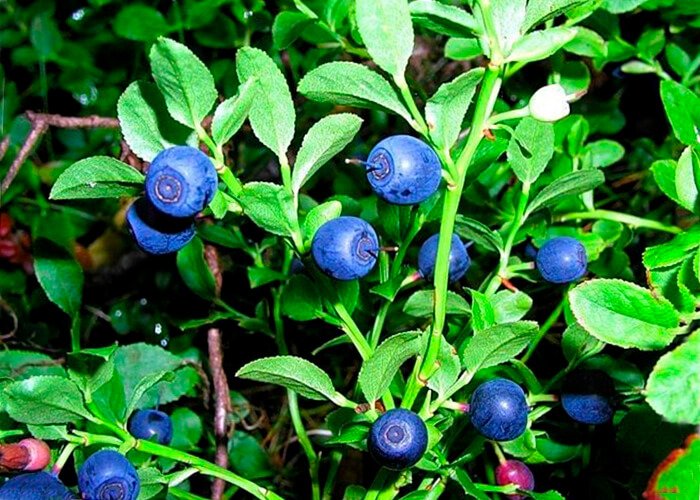
Lake Dobre, in the Volyn region, is a 46-hectare lake of karst origin with sandy shores and a clean, even sandy bed. Its maximum depth is 15 metres and its average depth 5 metres, and it is fed by underground springs and rainfall. Around the lake grow scenic stands of Scots pine and silver birch aged 40 to 80 years, beneath whose canopy cranberry, blueberry, spindle and wild strawberry survive well; the lake is rich in fish.
Lake Sviate
Lake Sviate is one of the most picturesque lakes in Western Polissia, covering 44 hectares. Right up to its edge grow mature stands of Scots pine and common oak aged 100 to 200 years, together with silver birch around 50 years old.
Lakes in the Rivne region
Two lakes are protected in the Rivne region — the larger Pochaivske Lake, covering 58 hectares, and Strilske Lake at 15 hectares. Both lie amid dense natural forests that shelter the water and its wildlife.
Shelekhivske Lake
Shelekhivske Lake, in the Lebedyn district of the Sumy region, is an exceptionally scenic body of water fed solely by numerous springs, which keeps its water clear and cool.
Lakes Repne and Slepne
Lakes Repne and Slepne, two distinctive water bodies near the town of Sloviansk in the Donetsk region, each cover about 30 hectares. They are salt lakes holding large reserves of curative brine and mud, and they support the nationally known sanatoriums "Donbas" and "Sloviansky." Their additional value lies in their origin: they formed through a centuries-long process of leaching of rock-salt strata — a clear example of the cultural and curative significance water bodies can acquire.
Bogs of Ukraine
Ukraine has comparatively few bogs, and a share of them must be preserved to protect and naturally regulate water. Bogs are also excellent hunting grounds, supporting forage grasses and berries (cranberry, blueberry and the like), medicinal plants, and reeds and mosses used as raw material for paper and building. The nationally significant bog monuments all lie in the Carpathians and are all small.

- Vysiache Bog, in the Verkhovyna district of the Ivano-Frankivsk region, covers only 0.5 hectare and is the largest of the so-called "hanging" bogs known in the Eastern Carpathians.
- Mshana Bog (6 hectares), in the Rozhniativ district, holds great scientific value: it preserves relict peat deposits that allow palaeobotanists to study the development of the local flora.
- Shyrkovets Bog (6 hectares) and Lisok Bog (8 hectares), in the Dolyna district, host rare communities of mire vegetation.
- In the Irshava district of Zakarpattia, the Chorni Hriazi Bog (15 hectares) is protected as the source of the Irshava River.
- Three typical Polissia bogs are protected as natural monuments in the Liuboml district of Volyn.
- Chornyi Lis is the southernmost sphagnum bog on the boundary of the forest-steppe and steppe, lying within the forest tract of the same name in the Kirovohrad region.
Springs and river sources as natural monuments
Springs and the headwaters of rivers count among the most prized hydrological monuments because a single protected source sustains an entire downstream system.

Biodiversity of hydrological monuments
Hydrological monuments protect far more than water — they shelter the plants, animals and rare species that depend on undisturbed wetlands and clean lakes. The biodiversity associated with these monuments is often the strongest argument for their protection, since microhabitats around a spring or bog can hold species found nowhere else nearby.
Flora and plant communities of water bodies
The vegetation framing Ukraine's protected lakes and bogs ranges from mature pine-oak-birch forest to specialized mire communities of reeds, sphagnum mosses and cranberry. Lake Soloviovo, in the Sosnytsia district of the Chernihiv region, is the only place in that area where the relict water chestnut grows — a species listed in the Red Book of Ukraine. Such culturally and scientifically significant flora make individual sites irreplaceable reference points for botanists.
Fauna of protected lakes and bogs
Protected wetlands act as wildlife habitat areas, with several sites functioning as breeding and migration grounds. The Sladkyi estuary (5 hectares) in the Berdiansk district of the Zaporizhzhia region, formed where the Berda River meets the Sea of Azov, draws large shoals of fish to spawn in spring, hosts many nesting waterfowl in its reeds, and serves as a resting stop for birds migrating south in autumn. These functions mirror famous wildlife monuments abroad, such as the salmon spawning grounds of the Henry's Fork River and Snake River in Idaho or the Fort Randall Eagle Roost in South Dakota, where bald eagles gather over winter along the Missouri River.
Relict and rare species
Relict and rare species give certain monuments disproportionate scientific weight, because they are living remnants of older climates and ecosystems. The relict peat of Mshana Bog and the water chestnut of Lake Soloviovo are Ukrainian examples; internationally, protected stands like the Bose Lake Hemlock Hardwoods and the Kickapoo River Natural Area in Wisconsin, or the bottomland hardwood forests of the Green Ash-Overcup Oak-Sweetgum Research Natural Areas, are designated under the National Natural Landmarks Program for the same reason — they preserve communities that have largely vanished elsewhere.
Cultural and archaeological significance of water monuments
Many water monuments carry cultural and archaeological meaning layered on top of their natural value, linking landscapes to history, legend and faith. Some Ukrainian wells are known from the chronicles, tied to legends or dedicated to historic events and notable figures. The Belsky spring (or Belsky well) in the Kotelva district of the Poltava region is mentioned in sixteenth-century chronicles; on the high bank of the Vorskla above it, archaeologists have excavated a vast hillfort dating from the third to fifth centuries BCE.
Such natural-cultural sites are recognized worldwide, from sacred indigenous waters to formally listed places: the National Register of Historic Places and the Virginia Landmarks Register in the United States, or the Smithsonian Cultural Rescue Initiative working to safeguard heritage after disasters, all reflect the same impulse to protect culturally significant features. Several Ukrainian wells echo this — one in the Chyhyryn district of the Cherkasy region stands at the homestead where Bohdan Khmelnytsky was born and buried, and a well in the village of Tukhlia, Skole district, supplied the water that writer Ivan Franko drew while working on his novella "Zakhar Berkut" in 1882.
Curative properties and resort use
Mineral and salt waters give many hydrological monuments a direct role in health and resort tourism. Around 500 protected springs exist in Ukraine, most of them mineral; medicinal mineral waters are those with elevated dissolved-solids content (more than one gram per litre) or distinctive physical properties such as raised temperature or radioactivity, and they divide broadly into acidic and alkaline groups. The salt lakes Repne and Slepne underpin established sanatoriums, and many sulphurous and artesian sources in the Prykarpattia foothills are guarded for the same therapeutic value — sustainable tourism here depends on keeping the water itself unspoiled.
Threats and challenges to conservation
Hydrological monuments face mounting threats from pollution, climate change and flooding, all of which can degrade or destroy features that took millennia to form. Human activities affecting natural monuments — drainage, abstraction, contamination and construction — are the most immediate dangers, but shifting climate adds slower, system-wide pressure.
Pollution and environmental degradation
Pollution and broader environmental degradation are the leading threats, which is precisely why undisturbed reference waters are so valuable for measuring how far other water bodies have declined. A third of the world's population already lacks clean fresh water, and once a spring or lake is contaminated its self-renewal can be overwhelmed faster than it can recover. Strict reserve regimes around drinking-water reservoirs — such as the Shcherbanivske, Sofiivske and Zhovtneve reservoirs in the Mykolaiv region — exist to keep human impact out of catchments that supply the public.
The impact of climate change on water bodies
Climate change reshapes water monuments by altering flow, temperature and the survival of cold-adapted species, threatening sites from alpine lakes to coastal wetlands. Organizations such as Earth.Org, with writers including Ana Bulnes and Carol Konyn, and agencies like NOAA document how warming endangers natural wonders worldwide, while frameworks such as the Kyoto Protocol set out mitigation commitments. Glacier-fed and glacier-dammed features are especially exposed — Surprise Lake in Alaska, fed by ice along the Knik River, illustrates how meltwater regimes can change a protected water body within a human lifetime.
Flood risks for rivers and coastal zones
Flooding is a hydrological hazard that endangers both protected sites and the communities around them, taking the form of slow riverine floods, sudden flash floods and storm-driven coastal surges. Floods form when rainfall, snowmelt or storm surge exceeds the capacity of a channel or shoreline to carry water away; flash floods are the most dangerous because they arrive with little warning. Virginia's geographic vulnerability is a textbook case — low-lying cities such as Norfolk, Virginia Beach, Hampton and Chesapeake on the James River and the Chesapeake face chronic coastal and riverine flooding, and historical events such as Hurricane Camille left lasting marks, as Hurricane Juan did on the Canadian coast.
Managing this risk relies on layered preparedness rather than any single defence:
- hazard mitigation plans drawn up by local governments and bodies such as the Virginia Department of Emergency Management, often guided by the United Nations Office for Disaster Risk Reduction;
- the National Flood Insurance Program, through which FEMA sets flood insurance and NFIP requirements and supports federal and state disaster recovery assistance;
- flood mitigation retrofits — elevating structures, floodproofing and protecting key infrastructure;
- post-disaster recovery procedures with thorough disaster documentation and assessment, including museum and cultural institution preparedness so that heritage survives the event.
Conservation and maintenance of hydrological monuments
Conserving hydrological monuments means protecting the whole ecosystem around the water, not just the water surface, and giving each site enough buffer to function naturally. Conservation and maintenance carry real implications for land use, access and funding, since a monument that is fenced off but starved of its feeding springs will still decline.
Requirements for ecosystem protection
Effective ecosystem protection sets size and integrity requirements alongside controls on the surrounding watershed, because a water body is only as clean as the land that drains into it. International conservation guidelines from the International Union for Conservation of Nature stress that even a Category III natural monument needs an intact buffer; the National Park Service and the National Natural Landmarks Program apply comparable size and integrity standards when assessing the criteria for National Natural Landmark designation. The largest underground freshwater reserve at the Pidzemne (Underground) lake in the Voznesensk district of the Mykolaiv region — tens of millions of cubic metres beneath a layer of sand — shows why guarding the overlying land matters as much as the water itself.
Self-renewal and self-purification of water
Water's capacity to renew and cleanse itself is the natural process conservation aims to preserve, since solar radiation and aeration let undisturbed water bodies restore their own quality over time.

Other protected natural monuments of Ukraine
Beyond water, Ukraine protects geological, zoological and botanical monuments, and hydrological sites often overlap with all three. Waterfalls, for example, are at once hydrological and geological — water acting as a sculpting force on rock over time.
Waterfalls and scenic viewpoints
The waterfalls of Crimea and the Carpathians are among the most spectacular hydrological monuments, where water erosion has shaped dramatic landscapes.

Geological natural monuments
Geological monuments preserve outstanding rock formations, canyons and geomorphological features that record the planet's history. Internationally these range from the basalt of the Columbia River Basalt Plateau and the Sheep Rock formations to sandstone meanders, the volcanic Cono de Arita, the Great Blue Hole of the Caribbean and the White Cliffs of Dover. Volcanic geology produces some of the most striking examples — the Aniakchak Crater and the Aniakchak Crater River in the Aniakchak National Monument in Alaska, the Mayon Volcano Natural Park, and the limestone Chocolate Hills and Hundred Island National Park show how varied a single category can be.
Zoological natural monuments
Zoological monuments protect key wildlife habitats and the rare fauna that depend on them. Eagle roosting areas, salmon spawning grounds and seabird colonies such as the Ilhas Cagarras off Brazil illustrate the type abroad, while the National Park Service designates many United States sites for their fauna. Rivers themselves — the Mississippi River, the Illinois River, the Fox River, the Eagle River and the Missouri River — sustain entire faunal communities, much as Ukraine's protected estuaries and lakes do at home.
Botanical natural monuments
Botanical monuments safeguard ancient trees, relict stands and distinctive plant communities. Famous individual trees and groves abroad include the Bogusław Oak and the Crooked Forest in Poland, the Oaks of Ivenacker and the Green Belt Thuringia in Germany, and hemlock and hardwood stands in Wisconsin. These echo the value of Ukraine's mature pine and oak stands ringing protected lakes — long-lived vegetation is itself a monument, recording centuries of undisturbed growth.
Natural monuments, parks and travel around the world
Natural monuments connect to a wider world of parks, urban green spaces and travel that the curious reader may want to explore next. In Illinois, Starved Rock — named for an Illiniwek legend and tied to Native American history — together with French Canyon, the La Salle Canyon Waterfall and the Lover's Leap Overlook show how outdoor hiking and exploration build on natural features; the Montrose Beach Dunes Natural Area near Chicago and the Fabyan Forest Preserve add forest preserves and urban green spaces to the mix.
Chicago itself blends nature with culture in Millennium Park, Grant Park and Wrigley Square, where the interactive Crown Fountain designed by Jaume Plensa, the Buckingham Fountain endowed by Kate S. Buckingham, Milton L. Olive III Park and works backed by the William Wrigley Jr. Foundation draw visitors year-round. For broader travel planning — from all-inclusive Caribbean resorts and honeymoon destinations to converted-church stays booked through Airbnb — outdoor adventure planning tools and good travel guides help match the trip to the season.
A note on Error Code 1020 and access problems
Error Code 1020 is an "access denied" message generated by Cloudflare's firewall when a website's security rules block your request before it reaches the web server. It belongs to the family of HTTP error codes and connection issues that can also stem from DNS resolution problems or aggressive firewall blocking. To fix Error 1020, clear your browser cookies and cache, disable any VPN or proxy, and retry; if the block persists, the site owner must adjust the Cloudflare firewall rule. If you reached a dead end on this site instead, our search page and the article index will get you back on track, and the page-not-found notice explains missing addresses.

Frequently Asked Questions
What are hydrological natural monuments?
How many hydrological natural monuments are in Ukraine?
Why is fresh water so scarce on Earth?
What makes Lake Dobroe special?
Why does fresh water need protection?