How Humans Use the Forest: Timber, Logging Types, and the Value of Trees in Our Lives
 libre
libre
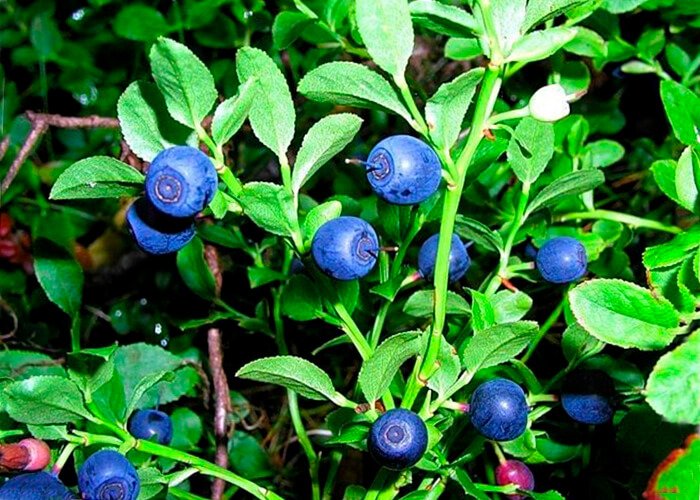
Humans use forests for recreation, clean air, food, raw timber and a vast range of ecosystem services — and doing so wisely is the single most important condition for keeping forests alive for future generations. We love the forest and travel there on free days to breathe clean air and gather mushrooms and berries — in a word, to rest body and soul. And so we do rest. The rustle of the trees enchants and lulls us, and our thoughts wander somewhere far away.
Forests cover roughly 31% of the planet's land area, according to the Food and Agriculture Organization of the United Nations (FAO), and they shape human life far beyond a weekend stroll. This page explains why forests matter to people, how we use wood, what happens when we disturb the biological balance, why deforestation is accelerating worldwide, and how sustainable forest management and restoration can reverse the damage.
Why does the forest matter so much in human life?
The forest matters to humanity because it is at once our evolutionary home, a source of food and medicine, a regulator of climate and water, and a place of rest. Great is the value of the forest in human life — it supplies materials, livelihoods, and irreplaceable ecological functions while also restoring the spirit.

The forest as the ancient cradle of humanity
Has it ever occurred to any of you that when we visit the forest we are visiting the ancient cradle of humanity? In their time, the original inhabitants of forests were not only sabre-toothed tigers, wolves and bears, but human beings too. The forest lulled us even then, sheltered us from hardship, and gave us food. Forests are also far older than humanity: the earliest tree-like plants such as Calamophyton formed the first known forests around 390 million years ago, and Archaeopteris, with true wood and deep roots, spread across the planet soon after — long before the evolutionary processes that produced modern forest ecosystems.
Recreational and aesthetic value of the forest
Beyond rest among the "pair of whitening birches" and the renewal of vigour of body and spirit, the forest gives us immense aesthetic enjoyment. This recreational and aesthetic value is increasingly measured by science. Studies of forest exposure — sometimes called "forest bathing" — link time among trees to lower blood pressure, reduced stress hormones and improved mental health, which is one reason urban forests and green spaces are now treated as public-health infrastructure rather than mere decoration.
Health and nutrition benefits of the forest for people
Forests directly support human health and nutrition by supplying wild foods, medicines and clean environments. For rural and food-insecure populations, forest foods — fruits, nuts, leaves, fungi, honey, bushmeat and edible insects — provide micronutrients that staple crops lack. FAO nutrition specialists such as Nancy Aburto have emphasised the role of forest and tree foods in dietary diversity, while dietary transitions in rural communities away from these foods are associated with rising non-communicable disease prevalence. Many pharmaceuticals also originate in forest plants: a large share of medicines trace back to compounds first identified in wild species, and traditional medicine practised by Indigenous forest communities still relies heavily on forest-derived plants.
Forest health and human health are tightly linked through the One Health approach, which recognises that intact ecosystems reduce disease risk. Deforestation and forest fragmentation raise the chance of zoonotic disease spillover — pathogens jumping from wildlife to people. Emerging and re-emerging diseases including the Ebola virus, HIV and malaria have all been connected to forest disturbance and the closer contact between humans and wildlife that follows clearing. The World Health Organization and the IPCC both flag deforestation and climate change as compounding threats to human health.
How is wood used by people?
The forest is useful to people — that is one very important side of the relationship between humans and the forest. But there is another side, perhaps even more important. We take and use wood for industrial and household needs. We take more and more of it. And we take it constantly. It is known that in every stand there is always a kind of mobile equilibrium.
Wood and fuelwood consumption patterns differ sharply between regions. In wealthier economies wood is used mainly for construction, paper and panels, while across much of Africa and parts of Asia woodfuel dependency remains high for cooking and heating. That woodfuel reliance carries its own health risks through indoor air pollution, and the shift to modern energy sources is one of the changes reducing fuelwood demand and easing pressure on forests.
Wood for industrial and household needs
Any human intrusion, even the most rational, disturbs this equilibrium to some degree and weakens the biological stability of stands. But such is the fate that has fallen to us: we must use the forest constantly, we are forced to do so, and therefore we constantly disturb the balance within a stand. A most complex task arises.

Types of forest felling
Yes, trees must be cut — this is an immutable truth. How much standing timber still dies on the stump because we cannot harvest it. There are different types of forest felling, ranging from selective cutting that removes individual trees to clear-felling that converts old-growth into even-aged stands. Felling is necessary, but it must be guided by one principle: disturb the stable equilibrium in nature as little as possible. Otherwise our descendants will not thank us, just as we cannot thank those who helped birch and aspen replace pine, spruce and oak. Logging operations — and especially illegal logging — are a leading cause of forest degradation worldwide, which is why sustainable forestry practices and certification systems now try to keep harvest within the forest's capacity to regenerate.
Human intrusion and the disruption of biological balance
When we intrude on the life of the forest, felling it, we weaken the trees' struggle for survival and the intensity of natural selection, and we involuntarily create new conditions favourable to some species and unfavourable to others. As a rule, that advantage does not fall to shade-tolerant trees. This is understandable: by cutting valuable spruce or fir, we open up the canopy.
This is where aspen and birch come from. These living conditions change not only for the trees but also for their pests, for animals, and for the soil. So it turns out that we involuntarily favour the less valuable species — aspen and birch. Unlike the prodigality of the elements, when we take from the forest we follow a different principle: economising our own effort, means and time.

Weakening the biological resilience of stands
And it must be admitted that this principle does not always allow us to observe the fundamental laws of the forest. Disturbance opens the door to exotic pests and competitors: the introduction of exotic diseases and insects can devastate weakened stands, while old-growth conversion to even-aged plantations reduces the genetic diversity within species and alters the mating systems and population genetic structure that give a forest its long-term resilience. A genetic inventory and baseline measurement of a stand, as forest geneticists such as Tom Ledig of the Pacific Southwest Research Station have argued, is essential before intervention so that managers know what they risk losing.
Why we must know the laws of forest life
So that nothing irreparable happens, we must know the forest stand — every side of its life, all its weaknesses and strengths. The classic of forestry science G. Morozov says on this subject:
...the more all aspects of a stand's life are adapted to local conditions, the more at ease one can be about the forest, the easier regeneration and protection will be, and the easier it will be to raise the productivity of the forest.
Of course, our management in the forest always disrupts natural selection, the microclimate, and the whole biogeocoenosis as a whole. Therefore the forester faces, day and night, the constant task of working out what to do and how, so that the stand's productivity increases while its biological stability does not weaken.
Conserving forest stands through a scientific approach
That is precisely why it is necessary to know the laws of forest life, to listen to the beat of its pulse, to be able to make a diagnosis if the forest falls ill, or a forecast of how the trees will behave in one or another case of our intervention.

The forest is wild, uncultivated; taming and rearing it is extraordinarily difficult.
An agronomist can go much further than we can in creating artificial conditions and in actively influencing his objects,
says G. Morozov.
He can even set himself the task of raising, as I would put it, physiological freaks; if such things were left to themselves, they would, of course, die out.
The fecundity of forest tree species
The forest is wild, and it is precisely this quality that allows it to maintain stability. Recall, for instance, its monstrous fecundity of forest tree species (more on this: Tree fruiting). How generously it scatters thousands and millions of seeds, caring nothing for the results.
Even if only a tiny fraction germinates, that is still an enormous number. And how many survive? A negligible part — some five per cent — become real trees.

One can, of course, run experiments with trees too, as scientific foresters do. But it often happens that an experiment begins at the end of one century and finishes at the end of another.
What ecosystem services do forests provide?
Forests provide ecosystem services that human economies and health depend on: they store carbon, regulate climate and rainfall, purify water, prevent soil erosion, harbour biodiversity, and supply timber and non-timber forest products. These services are why protecting forests is treated as a global priority rather than a local one. Forest biomass also represents one of the planet's largest stores of living matter, and tropical rainforests are among the most productive ecosystems on Earth in terms of primary production.
Forest biodiversity and its conservation
Forests hold the majority of the world's terrestrial biodiversity, from soil microbes to large mammals. Biodiversity within forest ecosystems underpins pollination, seed dispersal, pest control and genetic resources for crops and medicines. Habitat loss is the leading driver of species decline: iconic species such as the orangutan and the Sumatran tiger are threatened directly by the clearing of Southeast Asian forests, and domestication and simplification of landscapes further erode wild genetic diversity. Protecting connected, intact habitat is therefore central to conservation.
The forest as a carbon sink and climate regulator
Forests act as carbon sinks, absorbing carbon dioxide from the atmosphere and locking it in wood, roots and soil. Carbon sequestration in forests is one of the most cost-effective tools for climate mitigation, which is why carbon storage features so heavily in international climate policy. When forests are cleared or burned, that stored carbon is released, turning a sink into a source of emissions.
How are forests connected to climate change?
Forests and climate change are linked by powerful feedback loops: healthy forests slow warming by absorbing carbon, while deforestation accelerates it by releasing carbon and disrupting rainfall and water cycles. The Amazon rainforest illustrates this dynamic. The Amazon recycles its own rainfall through evapotranspiration — moisture rising from the canopy near the Solimões River and across the basin returns as rain — and large-scale clearing risks pushing this rainfall regulation mechanism past a tipping point, drying the region and weakening its role as a global climate stabiliser.
Carbon deposition and climate change mitigation
Carbon deposition in forest biomass and soils makes forest conservation and restoration a frontline climate strategy, a point repeatedly stressed by the IPCC. Restoring degraded land and halting deforestation could deliver a meaningful share of the emissions reductions needed this century. The reverse is also true: continued loss of forests is itself a major source of global greenhouse gas emissions, and global warming in turn threatens fragmented forests that are already under stress, creating a self-reinforcing cycle.
Deforestation: causes and consequences
Deforestation is the permanent removal of forest to make way for other land uses, and it is happening fastest in the tropics. According to analysis by Our World in Data researcher Hannah Ritchie and monitoring by Global Forest Watch and the World Resources Institute, the tropics lose millions of hectares of primary forest each year. The FAO's Global Forest Resources Assessment 2025 tracks these trends globally, while forest degradation — a decline in a forest's condition and function short of total clearance — adds further losses that are harder to see.
Main factors and drivers of deforestation
The primary drivers of forest destruction are agriculture and livestock. Expansion of cropland and grazing land is the single largest cause of forest loss worldwide, with logging, infrastructure and fire adding further pressure. Major drivers of deforestation include:
- Cattle ranching — the largest driver of clearing in the Amazon and across Latin America, tied to meat consumption.
- Soy and other crops — much grown as animal feed, linking livestock farming to indirect deforestation.
- Palm oil — a leading cause of forest loss in Indonesia and Malaysia.
- Logging and illegal logging — degrading and fragmenting forests for timber and pulp.
- Grazing land expansion — converting forest to pasture globally.
The influence of land use and commodities on forest clearing
Land-use change driven by globally traded commodities connects everyday consumption to distant forests. Beef and soy from Brazil, palm oil from Indonesia and Malaysia, and timber from across the tropics all carry deforestation in their supply chains. Brazil's Atlantic Forest has been reduced to a fraction of its original extent, and clearing continues across Colombia and the wider Amazon basin. As journalist Christina Nunez and others have documented, the link between meat consumption and deforestation makes dietary and sourcing choices part of the solution.
Decline of biodiversity and species loss
Deforestation drives biodiversity decline and species loss by destroying habitat faster than wildlife can adapt. Tropical forest loss is especially damaging because tropical forests concentrate so many species in limited areas. When forest is removed, the species exploitation and fragmentation that follow can eliminate whole populations, and in the most extreme cases lead to local extinction before species are even catalogued.
Edge effects and forest fragmentation
Forest fragmentation breaks continuous forest into isolated patches, exposing more area to damaging edge effects — wind, drying, invasive species and higher temperatures along newly created boundaries. Fragmentation impedes wildlife movement and migration, isolates populations, and reduces forest connectivity, leaving fragmented forests more vulnerable to global warming and to the introduction of exotic pests. Maintaining and restoring corridors between patches is a key response to these fragmentation patterns.
Sustainable forest management and forest protection
Sustainable forest management means using forests so that they keep regenerating — meeting today's needs for wood, food and services without depleting the resource for the future. It combines protected areas, certified harvesting, restoration and monitoring. The concept of the Forest Transition describes how some regions move from net forest loss to net gain: the Eastern United States, much of Europe, Japan, the Republic of Korea and China have all achieved temperate forest recovery after historic clearing, showing that the trend can be reversed.
Forest protection policy and enforcement
Effective forest protection depends on policy backed by enforcement. International commitments such as the Glasgow declaration at COP26 set a Global Forest Transition goal of halting and reversing forest loss, and mechanisms like REDD+ pay countries to reduce emissions from deforestation. Zero-deforestation policies in supply chains, certification by the Forest Stewardship Council and the Rainforest Alliance, and sustainable sourcing standards all push markets toward responsibly produced commodities. Historical examples show how old the impulse to regulate forests is — Charlemagne issued forest ordinances over a thousand years ago — but environmental policy effectiveness today depends on monitoring and on whether rules are actually implemented on the ground.
Agroforestry and integration with agriculture
Agroforestry integrates trees into farmland, combining agricultural productivity improvements with the benefits of tree cover. By growing crops or grazing livestock alongside trees, farmers gain shade, improved soil health, reduced erosion and additional income from fruit, nuts and timber, while keeping carbon on the land. This integration is a practical route to reducing pressure for new clearing, and works alongside reforestation, assisted natural regeneration and dedicated forest restoration projects to rebuild degraded landscapes. Technological solutions — from satellite monitoring to supply-chain traceability — increasingly support these efforts. Organisations such as the Ecolonomics Action Team, OIKOS and the National Forest Service, and researchers including Sooyeon Laura Jin, promote such combined approaches.
Monitoring and baseline measurement of forest condition
Measuring forest degradation requires clear baseline measurement and ongoing monitoring. Forest health assessment uses degradation indicators — canopy cover, biomass, species composition and demographic structure changes — to detect decline early. Satellite platforms such as Global Forest Watch, run with the World Resources Institute, allow near-real-time tracking of forest loss, while ground surveys capture genetic inventory and stand condition. Defining a tropical forest degradation baseline is essential so that restoration and tropical ecosystem management can be evaluated against a known starting point.
Legal and administrative definition of forests
The legal and administrative definition of a forest shapes which areas are protected and counted. The FAO and national authorities classify forests by land use and land cover, by climate and latitude — boreal, temperate and tropical — and by management status, distinguishing reserved and protected forests from production forests. Designations such as the Chichawatni Reserved Forest in Pakistan or the historic Niepołomice Forest near Kraków illustrate how administrative status determines stewardship. The word "forest" itself has a long etymology tied to land set aside under special law, a reminder that how we define forests has always influenced how we govern them.
Conclusion: the wise use of the forest by people
To use the forest well, people must take from it in a way that lets it regenerate fully, leaving no bare ground on the cutting site. That is why we must know the characteristics of stand types, so as to use them with benefit not only for today but for the future. You cannot saw off the branch you are sitting on. And once again I want to quote the words of G. Morozov:
...the most fascinating and most difficult task for the forester is to find such a synthesis as would reconcile our striving to use the spontaneous forces of nature's activity with the economic principle that underlies all of humanity's cultivated activity.
So, in using the forest, our most important task is to preserve the stability of the stand. What does this give us? It gives us continuity of use. Use it, take from it — but in such a way that the forest does not vanish from the face of the earth: that is the basic guide to the human use of the forest. Across the world, from the Amazon to the recovering woodlands of Europe and China, the same lesson holds — forests endure only where people choose to use them wisely.
For more on the natural world, explore our Nature section, and for related topics see Agriculture and Medicine.