How the Modern Plant World Formed: Cenozoic Era to the Ice Age
 libre
libre
The modern plant world took shape over hundreds of millions of years through a chain of climatic shifts, geological upheavals, and the slow migration of species as ice advanced and retreated. The great diversity of plant species we see today is the product of plants adapting, dying out, or relocating in response to constantly changing conditions on Earth — from the first photosynthetic bacteria in ancient seas to the flowering forests of the present day.
This article traces that long story: how life and the first plants began, how plants moved from water onto dry land, how geological eras reshaped vegetation, and what fossil evidence, relict species, and modern conservation reveal about the planet's green cover.

How did the modern plant world come to be?
The modern plant world came to be because living conditions on Earth changed continuously, and these changes drove the transformation of life in general and of plants in particular. To picture how this process unfolded, it helps to look at the most recent geological era — the Cenozoic — and trace briefly the events during which our present-day nature took its current form.
The story of plants, however, begins far earlier than the Cenozoic. To understand today's diversity fully, the narrative reaches back roughly 3.5 billion years — a span captured in Joseph Armstrong's book How the Earth Turned Green: A Brief 3.5 Billion-Year History of Plants, which presents plant evolution as a single continuous narrative from microscopic origins to modern ecosystems.
Why is there such great diversity among plant species?
Such great diversity exists because every plant has its own range of tolerance to temperature, moisture, light, and soil, and because over geological time those conditions varied enormously from place to place and from age to age. Some plants are perfectly at home in a given climate, having fully acclimatized to it; others survive but cannot spread widely; still others are dying out, while newcomers arriving from neighbouring regions begin to expand vigorously. The movement of plant species never stops.
As plants resettled the spaces freed by retreating ice, relationships formed that favoured one species over another. Better-adapted plants displaced the less adapted, and different plant communities arose. Over time a community's composition changed, new species took root and altered the surrounding environment — above all the soil — and the cycle continued. This perpetual reshuffling, driven by centuries-long swings in climate, is one of the deepest reasons for the richness of the plant kingdom.
Biodiversity and the distribution of plant species
Biodiversity reflects how plants have partitioned the world according to soil, light, water, and temperature, with the most extraordinary concentrations found in tropical rainforests. The Wet Tropics World Heritage Area in north-eastern Australia is a striking example: it preserves primitive flowering-plant lineages such as the family Austrobaileyaceae, regarded as living links to the earliest angiosperms. The area is managed by the Wet Tropics Management Authority through a system of World Heritage zoning, and the Rainforest Aboriginal Peoples — whose cultural landscape is woven into these forests — are recognised partners in its care.
Documenting this diversity depends on herbaria and identification laboratories that store, name, and study specimens. Institutions such as the Queensland Herbarium, the George S. Vasey Herbarium, the New York Botanical Garden, and dedicated facilities like a Laboratory for Plant Identification and Conservation hold collections that record where species grow and how their ranges shift — the backbone of plant identification and conservation work today.
How plants are named and classified
Plants are organised through a hierarchy of taxonomic ranks — kingdom, division, class, order, family, genus, species, and lower ranks such as subspecies and varieties — that capture morphological differences between related populations. The binomial nomenclature system devised by Carl Linnaeus gives every species a two-part Latin name, the genus followed by the species, with the author's name attributed for the scientist who first described it.
The Brazil nut illustrates how botanical naming records the history of exploration. Its scientific name, Bertholletia excelsa, places it in the family Lecythidaceae and honours the French chemist Claude Louis Berthollet, a colleague of Antoine Lavoisier whose work on chemical nomenclature shaped scientific naming conventions. The tree was documented during the New World expeditions of Alexandre von Humboldt and Aimé Bonpland along the Rio Orinoco; the genus was later studied in detail by botanists such as Scott Mori. Botanical gardens still circulate seeds for research and cultivation through the index seminum, the traditional seed catalogue that links collections worldwide.
The origin of life and the first plants
The first plants on Earth were not plants at all in the everyday sense but microscopic organisms living in ancient seas, long before anything green covered the land. Life's earliest photosynthesisers transformed the planet's atmosphere and made everything that followed possible, which is why the history of plant evolution begins in water.
Cyanobacteria and blue-green algae as the most ancient forms
Cyanobacteria, often called blue-green algae, are among the oldest known photosynthetic organisms and the true pioneers of life's greening of the Earth. By releasing oxygen as a by-product of photosynthesis over vast stretches of time, cyanobacteria drove the Great Oxygenation Event, the rise of free oxygen in the atmosphere that reshaped the chemistry of the entire planet and opened the way for oxygen-breathing life.
The evolution of photosynthesis in bacteria
Photosynthesis first evolved in bacteria, which learned to capture sunlight and convert it into chemical energy long before complex plants appeared. This bacterial photosynthesis was the engine of oxygen production; through countless generations it gradually enriched the air and the seas with oxygen, setting the stage for more elaborate organisms and for the eventual colonisation of land.
The discovery of chlorophyll and its role
Chlorophyll is the green pigment that captures light energy for photosynthesis, and its identification helped scientists understand how plants build living matter from sunlight, water, and carbon dioxide. Highly efficient at absorbing the wavelengths of light most useful for energy capture, chlorophyll gives plants their green colour and is the molecular foundation of nearly all food chains on Earth — animals exist, in the end, at the expense of green plants.
Ancient plant predecessors: algae in the water
Algae were the direct predecessors of land plants, living entirely in water where they were supported and supplied with nutrients by their aquatic surroundings. These early algae did not need protective coverings or internal plumbing because water bathed every part of them. Their descendants, however, would eventually face the challenge of life out of the water — a transition that required a whole suite of new adaptations.
The move of plants onto land
Plants moved onto land by evolving structures that let them survive away from constant moisture, a transition that ranks among the most important events in the history of life. The earliest land plants were small and confined to damp places, but they began the slow process that would clothe the continents in green.
Adaptations for survival on dry land
Survival on dry land required plants to solve three problems at once: keeping water in, staying upright, and reproducing without open water. Key structural adaptations include the cuticle, a waxy coating that reduces water loss; strengthened cell walls that provide support outside the buoyancy of water; and rhizoids, root-like filaments that anchor plants and draw up moisture. Together these features allowed plants to colonise environments that had been bare rock and mud.
The first land plants: mosses, liverworts, and hornworts
Mosses, liverworts, and hornworts were among the first plants to live on land, and they remain low-growing and tied to moist habitats today. As spore-producing plants they reproduce by releasing spores rather than seeds, and they still depend on a film of water for fertilisation. These pioneers act much as low plants do at the edges of harsh environments — they colonise bare ground and prepare the way for larger vegetation, just as moss-bog plants and pioneer species do in modern landscapes.
The development of vascular tissue in plants
Vascular tissue allowed plants to grow tall and to spread into drier ground by carrying water and nutrients through internal channels. The appearance of this plumbing was a turning point: it freed plants from being only a few millimetres high and made possible stems, leaves, and eventually the towering forests of later periods. Vascular tissue is the feature that separates simple mosses and liverworts from the great mass of more advanced land plants.
Cooksonia and the fossil evidence of the first plants
Cooksonia is one of the earliest known vascular land plants, preserved as fossils from the Silurian period and standing only a few centimetres tall. With its simple branching stems tipped by spore capsules, Cooksonia provides crucial fossil evidence of how plants first established themselves on land. Fossilised plants and seeds like these, found in ancient rock, are the primary documents from which scientists reconstruct plant evolution across the Silurian, Carboniferous, Jurassic, and Cretaceous periods.
Conifers and reproduction free of water
Conifers and other gymnosperms broke plants' final dependence on water for reproduction by evolving seeds and pollen, which carry the male cells without the need for a wet surface. The evolution of seeds, foreshadowed by the seed ferns, let plants colonise dry uplands far from rivers and lakes. Ancient conifer groups such as the Araucarians and the genus Agathis are living gymnosperms whose lineages stretch back to these early seed plants, the ancestors of today's pines, spruces, and firs.
Ancient Gondwanan plants and forests
Many of the world's oldest plant lineages trace back to Gondwana, the great southern supercontinent whose forests of conifers and seed ferns covered enormous areas. As Gondwana broke apart, fragments such as East Gondwana carried their distinctive floras with them, which is why the conifers and primitive angiosperms of the southern continents share deep evolutionary roots. The story of plant adaptation across continents is, in large part, the story of how these Gondwanan forests dispersed and diversified.
Geological eras and the formation of the plant world
Geological eras shaped the plant world by setting the climatic stage on which species expanded, retreated, or perished. The most recent era, the Cenozoic, lasted tens of millions of years and contains the events that produced today's vegetation across Eurasia and beyond.
The Cenozoic era
The Cenozoic era includes the Quaternary period, lasting about a million years up to the present, which was preceded by the Tertiary period of roughly 70 million years. It is within this era that the modern plant world assembled, shaped above all by a long cooling trend and by the ice ages that followed.
The Tertiary period
During the Tertiary period the climate changed dramatically — from hot at the start of the period to temperate by its close. With the beginning of the Quaternary an even greater cooling set in, the "great winter," as the ice ages of that period are sometimes called. The events linked to this cooling covered an immense area, reaching far beyond any single country and not confined even to the Northern Hemisphere.

The nature of the Tertiary period
The entire organic world of the Earth felt the effects of the ice age, and evidence of the changing plant and animal life in Tertiary and post-Tertiary times is found in many places. During the first half of the Tertiary period, lush tropical and subtropical forests grew across Ukraine, the southern Volga region, Central Asia, and the southern Urals. Even in the north, by the Arctic Ocean, remains of broad-leaved forests typical of a moderately warm climate have been found.
In the northern and north-western parts of the European territory, traces of this rich vegetation are comparatively rare. Most remains of Tertiary life there were apparently destroyed by the later work of glaciers in the Quaternary period. The richness of the Tertiary plant world is therefore judged from remains preserved in places where glacial destruction did not occur, or where remnants of ice survive to this day.
Greenland, for instance, still bears a mighty ice sheet up to two kilometres thick. Only on the island's southernmost part do plants grow, and they number only about fifteen species — far fewer than in the northernmost tundra. Yet more than 200 species of fossil plants have been found there, and most of them are warmth-loving forms. Greenland's climate was evidently far warmer than the present climate of the Moscow region. Many Tertiary plant remains also turn up in areas of permafrost, while further south, on the Don, remains of a Tertiary forest have been found.

Plants of the Tertiary period
The Tertiary forests held a remarkable mixture of trees: alongside chestnuts, beeches, hornbeams, and oaks grew plane trees, tulip trees, and cypresses, draped with grapevines and other climbing woody plants of warm lands. Remains of palms have been found in the southern Urals. Strikingly, the Tertiary vegetation near Arkhangelsk differed little from that of more southern places — a time when, in Lomonosov's phrase, "the grasses of southern lands took root in the North." The climate from north to south was far more uniform than it is now.
Areas sheltered from the influence of the north by mountains often preserved many warmth-loving forms. In western Transcaucasia near Batumi, in Talysh by the shores of the Caspian, and on the southern coast of Crimea, plants survive in natural conditions resembling those that existed in Tertiary times at the latitude of Moscow and further north. The Far East is especially interesting: it escaped post-Tertiary glaciation and so retained many Tertiary forms that adapted superbly to modern conditions. There the tropics met the northern taiga — lianas as thick as an arm twine around pines, spruces, and cedars, while velvet trees, Manchurian walnut, and Amur acacia grow beside fir and larch.
The Quaternary period and the ice ages
The cooling that brought on the great winter happened as the climate gradually grew colder and snow falling in the mountains of present-day Scandinavia, Finland, and northern Siberia no longer melted away over the summer. Year after year it accumulated, compressing under the weight of new layers into ice. Glaciers thickened and, under their own weight, slid down from the mountains as enormous icy rivers, moving hundreds of times slower than a true river of the same slope and slowing still further over the uneven terrain.
These moving glaciers turned millions of tonnes of hard crystalline rock into rounded cobbles, scattering them across vast spaces, especially in the north-west of the European territory. Everywhere the ice passed it left traces of colossal work, both in the shape of the land's surface and in huge accumulations of boulders, clay, and sand, destroying the palaeontological archive of the period as it ploughed and re-sorted the ground.
The cooling itself, geologists believe, was tied to changes in the Earth's surface. During the Tertiary period powerful mountain-building processes set the crust in motion, raising the Pamirs and Himalayas, the Caucasus and Crimea, the Balkans and Carpathians, the Alps and Apennines, the Cordilleras and the Andes. This geological revolution inevitably altered the courses of winds and ocean currents — and one consequence was the onset of cooling in the Tertiary and Quaternary periods.
The ice age and its influence on vegetation
The boundaries of the ice constantly shifted, and vegetation advanced and retreated with them. During the greatest glaciation the ice reached as far as the site of present-day Dnipropetrovsk, while another tongue approached the Petersburg region; the ice skirted higher ground, on which forests of conifers or broad-leaved trees often survived. In the European territory there were at least three glaciations and two interglacial epochs between them — the first lasting over 100,000 years, the second over 60,000 — with the glaciations themselves enduring 100,000, 75,000, and 35,000 years. The last ended about 13,000 years ago, beginning the post-glacial epoch in which the modern plant world started to assemble.
Life was never entirely destroyed when the ice advanced; it persisted in places, especially on the rises the glaciers skirted, and was surprisingly rich at the very edge of the ice fields. The naturalist M. A. Menzbier described summer mornings at the southern margin of the ice where streams laced the plain, lakes and bogs formed in the hollows fringed with reeds and shrubs, and deciduous and coniferous forests darkened the higher ground — while musk oxen, reindeer, woolly mammoths, woolly rhinoceroses, wild cattle, elk, bears, and lynx moved across the land. Such a rich animal population testifies, in turn, to abundant vegetation, since all animals ultimately depend on green plants.
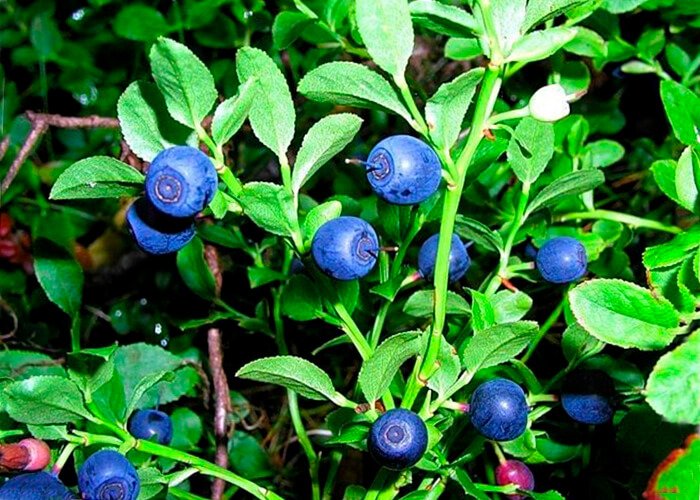
Among the plants nearest the ice were cold-loving mountain species pushed ahead of the advancing glaciers, which descended onto the plains and reached the latitudes of the Ivanovo and Gorky regions and further south. When warming came and the ice withdrew, most followed it north, returning to the mountains or helping build the tundra; low temperatures had become a necessity for them. A few stayed behind in suitable spots — much of the flora of moss bogs and some grasses of spruce and pine forests. Relicts such as the creeping dwarf birch, cranberry, bog bilberry, and fragrant wild rosemary survive from those times.

Evidence of the changing plant world
Evidence of how the plant world changed survives in three main forms: fossils preserved where glaciers never reached, warmth-loving plants sheltered in protected refuges, and the relict and endemic species that remain as living memorials of past climates. Together these records let scientists reconstruct the migrations of plants over thousands of years.
Fossil plants of Greenland and the permafrost zones
Greenland and the permafrost zones preserve some of the clearest fossil evidence of the warmer Tertiary world, holding remains of warmth-loving plants in places where glacial destruction was minimal. The bearberry — a low shrub with branches, leaves, and berries spread along the ground, resembling cowberry and common in pine forests — is one of the relicts that links the present flora to that older, warmer age.
The peat bog is an even finer archive of plant migration, because fruits, seeds, and especially pollen survive in it for a long time. Each flowering plant has pollen of a distinctive shape, so by studying pollen preserved in peat under a microscope, scientists can reconstruct how the surrounding vegetation changed and when. These records reach back to the first peat bogs, formed some 7,000–8,000 years ago, and reading them has steadily improved our picture of how plants moved across the land as modern vegetation took shape.
Warmth-loving plants preserved in sheltered regions
Warmth-loving plants survived in regions shielded from the cold by mountains, which acted as refuges through the ice ages. In western Transcaucasia, in Talysh by the Caspian near the border with Iran, and on the southern coast of Crimea, plants persist under natural conditions that resemble those of Tertiary times far to the north. The Far East, which escaped post-Tertiary glaciation, is the richest such refuge — a place where, as the naturalist I. V. Michurin found, wild Ussuri apples, pears, grapes, and actinidia combine the warmth-loving nature of the Tertiary with an exceptional hardiness to cold acquired in the colder ages, making them valuable for breeding new hardy varieties.
Relict and endemic plant species
Relict and endemic species are plants that survive only in restricted areas, having outlived the conditions that once let them spread widely. Mediterranean species, for example, persist in pockets of warm, dry climate, while endemic plant families confined to a single region — like the primitive angiosperms of the Wet Tropics — record evolutionary lineages found nowhere else. Steppe plants still found in light pine forests where no steppe now exists nearby are living memorials of an earlier, warmer and drier time, just as relict birches lingering on the southern coast of Crimea recall the colder ice-age climate.
The evolution of the animal world and its link with plants
The evolution of animals is bound up with that of plants, because animals exist, in the end, at the expense of green plants. The rich animal populations that lived at the edge of the ice — mammoths, woolly rhinoceroses, musk oxen, and reindeer — could only have existed because vegetation was abundant enough to support them, and their bones, found in great numbers, indirectly testify to the plant cover of the ice ages.
On other continents the link between plant and animal evolution took distinctive forms. In Australia, the breakup of Gondwana isolated marsupials whose evolution unfolded alongside the continent's ancient forests, producing animals and plants found nowhere else. Palaeontology museums and exhibits — including ventures such as JURASSICA — make this co-evolution visible to visitors, displaying fossils that show how plant and animal communities developed together across the Jurassic, Cretaceous, and Tertiary periods.
The modern plant world of Earth
The modern plant world of Earth is the outcome of this entire history — a mosaic of forests, grasslands, and wetlands assembled as species migrated, competed, and adapted after the last ice retreated about 13,000 years ago. As the climate warmed, black alder and willows advanced north along rivers, while grasses colonising the freed ground built the first post-glacial soils. The soil scientist V. V. Dokuchaev showed that soil is not merely a store of nutrients but a natural body formed historically from inorganic matter under the influence of climate, with the active participation of plants and animals.
Trees gave the vegetation its character: pine, a light-loving pioneer, spread across sandy ground and bogs, while shade-tolerant spruce displaced it on clays and loams; birch and aspen, also light-lovers, colonised open spaces first and prepared the way for spruce, which is why birch and aspen forests are regarded as temporary. Oak and other broad-leaved trees — maple, ash, elm, linden, and wild apple — moved up from the south-west, from the Carpathian foothills where they had sheltered during the ice. Along with birch came aspen, and where two waves of spruce and pine met, Siberian and European species grow side by side with their hybrids.

In the oak woods, the understorey carries shrubs that travelled with the oak — hazel (more detail: Early-flowering trees and shrubs), spindle, buckthorn, honeysuckle, and guelder rose — beneath which the famous oak-wood spring flowers bloom: lungwort shifting from pink to blue, anemones, corydalis, and toothwort. The clash of oak woods with spruce stands, vividly described by Professor S. S. Stankov in the Vetluga region, shows oak's understorey herbs persisting beneath spruce and fir that have replaced the oaks above — standing in such a spruce stand, one sees a forest floor of oak-wood grasses beneath a canopy of taiga conifers.

The bog remains the finest archive of these journeys, while the movement of steppe vegetation can be traced the same way. Between about 2,500 and 4,500 years ago, in a warm and dry interval, the steppe pushed far north — in places to the latitude of Vologda — its dense turf of roots and rhizomes hindering the spread of trees. When the climate grew wetter and cooler, trees regained the advantage: aspen and birch sheltered the advancing spruce, pine forests spread over dry ground, and the steppe retreated south, though some steppe plants survive to this day in light pine woods as living memorials of those other times.

Climate change and threats to the environment
Climate change today is shifting plant ranges once again, threatening species that cannot migrate or adapt quickly enough, and conservation has become urgent. Threatened species and endangered ecosystems — from tropical rainforests to Mediterranean shrublands — face habitat loss, warming, and human pressure, and the protection of areas like the Wet Tropics World Heritage Area, managed through World Heritage zoning, is a direct response. Knowledge of the plant world's past helps us reshape it wisely for the future, guiding the acclimatisation of new plants, the breeding of valuable forms, and the planning of crops suited to each locality.
Botanical gardens carry much of this conservation and education work. Their tropical greenhouses recreate distant habitats for visitors: an orchid and bromeliad greenhouse, a greenhouse of succulent plants, a carnivorous plant and fern greenhouse, and a Mediterranean greenhouse each display the flora of a different climate, while staff in plant-identification and conservation laboratories study and safeguard threatened species. These living collections turn the long history of plant evolution into something that can be walked through and understood.
Educational resources and the narrative approach to plant science
Educational resources increasingly tell the story of plants as a single connected narrative rather than a list of facts. Joseph Armstrong, who studied at the State University of New York in Oswego and built his academic career at Illinois State University, took exactly this approach in How the Earth Turned Green: A Brief 3.5 Billion-Year History of Plants, presenting the whole sweep of plant evolution as one continuous tale. Outlets such as The Conversation and its Curious Kids series, along with botanical illustration and palaeontology exhibits, extend this narrative style to wider audiences, while plant illustration and botanical art remain essential tools for recording and teaching species diversity.
Conclusion
The modern plant world is the product of an unbroken 3.5-billion-year story, from oxygen-making cyanobacteria and the first algae in ancient seas, through the move onto land by mosses and the vascular pioneers like Cooksonia, to the seed plants, gymnosperms, and flowering plants that dominate today. Geological eras, mountain-building, and repeated ice ages drove plants to migrate, compete, and adapt, leaving behind fossils, relicts, and endemic species that let us read the past. Understanding that history is not only intellectually rewarding but practically vital — for conservation, for breeding, and for managing the planet's green cover as climate change reshapes it once more.