The Evolution of Life on Earth: A Timeline From the First Life Forms
 libre
libre
The evolution of life on Earth is the roughly four-billion-year process by which living organisms diversified from the earliest single-celled forms into the vast range of plants, animals, fungi and microbes alive today. Over hundreds of millions of years, simple cells gave rise to photosynthetic bacteria, complex eukaryotic cells, multicellular organisms, and ultimately the immense biodiversity we observe now. This page traces that story from the formation of the planet through the origin of life, the great transitions in the tree of life, the rise and fall of the dinosaurs, the mass extinctions, and the emergence of humans.
The diversity of the living world is great in the present, but it becomes almost limitless once you picture how the development of life on Earth unfolded over hundreds of millions of years. Every blade of grass we walk past indifferently has an extremely long chain of ancestral generations behind it, and the further back in time we look, the less these ancestors resemble modern forms.
How does the family tree of the organic world work?
The family tree of the organic world is a branching diagram that shows both the origin of each group of organisms and the kinship between different groups. The trunk of the tree represents the first green organisms; the large boughs are the still-simple plant groups that arose from them; the smaller branches are the changed descendants of those groups; and the tips of the twigs are modern forms.
Every organism is shaped not only by the influence of the present, but by the whole of the past, all the way back to the origin of life hidden in the darkness of time.
This idea, expressed by the plant physiologist K. A. Timiryazev, captures why the picture of evolution is so often drawn as a branching tree. Some branches of the tree have dried up — these are extinct groups that disappeared because conditions turned unfavourable for them. Other branches, by contrast, have flourished and split into many offshoots — groups that developed in favourable conditions and produced many new forms. Charles Darwin used the same tree imagery in *On the Origin of Species*, with the illustration engraved by the naturalist John Gould's contemporaries helping to popularise the concept.
Why is evolution compared to the movement of a river?
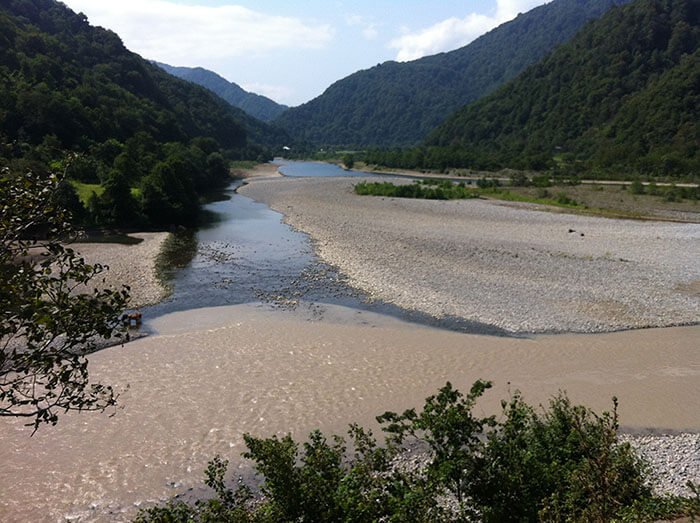
Evolution can be pictured even more vividly as the movement of a river that splits into numerous channels — some swift and rushing, others slow, narrowing and disappearing. Just as the volume of water and the speed of its flow constantly change in the channels and branches of a real river, so the forms of living things in the great river of life have changed: some quickly, others remaining almost unchanged for long stretches of time.
Why did Timiryazev call biology the science of the dynamics of the organic world?
K. A. Timiryazev named biology "the science of the dynamics of the organic world" in order to stress that ceaseless movement is the fundamental property of life. Rather than treating species as fixed, this view emphasises continuous change through descent with modification — the core of the evolutionary biology framework first set out by Charles Darwin and refined by molecular biology in the twentieth century.
What changes has the Earth undergone throughout its history?
Many changes have taken place on Earth over its long history, and each transformed the physical and chemical conditions of life:
- The outlines and relief of the land changed, as did the area and depth of the world ocean.
- New mountain ranges arose while old mountains were worn down, and mountainous regions turned into plains.
- The direction and character of winds and ocean currents shifted.
- The composition of the atmosphere and of ocean and sea water also changed over time.
- The amount of light and heat reaching the Earth from the Sun differed in different ages.
- Scientists believe that even the position of the Earth's axis relative to the plane of its orbit around the Sun did not remain constant.
All of this drove substantial changes both in the conditions of life and in the world of plants. Geologists, who study the life of the Earth's crust through the character and composition of rock deposits, their form and arrangement, and other data, have reconstructed the picture of the geological changes that occurred on the planet.
How did the Earth form and what was its early history?
The Earth formed about 4.54 billion years ago from dust and gas orbiting the young Sun. Soon after, a Mars-sized body named Theia is thought to have collided with the proto-Earth, and debris thrown off by that impact coalesced to form the Moon. For several hundred million years the planet was repeatedly struck during the Late Heavy Bombardment, an interval of intense asteroid and comet impacts that delivered water and organic compounds and helped set the stage for planetary habitability.
What is continental drift and how did Pangea form?
Continental drift is the slow movement of the Earth's continents across the planet's surface, driven by plate tectonics. Around 335 million years ago the drifting landmasses converged into a single supercontinent called Pangea, surrounded by one global ocean. Pangea later broke apart, and the migrating fragments became today's continents — a process that repeatedly reshaped climates, sea levels, and the distribution of species and so steered the course of evolution.
What are the geological eras and the scale of deep time?
Geological eras are the largest divisions of Earth's history, each spanning hundreds of millions of years and marked by qualitatively different rock layers and the remains of life found within them. The unevenness of development — long, relatively calm evolutionary periods interrupted by shorter but turbulent geological revolutions lasting millions of years — led scientists to divide the history of life into distinct stages. The broad sequence of eras runs as follows:
- Azoic ("lifeless") era — a very long interval preceding the appearance of life.
- Proterozoic era ("early life") — lasting about 600 million years, when primordial life arose.
- Palaeozoic era ("ancient life") — estimated at about 325 million years.
- Mesozoic era ("middle life") — lasting about 115 million years.
- Cenozoic era ("new life"), or the modern era, whose beginning lies roughly 70 million years from the present.
Each era is further divided into shorter spans, usually measured in tens of millions of years, called geological periods (for more detail see How life originated in the ancient eras of the Earth). Eras and periods are distinguished by features such as intense mountain-building (see the Tibetan Plateau), violent volcanic activity, changes in the area of seas and land as sea level rose or fell, and changes in the heat reaching the Earth from the Sun. Taken together these data show that life has existed on Earth for at least a billion years. Modern interactive resources such as the ChronoZoom Time Atlas let anyone navigate this deep time visually, from the Big Bang to the present.
How do the traces of past life and palaeontology work?
The most valuable data about Earth's changes come from the remains of life preserved in the planet's depths, and these traces of past life are studied by the science of palaeontology. Palaeontology helps geology determine what changes occurred in the Earth's crust by dating and interpreting the fossils held within rock strata.
What are palaeontological documents?
Palaeontological documents are the remains of animals and plants — highly reliable materials from which the events of Earth's past can be confidently reconstructed. Such finds long attracted the attention of scholars. M. V. Lomonosov wrote about them in his work "On the Strata of the Earth":
The surface of the Earth now has an entirely different appearance from what it had in ancient times. In cold climates, traces of Indian grasses appear in stone mountains, with distinct outlines that attest to their nature.
Reasoning that traces of southern plants are found in cold lands, Lomonosov drew an entirely correct conclusion: evidently, in the distant past the living conditions of the north were completely different from those of today. The same logic underpins modern palaeoclimate research.
What valuable excavations and study methods are used?
Detailed, valuable excavations are found comparatively rarely, because the especially favourable conditions under which the delicate parts of a plant could leave a long-lasting trace were not common on Earth. Sometimes a leaf, falling onto soft silt, was covered by it; the silt later compacted into solid rock, and a researcher splitting such a layered rock into plates would suddenly find a clear imprint of the leaf or another part of an ancient plant. Today these methods are supplemented by radiometric dating, microscopy, and molecular analysis.
How does amber preserve ancient life?
Amber preserves ancient life by trapping organisms in hardened tree resin. On the southern and south-eastern shores of the Baltic Sea, pieces of amber are found containing beautifully preserved imprints of small arthropods (insects, spiders) and plant parts (buds, leaves, flowers, seeds). Amber is the hardened resin of certain ancient conifers; when it flowed from damaged trunks and branches, small animals and plant fragments became caught in it. Amber is the hardened resin of certain ancient conifers
Much time passed, the resin turned into amber, and we now sometimes discover within it astonishingly clear and precise traces of ancient life.
What are pieces of petrified wood?
Pieces of petrified wood, consisting entirely of mineral matter, are also found in the ground. They preserve the structure of the wood so precisely that a researcher examining thin plates of the fossil under a microscope feels as though looking at the wood of a living tree. Such fossilisation occurs under special conditions, when the organic matter of the wood is very slowly replaced by mineral substances dissolved in water, so the wood becomes fully mineralised while keeping its form and structure.
In most cases a great deal of painstaking work is needed to reconstruct the past of plants from faint, half-erased traces. Nonetheless, persistent research has reached into the depths of the past and, from these traces, has reconstructed fairly fully how the plant world changed over millions of centuries.
How did life originate on Earth?
Life on Earth is thought to have originated through abiogenesis — the gradual emergence of living cells from non-living chemistry more than 3.5 billion years ago. The idea that life can arise spontaneously from inert matter was sharply constrained by Louis Pasteur, who showed in the nineteenth century that microorganisms come only from existing microorganisms, redirecting the question toward how the very first cells appeared from prebiotic chemistry in the early ocean. All living things today descend from a single common ancestor, often called LUCA (the Last Universal Common Ancestor).
What was prebiotic chemistry and how did the first organic molecules form?
Prebiotic chemistry refers to the natural chemical reactions on the early Earth that produced the basic building blocks of life — amino acids, nucleotides, and lipids — from simple chemicals such as water, methane, ammonia, and hydrogen. These molecules accumulated and combined into self-replicating systems. Researchers such as Andy Ellington study how RNA-like molecules could have stored information and catalysed reactions in an early "RNA world," bridging the gap between basic chemical composition and the first molecular biology foundations of living cells.
What is the earliest evidence of life on Earth?
The earliest evidence of life on Earth comes from ancient rock formations that preserve chemical and structural signatures of microbes. Putative microfossils and graphite enriched in life-derived carbon have been reported from the Nuvvuagittuq Greenstone Belt in Quebec, sometimes dated to more than 3.7 billion years, while stromatolites — layered structures built by microbial mats — appear in rocks from Greenland and Western Australia. Together these sites in the Nuvvuagittuq Belt and beyond push the origin of unicellular life deep into Earth's first chapters.
How did photosynthesis evolve and oxygenate the atmosphere?
Photosynthesis evolved in early photosynthetic bacteria, and its most consequential innovation arose in cyanobacteria, which used sunlight to split water and release oxygen as a by-product. The resulting build-up of atmospheric oxygen, known as the Great Oxygenation Event around 2.4 billion years ago, transformed Earth's chemistry, drove many anaerobic organisms to extinction, and eventually made the rise of oxygen-breathing animal life possible. The history of bacteria thus shifted scientific perception from viewing them merely as pathogens to recognising them as the geochemical engineers that reshaped the planet's biogeochemical landscape.
How did eukaryotic cells appear?
Eukaryotic cells — the complex cells with a nucleus that make up animals, plants, fungi and protists — appeared through endosymbiosis, in which one cell engulfed another and the two formed a permanent partnership. The endosymbiotic theory, championed by Lynn Margulis, explains that mitochondria originated from free-living proteobacteria and chloroplasts from cyanobacteria-like ancestors. Microbiologist Carl Woese used molecular sequencing to reveal that life splits into three domains — bacteria, archaea, and eukaryotes — while W. Ford Doolittle showed that horizontal gene transfer blurred the earliest branches of the tree, complicating the simple picture of strictly vertical inheritance.
How did sexual reproduction originate?
Sexual reproduction originated among early eukaryotes as a means of combining genetic material from two parents, generating the variation that natural selection acts upon. By reshuffling genes each generation, sex accelerated adaptation and helped organisms cope with parasites and changing environments — an advantage thought to explain why sexual reproduction became so widespread despite its costs compared with simple cell division.
How did multicellular life emerge?
Multicellular life emerged when single cells began to live together, cooperate, and specialise, a transition that occurred independently several times in Earth's history. Early multicellularity experiments are recorded in Proterozoic Eon rocks, and the correlation between morphology and genetic complexity has been a major research focus. Studies of the sponge Amphimedon queenslandica, sequenced by teams including David J Miller at James Cook University, revealed that this simple animal already possessed much of the genomic toolkit of the common metazoan ancestor — showing that early animals were genetically more complex than their plain bodies suggest.
What were the Ediacaran biota and the Cambrian explosion?
The Ediacara biota were the first large, soft-bodied multicellular organisms, flourishing just before the Ediacaran-Cambrian Boundary roughly 540 million years ago. They were followed by the Cambrian explosion, a relatively rapid burst of diversification in which most major animal body plans appeared, including the symmetrical Bilateria and unusual creatures such as Wiwaxia. Research by scientists including Thomas C G Bosch at Christian Albrechts Universität zu Kiel has highlighted how early animals also acted as agents of environmental change — for example, zooplankton ventilated and transformed the oceans, and the rising atmospheric oxygen levels and animal evolution reinforced one another.
How did animals and their major body plans evolve?
Animal evolution produced a series of major body plans, from radially symmetrical sponges and jellyfish to the bilaterally symmetrical animals that dominate today. As complex animals diversified, ecological interactions with microbes deepened: bacteria serve as settlement cues for marine larvae, introduced species can disrupt microbial communities, and symbionts such as Symbiodinium — the algae that power coral reefs — show how tightly animal and microbial diversity are intertwined, as documented by science writers such as Hayley Dunning.
How did fish and vertebrates evolve?
Fish were the first vertebrates, animals with a backbone, and they arose in the seas of the Palaeozoic era. From early jawless fishes came jawed fishes, and from lobe-finned fishes evolved the first four-limbed animals that made the transition from aquatic to terrestrial life. This vertebrate lineage ultimately gave rise to amphibians, reptiles, birds and mammals, making fish the foundation of the entire vertebrate story.
How did arthropods evolve and colonise the land?
Arthropods — the group that includes insects, spiders, crustaceans and their relatives — were among the first animals to colonise the land. Their hard external skeletons and jointed limbs, well preserved in fossils and even in Baltic amber, helped them resist drying out and move on dry ground, allowing them to spread across terrestrial habitats long before vertebrates fully established themselves there.
How did plants evolve?
Plant evolution began with the first green organisms in water and progressed to the land plants that now cover the continents. The development of life, like the development of everything that exists, was not smooth: it alternated between long, relatively calm periods and shorter, turbulent ones, and the plant world changed accordingly — some lineages transforming quickly, others persisting almost unchanged for vast stretches of time.
How did terrestrial plants and the first forests develop?
Terrestrial plants developed structures — roots, vascular tissue, and protective spores and seeds — that allowed them to survive away from water, and by the Devonian period they had grown into the first true forests. These early forests drew down carbon dioxide, enriched the atmosphere with oxygen, built soils, and created entirely new habitats, reshaping both the climate and the opportunities available to land animals.
How did dinosaurs evolve and become extinct?
Dinosaurs evolved during the Mesozoic era and dominated terrestrial ecosystems for roughly 165 million years before becoming extinct about 66 million years ago. Their extinction is attributed to the Cretaceous-Paleogene extinction event, triggered when a large asteroid struck near the Yucatan Peninsula, with effects worsened by massive volcanic activity. The disappearance of the dinosaurs opened ecological space that allowed mammals to diversify rapidly and rise to prominence.
What were the mass extinctions in Earth's history?
Mass extinctions are events in which a large fraction of the planet's species died out over a geologically short interval, punctuating the calm evolutionary periods with sudden upheavals. The major events include:
- Late Devonian extinction event — a prolonged crisis that struck marine life especially hard.
- Permian-Triassic extinction event — the most severe of all, wiping out the great majority of species and marking the end of the Palaeozoic era.
- Cretaceous-Paleogene extinction event — the impact-driven event that ended the age of dinosaurs.
Each mass extinction reset the course of evolution, clearing dominant groups and allowing survivors to radiate into the vacated niches.
How are biodiversity and the distribution of species explained?
Biodiversity — the variety of life and the way species are distributed across the planet — is the cumulative product of billions of years of evolution, diversification, and extinction. Biological diversity ranges from the genetic differences within a single population to the richness of whole ecosystems, and it reflects how lineages adapted to the changing geography, climate, and chemistry of the Earth. Microbial diversity underlies all of it, with microbes shaping nutrient cycles, soils, and the chemistry of the oceans and atmosphere on which larger organisms depend.
What are the core concepts of evolutionary biology?
Evolutionary biology rests on a handful of core concepts: descent with modification from common ancestors, variation within populations, and natural selection acting on that variation over deep time. These ideas, first set out by Charles Darwin and supported by the field naturalist tradition of contemporaries like John Gould, are now reinforced by genetics, molecular biology, and palaeontology. Free educational resources such as Evolution 101 and the Understanding Evolution project make this framework accessible, explaining how the river of life keeps branching, drying up, and flourishing — the continuous dynamic that Timiryazev placed at the heart of biology.
To explore related topics across the sciences, see our sections on Astronomy and Agriculture, or return to the main collection of articles on travel, nature, science and life.