How to Plant and Grow Blackberry Bushes for an Abundant Fruit Harvest
 libre
libre
Blackberry is a thorny, perennial bramble of the genus Rubus that grows wild along riverbanks, near floodplain water bodies, and in ravines, and it rewards gardeners with flavorful fruit over a long season — from midsummer to late autumn. The plant flowers in the second half of June, and the first berries ripen as early as July.

What does the blackberry plant look like?
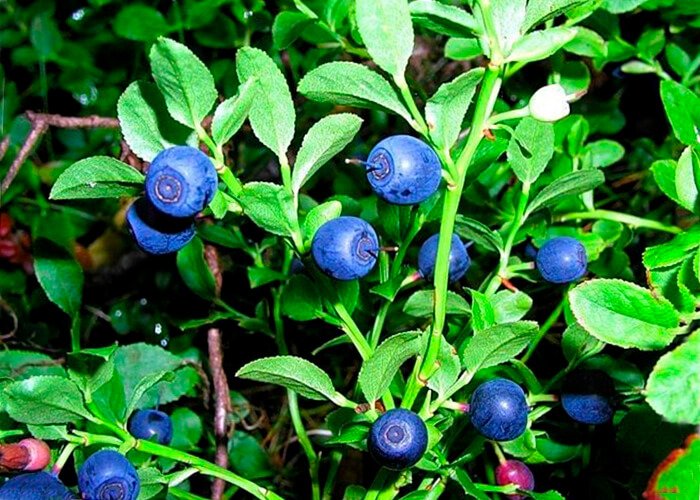
The blackberry plant is recognized by its long, trailing stems set with sparse thorns and coated in a bluish, waxy bloom. These canes sometimes reach up to 4 meters in length. Along the stems sit compound leaves arranged singly — most are trifoliate (three leaflets), though some bear five leaflets. Every leaf is green above and pale grayish beneath, with short, narrow stipules at the base of each leaf stalk. This waxy gray coating on both stems and fruit is what gives the wild European species its common Russian name, the "gray" blackberry.
How is the blackberry botanically classified?
Blackberry belongs to the genus Rubus within the rose family, Rosaceae — the same family as roses, apples, and strawberries. The genus Rubus is enormous and notoriously complex, containing hundreds of microspecies that hybridize readily, which is why botanists treat blackberries as an aggregate group rather than a tidy set of distinct species. Common cultivated and wild blackberries include Rubus allegheniensis (the Allegheny blackberry, a native North American highbush type), the Common blackberry, and the aggressively spreading Rubus armeniacus (Himalayan blackberry). Closely related Rubus crosses include the loganberry — developed by James Harvey Logan in California — which is a blackberry-raspberry hybrid.
Why is the blackberry a perennial plant?
The blackberry is a perennial plant, yet each of its canes lives only two years. New shoots emerge from buds on the underground rootstock. In the first year a cane (the primocane) grows and sets fruit buds; in the second year (as a floricane) lateral branches with flowers develop from those buds. After the fruit ripens, the two-year-old canes dry out and die, while fresh primocanes are already growing to replace them. This primocane-and-floricane cycle is the key to understanding pruning: the dead, fruited canes are removed and the year-old canes are kept for next season's crop.
How do blackberry canes grow, and what are the growth habits?
Blackberry canes fall into three main growth habits, and choosing the right one shapes the support you'll need:
- Erect — stiff, self-supporting canes that need little or no trellis; many Arkansas-bred cultivars such as Apache, Navaho, Arapaho, Ouachita, and Natchez fall here.
- Semi-erect — vigorous, arching canes that benefit from a trellis; examples include Triple Crown, Chester, and Black Diamond.
- Trailing — long, ground-running canes that must be trained on wires, typical of West Coast types like Marion (the famous "marionberry") and Black Diamond from the Pacific Northwest.
Growth rates and mature size vary with habit: erect types stay around 1.2–1.8 m, semi-erect canes can arch to 2.5–3 m, and trailing canes may extend several meters along a wire. Erect and semi-erect plants are generally the most beginner-friendly because they need the least training.
What do blackberry flowers look like, and when do they bloom?
Blackberry flowers are fairly large, with a calyx of five gray-felted sepals and a corolla of five white petals; each flower carries numerous stamens and pistils. The abundant nectar and pollen make blackberry blossoms a strong draw for bees and other pollinating insects, supporting good fruit set.
When is blackberry bloom season?
Wild blackberry begins blooming in the second half of June in temperate regions, but bloom timing shifts with climate and cultivar. In warm Southern states, cultivated varieties can flower in April–May, while in cooler areas such as Maine or the upper Mid-Atlantic, bloom may arrive in late June. Most modern cultivars are self-pollinating, so a single plant will set fruit, though the presence of pollinators improves berry size and yield.
What are blackberry fruits, and when do they ripen?
Blackberry fruits are black with a bluish waxy bloom, and what people casually call a "berry" is botanically an aggregate of drupelets — a cluster of 20 to 26 tiny drupelets fused around a fleshy core. The fruit is rich in a deep purple juice that stains the hands and lips of anyone who picks and eats it. A ripe berry becomes plump and separates easily from its stalk; under-ripe fruit clings and tastes tart.
What is the fruit ripening and harvest timeline?
The first berries ripen in July, and harvest continues over many weeks because fruit on a single plant matures unevenly. Pick only fully ripe, glossy-dull black berries — they pull away from the receptacle with no resistance. Because the fruit is soft and perishable, pick into shallow containers, harvest in the cool of the morning, and refrigerate promptly; fresh blackberries keep only a few days, so most fruit destined for storage is frozen, dried, or processed quickly.
How is a blackberry different from a black raspberry?
The clearest difference between a blackberry and a black raspberry is what stays behind when you pick the fruit. A black raspberry pulls free of its core, leaving a hollow, thimble-shaped berry, whereas a blackberry keeps its white core inside, producing a solid fruit. Blackberry canes are typically more robust and the drupelets larger and glossier, while black raspberry stems often show the same bluish, waxy bloom but bear hollow, dome-shaped fruit. Both belong to genus Rubus, but they are distinct species.
How does the blackberry reproduce?
Blackberry's method of vegetative reproduction is remarkably distinctive — it roots itself from the tips of its own canes. In late summer, on the bare, leafless tips of green shoots that bend down toward the ground, adventitious roots begin to grow out around the large terminal bud and push into the soil. By September, after rains, this tip-rooting reaches a substantial stage, and the cane forms a new daughter plant where its tip meets the ground.
A blackberry plant in this state makes a curious sight: an arching stem that begins at the rootstock and ends in a fresh set of roots. Few people are aware of this interesting trait of the blackberry, and it is rarely described in books.
Beyond tip-layering, this same vigor is why some Rubus species — especially the Himalayan blackberry, Rubus armeniacus — become invasive weeds on the West Coast and in the Pacific Northwest, spreading by seed (dispersed by birds and mammals) and by aggressive rooting. Where invasiveness is a concern, choose well-behaved named cultivars and manage stray canes before they root.
What blackberry varieties should you choose?
Choosing a blackberry variety comes down to matching thorniness, cane habit, cold hardiness, disease resistance, and fruiting type to your garden and climate. Most modern cultivars trace back to breeding programs at the University of Arkansas, USDA-ARS, and Oregon State University, with extension guidance from groups such as NC State Extension, the North Carolina Cooperative Extension, the Southern Region Small Fruit Consortium, and researchers including E. Barclay Poling and Gina Fernandez. Genetic and trait-mapping work at the John Innes Centre continues to refine flavor, firmness, and thornlessness.

A practical way to compare common types:
| Cultivar | Habit | Thorns | Notable trait |
|---|---|---|---|
| Natchez | Semi-erect | Thornless | Early, very large berries |
| Ouachita | Erect | Thornless | Firm fruit, good disease resistance |
| Triple Crown | Semi-erect | Thornless | High yield, sweet flavor |
| Chester | Semi-erect (trailing) | Thornless | Excellent cold hardiness |
| Apache | Erect | Thornless | Large fruit, self-supporting |
| Kiowa | Erect | Thorny | Among the largest berries |
| Prime-Ark Freedom | Erect | Thornless | Primocane (fall) fruiting |
Which thornless blackberries are best?
Thornless blackberries make picking and pruning painless, and decades of breeding have produced many excellent options. Strong thornless choices include the Natchez Blackberry, the Ouachita Blackberry, the Triple Crown Blackberry Bush, the Chester Trailing Thornless Blackberry, the Apache Blackberry, the Navaho Thornless Blackberry Bush, the Galaxy Thornless Blackberry, the Sweetie Pie Thornless Blackberry Bush, and the compact Bushel and Berry® Baby Cakes Blackberry® for containers. The Proven Winners® Taste of Heaven® Blackberry Shrub and the Big Daddy Blackberry Bush are popular ornamental-yet-productive selections, while the original Thornless Blackberry Bush types laid the groundwork for thornless cultivar development.
Which blackberry varieties are the most cold-hardy?
For cold climates, choose cultivars bred or proven for winter hardiness, since blackberry canes can be damaged by hard freezes. Chester Blackberry is one of the most winter-hardy thornless types, and Darrow (the Darrow Thorny Blackberry) was specifically selected for cold tolerance in the Northeast — guidance echoed by the University of Maine Cooperative Extension for growers in Maine and similar zones. Triple Crown also handles cold reasonably well. In the harshest zones, lay trailing canes down and mulch over winter for protection. Match any variety to your USDA hardiness zone, and in marginal areas favor erect, hardy types over tender trailing ones.
Which blackberries resist disease?
Disease-resistant cultivars sharply reduce spraying and crop loss, with the main blackberry threats being orange rust, anthracnose, and raspberry bushy dwarf virus. Ouachita, Natchez, and several Arkansas releases (including the Caddo Blackberry, Ponca Blackberry, Osage, and Von) were bred with improved disease tolerance. To prevent problems, plant certified disease-free stock, space plants for airflow, prune out and destroy old fruited canes, and remove any cane showing the bright orange spore masses of orange rust — an incurable systemic disease — roots and all.
Which blackberries are best for beginners?
Beginner gardeners should start with erect or semi-erect thornless cultivars that need minimal trellising and forgiving care. Reliable starter varieties include Ouachita, Apache, Triple Crown, and the Navaho Blackberry, all of which are thornless, self-supporting or lightly trellised, self-pollinating, and productive. The container-friendly Bushel and Berry® Baby Cakes Blackberry® and Mini Hardy dwarf types are ideal where space is tight, since they fruit on a patio without a trellis.
Which blackberries tolerate drought and heat?
For hot, dry regions, choose heat-adapted cultivars developed for the Southern states and Ozarks climate, such as the Arapaho, Osage, Sweet-Ark Caddo, Sweet-Ark™ Ponca Blackberry Plant, and the primocane-fruiting Prime-Ark Traveler and Prime Ark® Freedom Blackberry. These Arkansas selections handle warm summers better than cool-climate trailing types. Even drought-tolerant blackberries crop best with steady moisture during flowering and fruiting, so deep mulch and supplemental irrigation in heat waves protect both yield and berry size.
How do you grow blackberries?
Growing blackberries successfully starts with full sun, well-drained soil, and a plan for the cane lifecycle. Blackberries need at least 6–8 hours of direct sun for sweet, abundant fruit, and they reward good site prep with crops for 15 years or more. Plant in early spring once hard frost has passed; bare-root and potted plants are typically shipped in the dormant season for this reason. Space erect types about 0.9 m apart in rows 2.5–3 m apart, and semi-erect or trailing types 1.5–1.8 m apart, training the canes onto a two-wire trellis.
How do you prepare the site and soil?
Prepare the planting site with rich, well-drained, slightly acidic soil (pH about 5.5–6.5) and plenty of organic matter. Choose a sunny spot away from wild brambles, which can carry disease. Work in compost or aged manure before planting, and avoid low, waterlogged ground, since blackberries dislike "wet feet." A 5–8 cm layer of mulch — straw, wood chips, or bark — conserves moisture, suppresses weeds, and keeps roots cool. Water consistently, providing roughly 2.5 cm of water per week during the growing and fruiting season.
What is the fertilizing schedule for blackberries?
Fertilize blackberries lightly but regularly, leading with nitrogen in spring as growth begins. A common approach is a balanced fertilizer (such as 10-10-10) at planting and again each spring, with an extra nitrogen side-dressing after fruiting for primocane types. As a rough guide, apply about 25–50 g of actual nitrogen per plant per year, split across the season; avoid heavy late-summer feeding, which pushes tender growth that won't harden before winter. Pair feeding with pruning: remove spent floricanes after harvest and thin primocanes to the strongest few per plant.
How are blackberries grown commercially?
Commercial blackberry production has grown into a global industry, with Mexico now a leading exporter of fresh blackberries to the United States during the off-season, alongside major domestic acreage in Oregon, California, and the Southern states. Specialty nurseries such as Ison's Nursery & Vineyard in Brooks, GA propagate named cultivars for both home and commercial growers. Many small farms also build roadside fresh-market and U-pick operations, where firm, shippable cultivars like Ouachita, Natchez, and Prime-Ark Traveler are prized for shelf life and flavor. For deeper agronomy guidance, see our agriculture articles and related growing resources.
What is the nutritional value and what are the health benefits of blackberries?
Blackberries are nutrient-dense and rich in sugars, vitamin C, pectin, tannins, natural pigments, organic acids, and trace minerals. Their deep color reflects a high content of anthocyanin antioxidants, and they supply notable dietary fiber and vitamin K. Dried berries are traditionally brewed into infusions used as a diaphoretic (sweat-inducing) and cold remedy, while the leaves can be dried in the shade and steeped as a tea substitute.
What are blackberries used for in the kitchen?
Blackberries are excellent both fresh and preserved, and their culinary range is wide. The fragrant, sweet-tart, juicy fruit is delicious eaten straight from the cane, but it is arguably even better in the kitchen, where it becomes:
- Jam, syrup, jelly, marmalade, and fruit leather (pastila)
- Compotes and kissel (a fruit-thickened drink)
- Pies, cobblers, and crumbles
- Sauces, vinegars, and cordials
- Sun-dried or frozen fruit for year-round use
Because fresh berries are highly perishable, freezing and cooking are the most practical post-harvest processing options for a large crop.
What is the ecological role of blackberry and its value to wildlife?
Blackberry plays an outsized ecological role, feeding pollinators in bloom and birds and mammals in fruit, while its thorny thickets provide shelter and nesting habitat. The flowers attract bees and other insects, and the berries are eaten by songbirds, foxes, bears, and many small mammals, which then disperse the seeds. Conservation agencies recognize the native value of species such as the Allegheny blackberry (Rubus allegheniensis); the Missouri Department of Conservation, for example, highlights native blackberries as important wildlife food and cover across Missouri and the Ozarks. The same vigor that benefits wildlife, however, makes introduced types like Rubus armeniacus invasive in parts of Oregon and the broader Pacific Northwest.
What is the cultural significance of the blackberry in folklore?
Blackberries are woven through folklore and storytelling, most famously in the Br'er Rabbit tales recorded by Joel Chandler Harris, where the briar patch is the trickster's beloved refuge. Folklorists such as Vance Randolph documented blackberry lore across the Ozarks, and traditional growers and writers — including Lewis Hill, Roberta Bailey, and others in the home-gardening community — have kept practical and cultural knowledge of the bramble alive for generations.
When should blackberries be harvested?
Blackberries are harvested from midsummer to late autumn, beginning with the first ripe berries in July and continuing as fruit matures over many weeks. Pick when the berry is fully colored, plump, and slightly soft, releasing from the stalk with no tug — that is the surest ripeness indicator. The harvest dates for wild blackberry are given in the calendar for gathering wild fruit, and the seasonal timing of the first ripe fruit sets the rhythm for the whole picking season.