Beautiful Planet Earth: The Most Stunning World in the Solar System
 libre
libre
The planet Earth is beautiful — those were the words of the first human ever to look back at it from space. That single perspective, seeing a living blue world suspended against the black emptiness of the cosmos, captures why Earth remains unique among every body we know: it is the only planet where life covers the surface, fills the oceans, shapes the crust and breathes through the atmosphere. This page explores what makes Earth extraordinary — from its formation and internal structure to its biosphere, and how that fragile beauty has been captured on film for audiences on the ground.
Why the planet Earth is beautiful because of life
Earth is remarkable precisely because it teems with life, and someday a traveller who has walked the landscapes of dozens of worlds — not only in our own solar system — will say so with certainty. Earth stands apart from the sharp broken cliffs, the scattered stones, the sand deserts whose whirlwinds lift clouds of fine dust kilometres into the sky, and the endless blue-white plains of never-melting ice into which the lightest gases have frozen on other planets.

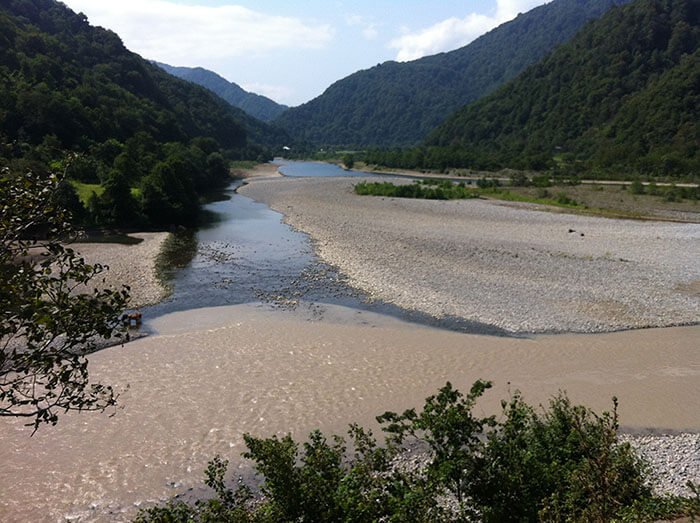
Set beside photographs of those other, silent worlds, a single image of a modest birch tree swaying under a gentle breeze tells the whole story. On that photograph there might instead be a tropical palm or a northern pine dusted with white flakes of snow — but everywhere there would be the presence of life. It is life that makes our planet astonishing, and it makes astonishing not only the landscapes of the continents but also the depths of the oceans, the crust of the Earth, and its atmosphere, so unlike that of any other planet.
What makes the planet Earth unique
Earth is unique because of a rare combination of properties that together permit and sustain life: a stable distance from the Sun, liquid water across most of its surface, a protective magnetic field, an oxygen-rich atmosphere and active geology that recycles its crust. The planet is roughly 4.5 billion years old, formed from the remnants of an earlier generation of stars whose material collapsed into the disk that became the Sun and its family of worlds. As the young Earth cooled, its atmosphere developed, water condensed into oceans, and the conditions for a biosphere gradually emerged.
Earth's internal structure is layered like the rings of an onion, each layer with its own composition and physical properties:
- Crust — the thin outer shell, ranging from about 5–10 km thick beneath the oceans to 30–70 km beneath the continents, made largely of silicate rock.
- Mantle — a deep region of hot, slowly flowing silicate rock extending nearly 2,900 km down, divided into upper and lower mantle regions.
- Outer core — a layer of molten iron and nickel whose circulation generates Earth's magnetic field.
- Inner core — a solid iron-nickel sphere kept solid by immense pressure despite temperatures comparable to the surface of the Sun.
The motion of molten metal in the outer core works like a dynamo, producing the magnetic field that shields the surface from harmful solar radiation. Above that, the rigid crust is broken into moving plates. Plate tectonics drives continental movement over geological time, raising mountain ranges such as Mt. Everest and gouging deep trenches such as the Mariana Trench, the deepest point of any ocean. This restless geology, unusual in the solar system, keeps Earth's surface renewing itself.
Water is the other defining feature. Oceans cover most of the planet, and the colour of ocean water is shaped by how it absorbs and scatters light along with the plankton and dissolved matter it contains. Water is distributed among the oceans, ice caps, groundwater, rivers, lakes and the atmosphere in a constant cycle. Compared with the whole history of the planet, human presence is astonishingly brief — a thin sliver of time near the very end of Earth's long story.
Life has always existed on Earth
Academician V. I. Vernadsky held that life has always existed on Earth, though the view closer to us today is that life has reigned on Earth for roughly the last three billion years. We also know almost certainly that even the planets Vernadsky counted as inhabited — Venus and Mars — are in all likelihood entirely dead.

Vernadsky's hypothesis of living matter
Vernadsky was right about something fundamental: over the last two to three billion years the Earth's crust — or more precisely its material — has formed with the greater or lesser participation of living matter. More than that, the presence of living matter has governed the migration of many elements through the crust. His concept of "living matter" as a genuine geological force reshaped how scientists understand the boundary between biology and geology, and it underpins the modern idea of the biosphere as an active planetary system rather than a passive backdrop.
Venus and Mars: why they are dead
Venus and Mars are lifeless because neither retained the delicate balance of conditions that Earth enjoys. Venus is smothered by a crushing carbon-dioxide atmosphere that traps heat to furnace temperatures, while Mars lost most of its atmosphere and surface water long ago, leaving a cold, dry, irradiated desert. Living matter never gained a foothold there to cleanse the atmosphere or moderate the climate the way it did on Earth — which is exactly why the search for life beyond our world now focuses on distant exoplanets in the habitable zones of other stars, such as Kepler-186f, an Earth-sized world orbiting within its star's temperate band.
The role of living matter in forming the Earth's crust
Living matter has physically built large portions of the Earth's crust, locking away elements that once floated free in seawater and the air. The clearest witnesses to this are the vast limestone beds found around the planet (more: Ferrous and non-ferrous metals and their ores).
Limestone and the biogenic origin of rock
Limestone beds reach considerable thickness and arose from the shells of tiny sea creatures that settled to the seafloor. Limestone is made of calcium, carbon and oxygen; it is impossible to imagine how much of these substances is bound up in the durable molecules of calcium carbonate (CaCO₃) that make up the rock. That calcium was once dissolved in the waters of ancient seas, and the carbon was once part of Earth's atmosphere. At the cost of life and death, the ancient inhabitants of the seas cleansed the atmosphere and lowered the salinity of the oceans.
Coal, peat, oil and gas
Coal, oil shale, peat, oil and gas — the fossil fuels that still form the energy foundation of modern civilization — are likewise of biogenic origin. Not long ago coal was called "the bread of industry." These fuels, too, drew excess carbon monoxide and carbon dioxide out of Earth's atmosphere, storing the captured energy of ancient sunlight for hundreds of millions of years.

Marble, chalk and other mineral resources
Marble, chalk, and certain ores are among the many other useful minerals of biogenic origin, connected with living matter (more: How minerals are used). To this day the same processes continue across the globe: in some places the remains of countless minute organisms accumulate, concentrating rare and scattered elements in their bodies; in others, generation after generation of bog plants pile upon one another, covering steppe lakes with a quivering peat surface and building up valuable fuel. Coral reefs, islands and atolls keep growing, and the jungles, groves and taiga keep rustling in the wind — all of it unfolding spontaneously and without design.
The Sun as the source of energy for life
The Sun is the engine behind nearly all life on Earth, and living matter has spent billions of years gathering and storing the streams of light poured out by the young Sun so that they could be given generously to people today. Those stored reserves have provided the few centuries of cultural development that lie between the invention of the steam engine and the widespread use of atomic and thermonuclear energy.
The rays of the Sun that lit up mighty forests of tree ferns many millions of years ago were carried into our age inside black combustible stone — energy preserves invented by living matter and belonging among the astonishing substances of our planet. On lifeless planets that same flood of radiation is simply reflected, or if such a world heats up under it, it cools almost instantly once it slips into shadow; Earth, wrapped in its living film, holds and channels that energy instead.
Earth's atmosphere: structure and composition
Earth's atmosphere is a layered envelope of gases — chiefly nitrogen and oxygen — that shields the surface, regulates temperature and makes weather possible. Its density is greatest near the ground and thins with altitude until it fades into the vacuum of space. This gaseous shell, unlike the atmospheres of neighbouring planets, is the direct product of billions of years of interaction between geology and living matter.
Layers of the atmosphere and their properties
The atmosphere is divided into distinct layers, each with characteristic properties:
- Troposphere — the lowest layer, where nearly all weather occurs and where temperature falls with height.
- Stratosphere — home to the ozone layer, which absorbs much of the Sun's ultraviolet radiation and protects life below.
- Mesosphere — a colder layer where most meteors burn up.
- Thermosphere and ionosphere — electrically charged upper regions where the aurora borealis glows as charged solar particles interact with atmospheric gases.
The ozone in the stratosphere, together with the overall density of the atmosphere, forms a barrier that would be impossible without the oxygen released by living organisms over geological time.
Clouds, water vapour and the water cycle
Clouds form when water vapour rises, cools and condenses onto tiny particles suspended in the air, and this endless movement of water between ocean, atmosphere and land is the water cycle that sustains the biosphere. Water vapour is also a powerful greenhouse gas that helps keep the planet warm enough for liquid water to persist, tying the atmosphere directly to the oceans and to life.
Aerosols and atmospheric particles
Aerosols — tiny solid and liquid particles such as dust, sea salt, soot and pollen suspended in the air — influence cloud formation, scatter sunlight and affect climate. Along with the way molecules scatter light, aerosols shape the sky's appearance: the blue of the daytime sky is produced by Rayleigh scattering, in which shorter blue wavelengths of sunlight are scattered far more strongly by air molecules than longer red ones.
The biosphere and Earth's natural phenomena
The biosphere is the thin living film that covers the entire surface of the Earth, absorbing the avalanche of radiation that pours onto it and driving processes that no dead planet undergoes. Living matter has passed through a long series of modifications driven by natural evolution, while inert, lifeless nature scarcely evolves at all — the mineral world today undergoes much the same transformations that were characteristic of it three and five billion years ago. Human activity has now become a geological force in its own right, at scales that rival and sometimes vastly exceed the spontaneous workings of nature.

The ocean depths, filled with life
The ocean depths are among the most life-filled and least explored parts of the biosphere, from sunlit surface waters swarming with plankton to the crushing darkness of trenches like the Mariana Trench. Plankton and other aquatic ecosystems form the base of the marine food web and generate much of the planet's oxygen, while dissolved matter and living organisms give ocean water its varied colours. New generations of tiny organisms continually settle to the seafloor, concentrating rare elements in their bodies and, over immense spans of time, building new layers of rock.
Climate change and environmental degradation
Human activity has grown so vast that even its by-products often carry grim consequences for the planet. Imagine the scale of farmers who each year turn over the surface layer of the soil, sow enormous expanses with selected plant species and add huge quantities of fertilizers and other substances — some of them destructive poisons. Metallic iron is a rarity among natural creations, yet industry produces millions of tonnes of steel; the mining of combustible fossil fuels — coal, oil and shale — is measured in hundreds of millions of tonnes, and all of this represents the titanic activity of humanity in just a single year.
The side effects are severe: mighty rivers that recently nourished many countries of Western Europe and America have been polluted so badly that one cannot drink from their clouded waters, and the atmospheres of many cities in the United States and Japan are threatened with contamination by poisonous automobile exhaust. Documenting this degradation — the retreat of ice and polar regions, the changing climate and the pressure on ecosystems — has become one of the central purposes of modern nature filmmaking, which uses the view from space to show just how thin and fragile the living layer of Earth truly is.
Earth from space: the view of the first astronauts
Seeing Earth from space transforms how people understand the planet, revealing cities, weather systems, oceans and natural wonders as parts of a single fragile whole. That perspective is the heart of A Beautiful Planet, a 2016 IMAX documentary produced through a collaboration between IMAX Corporation and NASA and directed by Toni Myers, distributed theatrically by Walt Disney Studios through IMAX Entertainment. The film's crew of astronauts aboard the International Space Station — including Scott Kelly, Terry Virts, Barry E. Wilmore, Samantha Cristoforetti, Anton Shkaplerov, Kjell Lindgren and Kimiya Yui — shot much of the footage themselves, with actress Jennifer Lawrence providing narration.
Filming the planet Earth in high resolution
The astronauts filmed Earth in high resolution using digital 4K IMAX cameras, whose sharpness and low-light sensitivity let them capture cities glittering at night, storms sweeping across oceans and the shimmer of the aurora — imagery that older film cameras could not achieve aboard the station. Much of the filming took place from the ISS Cupola module, a domed observation deck of seven windows that gives astronauts a panoramic view of the planet below. Cinematographer James Neihouse trained the crew to operate the cameras, so the finished documentary shows Earth's natural wonders from orbit exactly as the astronauts saw them, without a professional film team on board.
Computer-generated visualization of Earth and space
Beyond live footage, the documentary uses photorealistic computer-generated visualization to show scenes no camera could reach — the formation of the solar system, the giant impact that created the Moon, and journeys across the Milky Way Galaxy. Such 3D renderings of Earth and space rely on detailed texture mapping and physically based materials, and advanced scientific visualization of this kind draws on the expertise of institutions like the National Center for Supercomputing Applications at the University of Illinois Urbana-Champaign, which has produced digital renderings of astronomical scenes for the screen.

Earth in documentary cinema
Documentary cinema has become one of the most powerful ways to convey both the beauty and the fragility of the planet, and A Beautiful Planet exemplifies the approach. Running about 46 minutes and shot in the large-format IMAX system, the film pairs its space footage with a clear conservation message: that Earth is a rare, living oasis whose delicate balance is being altered by human activity. The IMAX theatrical format — with its towering screens and immersive sound — was chosen precisely to make audiences feel the overwhelming scale and vulnerability of the world seen from orbit.
Comparable documentaries about the planet
Viewers drawn to Earth-from-space documentaries often seek out comparable titles, and several share the same lineage of IMAX space films directed by Toni Myers:
- Hubble 3D — following the servicing of the Hubble Space Telescope.
- Space Station 3D — an earlier look at life aboard the ISS.
- Blue Planet and other large-format Earth documentaries emphasizing environmental themes.
These films together form a recognizable genre that uses orbital cinematography to argue for planetary conservation, much as broader natural history documentaries do at ground level.
Audience reviews and viewer ratings
Audiences and critics have generally praised A Beautiful Planet for its stunning visuals and family-friendly conservation message, while some noted that its short runtime leaves little room for depth. Community discussion on platforms such as Reddit tends to highlight the immersive IMAX imagery and Jennifer Lawrence's narration as standout elements, and the film performed respectably at the box office for a large-format documentary. The consensus in critical reception is that its greatest strength is the authentic footage captured by real astronauts rather than a studio crew.
Conclusion: why Earth is beautiful
Earth is beautiful because it is alive — a single planet where geology, atmosphere, oceans and living matter have worked together for billions of years to produce a world unlike any other we have found. From the biogenic rocks beneath our feet to the ozone shield above and the biosphere that ties them together, every layer bears the signature of life. Seen from the Cupola of the International Space Station or rendered in photorealistic visualization, that living world reveals both its grandeur and its fragility. Recognizing how rare and delicate this balance is — and how heavily human activity now weighs upon it — is the first step toward protecting the only home we have. To explore more about our place in the cosmos, continue with astronomy.