Deer in Ukraine: Species and Deer Hunting Guide
 libre
libre
Deer in Ukraine inhabit forests and steppes across a range of ecological zones, and they are one of the most sought-after quarries for anyone planning a hunt in this part of Eastern Europe. The country is home to several members of the deer family, each with its own habitat, trophy value and hunting method. The main species a hunter will encounter are:
Deer in Ukraine: species and distribution
Ukraine offers a genuinely diverse deer population because its territory spans several ecological zones — the Carpathian Mountains, the forest-steppe, the Polissya woodlands of the north, and the open steppe reaching down to the Black Sea. This variety of habitats supports red deer (Cervus elaphus), the acclimatized Askanian deer, Manchurian sika deer brought from the Ussuri Province, and the widespread European roe deer, giving international hunters a wide choice of species within a single destination.
The modern range and population of deer in Ukraine reflect decades of reintroduction and wildlife management. Red deer, once restricted mainly to the Carpathian and Crimean mountains, have been resettled and successfully re-acclimatized across many regions, while sika deer were introduced into more than ten oblasts. Hunting grounds are managed by forestry enterprises and hunting-ground users under the State Forest Resources Agency of Ukraine, which oversees rational resource management, wildlife population control and habitat protection so that harvest levels stay sustainable.
Red deer
The main range of the red deer in Ukraine lies in the Carpathian and Crimean mountains, but red deer are also found in the Luhansk, Kharkiv, Kyiv, Kherson, Zaporizhzhia, Zhytomyr, Rivne and Volyn regions, where they were resettled and successfully re-acclimatized.

Appearance and characteristics
The red deer earns its name — it is truly noble, and it shows in everything about the animal. Very slender and full of grace, it is striking in its beauty. Of all the animals living in Ukraine's forests, the red deer is the largest and most prized, with adult stags weighing up to 300 kg. In winter the coat is greyer, and in summer it turns a reddish-brown; around the tail the deer carries a white-rust "mirror" patch.
In their fourth year males grow antlers with 6–8 tines, and by the age of 7–8 they may carry 16 or more. Mature stags shed their antlers in March or early April. The red deer's antlers are precisely the trophy that draws international hunters, and Ukrainian stags of the European red stag type can reach impressive scores under SCI measurement.
Habitat of the red deer
The red deer occupies several distinct landscapes in Ukraine, and the character of a hunt changes markedly depending on which one you choose. Understanding the terrain is the first step in planning a successful expedition.
Habitat in the Carpathian Mountains
The Carpathian Mountains form the classic red deer country of western Ukraine, covering the Ivano-Frankivsk Region, the Verkhovyna District and neighbouring highland areas. Here the deer live among steep, forested slopes and alpine meadows (polonyny), and hunting demands real physical stamina. Mountain hunting in the Carpathians is the most atmospheric setting for the rut, but the terrain and weather reward patient, well-conditioned hunters.
Habitat in the Crimean Mountains
The Crimean Mountains historically held a distinct population of red deer adapted to the warmer, drier woodlands of the peninsula. This mountainous belt above the Black Sea gave rise to the Crimean red deer, one of the bloodlines later used in Ukraine's deer-breeding work.
Habitat in the forest-steppe regions
In the forest-steppe and lowland regions — including the Kyiv, Zhytomyr, Rivne, Volyn and Poltava areas — red deer inhabit a mosaic of woodland, field edges and clearings. On these flatter grounds driven hunting works well, and forestry enterprises sow clearings and forest lanes with winter rye specifically to hold and feed the deer.
Diet and way of life
Red deer feed in summer on grasses, acorns, nuts, and the fruit of wild apple and pear trees. They are fond of grazing on winter crops, which is why hunting estates sow all their glades and forest rides with winter rye. In winter the deer switch to the young shoots of trees and shrubs. The best time to observe them is early in the morning or in the evening, when they move out onto pastures, cut-over areas, glades, mountain meadows or winter fields.
Breeding and the rut
The red deer rut begins at the end of September and runs through the whole of October. Stags engage in fierce fights, and only the victor gathers a harem of five to seven hinds. Gestation lasts 230–260 days, and in May or early June the hind bears one calf, occasionally two, which can run well within a week. Red deer reach sexual maturity in their second year and live for 20–25 years.
Hunting red deer
Hunting red deer in Ukraine is permitted from 1 September to the end of December, and the peak of the season is the rut, when stags respond to calls and are most approachable. This is when trophy hunters travel to the Carpathians for the chance at a mature stag on the roar.
Seasons and rules for hunting deer
The red deer season opens on 1 September and closes at the end of December, with the finest hunting during the rut in late September and October. Peak rut timing is the most productive window: stags are vocal at dusk and dawn, which is exactly when a hunter can close the distance on a roaring animal. A serious hunter takes at least a week in the mountains, because the roar happens in the twilight of dawn and dusk.
Licensing and hunting permits
Deer hunting in Ukraine requires a valid licence and a species-specific permit issued through the hunting-ground user, and foreign hunters must also observe firearms and border regulations administered by the Ministry of Internal Affairs. A reputable outfitter such as Hunt Ukraine or Ukrainian Hunting Expeditions arranges the hunting licence, the trophy tags and the paperwork for legally importing and later exporting firearms, so that every stage of the hunt complies with Ukrainian law.
Hunting on the roar from the stalk
The best method is stalking during the rut. This is a very engaging form of hunting (for more, see: How to hunt moose), but in the mountains it calls for particular endurance. To achieve the coveted success — a good trophy in the shape of the antlers — you need time, willpower and patience. Shots should be taken with a rifle, aiming for the head, neck or the front shoulder.
Driven hunting
Driven hunting is also practised, but in the mountains it is unproductive and very labour-intensive; on the flatter ground of the Ukrainian forest-steppe, however, it yields good results.
Weapons and equipment for the deer hunt
Red deer are taken with a centrefire rifle, since a clean shot to the head, neck or front shoulder demands accuracy at range and adequate stopping power. Alongside the rifle, mountain hunting calls for solid boots, weatherproof clothing for the changeable Carpathian climate, and quality optics. Ukrainian outfitters typically transport hunters to the grounds in rugged vehicles such as the Nissan Patrol.
Rifle and equipment rental
Hunters who prefer not to travel with their own firearm can rent a rifle and equipment through the outfitter, which spares them the border formalities of importing a weapon. Rental packages generally include the rifle, ammunition and basic gear, arranged in advance during the pre-trip consultation so everything is ready on arrival.
Askanian deer
Besides the red deer, the Askanian deer lives on Biryuchy Island in the Sea of Azov, within the Azov-Sivash reserved hunting estate. Its founding stock was a hybrid deer produced by crossing red, Caucasian and Crimean deer with maral, izubr and wapiti.
History of acclimatization in reserves
The Askanian deer is the result of deliberate acclimatization and cross-breeding work carried out in Ukraine's reserves, in the tradition of the famous Askaniia-Nova Biosphere Reserve. From that hybrid foundation a new, stable form of deer emerged — one that thrives without forest, feeding solely on the grassland vegetation and the wetland reeds of Biryuchy Island. This adaptation to open steppe makes the Askanian deer a distinctive quarry found nowhere else.

Trophy quality and antlers
The Askanian deer carries very well-developed, massive antlers. Specimens sent to the World Hunting Exhibition in Budapest received high marks and gold medals, confirming the exceptional trophy quality of this bloodline.
Hunting the Askanian deer
Each year 200–250 head are removed from this population as part of selective culling, which is how hunting the Askanian deer is managed. Hunting deer in the steppe and forest-steppe zone is complicated by how hard it is to approach within close range: on open ground the deer sees everything around it, and deer possess incredibly keen eyesight and an excellent sense of smell.
Sika deer
The sika deer, resettled from the Ussuri Province, is smaller than the red deer. This Manchurian sika deer has been acclimatized in the Cherkasy, Kyiv, Vinnytsia, Kherson, Dnipropetrovsk, Chernihiv, Donetsk, Kropyvnytskyi, Ternopil, Khmelnytskyi and Volyn regions.

Appearance and features
The spotting of the sika deer is especially vivid in summer. Sika are largely herd animals. The rut falls in October, and, as with the red deer, the males gather harems. At the end of May or in June a single calf is born, more rarely two. The Manchurian sika of the Dybowski type is the larger of the sika forms and the one most valued by trophy hunters.

Range and acclimatization
Historically absent from Ukraine, the Manchurian sika deer was introduced from the Russian Far East and gradually established across the central and western oblasts. Its acclimatization was part of the same wildlife-enrichment programmes that reshaped the country's deer population during the twentieth century, and today sika deer form a settled if localized presence in managed hunting grounds.
Hunting the sika deer
As an object of hunting the sika deer is of no special interest and is taken mainly through selective culling. It can also be used to harvest velvet antler (panty). For hunters, this makes sika deer a species usually pursued as an add-on within a broader tour rather than as a headline trophy.
European roe deer
The European roe deer is present in every region of Ukraine. An adult roe deer weighs up to 30 kg, making it the smallest member of the deer family in the country. The roe deer is dark grey in winter and reddish in summer, and it has a mirror patch by the tail, like the larger deer.

The buck sheds its antlers in October or November, more rarely in early December. In winter roe deer gather into small herds led by an old doe. The roe rut falls in the second half of June and continues into July.
At dawn the bucks give barking calls resembling the bark of a dog, stage fights, and the does await the winner. Gestation lasts 270–280 days. In May and June the doe bears one or two, sometimes three or four, fawns. The roe deer lives up to 16 years.
Hunting roe deer
Roe deer are usually hunted by the driven method, best done before December while the bucks still carry the antlers that are the hunter's coveted trophy. Stalking is also practised, as is hunting from purpose-built high seats when the roe come out to feed on cut-over areas, glades or winter fields.
Other game species for hunting in Ukraine
Beyond deer, Ukraine offers a broad menu of big game and exotic species that can be combined into a single expedition, which is one reason it is gaining ground as a hunting destination in Eastern Europe. The State Forest Resources Agency of Ukraine records substantial populations of ungulates, fur-bearing animals and feathered game across the country's hunting grounds.
Wild boar hunting
Wild boar are a classic Ukrainian quarry, hunted both by driving and from high seats, though populations in some regions have fluctuated because of African Swine Flu. Boar hunts pair naturally with a red deer or roe deer trip and add an energetic, group-friendly element to an itinerary.
Moose hunting
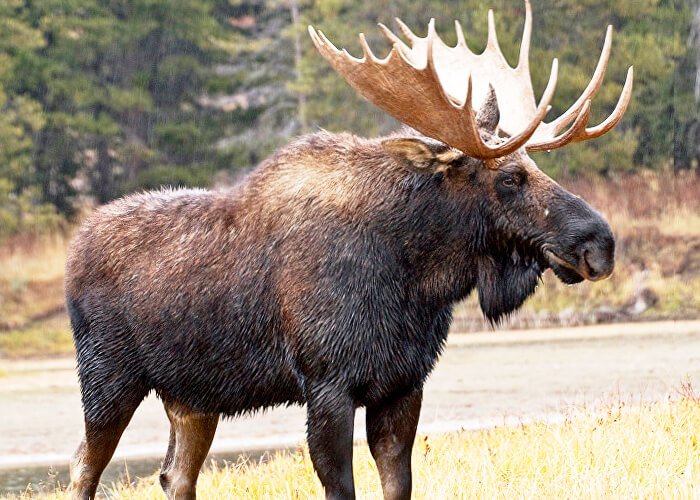
Moose (elk) inhabit the northern Polissya woodlands and the marshy Volyn and Rivne areas, where the terrain suits stalking on the roar much like the red deer. Hunting moose demands the same endurance and patience as mountain deer hunting, and many of the same methods apply — for a fuller treatment see the linked guide above. Other species available on request include mouflon sheep, wolves, chamois and a variety of feathered game such as capercaillie.
Organizing hunting tours
A well-run hunting tour in Ukraine handles everything from the moment you land to the day your trophy is shipped home, so an international hunter can focus on the hunt itself. Established outfitters such as Hunt Ukraine and Ukrainian Hunting Expeditions build packages around a chosen species, season and region, and coordinate licences, logistics and lodging as a single service.
Individual and group tours
Tours are offered both for solo hunters and for groups, and can be customized to the species and difficulty you want. A one-on-one guided stalk for a Carpathian red deer stag suits the dedicated trophy hunter, while a driven boar or roe deer hunt works well for a party travelling together. Package inclusions typically cover guiding, transport to the grounds, licences and accommodation, while trophy fees, taxidermy upgrades, firearm rental and export paperwork are usually costed separately.
Guide and route planning
Professional English-speaking guides with deep local knowledge lead every hunt, scouting the ground, judging trophies and managing the shot for a clean, ethical harvest. Planning starts with a pre-trip consultation to fix dates around the rut, select the region and tailor the itinerary, so that a hunt during peak rut timing lands the hunter in the right valley at the right hour.
Accommodation and meals
Lodging ranges from comfortable hunting lodges near the grounds to city hotels such as the Grand Hotel Lviv Luxury & Spa or the Verkhovel Hotel in the Carpathians. Meals showcase Ukrainian hospitality and regional cuisine, with hearty local dishes served at the lodge and dietary needs accommodated on request as part of the package.
Airport pickup and border assistance
Transfer support usually begins at Boryspil International Airport near Kyiv or at Lviv Airport, with airlines such as Lufthansa Airlines serving the main routes. Outfitters provide airport pickup, translation services, help with border-crossing procedures and visa requirements, and assistance with the temporary import and export of firearms, then coordinate trophy preparation, documentation and shipping after the hunt through certified taxidermy and export channels.
Client reviews
International hunters consistently praise Ukrainian outfitters for their organization, the quality of the trophies and the warmth of the welcome. Repeat clients highlight the seamless airport-to-lodge logistics, the expertise of the guides during the rut, and the reliable trophy export process — the practical details that turn a first Ukrainian hunt into a return trip.