Theoretical Foundations of Traditional Chinese Medicine
 libre
libre
Traditional Chinese Medicine (TCM) is a complete medical system built on distinctive theoretical foundations — chiefly the concepts of Yin and Yang, the Five Elements, Qi, and Xue (blood) — that differ markedly from the assumptions of European science, both in the ideas themselves and in the diagnostic and therapeutic methods derived from them. It is often said that theory is the weakest point of Chinese folk medicine, but that judgement mistakes the unfamiliarity of the framework for its supposed weakness.

Theoretical foundations of Chinese medicine
The theoretical foundations of Chinese medicine can only be fairly judged from a concrete historical standpoint. The limited theoretical training of many — or at least a great number of — folk practitioners, together with several clearly irrational elements within the theory of Chinese medicine itself, does not prove that the theory as a whole is weak. These are shortcomings of practitioners and of accretions, not of the underlying system that organised centuries of clinical observation.
Until very recently, scholars studied mainly the practical side of Chinese medicine. It is now clear that, however one weighs the merits or defects of the theoretical positions of Chinese medicine, the system must be examined comprehensively, deeply, and critically. Only such study makes it possible to speak of a genuinely creative use of the vast heritage of Chinese folk medicine.
Theory and practice in Chinese medicine
Chinese medicine treats theory and clinical practice as inseparable, and privileging one at the expense of the other obstructs the further development of the tradition. So-called folk medicine, based largely on the use of medicinal plants, exists among many peoples across the world, but Chinese medicine is unusual in the depth and coherence of the theoretical scaffolding that connects its remedies to a unified model of the body.

The relationship between theory and clinical practice
Chinese medicine proceeds from theory to practice when treating disease — more precisely, from theoretical conclusions and generalisations reached earlier through collective experience toward their application in each individual case according to circumstances. This deductive movement, from a shared model of physiology and pathology down to the particular patient, distinguishes the tradition from a purely empirical accumulation of remedies. The same feature underlies the syndrome-based reasoning (Zheng differentiation) that still guides diagnosis today.
From theory to treating the individual patient
The clinician in Chinese medicine matches a general theoretical pattern to the concrete condition in front of them, adjusting the remedy, its formulation, and its dosage to the specific state of the patient. This is why two people with the same complaint may receive different prescriptions: treatment follows the identified syndrome and the balance of forces within the body, not the disease label alone. The approach anticipates what modern medicine calls individualised or precision care.
Principal features of Chinese medicine
Chinese medicine possesses many distinctive traits found in no other healing tradition. From very early times it had a coherent body of theory, which subsequently developed and underwent various changes on the basis of accumulating empirical data and the growth of a range of other fields — the natural sciences, technical crafts, and, above all, philosophy. This layered, self-revising character is one reason the theoretical system of TCM is so complex.
Classical works and books of Chinese medicine
Over its development Chinese medicine has been enriched by more than 20,000 classical works (see: Books of Chinese medicine) that set out and summarise experience gathered from ancient times. Even before the Common Era, becoming a physician of Chinese medicine required mastery of methods for examining the patient, a rich materia medica, complex formulation, and precise dosage of remedies, as well as a firm grasp of certain theoretical fundamentals.
The most authoritative of these texts is the Huangdi Neijing — the Yellow Emperor's Inner Classic (Neijing) — which codified the physiology of Qi, blood, and the organ systems. Later the pharmacological tradition was crowned by Li Shizhen's sixteenth-century Compendium of Materia Medica (Bencao Gangmu), the most comprehensive survey of Chinese Materia Medica of its age. Modern scholarship continues this documentary lineage: works such as the Theoretical Foundations of Chinese Medicine by Dr. Kan-Wen Ma, and Nathan Sivin's studies published by MIT Press, trace how these classics shaped clinical reasoning.

The basic theory of Traditional Chinese Medicine
The basic theory of Traditional Chinese Medicine rests on a small set of interlocking concepts: Yin and Yang, the Five Elements (Wu Xing), Qi (vital energy), Xue (blood), the Zangfu organs, and the meridians and collaterals. Health is understood as dynamic balance and harmony among these forces — a form of homeostasis — while disease is the disturbance of that balance. The framework is holistic: the human body is treated as a small cosmos in continuous exchange with nature, so that season, climate, diet, and emotion are all causes and correlates of illness. This holism, the unity of the human being and nature, is the organising principle of the whole system.
Philosophical schools of Chinese medicine
The most valuable medical theories — those that retain their significance to this day — grew out of philosophical schools whose foundation was a materialist explanation of the world, and the history of Chinese philosophy knows a great many such schools. Chinese philosophy shaped medical theory directly: hardly a single philosopher of ancient China failed to touch, in one way or another, on questions of medicine.
This is natural. The natural philosophers of those times, each from their own ideological standpoint, explained the world and in doing so explained the human being — existence, spiritual and physical faculties, and the structure and functions of the body as a whole and of its individual organs. Reflecting on the relation of the human being to society, to nature, and to the external environment generally, these thinkers devoted much attention to such concepts as life and death, health and disease.
The influence of Chinese philosophy on medical theory
Chinese philosophy supplied medicine with its explanatory categories, its cosmology, and its ethics of prevention. In many ancient books whose titles almost always included the word "zi" — "discourse," a sign that the work was philosophical — medical categories were routinely treated as philosophical categories. The result is a medicine in which physiology, morality, and natural philosophy are woven together rather than separated, a feature that persists in the terminology and reasoning of TCM.
The teaching of Confucius
The ethical-political teaching of Confucius (the Latinised form of Kong Fuzi, 551–479 BCE), the first outstanding philosopher of ancient China, was progressive for its time. He held that every person should, as far as possible, study and improve themselves morally. Urging the rulers of a then-fragmented China to submit to the moral authority of the Zhou dynasty (see: Medicine of ancient China), Confucius advised them to care for the education of the people and their cultivation in the spirit of the central ethical idea of "ren" (humaneness).
This orientation of early Confucianism could exert a highly beneficial influence on medicine. In the Lunyu (Analects), compiled by his disciples, the philosopher's sayings include many practical counsels on how to protect oneself from illness and even on treating some diseases. Only later was Confucius's teaching adapted by the ruling classes for other purposes — to school the people in servile obedience and to perpetuate the feudal order with its rigid hierarchy.

Materialist schools and the explanation of the world
Several materialist schools gave ancient physicians the intellectual tools to explain the world without recourse to gods, and each left its mark on medical theory. The teaching of Mozi (479–381 BCE), relatively close in social origin to the common people, took the real vital interests of the masses as the criterion for evaluating all phenomena, opposing the wasteful life of the aristocracy. Xu Xing, the most consistent representative of this school, demanded that even the ruler of the state till the soil alongside the peasants.

In the third century BCE the followers of Mozi developed a materialist theory of knowledge that passed almost directly into medical thinking. To know the world, they said, three conditions are required: the human sense organs; the surrounding objects and things that are their object; and the contact of the first with the second, from which sensation arises. Sensation, however, is only the beginning of knowledge; reflection is then needed to grasp what a given sensation means, and only on the basis of such reflection can the nature of things be established.
No other philosophical school of antiquity offered anything that could pass so fully into medical theory. The teaching of the "hermit" school, founded in the fourth century BCE by ruined aristocrats and expressed by Yang Zhu (395–335 BCE) — whose disciple wrote the Laozi (Dao De Jing) — held that everything arises from the "Dao," which exists independently of human consciousness, and that any thing, having reached a certain stage, must turn into its opposite. This gave rise to Daoism and, in medicine, to a doctrine of moderation: people should never lose a sense of measure, since excessive effort brings contrary results. From this came a body of preventive teaching, with attention to rational nutrition and communal hygiene.
The Confucian Xunzi (298–238 BCE) added further materialist elements, holding that nature exists by its own laws and that the laws of morality are created not by a god but by people themselves. Culture and the sciences, he taught, are created to sustain and improve human life — a view in which medicine could find a firm ally against sorcery and mysticism.


The teaching of Yin and Yang in the theory of Chinese medicine
Yin and Yang describe the two opposing yet complementary forces whose interplay produces every phenomenon in Chinese medical theory. The doctrine, set out in the second century BCE in the Huainanzi, held that the basis of the universe is a "primordial vital ether": its light, pure part forms the positive, masculine principle (Yang), while its heavy, turbid part forms the negative, feminine principle (Yin). Confucius had earlier recognised two opposing essences at the root of all being — an active first cause and a passive principle — which were later renamed and reinterpreted as "vital heat" (celestial, masculine Yang) and "moisture" (earthly, feminine Yin).
- Light Yang tends toward expansion and rarefaction, is in continuous motion, and strives upward.
- Yin, being heavier and inclined to condense, tends to sink downward.

There is no object that contains only one principle: every form necessarily holds both, with one or the other predominating in a given period, and all the variety of things is the product of their interaction. In the human body the carriers of these two principles are the "vital spirits" — air (Qi) and blood (Xue) — the two cornerstones of the traditional physiology. Ancient physicians held that life and health depend on the perfect equilibrium and harmony of these; disturbance of the balance leads to disease, and their separation to death. Different states of the body are read from different states of the pulse, which reflects the ceaseless ebb and flow of blood and air.
The Five Elements theory (Wu Xing)
The Five Elements theory holds that the world — and the human body within it — is composed of five material primary elements: water, fire, wood, metal, and earth. The idea was formulated by the school of Zou Yan (Zhou Yan, 340–305 BCE), which assigned itself a special role in both philosophy and the natural sciences, especially medicine. These universal and fundamental elements were said to define the essence of everything that exists, including the human organism, which is nothing other than the universe in miniature. Together with Yin and Yang, the Five Elements (Wu Xing) form all bodies.
The number "five" plays a marked role in the philosophy of ancient China. Five planets were counted (Saturn, Jupiter, Mars, Venus, Mercury). The Zhou-era chronicle Chunqiu records, for the year 611 BCE, the motion of a comet in the constellation of the Great Bear, and under 720 BCE what is apparently the world's first record of a solar eclipse. The star catalogue of Shi Shen (4th century BCE), describing 800 stars, is the oldest surviving book of its kind. The Chinese held that there were five directions — east, west, north, south, and a central one (the Han empire) — five basic colours (white, yellow, red, black, green), and five tastes (sweet, sour, bitter, pungent, salty).
The concept of the vital energy Qi
Qi is the vital energy whose movement and balance sustain life in the body, circulating together with blood through a network of channels. The primary elements — air, water, fire, metal, and wood — were held to exert a leading influence on the chief organs, later reckoned as ten, in two groups of five, according to whether Yin ("moisture") or Yang ("vital heat") predominated. The first group, in which the feminine Yin prevails, comprises the five solid Yin organs (Zang) — heart, liver, kidneys, lungs, and spleen. The second, in which the masculine Yang prevails, comprises the six hollow Yang organs (Fu) — the small and large intestines, stomach, gallbladder, and the bladder with its ureters.
These organs stand in fixed relations with one another, with the Five Elements, and with the directions, seasons, and times of day — a cosmological scheme carried over into medical theory as the Zangfu manifestation theory:
- the heart was linked with the small intestine and akin to the south, midday, summer, and "fire";
- the lungs were linked with the large intestine and akin to the west, evening, autumn, and "metal";
- the kidneys, linked with the bladder and ureters, were akin to the north, night, winter, and "water";
- the liver was linked with the gallbladder and akin to the zenith, the last 18 days of each season, "earth," and so on.
Theory of the circulatory system, meridians, and collaterals
Chinese folk medicine developed strikingly early ideas about the circulatory system and the channels — meridians and collaterals — through which Qi and blood are transported. Interest in anatomy is very old (legend has it that Shi Huangdi, the first emperor of China, ordered the dissection and detailed description of the internal structure of the corpses of 30 executed men). Centuries before Europeans, Chinese physicians wrote:
the vessels communicate with one another in a circle, having neither beginning nor end… the blood in the vessels circulates continuously and in a circular fashion, and the heart governs the blood.
They divided the vessels into:
- arteries ("Ti-mai"),
- veins ("Luo-mai"),
- capillaries ("Sun-mai"),
and also stated that the blood transports gases and nutrients through them. William Harvey thus discovered in 1628 what had been described in China nearly a thousand years earlier.

Earlier than in many other countries — around the fifth century BCE — China identified five chief internal organs: the heart, the liver (with the digestive tract), the spleen, the lungs, and the kidneys. Each organ was understood as a functioning system with its nervous connections and even in combination with the person's psychic properties, and these five organs were said to be interconnected and to function in a definite order.
The psyche and the body act simultaneously and inseparably from one another — states the Neijing.
Chinese physicians long recognised the links between inner and outer, whole and part, morphological and functional, somatic and psychic, which is why they began very early to attend to the role of psychic trauma in the pathological process.
Diagnostic and therapeutic methods in Chinese medicine
The therapeutic methods of Chinese medicine fall into two broad families: mind–spiritual and natural therapies on the one hand, and physical interventions on the other. In practice they include acupuncture and moxibustion, cupping, herbal medicine, dietary regulation, and exercise. Diagnosis applies the theory of the Five Elements and of Yin and Yang: the "windows" through which the physician "sees the disease" are the eyes, ears, tongue, and nostrils — organs in which "vital heat" (Yang) appears — while "moisture," the warm Yin, is judged from the state of the stools and urine. The diagnostic significance of the pulse forms a distinct branch of the tradition.

Acupuncture and moxibustion
Acupuncture and moxibustion treat disease by stimulating defined points along the meridians to restore the balance and flow of Qi and blood. In acupuncture fine needles are inserted at specific points; in moxibustion the burning of the herb mugwort warms those points. Both rest directly on the theory of meridians and collaterals, since pathological changes in the meridians are held to reflect and to influence the state of the internal organs. Alongside them, cupping applies suction to the skin to draw stagnant Qi and blood, and all three remain among the most widely practised TCM techniques worldwide.
Medicinal plants and the pharmacopoeia
Herbal medicine is the core of the Chinese pharmacopoeia, drawing on thousands of plant, mineral, and animal substances classified by their properties and actions. Each remedy is described in terms of its "nature" (cold, hot, warm, cool) and "flavour" (the five tastes), and these properties are matched to the diagnosed syndrome. It was this pharmacopoeia that gave modern medicine one of its landmark drugs: artemisinin, derived from sweet wormwood following the study of classical texts, whose discovery was recognised with a Nobel Prize and which remains a frontline antimalarial. A note of caution accompanies the tradition, however: demand for certain animal-derived ingredients has been linked to wildlife smuggling and threats to endangered species, a conservation concern that has pushed practice toward plant-based and cultivated substitutes.
Geranium as an astringent medicinal remedy
Geranium is one example of an astringent plant remedy within the pharmacopoeia, valued for its tightening, drying action on tissues and secretions. Astringent herbs of this kind were classed by their capacity to consolidate and to check discharge — a property read through the same Yin–Yang and Five Elements framework that governed the rest of the materia medica.
Formulation and dosage of remedies
Chinese medicine rarely uses a single herb in isolation; instead it combines several into a formula, with each ingredient assigned a role and a carefully calibrated dose. Mastery of formulation and dosage was, even before the Common Era, a prerequisite for becoming a physician, because the balance of ingredients — and their proportions — determined whether a prescription corrected or worsened the patient's disturbed equilibrium. This combinatorial logic is one reason the pharmacological action of a whole formula can differ from that of its isolated components, a point at the centre of modern research into TCM.
The historical development of Chinese medicine
The history of Chinese medicine stretches from Bronze Age divination and early anatomical curiosity to a state-supported modern system, and its long arc explains both its coherence and its accretions. Ancient Chinese materialist philosophers already held that immobility means the death of the living, and the tradition's vitality lay in its continual absorption of new observation. Milestones include the compilation of the Huangdi Neijing, the pharmacological synthesis of Li Shizhen, and, in the twentieth century, the formal integration of Chinese and Western medicine.
Medicine of ancient China and the Shang dynasty
Medicine in ancient China reaches back to the Shang dynasty, whose oracle-bone inscriptions record illnesses, body parts, and appeals for healing. From these beginnings emerged an interest in anatomy and a body of empirical remedy that would later be systematised. Bian Que, the famous physician of the fifth century BCE, held that disease passes through four stages in its development — first in the skin, then in the bloodstream, then concentrated in the stomach and intestines, and finally penetrating to the very depth of the body, the "bone marrow," a stage at which the disease was deemed incurable.
This staging was later elaborated into a scheme of localisation. Disease could be superficial — in the skin, subcutaneous tissue, and the muscles and vessels nearest the surface — forming a "surface syndrome" (biao zheng). In a more severe stage it settled in the middle of the body, in the organs near the diaphragm, producing a "middle syndrome"; and on penetrating deep into the organism it yielded an "internal syndrome" (li zheng). By the character of symptoms, physicians further divided diseases into four groups — a masculine syndrome (Yang), a feminine syndrome (Yin), "full" syndromes (shi), and "empty" syndromes (xu) — which in modern terms correspond roughly to acute versus chronic course and to strong versus weakened reactivity of the body. This is the origin of Zheng (syndrome) differentiation.
Two other threads run through this early history. The Chinese, being predominantly agriculturalists, carried their close observation of weather into medicine, giving a central role to seasonality: illnesses of an inflammatory character were assigned to spring, diseases of the skin and stomach to summer, and disorders of the respiratory tract to autumn and winter. When the emperor Jin Ping fell ill in 533 BCE, the physician He explained that disease can arise from the disequilibrium of the six "Qi" — wind, cold, damp, dryness, heat, and moisture — that is, from changes in the weather, the classical doctrine of the six climatic factors.

Hua Tuo — the greatest physician of Chinese medicine
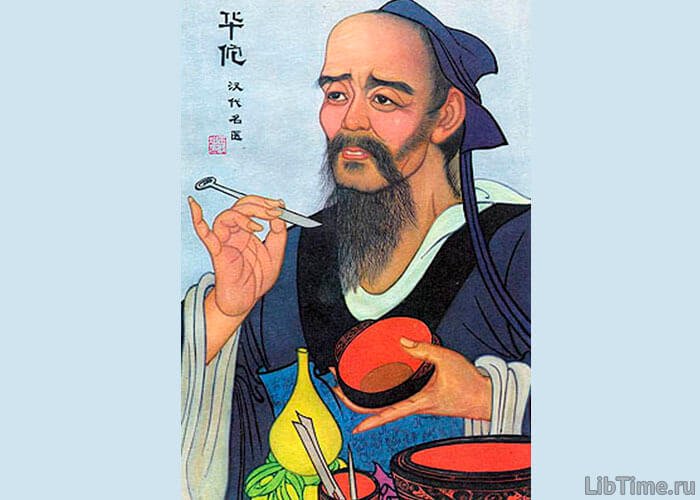
Hua Tuo, active in the second century, stands among the greatest physicians in the history of Chinese medicine, renowned for surgery, anaesthesia, and a system of therapeutic exercise. His legacy illustrates how the tradition combined refined clinical technique with the theoretical framework of Qi, blood, and organ function. Later study of pathology built on such figures: the causes of disease (etiology) were traced to the predominance of one primary element and the disturbance of the general balance and harmony — so that an excess of "fire" chiefly disorders the heart, an excess of "water" the kidneys, and so on.
The outstanding epidemiologist Wu Youxing
Wu Youxing (also known as Wu Youke), an outstanding epidemiologist of the mid-seventeenth century, advanced a theory of infection that anticipated the germ theory by some two hundred years. Studying a major epidemic in Hebei province in 1642, he sought the causes of infectious disease and held that at certain times of year "harmful invisible particles" — "yi-qi" — become active, enter the body, strike it, and then, passing from person to person, cause severe epidemics. In his celebrated treatise Wen yi lun he argued that epidemic diseases also arise through the action of "wind," understood not as a meteorological phenomenon but as a means of carrying the "yi-qi" through the skin, lungs, or stomach.
After the invisible particles penetrate the body, Wu Youxing wrote, a struggle begins between the organism and the "yi-qi," and the outcome depends on the balance of forces between the two sides — a balance that timely and correct treatment can shift in the body's favour, a theory of resistance enhancement strikingly close to modern immunology. He introduced the term "li-qi" for these especially virulent, pathogenic agents, a definition matching the modern concept of pathogenicity. Notably, Wu Youxing also criticised idealistic conceptions in the canonical Neijing, stressing instead environmental factors — climate, air temperature and humidity, and the cleanliness, composition, and quality of water. Historians of medicine rightly call him a leading figure in the study of the etiology and pathogenesis of infectious disease.


Modernisation of medicine in early twentieth-century China
The modernisation of Chinese medicine accelerated in the early twentieth century amid sweeping cultural and political change in China. Under the foreign Qing dynasty (see: Qing) the ancient culture had been in slow decline, but the collapse of the empire and the reform movements that followed forced Chinese medicine into contact with Western science. After 1949, under policies associated with Mao Zedong, the state promoted the integration of Chinese and Western medicine, established research bodies such as the China Academy of Traditional Chinese Medicine, and — despite the upheavals of the Cultural Revolution — set Chinese medicine on a path of standardisation. Today the National Health Commission of the People's Republic of China oversees the sector, and outlets such as China Daily report on its continuing expansion.
Chinese medicine within the system of Eastern medicine
Chinese medicine is the largest and most systematised of the Eastern medical traditions, and it belongs to a broader family that also includes Indian, Tibetan, and other Asian systems. What sets it apart is the tightness of its theory: a single framework of Yin and Yang, the Five Elements, Qi, and the Zangfu organs links diagnosis, pharmacology, and treatment. Chinese medicine has also spread far beyond its homeland, taking root across the Sinosphere and gaining recognition internationally, including from the World Health Organization.
Comparison with other traditional medicine systems
Compared with other traditional medicine systems, Chinese medicine is distinguished by its deductive, theory-first structure and its holistic model of the body as a miniature cosmos. Scholars of medical anthropology such as Charles Leslie, and historians of Chinese science such as Nathan Sivin, have documented how Chinese medicine differs from Ayurveda and from Western biomedicine in its underlying assumptions about health, disease, and the relation of the person to nature. Where Western medicine tends toward reductionism and the isolation of single causes, Chinese medicine emphasises pattern, balance, and the interdependence of systems — a difference in theoretical framework rather than merely in technique.
Its place in complementary and alternative medicine (CAM)
Within complementary and alternative medicine (CAM), Chinese medicine is one of the most widely used and most researched systems, and it increasingly features in integrative medicine, where its methods are combined with conventional care. Acupuncture, herbal formulas, and cupping are the practices most often adopted outside China. The move from "alternative" toward "integrative" reflects a growing body of clinical study and a demand from patients for approaches that address the whole person alongside biomedical treatment.
Criticism and debate over the effectiveness of Chinese medicine
Chinese medicine is the subject of ongoing controversy over its effectiveness, its evidence base, and the scientific status of its core concepts such as Qi and the meridians. Critics argue that many of its theoretical entities cannot be demonstrated by the methods of modern science and that some claims amount to pseudoscience; defenders point to specific, tested outcomes and to the need for research methods suited to whole-formula, individualised treatment. Establishing evidence-based standards for the quality and safety of TCM — and for the accuracy and safety of its diagnosis and treatment — is now a central task for the field.
Pharmacological and clinical effects
A key distinction in evaluating Chinese medicine is between pharmacological action and clinical effect. A remedy may show measurable activity in the laboratory yet fail to help patients, or a complex formula may produce clinical benefit that cannot be reduced to any single isolated compound. Artemisinin is the clearest case where a pharmacological action, derived from a classical remedy, translated into a decisive clinical effect against malaria — a discovery honoured with a Nobel Prize and highly relevant during global health emergencies, including the response to COVID-19, when interest in TCM's therapeutic mechanisms and its potential to enhance resistance rose sharply.
Modern science and technology in the study of Chinese medicine
Contemporary research increasingly applies modern science and technology — molecular pharmacology, systems biology, and a cybernetic view of the body's regulatory systems — to test and explain the mechanisms of Chinese medicine. One active line of enquiry connects TCM's effects to the intestinal microbiota and its links with chronic disease, a bridge between the tradition's holism and modern physiology. Researchers including Luqi Huang, Lanping Guo, Ai-Ping Lu, and others have published methodological work in venues such as Frontiers of Medicine and the World Journal of Gastroenterology, and institutions such as the National Pharmaceutical Engineering Research Center pursue the integration of traditional knowledge with contemporary experimental methods. This methodological innovation — combining syndrome differentiation with quantitative measurement — aims to preserve the individualised logic of TCM while meeting the standards of evidence-based medicine.
Affordability and accessibility of Chinese medicine in developing countries
Chinese medicine remains attractive in many developing countries because its plant-based remedies and low-technology techniques are affordable and accessible where biomedical infrastructure is scarce. This same accessibility fuels part of the debate: wide, informal use makes quality control and safety oversight difficult, which is why standardisation and evidence-based regulation matter for public health as much as for scientific credibility. Balancing access against safety is one of the practical challenges facing the global spread of TCM.
These, in broad outline, are some of the theoretical positions on which the millennia-old edifice of Chinese folk medicine was built — the framework of Yin and Yang, the Five Elements, Qi, and the organ systems that supported the three great pillars of the science of health: pharmacology, diagnosis, and treatment.