The First Hydroelectric Power Plants: Inside Central Europe's Oldest Station
 libre
libre
Hydropower is energy harnessed from moving water, and the first hydroelectric power plants converted that motion into electricity by directing flowing or falling water onto turbine blades linked to generators. To understand what the earliest large stations were like, this page looks at pioneering facilities across Europe, North America, and the wider world — from the oldest large hydroelectric station in Central Europe, built on the Isar River in Germany, to the Vulcan Street Plant in Appleton, Wisconsin, and the giant dams that followed.
The First Hydroelectric Power Plants: Origins and History
The first hydroelectric power plants appeared in the early 1880s, when engineers combined the ancient water wheel with the newly invented electrical generator. Hydroelectric power works by using a dam, a diversion, or a natural drop to send water through a penstock onto a turbine; the spinning turbine drives a generator that produces electricity. This same basic principle links a modest mill on the Fox River to vast structures such as the Hoover Dam and the Three Gorges Dam.
Two early large stations illustrate the leap in scale that followed. The Walchensee power plant in Bavaria used a 200-metre natural height difference between two Alpine lakes, while the Dnieper Hydroelectric Station in Ukraine was carved from a river by human engineering. Both showed how quickly the technology of the first hydroelectric power plants matured into national-scale infrastructure.
Ancient Origins of Water Power Technology
Water power technology is thousands of years older than electricity, beginning with devices that turned the energy of flowing water into useful mechanical work. Long before turbines and generators, civilisations used the steady push of rivers and streams to grind grain, lift water, and drive early machinery. This deep history is what the first hydroelectric power plants ultimately built upon.
Early Applications of Water Power in Antiquity
Water-powered mills were in use across Ancient Greece, Imperial Rome, and China more than two thousand years ago. The Roman architect Vitruvius described a vertical water wheel driving a grain mill in the first century BC, and Roman engineers built large milling complexes fed by aqueducts. A water wheel functions by catching the flow or the weight of water in its buckets or paddles, so that the moving water rotates a shaft — the same conversion of the water cycle's energy into rotary motion that later powered hydroelectric plants.
The Archimedes Screw and Early Hydraulic Inventions
The Archimedes Screw, attributed to the Greek mathematician Archimedes while he worked for the King of Syracuse, is one of antiquity's most enduring hydraulic inventions. It is a helical screw inside a cylinder that raises water when turned, and it was used for irrigation and for draining mines and ships. Modern versions of the Archimedes Screw are now run in reverse as low-head hydropower generators, turning the ancient lifting device into an electricity producer.
Development of Modern Hydro Turbine Technology
Modern hydro turbine technology took shape in the 1700s and 1800s, when engineers replaced open water wheels with enclosed, high-efficiency turbines. A landmark reference was Architecture Hydraulique, the four-volume treatise by Bernard Forest de Bélidor published between 1737 and 1753, which set out the mathematics of hydraulic machinery and shaped later turbine design. This body of hydraulic engineering made it possible to extract far more of the water's energy than a traditional water wheel ever could.
The Francis Turbine and Its Role in Early Plants
The Francis Turbine, developed by the engineer James Francis in 1849, became the workhorse of early hydroelectric power plants and remains the most widely used water turbine in the world today. It is a reaction turbine in which water enters radially and exits axially, allowing it to work efficiently across a wide range of heads. The Walchensee plant in Bavaria ran on eight large Francis turbines, whose polished brass plates read "168,000 horsepower" on their cast-iron casings — a direct demonstration of how central the Francis Turbine was to the first generation of large stations.
Early Hydropower Adoption Timeline
Hydropower adoption spread rapidly from a handful of demonstration sites in the early 1880s to widespread industrial and municipal use within a decade. The first installations lit private estates and single factories, but by the 1890s hydroelectric stations were feeding power into growing electrical grids. Understanding this timeline helps explain how quickly the world moved from experimental plants to reliable public electricity supply.
The First Hydroelectric Central Station in North America
The first hydroelectric central station in North America was the Vulcan Street Plant, which began operating on the Fox River in Appleton, Wisconsin, on 30 September 1882. Financed by paper manufacturer Henry James Rogers of the Appleton Paper and Pulp Company, the plant used an Edison K type dynamo driven by a water wheel to light Rogers' own home, his paper mill, and a nearby building. The Vulcan Street Plant marks the beginning of the history of hydroelectric power in Wisconsin, and Rogers' residence survives today as the Hearthstone Historic House-Museum, celebrated as the first home lit by hydroelectricity from a central station.
The First Hydroelectric Power Plants in the United States
The first hydroelectric power plants in the United States clustered where fast-moving rivers met early industry. Alongside the Vulcan Street Plant in Appleton, an early commercial station opened in Grand Rapids, Michigan, where a dynamo at the Wolverine Chair Factory lit shop windows and city lamps in 1880. Niagara Falls became the great early showcase, sending large-scale hydroelectric power over long distances by the 1890s. Across the Atlantic, William Armstrong had already electrified his country house at Cragside in England in 1878 using water power — the first house in the world lit by hydroelectricity, a private forerunner to the American central stations.
The Walchensee Power Plant: Europe's Oldest Hydroelectric Station
The Walchensee power plant on the Isar River in Germany is one of the oldest large hydroelectric stations in Central Europe and long held the title of Europe's largest. It exploits a natural setting of exceptional advantage, using two Alpine lakes separated by a great vertical drop. The following sections trace how nature and engineering combined at Kesselberg to produce power on a scale that was remarkable for its time.

Natural Conditions at Kesselberg and Lakes Walchen and Kochel
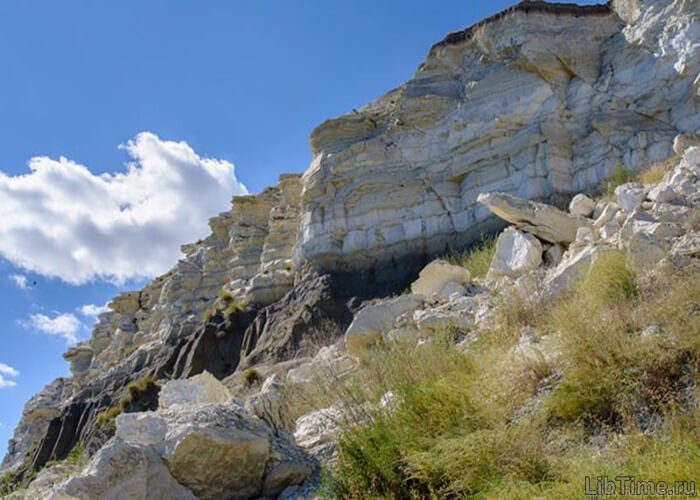
Mount Kesselberg rises halfway between Munich, the capital of Bavaria, and the high-altitude resort of Mittenwald. Its broad ridge acts like a massive natural dam, holding back the waters of Lake Walchen, while at the foot of the mountain's northern slope lies Lake Kochel. The height difference between the two lakes is more than 200 metres — a natural head that makes the site almost ideally suited to hydropower. To exploit it, engineers only had to use the conditions nature had created and guide the water of Lake Walchen onto the blades of the turbines.
Construction of the Reservoir and Diversion of the Isar River
Construction of an artificial reservoir and the power station began on Mount Kesselberg and along the shore of Lake Kochel. The waters of Lake Walchen could not simply be released down the mountain: pulling the plug on a full trough empties it within minutes, and in the same way the 110 million cubic metres held in Lake Walchen would have drained into Lake Kochel in a matter of days. To keep the reservoir constantly replenished, the engineers rerouted the nearby Isar River and directed its flow into Lake Walchen — because a reservoir with no inflow is as useless as an empty well.
How the Plant Works: From Water Tower to Turbines
Only after the diversion was complete did workers blast a 1.2-kilometre tunnel through Mount Kesselberg, creating the opening for the metaphorical "plug," fitted with a strong, lockable gate. High on the mountain, clinging like a swallow's nest, sits the "water tower." Inside it, mechanical gatekeepers — powerful spool valves — direct the water into six large pressure pipelines. Through these penstocks the water falls 200 metres into the machine hall, where it drives eight large Francis turbines whose spinning shafts turn generators. As the spent water flows on into Lake Kochel, the electric current is already spreading through copper conductors across the country.
Power Output and Distribution Across Bavaria
The Walchensee plant's turbines were rated at 168,000 horsepower, and the area served by its current is larger than the catchment basin of the Isar River that produces it. Power reaches the snow-capped Alpine peaks, the charcoal-burning fires of the Bavarian Forest, and the dark woodlands of the Black Forest. In 1932, however, Walchensee had to surrender its title as the largest early hydroelectric station in Europe to the Dnieper Hydroelectric Station in Ukraine.
The Dnieper Hydroelectric Station
The Dnieper Hydroelectric Station in Ukraine was, unlike Walchensee, a work in which nature did not meet the builders halfway as it had in the Bavarian mountains. It was created entirely by human hands — "a fairy tale of earth and water, stone, machines and electric energy," as the progressive French writer Henri Barbusse once described it. The station became the benchmark for large dam-based hydroelectricity in Europe.
Construction and Turbine Technology of the Dnieper Plant
When the Dnieper station was built, domestic industry could produce turbines rated only up to 20,000 horsepower, so the turbines for the new plant were brought from America, each rated at 91,000 horsepower. This dependence on imported machinery illustrates how demanding the engineering of the first very large hydroelectric plants was, and how few manufacturers could meet it.
Rebuilding After World War II
After the Second World War ended, reconstruction of the Dnieper station began immediately. This time the turbines came not from America but from Leningrad, and they were considerably better than the original American units — a sign of how rapidly turbine technology had advanced in a single generation.

Power Capacity and Annual Output
Each turbine wheel of the rebuilt Dnieper station receives 20 million cubic metres of water every day. Rated at 102,000 horsepower, each wheel produces 75,000 kilowatts of electric energy, and the station's annual output reaches 3 billion kilowatt-hours — twice the capacity of the hydroelectric plants at Niagara Falls. These figures capture what the first large hydroelectric power plants were capable of achieving.
Early Electrical Infrastructure and Lighting Systems
Early electrical infrastructure grew directly out of these first hydroelectric plants, which coupled water turbines to dynamos and generators to feed lighting systems. The earliest stations powered a single factory or private home through direct-current dynamos such as the Edison K type; within a decade, alternating current allowed hydroelectric power to travel over transmission lines to whole towns. This shift from isolated lighting to networked distribution turned hydropower from a novelty into the backbone of modern electricity supply.
Types of Hydroelectric Power Plants
Hydroelectric power plants fall into several distinct types according to how they manage water and how large they are. The main categories are conventional dam-based plants, conduit facilities, run-of-the-river stations, and pumped-storage systems, and each suits different sites and grid needs. Knowing these types clarifies how the same basic principle scales from a small stream to the Grand Coulee Dam.
Conventional Dam-Based Hydroelectricity
Conventional dam-based hydroelectricity stores water in a reservoir behind a dam and releases it through turbines on demand. This storage lets operators match generation to electricity use, making dam-based plants a flexible, dispatchable form of renewable electricity. The Hoover Dam on the Colorado River and the Three Gorges Dam in China are the best-known examples of this design at massive scale.
Conduit Hydroelectricity and Run-of-the-River Systems
Conduit hydroelectricity generates power from water already moving through existing pipelines, canals, or irrigation systems, adding turbines without building a new dam. Run-of-the-river hydroelectric stations similarly use the natural flow of a river with little or no storage, so their output rises and falls with seasonal precipitation. Both approaches have a lighter footprint than large reservoirs and are central to modern low-impact hydropower expansion.
Pumped-Storage Hydropower and Classification by Size
Pumped-storage hydropower stores energy by pumping water uphill to an upper reservoir when demand is low and releasing it through turbines when demand is high, acting as a giant grid battery. Hydropower plants are also classified by size — commonly as large, small, mini, or micro — based on their generating capacity, with large facilities producing hundreds or thousands of megawatts and micro plants serving a single building or hamlet. This range of scales, from pumped-storage giants to micro conduit units, lets hydropower fit almost any site.
Dam Construction and Engineering
Dam construction is the largest engineering undertaking in conventional hydropower, combining civil works, hydraulics, and turbine installation on an enormous scale. The Hoover Dam, built on the Colorado River during the 1930s under the Bureau of Reclamation, employed thousands of workers during the Great Depression and became a symbol of large public infrastructure. Comparable megaprojects include the Grand Coulee Dam on the Columbia River, the Bonneville Dam managed with the Bonneville Power Administration and the U.S. Army Corps of Engineers, and the Itaipu Dam shared between Brazil and Paraguay — all built to convert a river's head and flow into steady electricity.
Hydropower Compared to Other Energy Sources
Hydropower stands out among electricity sources for its efficiency, reliability, and lack of fuel combustion. Modern hydroelectric plants convert around 90 percent of the available energy in falling water into electricity, far higher than most thermal plants. Comparing hydropower with both fossil fuels and other renewables shows why it remains a cornerstone of the global energy mix, supplying roughly a sixth of the world's electricity according to the International Energy Agency.
Comparison of Hydropower to Fossil Fuels
Compared to fossil fuels, hydropower produces electricity without burning coal, oil, or gas, so it emits almost no direct carbon dioxide or air pollutants during operation. It also offers rapid, controllable output that can be ramped up within minutes, giving it a flexibility that coal plants lack. According to the U.S. Energy Information Administration (EIA), hydropower supplies a meaningful share of U.S. renewable electricity, and it does so with fuel costs of effectively zero.
Comparison of Hydropower with Other Renewable Sources
Against other renewables, hydropower's key advantage is dispatchable storage: unlike wind and solar energy, a reservoir plant can hold energy and deliver it on demand. Solar energy comes in several forms — passive solar design that captures heat through building orientation, active solar techniques that circulate a fluid, and photovoltaic panels — and pioneering research by Farrington Daniels at the University of Wisconsin-Madison Solar Energy Laboratory helped establish the field. Emerging marine and hydrokinetic technologies, including tidal power generation, extend the water-energy idea to the sea, while pumped-storage hydropower increasingly backs up variable wind and solar output.
Environmental Impact of Hydropower
The environmental impact of hydropower is mixed: it delivers clean electricity but can disrupt rivers, fish, and habitats. Large dams change water flow, sediment movement, and temperature, and they can block the migration routes of fish such as salmon and steelhead. Managing these effects is central to modern hydropower planning, particularly across the Columbia River Basin.
Environmental Benefits of Hydroelectricity
Hydroelectricity's environmental benefits centre on emissions-free generation and long-lived, low-cost infrastructure. Because it burns no fuel, a hydroelectric plant avoids the greenhouse gases and pollutants of thermal generation while providing reservoirs that can also supply water, irrigation, flood control, and recreation. These multi-purpose reservoirs are part of the wider water resource infrastructure that shapes regions like the Pacific Northwest and Northern California.
Fish Screens, Migration, and Wildlife Considerations
Fish screens, fish ladders, and hatcheries are the main tools used to protect wildlife around hydropower dams. Regional efforts such as the Fish and Wildlife Program in the Columbia River Basin — supported by bodies including the Independent Scientific Advisory Board and the Regional Technical Forum — set standards for salmon and steelhead management, invasive species control, and reservoir operations. Public and private operators, from the Bonneville Power Administration to local utilities such as NID, which runs several power plants including the Yuba-Bear Power Project in California, balance generation against these fish and wildlife obligations.
Conclusion: The Legacy of the First Hydroelectric Power Plants
The first hydroelectric power plants — from William Armstrong's Cragside and the Vulcan Street Plant in Appleton, Wisconsin, to the Walchensee station on the Isar and the Dnieper Hydroelectric Station — proved that moving water could deliver reliable, fuel-free electricity at ever greater scale. Their descendants, from the Hoover Dam and the Grand Coulee Dam to the Three Gorges Dam and the Itaipu Dam, now supply about a sixth of the world's power and a large share of the United States' renewable electricity. As modernisation of existing facilities, non-powered dam conversion, and pumped storage open new opportunities, hydropower's founding principle — turning the energy of the water cycle into current — remains as relevant as it was on the day the first hydroelectric power plants switched on.