The History of Earth's Formation: How Our Planet Took Shape
 libre
libre
Earth formed roughly 4.5 billion years ago from a cloud of dust and gas, and its surface has been reshaped ever since by water, moving continents, volcanic upheaval, and the slow march of life. Where the Sahara Desert now stretches across North Africa, the waters of a vast ocean once churned. The story of how our planet came to be is a record written into rock, fossils, and the very chemistry of the ground beneath us.
It is hard to imagine that the Indian Ocean once washed against the Bavarian mountains, that a land bridge running through Iceland joined Europe to America, that crocodiles once teemed and eucalyptus grew near the German city of Merseburg, or that giant walls of ice rose where the shores of the Baltic Sea now lie. The history of the formation of the Earth has always set difficult puzzles before those who study nature.

How old is the Earth and how did it take shape?
The Earth is about 4.54 billion years old, an age so vast that a million years in its history amounts to no more than half an hour in the life of an eighty-year-old person. Just as a human face changes on the journey from infant to elder, the appearance of the Earth has changed throughout the whole of its history. Understanding that history means starting long before the planet itself existed — with the origin of the matter it is made from.
Origin of the Universe and the Big Bang
Everything, including the atoms in the Earth, traces back to the Big Bang roughly 13.8 billion years ago, when the universe began expanding from an extremely hot, dense state. In the first minutes only the lightest elements — hydrogen and helium — formed. The heavier elements that make up rock, water, and living tissue were forged much later inside stars.
Nucleosynthesis is the process by which stars fuse light elements into heavier ones. Through nuclear fusion, a star turns hydrogen into helium, and in its later life into carbon, oxygen, silicon, and iron. When a massive star exhausts its fuel it collapses and detonates as a supernova, an explosion that scatters these newly minted elements across space. The dust and gas enriched by earlier supernovae in our region of the Milky Way became the raw material for the Sun and its planets.
Formation of the Solar System
The Solar System formed from a collapsing cloud of interstellar gas and dust called the solar nebula, about 4.6 billion years ago. Under its own gravity the solar nebula contracted, spinning faster and flattening into a rotating disk. Most of the material fell inward to the centre, where rising pressure and temperature ignited nuclear fusion and gave birth to the Sun. The leftover matter in the surrounding disk went on to build the planets, including the Earth.
Early solar system conditions
In the early Solar System, temperature governed where each kind of material could survive. Close to the Sun it was so hot that only metals and rocky minerals stayed solid, which is why the inner worlds — Mercury, Venus, Earth, and Mars — are small, dense, terrestrial planets. Far from the Sun, beyond the "frost line", ices and gases persisted, allowing giants such as Jupiter to grow enormous. This inner-versus-outer contrast in the disk explains the fundamental difference between rocky planets and gas giants.
Earth Formation Timeline and Process
The Earth was built in three broad stages: dust and grains clumped together, those clumps grew into larger bodies, and those bodies collided and merged into a planet. Tiny particles in the disk stuck together to form planetesimals — solid objects kilometres across. Planetesimals collided and combined into protoplanets, and repeated impacts finally assembled the Earth through a process called accretion. Radiometric dating of meteorites, which are leftover fragments from this era, pins the age of the whole Solar System, and therefore the Earth, at about 4.56 billion years.
The Hadean Eon: Early Earth Conditions
The Hadean eon covers the Earth's earliest chapter, from formation to about 4 billion years ago, and it was a violent, superheated world. Constant bombardment by planetesimals, combined with heat released as the planet compressed, kept the young Earth extraordinarily hot. Decay of radioactive elements such as uranium added still more heat from within, so the surface bore no resemblance to the world we know today.
Magma ocean and molten early Earth
So much heat accumulated that the early Earth was largely molten, covered by a global magma ocean. In this liquid state the planet underwent differentiation: dense iron sank toward the centre to form the core while lighter silicate rock rose to build the mantle and, eventually, a thin crust. This sinking of iron released even more gravitational heat in an event sometimes called the iron catastrophe. The physicist J.A. Jacobs described how core formation would have driven this runaway heating. As the outermost layer finally cooled and hardened, the boundary between crust and mantle — later named the Mohorovičić Discontinuity — took shape.
Early Earth Atmosphere Composition
The Earth's first atmosphere was nothing like the air we breathe; it had almost no free oxygen. Gases escaping from the molten interior through volcanic activity produced an atmosphere rich in water vapour, carbon dioxide, nitrogen, and sulphur compounds. This outgassing, repeated over millions of years, supplied both the early atmosphere and, crucially, the water that would later fill the oceans.
Asteroid Bombardment and Delivery of Water
A prolonged rain of asteroids and comets, known as the Late Heavy Bombardment, struck the young Earth and is thought to have delivered a share of its water and volatile elements. Each impact heated the surface anew, while icy bodies added water and organic-rich material. The scars of similar collisions survive in features such as the Manicouagan Crater in Canada, one of the largest well-preserved impact structures on Earth.
Moon formation and the giant impact
The Moon most likely formed when a Mars-sized body named Theia collided with the early Earth, a scenario known as the Giant Impact Hypothesis. The colossal crash flung molten debris into orbit, and that debris coalesced into the Moon. Strong evidence comes from lunar samples returned by the Apollo missions: their oxygen isotopes match those of Earth almost exactly, showing the two bodies share common material, while the Moon's shortage of volatile elements fits a scorching, high-energy origin.
Modern dating techniques sharpen this picture. The hafnium–tungsten method exploits the fact that radioactive hafnium decays into tungsten; comparing these isotopes in rocks and meteorites reveals how quickly the Earth's core separated and when the Moon-forming impact occurred. Researchers connected with the University of Chicago's Geophysical Sciences Department, including Prof. Andy Davis and Bruce D. Dod, have contributed to the isotope studies that underpin these timelines.
Water - the constant companion of the Earth
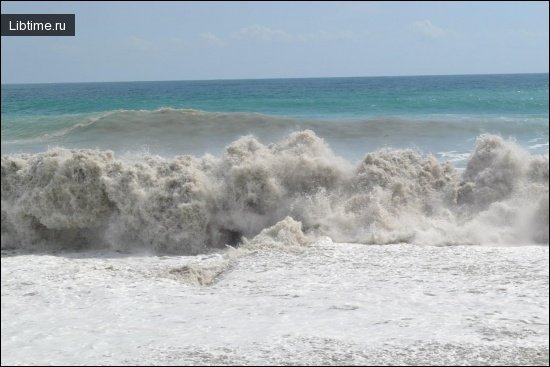
Water has accompanied the Earth throughout its whole history, from infancy to the present, and its beginning and end still remain unclear. Even in the Earth's earliest age, as the crust hardened, water gathered to form the first seas. The gradual cooling of the atmosphere let water vapour condense into rain, and over long ages that rain filled the low basins of the crust to create the primordial oceans.
Formation of ancient seas and oceans
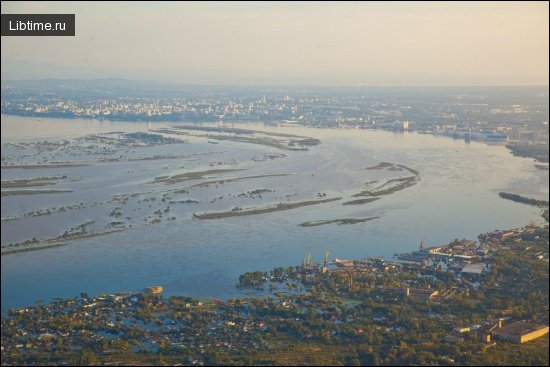
Not only the Sahara but much of Europe may once have been sea floor. When the volcanic outgassing had loaded the atmosphere with water vapour, and the surface fell below the boiling point of water, immense volumes of rain condensed and drained into the crust's hollows. These condensing waters became the ancient seas. A few million years later, in the "childhood" of the Earth, seas driven by volcanic activity flooded the land and buried primeval forests beneath thick layers of silt. Under heat and compression, those buried forests turned into coal seams.
Chemical Weathering and Ocean Salinity
The oceans became salty because rivers and rain slowly dissolved minerals out of the rocks and carried them to the sea. Rainwater, made mildly acidic by atmospheric carbon dioxide, chemically weathers continental rock and releases sodium, chloride, and other dissolved salts. Over hundreds of millions of years this steady delivery, combined with the evaporation of pure water back into the air, built up and maintained the salinity of the world ocean.
The Archean Eon and Emergence of Prokaryotic Life
Life first appeared during the Archean eon, more than 3.5 billion years ago, in the form of simple single-celled prokaryotes without a nucleus. Life's chemistry probably began earlier still, as organic molecules assembled in the early oceans; many researchers think self-copying molecules such as RNA were an early step toward living cells. Fossil evidence of these microbes survives as layered structures called stromatolites, among the oldest traces of life on Earth.
The Proterozoic eon that followed brought two decisive changes. Photosynthetic organisms — cyanobacteria — began releasing oxygen, and over vast spans this oxygen accumulated in the seas and then the atmosphere in the "Great Oxidation." That oxygen enrichment set the stage for eukaryotic life, cells with a nucleus, which are the ancestors of all complex organisms. The Proterozoic also saw extreme "Snowball Earth" episodes when glaciers may have reached the tropics.
The Cambrian Explosion and Multicellular Life
Around 540 million years ago, at the start of the Phanerozoic eon, animal life diversified with astonishing speed in an event called the Cambrian Explosion. Within a geologically short span, most major groups of multicellular animals appeared, leaving abundant hard-shelled fossils for the first time. Rising atmospheric oxygen and the arrival of predators are thought to have driven this burst of evolutionary experimentation.
The Age of the Coal Forests
Had we seen the Earth in this age, we would not have recognised it. The planet's "face" bore none of the great wrinkles — the folded mountain chains such as the Himalayas, the Urals, or the Alps. A broad belt of seas surrounded the land, and the waters of the Indian Ocean reached into Central Europe. In what is now Russia, an arm of the sea separated Europe from Asia.
Formation of carboniferous coal seams
The coal we mine today formed when the lush forests of the Carboniferous period were flooded, buried under silt, and slowly compressed. As shallow seas repeatedly drowned the swampy lowlands, dense plant matter was sealed beneath sediment where it could not fully decay. Over millions of years, heat and pressure transformed this peaty material first into brown coal and then into the hard black coal seams. The seas withdrew, returned again, and in a later flooding left us the deposits of brown coal — a reminder that the shoreline moved back and forth many times.
The Age of Dinosaurs
During the Mesozoic era the land was ruled by giant reptiles, and the seas still lapped far inland. On islands and in the depths of primeval forests lived enormous animals, leaving behind rock formations that record the era: the sandstone hills along the Elbe, the shelly-limestone mountains of the Jura, and the white chalk cliffs of the island of Rügen in the Baltic Sea.
Giant reptiles and the brontosaurus
Among these giants was the brontosaurus, a long-necked animal reaching some 30 metres in length and 8 metres in height. Such sauropods were among the largest land animals ever to exist, browsing the vegetation of a warm, sea-fringed world where no modern mountain ranges yet stood.
Transition from Dinosaurs to Mammals
The age of the dinosaurs ended abruptly about 66 million years ago in a mass extinction, opening the way for mammals to rise. This was one of several mass extinctions that repeatedly reset the course of evolution, clearing dominant groups and allowing survivors to diversify. With the great reptiles gone, small mammals radiated into the vacant ecological roles, eventually producing the diverse mammalian life — including humans — of the present day.
The Ice Ages and Advancing Glaciers
In a new period of the Earth's history, tremendous events began. Snow fell without pause even in summer; the northern glaciers could no longer be contained in their beds. Vast tongues of ice crept over the land and buried much of Europe and North America under a layer a kilometre thick. Over roughly 600,000 years the glaciers advanced and retreated several times, grinding and reshaping everything in their path.
The Shaping of Modern Continents and Coastlines
The coastlines of today's continents took their final form only after the seas at last abandoned the land. As they retreated, the seas broke through the great isthmuses between Denmark and Norway and between France and England. Like the greatest of sculptors, the retreating waters carved the Earth into the familiar features we recognise now.
This restless rearrangement of land and sea is explained by plate tectonics, the slow movement of the rigid plates that make up the Earth's outer shell. Driven by heat from the deep interior, the plates drift, collide, and split apart, raising mountain ranges and opening oceans over hundreds of millions of years. Long ago the continents were gathered into a single supercontinent, Pangaea, which later fragmented into the landmasses we know — the same process that once let the Indian Ocean reach Central Europe.
Current Biodiversity and Life on Earth Today
The Earth today supports a staggering diversity of life, the product of nearly four billion years of evolution punctuated by extinctions and rebounds. Scientists have documented well over a million species, yet many millions more likely remain undescribed, especially among insects, marine invertebrates, and microbes. Organisations such as the National Geographic Society, through educators including Tyson Brown, work to document and communicate this living heritage and the deep-time history that produced it.
Geologic Time Scale Summary
Geologists divide the Earth's history into eons, the largest units of the geologic time scale, each marking a major stage in the planet's development. Read in order, they trace the whole journey from a molten world to today's living planet.
- Hadean eon (about 4.6–4 billion years ago): formation, the magma ocean, core differentiation, and the Moon-forming impact.
- Archean eon (about 4–2.5 billion years ago): a stable crust, the first oceans, and the earliest prokaryotic life.
- Proterozoic eon (about 2.5 billion–540 million years ago): the rise of oxygen, eukaryotic cells, and Snowball Earth episodes.
- Phanerozoic eon (about 540 million years ago to the present): the Cambrian Explosion, the age of dinosaurs, mass extinctions, the ice ages, and modern biodiversity.
Taken together, these eons show that the fossilised fish found deep underground and atop high mountains are not a curiosity but a clear record: the Earth is a changing planet, and its surface in the distant past looked profoundly unlike the world we inhabit today. For a wider view of how these discoveries connect to the science of the cosmos, the study of astronomy and the broader field of science continue to refine our understanding of where the Earth came from.