The History of Arctic Expeditions to Franz Josef Land
 libre
libre
Expeditions to Franz Josef Land began just seven years after the archipelago was discovered, disproving the prediction of its discoverer that the islands would remain uninhabited for generations. Franz Josef Land is a remote High Arctic archipelago in the far north of Russia, and today small-ship expedition cruises make it possible to visit its ice-bound shores, historic sites and abundant wildlife. This page traces the exploration history of the islands, describes their geography and wildlife, and explains how a modern voyage to this frozen frontier works.
Expeditions to Franz Josef Land Island: A Complete History
The recorded human history of Franz Josef Land is a chain of daring polar journeys, shipwrecks and scientific firsts that unfolded across the late 19th and early 20th centuries. Long regarded as one of the last blank spaces on the world map, the archipelago drew explorers hungry for the North Pole and naturalists eager to document a wholly unknown Arctic environment. What follows is the sequence of expeditions that gradually revealed the islands of Franz Josef Land to the outside world.

Discovery of Franz Josef Land by Julius Payer in 1873
Franz Josef Land was discovered in 1873 by the Austro-Hungarian explorer Julius von Payer, whose ship the Admiral Tegethoff drifted into the archipelago while trapped in pack ice. Payer named the new land after the Austrian emperor Franz Josef and, surveying its bleak icescape, predicted the islands would stay empty of people for many years to come. He was wrong. The first true expedition sent specifically to Franz Josef Land arrived only seven years later, beginning a busy era of polar activity.
The First Expeditions to the Island
After Payer's discovery, a succession of expeditions from several nations reached Franz Josef Land, some seeking the North Pole, others hunting walrus and polar bears, and a smaller number pursuing genuine scientific research. The most consequential of these early voyages belonged to the Scot Benjamin Leigh Smith, the Englishman Frederick Jackson and the Norwegian Fridtjof Nansen.
The Scottish Expedition of Leigh Smith
A ship appeared in the icy channels of the archipelago in 1880 — the yacht Eira, belonging to the Scotsman Benjamin Leigh Smith. On that first voyage Leigh Smith discovered Alexandra Land (Land of Alexandra) and several more islands to the west, then returned home safely. The following year, however, after the Eira sank, he and his crew were forced to endure the full ordeal of an Arctic overwintering.
The Sinking of the Eira and the Polar Wintering
Twenty-five men spent the winter of 1881–82 in a shelter built from the wreckage of the Eira, roofed with the yacht's sails, at a spot on Bell Island later associated with the site known as Eira Lodge. When the sea ice broke up, they set out in four small boats toward Novaya Zemlya. Forty-two days passed before rescue vessels finally picked up the survivors of Leigh Smith's expedition — a testament to how unforgiving early Arctic travel could be.
Expeditions from Different Nations
Franz Josef Land attracted a remarkable number of expeditions from across Europe in the decades after Leigh Smith. The scale of this activity, and the fact that so little of it was scientific, tells much about how the archipelago was viewed in its era: less as a place to understand than as a stage for hunting and record-setting.
Norwegian Expeditions (1865–1928)
Norwegian expeditions to the waters around Franz Josef Land numbered as many as 103 between 1865 and 1928. Of that great total, only two set themselves any scientific goals; the rest were purely commercial hunting voyages or sporting ventures chasing walrus, seals and polar bears. Norway's proximity to the Arctic and its long sealing and whaling tradition made these northern grounds a natural extension of its maritime economy.
Russian Scientific Expeditions
Russian expeditions to Franz Josef Land over the same period numbered only 12, yet 7 of them produced scientific results — a far higher proportion than the Norwegian voyages. Today the entire archipelago lies within Russia and is administered as part of the Russian Arctic National Park, and the Russian scientific tradition in these islands continues through fieldwork based at stations on islands such as Rudolf Island.
The Race to the North Pole
Most of those who pushed toward Franz Josef Land were driven by the ambition to be first at the North Pole rather than by curiosity about the land itself. Among all these "pole sportsmen" only Fridtjof Nansen, who came closer to the goal than any of them, was able nonetheless to declare that
reaching this point is in itself of no value...
The others strained for the Pole, and the Pole alone. Perhaps there was only one further exception to this single-minded rush.
Frederick Jackson's Scientific Expedition of 1894
That exception arrived in September 1894, when an English ship reached Cape Flora, the southernmost cape of Franz Josef Land, carrying a large and for the first time genuinely scientific expedition. It was led by Frederick George Jackson, a Fellow of the Royal Geographical Society, in what became known as the Jackson–Harmsworth Polar Expedition.
The funding was provided by the newspaper publisher Alfred Harmsworth. Thanks to Jackson's work, scientists were for the first time able to form a coherent picture of the nature of Franz Josef Land as a whole — its coasts, its climate and its living things.
The Famous Meeting of Jackson and Nansen at Cape Flora
In the expedition's second year, Cape Flora became the scene of a meeting that astonished the world: the encounter between Frederick Jackson and Fridtjof Nansen, a man who three years earlier had set off on a deliberate drift into the ice of the Arctic Ocean. For three years nothing had been known of the fate of Nansen's ship, the Fram, frozen into the pack far to the east.
Then Jackson suddenly saw a man on the shore, dressed in filthy rags, with long matted hair and a face blackened by grease and soot. He did not recognize him at once. But, peering closely, he quickly asked in a voice breaking with emotion:
Aren't you Nansen?
And heard in reply:
Yes, I am Nansen.
Fridtjof Nansen's Journey Toward the North Pole
Fridtjof Nansen — a man the whole world would later honor as one of its worthiest sons — had returned to human company at Cape Flora. His return was the end of one of the most audacious polar attempts ever made, and Franz Josef Land was its unlikely refuge.
The Drift of the Fram and the Retreat from the Pole
Contrary to Nansen's expectation, the ice carried the Fram off to one side of the Pole rather than across it. Nansen therefore set out on foot for the Pole together with Hjalmar Johansen. The two Norwegians came within 419 kilometers of the North Pole before turning back — closer than anyone had yet reached.
By then the Fram had been swept far to the west by the current, so the pair decided to head for the nearest land. They hoped to reach Spitsbergen, in the Svalbard group, but fate offered them Franz Josef Land as their salvation instead. On 24 July Nansen "discovered" the archipelago from the polar side, naming a small group of islands there the White Land.
Wintering on Jackson Island

Hunting, sleeping and keeping up regular meteorological observations were their occupations through eight long months. Then, in mid-July 1896, came the incredible meeting at Cape Flora. Five hundred days had passed since they had parted from other people — five hundred days spent alone amid a world of ice. They not only survived but never for a moment forgot their duty as discoverers and investigators of the unknown.
It was a feat that astounded the world. In 1930 — the year of the great Norwegian's death — the Presidium of the USSR Academy of Sciences resolved to rename Franz Josef Land as Fridtjof Nansen Land. But the resolution remained on paper only, and the archipelago kept the name given to it by its discoverers.
19th-Century Arctic Exploration in Context
The rush to Franz Josef Land belongs to the broader "heroic age" of polar exploration, when the Arctic and Antarctic were treated as the last great frontiers left on Earth. Reaching the North Pole carried the same national prestige that flag-planting on unknown continents had in earlier centuries, which is why so many voyages here were about records rather than research.
Franz Josef Land played a special role in this history because its high latitude made it a natural springboard toward the Pole. Later ambitions built on the same idea: the American-financed Fiala–Ziegler Polar Expedition, backed by the businessman William Ziegler, established Camp Ziegler in the archipelago in the early 1900s and used Rudolf Island — the northernmost island of the group — as a forward base. The story of the region is therefore inseparable from the wider culture of 19th- and early-20th-century polar exploration.
Geography of the Franz Josef Land Archipelago
Franz Josef Land is an archipelago of around 190 islands lying in the Arctic Ocean north of Novaya Zemlya and east of Svalbard, entirely within the Russian High Arctic. It is one of the most northerly land masses on the planet, uninhabited apart from a small border and weather presence, and almost completely covered by glaciers and permanent ice. Getting there means a long sea crossing, which is why the islands remained empty for so long after their discovery.
Arctic Geological Features of the Islands
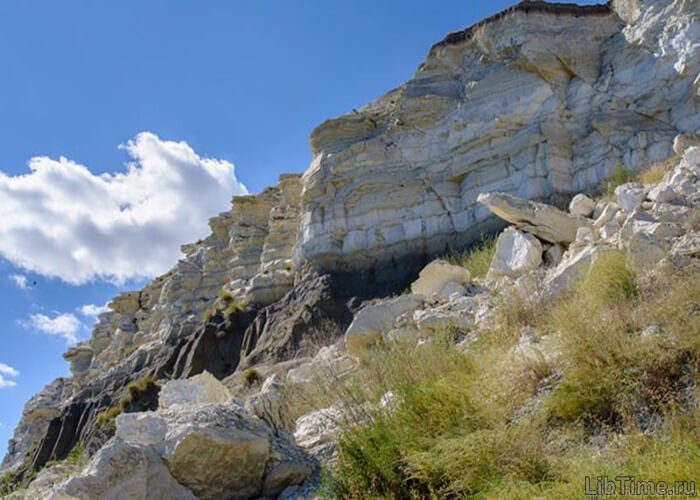
The landscape of Franz Josef Land is dominated by ice caps, glaciers and flat-topped basalt mountains that rise above snowfields and frozen straits. Roughly 85 percent of the land is glaciated, and where bare rock is exposed it reveals dark volcanic layers laid down long before the present ice sheets formed. Sheer cliffs, glacier fronts calving into the sea and snow-capped peaks give the archipelago its stark, otherworldly character.
Champ Island is famous for one of the region's strangest natural phenomena: near-perfect stone spheres, or concretions, scattered across its slopes. These stone balls range from a few centimeters to several meters across and formed as minerals gradually precipitated around a nucleus within sedimentary rock, building up in concentric layers over immense periods. Similar spherical concretions occur in a handful of places worldwide, but the Champ Island field is unusual for the size range of its spheres and for the way weathering and erosion have exposed and rounded them.
Notable Islands: Alexandra Land, Arthur Island and Cape Flora
Several islands stand out on any visit to Franz Josef Land, each tied to a chapter of its history or a distinctive landscape:
- Alexandra Land (Land of Alexandra) — the westernmost large island, home to the Nagurskoye Air Base, a Russian military and border installation that reflects the archipelago's strategic Cold War and modern-day importance.
- Rudolf Island — the northernmost island, whose Cape Fligely marks the most northerly point of land in the Eastern Hemisphere and which hosted early scientific stations and pole-bound expeditions.
- Cape Flora — the historic southern landing site where Jackson and Nansen met, and where the remains of expedition camps still lie.
- Bell Island — associated with Leigh Smith's overwintering and the Eira Lodge site.
- Champ Island and Arthur Island — visited today for their geology and wildlife, with Arthur Island offering good opportunities for observing seabirds and marine mammals along its shores.
Wildlife of Franz Josef Land
Franz Josef Land supports a rich High Arctic fauna concentrated at the ice edge, on cliff colonies and along the productive coastal waters. The archipelago is a designated nature sanctuary within the Russian Arctic National Park, and its wildlife — polar bears, walruses, seals, whales and vast seabird colonies — is the main draw for modern expedition travelers.
Arctic Marine Mammals and Seabirds
The polar bear is the emblematic predator of Franz Josef Land, and the archipelago is an important denning ground where females raise cubs on the pack ice. Polar bears here feed chiefly on ringed and bearded seals hunted at the ice edge, and encounters — always at a safe distance — are a highlight of any voyage.
The Atlantic walrus is the other signature mammal, gathering in noisy haul-outs on beaches and ice floes where the animals rest, spar and use their long tusks for hauling out and display. The bearded seal, a large ice-dependent seal that favors shallow waters where it forages on the seabed, is common throughout the straits, and cetaceans including the beluga, the narwhal and the bowhead whale move through the surrounding seas. Cliff faces such as Rubini Rock, a striking columnar-basalt outcrop, host dense breeding colonies of seabirds, with the Brünnich's guillemot among the most numerous nesting species.
The Arctic Fox and Land Animals
The Arctic fox is the only land mammal resident year-round in Franz Josef Land, and it is a resourceful survivor of this extreme environment. A skilled hunter and scavenger, the Arctic fox preys on nesting birds and eggs at the seabird cliffs in summer, follows polar bears to scavenge seal remains, and changes into a thick white coat to endure the winter. Its ability to exploit whatever food the seasons offer is what allows it to persist where larger land animals cannot.
Arctic Fish Fauna and Biodiversity
The waters of Franz Josef Land hold a fish fauna dominated by cold-adapted families and shaped by the archipelago's high-latitude, ice-influenced conditions. Surveys have documented a species assemblage in which eelpouts of the family Zoarcidae are especially well represented, alongside commercially and ecologically important species such as Atlantic cod (Gadus morhua), capelin (Mallotus villosus), beaked redfish (Sebastes mentella) and the long-lived Greenland shark (Somniosus microcephalus) in deeper waters.
A detailed study of the nearshore and deep-water fishes of Franz Josef Land — carried out by researchers including Alan M. Friedlander and Natalia V. Chernova of the Zoological Institute of the Russian Academy of Sciences and published in the journal PeerJ in partnership with the National Geographic Society — combined scuba diving, trawling and deep-water drop-camera footage to document species and taxonomy. The work described forms such as the eelpout Gymnelus esipovi and compared the archipelago's fish assemblages with those of other Arctic regions, providing baseline data for monitoring how climate change and warming waters may reshape these communities and drive transient, migrating species into the region.
Arctic Flora and Vegetation
Vegetation in Franz Josef Land is sparse and low, confined to the narrow strips of ice-free ground that thaw briefly in summer. Mosses, lichens, hardy grasses and cushion-forming flowering plants such as Arctic saxifrage and polar poppy cling to sheltered, nutrient-rich spots — often beneath seabird cliffs, where guano fertilizes the thin soil. This tundra flora is among the most northerly plant life on Earth and a rewarding subject for close-up observation on shore walks.
Bird Watching Opportunities
Bird watching is one of the great pleasures of a Franz Josef Land expedition, thanks to the enormous seabird colonies packed onto its cliffs during the brief summer. The columnar cliffs of Rubini Rock and similar sites teem with breeding Brünnich's guillemots, black-legged kittiwakes, little auks, glaucous gulls and other High Arctic species, while ivory gulls — a true ice specialist — patrol the pack. The concentration of birds at these breeding grounds makes the archipelago a magnet for birders and nature photographers alike.
The Barents Sea Ecosystem
Most voyages to Franz Josef Land cross the Barents Sea, one of the most productive marine regions in the Arctic. The Barents Sea Large Marine Ecosystem lies where warm Atlantic water meets cold Arctic water, driving a huge seasonal bloom of plankton that supports vast stocks of capelin and cod and, in turn, seals, whales and seabirds. This mixing of water masses is the ecological engine behind the wildlife concentrations travelers see farther north.
Crossing the Barents Sea to the Archipelago
The Barents Sea crossing is itself part of the expedition experience, a passage of one to two days over open Arctic water before the first islands appear. Whales and seals are regularly sighted along the way, and seabirds follow the ship as it steams north. Because sea ice and weather change quickly at these latitudes, captains adjust the route continually, and the crossing sets the tone for the remote frontier that lies ahead.
Modern Expeditions to Franz Josef Land Island
Today Franz Josef Land is visited by a small number of ice-strengthened expedition ships each short summer season, offering travelers a chance to follow in the wake of Nansen and Jackson. Operators such as Poseidon Expeditions run voyages aboard vessels like the M/V Sea Spirit, and the archipelago also features in itineraries marketed by companies including Quark, Seabourn, Apex Expeditions, Secret Atlas and the Russian specialist RUSARC. Small-ship expeditions are the only practical way to reach these islands, and their modest passenger numbers allow flexible landings and close, low-impact wildlife viewing.
Typical Expedition Itinerary
A Franz Josef Land voyage usually runs for around two weeks and often begins in Longyearbyen, the main town of Svalbard on the island of Spitsbergen, before crossing to the archipelago. A representative day-by-day itinerary looks like this:
- Embarkation in Longyearbyen, with time to explore the town, its museum and nearby coastal scenery such as the Lilliehöök Glacier area or Ny-Ålesund.
- One to two days crossing the Barents Sea toward Franz Josef Land, with wildlife watching from deck.
- Days of landings and Zodiac cruises among the islands — Cape Flora, Bell Island, Champ Island, Rubini Rock, Cape Tegethoff and Rudolf Island with its Cape Fligely, weather and ice permitting.
- The return crossing and disembarkation, again typically at Longyearbyen.
Alternative routes reach the archipelago from Russian ports such as Murmansk, and some Russian High Arctic programs also touch Novaya Zemlya and its polar station at Malye Karmakuly. Every itinerary is provisional, because ice conditions dictate where and when a ship can land.
Activities and Onboard Programs
Days on a Franz Josef Land expedition are built around going ashore and onto the water, supported by an onboard program of lectures from naturalists, historians and glaciologists. Typical activities include:
- Zodiac excursions and boat tours along glacier fronts, bird cliffs and walrus haul-outs.
- Sea kayaking in sheltered bays for those wanting a quieter, closer view of the ice and wildlife.
- Nature hikes and tundra exploration on ice-free landing sites, with guides interpreting flora, geology and history.
- Polar bear and walrus watching, both from the ship and from Zodiacs at a respectful distance.
- Visits to historic sites and polar station infrastructure, following the routes of the early explorers.
Arctic Photography Opportunities
Franz Josef Land is an exceptional destination for photography, combining dramatic ice landscapes, charismatic wildlife and layers of exploration history. Many voyages carry a dedicated photography guide, and Zodiacs allow low-angle shooting close to walrus haul-outs, bird cliffs such as Rubini Rock and calving glacier fronts. Subjects range from polar bears on the ice to the geometric stone spheres of Champ Island.
Shooting in 24-Hour Arctic Daylight
At these latitudes the summer sun never sets, giving photographers 24-hour daylight and long stretches of low, golden light that would count as "golden hour" anywhere else. This continuous daylight allows landings and shooting at any hour and produces soft, directional light on ice and wildlife, though it also calls for careful exposure control against bright snow and for taking rest despite the perpetually lit sky.
Access Restrictions and Permit Requirements
Franz Josef Land lies within a Russian border zone and a national park, so access is tightly controlled and cannot be arranged independently. Visitors travel with licensed operators who obtain the necessary national-park permits, and everyone aboard requires a Russian visa; ships crossing from Svalbard clear Russian immigration procedures before landing. The presence of the Nagurskoye Air Base and Russian border security means certain areas are off-limits, and landing sites are agreed in advance with the authorities of the Russian Arctic National Park.
The Wildlife Sanctuary and Protected Ecosystems
The whole of Franz Josef Land is protected as a strict nature sanctuary within the Russian Arctic National Park, which shapes how every visit is conducted. Conservation rules govern group sizes, minimum distances from wildlife, biosecurity to prevent introduced species, and the removal of all waste, while historic camps and expedition relics are preserved in place. These protections keep the archipelago one of the least-disturbed wildlife sanctuaries in the Arctic, safeguarding its polar bear denning grounds, walrus haul-outs and seabird colonies.
Planning Your Expedition to Franz Josef Land
Planning a trip to Franz Josef Land centers on choosing a reputable expedition operator, securing the right permits and visa, and preparing for genuinely extreme conditions. Because independent travel is impossible, the practical first step is booking a berth on a scheduled voyage — most of which depart during the short window from July to early September when ice retreats enough to allow landings.
Sensible preparation for a Franz Josef Land expedition includes:
- Documents: a valid Russian visa and the operator-arranged national-park permits; confirm requirements early, as processing takes time.
- Clothing: waterproof outer layers, insulating mid-layers, warm hats and gloves, and sturdy waterproof boots for wet Zodiac landings.
- Gear: binoculars for wildlife and birds, a camera with a telephoto lens and spare batteries (cold drains them quickly), and protection against bright, all-day glare on snow.
- Fitness and mindset: readiness for flexible schedules, since weather and ice can change or cancel landings at short notice.
Safety at sea and ashore is managed by the expedition team through ice navigation by an experienced captain, strict Zodiac and boat protocols, and armed bear guards who scout and secure every landing before passengers step ashore. Travelers interested in the wider natural history of the far north — from Arctic wildlife to the region's fish and marine life — will find Franz Josef Land one of the most rewarding and least-visited frontiers left on the planet.