The Rise of the Qin Empire and the Building of the Great Wall of China
 libre
libre
The Qin dynasty emerged and expanded rapidly in China around 200 BC, founding the first unified empire in Chinese history and establishing the imperial dynasty system that would shape governance for more than two millennia. Under Qin Shi Huang, the many warring kingdoms of ancient China were welded into a single centralized state, and the reforms introduced during this brief but transformative period laid the foundations for every dynasty that followed.
Development of the Qin Empire

The Qin empire stretched across an enormous territory reaching from southern Manchuria to Sichuan and Guangdong, and within it the productive forces of ancient China began to grow with unusual speed. The widespread adoption of iron and the shift to plough-based farming allowed agricultural output and craft production to surge, giving the Qin state the material base it needed to dominate the Central Plain.
Rise of the Qin Empire (221 BC)
The Qin dynasty was proclaimed in 221 BC, when the state of Qin completed its conquest of the last of the rival kingdoms and unified China for the first time. The ruler who accomplished this, born Ying Zheng and known during his kingship as the sovereign of Qin, took the title Qin Shi Huang — "First Emperor of Qin." His court at Xianyang, the imperial capital in the Guanzhong basin, became the administrative heart of a realm far larger than any previous Chinese state.
Qin's geographical position was a decisive advantage in its rise. Sheltered behind mountain passes in the fertile Guanzhong region, the Qin heartland was difficult to invade yet well placed to strike eastward into the plains held by its rivals. This defensible base, combined with disciplined armies and a ruthless war strategy, let Qin absorb its neighbours one by one.
Chinese Unification Under Qin
The unification of China under Qin ended the Warring States period, the centuries of near-constant conflict among the Seven Warring States that had followed the decline of Zhou dynasty authority. The seven contenders — including Qin, Chu, Qi, Zhao and Wei — had fought for supremacy across the Central Plain, and Qin defeated them through a combination of military superiority and shrewd diplomacy, playing rivals against one another before conquering them in turn.
Much of Qin's strength came from the Legalist reforms of Shang Yang, a statesman who had reorganized the Qin state generations earlier. Legalism rewarded farming and military service, tied rank to achievement rather than birth, and imposed strict, uniform laws — a sharp contrast with the aristocratic traditions of states such as Chu. Later ministers, including Lu Buwei and the influential chancellor Li Si, extended this administrative machinery across the newly conquered lands.
The unification also drove military expansion beyond the old kingdoms. Qin armies pushed south into the Yangzi delta and toward the coast, while campaigns in the north confronted the nomadic Xiongnu and secured the frontier. This political consolidation and territorial expansion turned a patchwork of feudal states into a single empire governed from one capital.
Development of Productive Forces and Iron Technology
Iron technology was the engine of Qin's economic transformation. The spread of iron tools and weapons across the empire raised agricultural yields, improved craft manufacture, and equipped the armies that carried out the conquests. This broad use of iron marked a decisive step in the Neolithic-to-Bronze-Age transition and beyond, moving Chinese state formation into a more advanced material era than the earlier Shang dynasty had known.
Agricultural Development and Irrigation Systems
Agriculture flourished as the Qin combined plough farming with major irrigation and land-management works. Grand-scale construction of postal roads, canals, palaces and public buildings reached extraordinary proportions, and canal networks both watered the fields and moved grain and troops across the empire. Archaeological settlement-pattern studies of ancient China — such as fieldwork in coastal Shandong Province led by researchers including Gary M. Feinman and Linda M. Nicholas of the Field Museum of Natural History with Hui Fang of Shandong University — reveal how densely such agrarian communities packed the productive river valleys and plains.
The Great Wall of China
The Great Wall of China was begun as a state defence project in 214–213 BC, when Qin Shi Huang ordered the northern frontier fortifications joined into a single continuous barrier. The Great Wall stands as a colossal monument to the industry and skill of the Chinese people, and it grew directly out of the empire's programme of roads, canals and monumental building.
Construction and Human Cost of the Wall
The scale of the work is captured by a single fact: 600 kilometres of this immense wall were raised in just five years under the Qin. Building the remaining two thousand kilometres, however, took sixteen centuries of later effort, with the Ming dynasty responsible for much of the stone wall visible today. This "stone poem" cost the people untold suffering, and it is no accident that they called it "the wall of great sorrows."

Strategic and Defensive Significance
The Great Wall of China repeatedly saved the country from foreign invasion, and its strategic value proved Qin Shi Huang's foresight over more than twenty centuries. Until Western cannon later intervened, enemies never came from the direction of the sea. The Huns, Mongols, Manchus and Tatars — everyone who disturbed the peace of the realm — always arrived from beyond the wall, out of the north and west, which is exactly why the fortifications were placed where they were. The wall's true purpose was to blunt the recurring military threat of northern nomads such as the Xiongnu, and its role in holding China together made it central to keeping the empire unified.
Emperor Qin Shi Huang
Qin Shi Huang, also written Qin Shihuangdi, drove the political, economic, administrative, cultural and educational unification of all the former principalities into a single system. Clothing, ceremonies and even parts of religious practice were standardized, and to achieve these ends the First Emperor spared no means, exercising an authoritarian rule enforced by harsh laws.

Centralized Bureaucratic System and Administrative Reforms
Qin Shi Huang replaced the old feudal order with a centralized bureaucratic system in which officials, not hereditary nobles, governed on the emperor's behalf. Guided by Li Si and the principles of Legalism, this administrative structure concentrated authority in the throne and applied a single body of law across the whole empire, a model of centralized governance that later dynasties preserved.
Centralization of Provincial Administration
The empire was divided into provincial commanderies and counties, each run by appointed administrators answerable to the central court rather than to local aristocratic families. This dismantled the regional power bases that had fuelled the Warring States conflicts and let the capital at Xianyang direct taxation, conscription and public works from the centre.
Military Reforms
Military organization was reformed alongside civil administration, with armies raised through universal conscription and commanded by officers chosen for merit and loyalty rather than noble birth. Weapons were standardized, garrisons were stationed along the new frontier fortifications, and control of the army was kept firmly in imperial hands — a system that made military strength and bureaucratic efficiency reinforce one another.
Unification of Currency, Weights, and Measures
Across the empire the Qin introduced a single currency and uniform state standards of weight and length, an act of standardization that dramatically simplified trade and taxation. The writing system was likewise unified, giving officials in every province a common script — a lasting contribution to Chinese governance and to the collective identity of the people. For merchants and travellers the era also produced a star catalogue and the world's first compass, aids to navigation and commerce that reflect the practical spirit of the age.
Book Burning and Persecution of Scholars
Qin Shi Huang burned the works of authors he disliked and turned the same fury on the scholars who disagreed with him, a campaign of intellectual control aimed at silencing dissent and cementing Legalist orthodoxy over rival schools such as Confucianism. Tellingly, medical texts were treated as an exception: rather than being destroyed, they were gathered and copied. In the span of roughly forty years (246–207 BC) China accomplished across every field of life the kind of work that other countries spent centuries to achieve.
In these conditions a vigorous flowering took place throughout public life, and the social sciences advanced swiftly. Silk began to replace bamboo strips as a writing surface, and books became far less bulky and easier to circulate as a result.
Afterlife Beliefs and Tomb Construction
Qin Shi Huang's belief in an existence beyond death drove one of the greatest construction projects of the ancient world: the vast Mausoleum of the First Qin Emperor near Xianyang. To guard him in the afterlife, artisans produced the Terracotta Army, thousands of life-sized Terracotta Warriors modelled individually and buried in ordered ranks. The scale of the Mausoleum of Qin Shi Huang, rediscovered in modern times, remains one of the most striking testaments to the emperor's ambition and to the organizational power of the Qin state.
Scientific and Cultural Achievements
The Qin period saw achievements in science and technology that placed China far ahead of the rest of the world. Advances in navigation, astronomy and mining spread from the empire outward, several of them reaching Europe only many centuries later.
The Compass and Star Catalog
Among the era's inventions were a detailed star catalogue for astronomers and travellers and the world's first magnetic compass. These tools supported both scholarly observation of the heavens and the practical needs of merchants moving goods across the empire's roads and canals.
Mining and Percussion Drilling Technology
Chinese engineers developed percussion (cable-tool) drilling, a technique for sinking deep boreholes that brought significant gains in the mining industry. This method was carried from China to Europe only in the nineteenth century, a striking measure of how far Qin-era technology outran that of other regions.
Development of Medicine
Records of medicine in ancient China reach back as far as the thirteenth century BC, and the growth of the Qin empire gave the healing arts a powerful boost. The changing economic relations of the period benefited medicine directly, putting new materials and more refined methods of preparing them at physicians' disposal.
Mineral-Based Medicines and Treatments
The pharmacopoeia of the Qin era expanded with many substances of mineral origin. Saline solutions were used for washing wounds; various purgative salts, iron compounds, sulphur, mercury and arsenic were employed to treat skin and venereal diseases. This growing arsenal of remedies reflected both the new materials available and the accumulating experience of practitioners.

Hygiene and Preventive Care
The general rise in cultural life allowed physicians to give special attention to hygiene and prevention. Drawing on the ethical teachings of the day, which held a "sense of moderation" to be the proper rule of conduct, doctors urged temperance in food and drink, in clothing and in sleep, championed cleanliness, and made increasingly wide use of general strengthening remedies and regimens.
The Han Period (206 BC – 220 AD)
This preventive, moderation-centred approach to medicine became especially popular at the start of the Han period (206 BC – 220 AD), the long-lived dynasty widely remembered as a golden age of Chinese civilization. During this time feudal productive relations became dominant, opening — at least at first — new scope for the growth of the productive forces, and science and culture rose steadily alongside them.
Origin of the Han Chinese Identity
Where Western observers named the country after Qin — the root of the word "China" — the Chinese themselves came to call themselves the people of Han, "sons of Han." The Han dynasty was founded by Liu Bang, a commoner who prevailed in the civil war after Qin's fall and reigned as Emperor Gaozu of Han. Rather than discard the machinery Qin had built, the Han preserved its centralized bureaucracy, its standardized currency and its administrative structure, giving the empire long-term political stability and reintegration after the upheavals of the transition.
Confucianism Under Emperor Wu
Under Emperor Wu the Han state embraced Confucianism as its guiding philosophy, blending the moral teachings of Confucius with the practical bureaucratic apparatus inherited from Qin Legalism. Confucian doctrine now shaped the selection and conduct of officials, tying government service to classical learning. Emperor Wu also pursued vigorous military expansion, and it was during his reign that the Silk Road opened trade routes westward through Central Asia, spreading Chinese goods and technology far beyond the empire's borders.
The First Pharmaceutical Book
The Han era opened for medicine with the appearance of the first pharmaceutical book, the "Shennong Bencao" tradition of materia medica. It described more than three hundred kinds of drugs, setting out in detail the indications and contraindications for each. Remarkably, modern study of some of these remedies has confirmed many of the author's conclusions.
The reliability of the text is explained by its selectivity: it recorded not every drug then known but only those proven by the collective experience of generations to give a clear positive effect. Chinese physicians of the time in fact commanded far more remedies than the book lists.
In the second century BC, for example, the population of Shandong Province alone submitted ten thousand prescriptions to the imperial court. The Daoism widespread in that era promoted the idea of immortality, supposedly attainable through certain means, and numerous expeditions — physicians among them — were sent to the islands of the southern and eastern seas in its pursuit. A special obligation was even imposed on the people to collect medicines and recipes; one expedition seeking the "herb of immortality," which included the physician Xu Fu, set out as early as 219 BC by order of Qin Shi Huang.
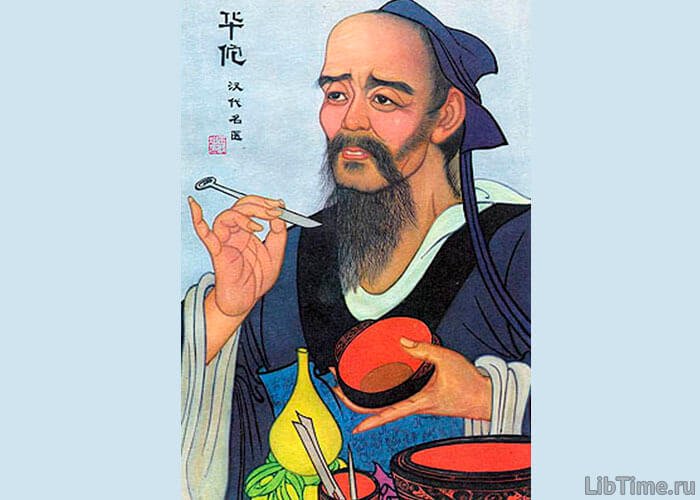
The Physician Cang Gong
A major achievement of the Han period was the systematic keeping of case histories, first undertaken by the physician Cang Gong. This eminent doctor and official was born in 215 BC in the town of Linzi in north-eastern China; the date of his death is unknown. Chronicles record that in 167 BC his services were widely honoured at court.

His original name was Chunyu Yi, but during his career as an official and physician he was known by an honorific title marking him as a high-ranking and respected functionary. He studied medicine under the then-famous physician Gongsheng, who had in turn received his knowledge from the pupils and followers of the legendary healer Bian Que.
Widely educated for his time, Cang Gong took a keen interest in pathology, was skilled in various methods of diagnosis — particularly "pulse diagnosis" — and enjoyed a reputation as a superb diagnostician.
Keeping Patients' Case Histories
Cang Gong was the first physician in China to keep case histories for every patient he treated. He carefully recorded each patient's place of birth, permanent residence and occupation, together with detailed data on the illness, its symptoms, previous treatment and — with special care — the treatment he applied. These journal entries were made by his own hand and preserved with great attention.
Twenty-five of these case histories survive to the present day, copied many times over the centuries. Deciphering them yields rich material on the general level of medical knowledge of the age, and their content testifies to the scholar's high erudition, his grasp of the pathology of disease processes, and his strong interest in etiology.
It is striking that, by the author's own assessment, the illness of eleven of the twenty-five patients whose records survive was caused by "sexual excess and the consumption of large quantities of intoxicating drink." The remaining patients suffered from gastrointestinal disease, parasitic worm infestation, kidney inflammation, decayed teeth and carbuncles. The records also show that ten of these twenty-five patients died.

Cang Gong fought energetically against excess, especially in food, and his patients appear to have been drawn from the ruling classes. Chinese folk physicians hold their compatriot in high regard for his ability to probe deeply into the causes of illness and to analyse the findings of his examinations; his understanding of pathological processes was remarkably advanced for the age of the Qin empire's development.
Fall of the Qin Dynasty
The Qin dynasty collapsed within a few years of Qin Shi Huang's death, making it one of the shortest-lived yet most consequential dynasties in Chinese history. The very rigidity and harshness that had let Qin unify China so quickly turned the population against it once the First Emperor was gone, and rebellion swept the empire away.
The 15-Year Duration of Qin Rule
The unified Qin empire lasted only about fifteen years, from the completion of unification in 221 BC to its fall in 206 BC. In that short span it nonetheless created the imperial dynasty system, a centralized bureaucracy and a set of standards that would govern China for the next two thousand years — a legacy out of all proportion to its brief life.
Causes of the Dynasty's Collapse
Several forces combined to bring the Qin dynasty down in rapid succession:
- Crushing labour and military burdens. The Great Wall, the roads and canals, and the immense imperial mausoleum consumed vast amounts of forced labour, breeding deep resentment among the people.
- Harsh Legalist law. Severe punishments and heavy taxation left ordinary subjects with little to lose, making rebellion an attractive risk.
- A weak succession. After Qin Shi Huang's death the eunuch Zhao Gao and the chancellor Li Si manipulated the succession, installing a feeble heir and plunging the court into intrigue.
- Popular revolt and civil war. Uprisings spread across the empire, and rival leaders — most notably Xiang Yu and Liu Bang — turned rebellion into a war for the throne that Liu Bang ultimately won, founding the Han dynasty.
Comparison With Other Chinese Dynasties
Set against the sweep of Chinese history, the Qin dynasty stands out as the founder rather than the perfecter of the imperial system. The earlier Shang dynasty and Zhou dynasty ruled through kinship and feudal ties, whereas Qin imposed direct bureaucratic control; the Han dynasty that followed kept Qin's institutions but softened its ideology with Confucianism, which is why the Han — not the short-lived Qin — is remembered as the classical golden age. Later dynasties such as the Ming, which rebuilt much of the Great Wall in stone, continued to work within the imperial framework that Qin first established.
Comparison Between the Roman and Chinese Empires
The Qin and Han empires are often compared with the Roman Empire, since both built enduring, road-linked, bureaucratically governed states at opposite ends of Eurasia around the same era. Both invested heavily in infrastructure — roads, walls and canals in China, roads and aqueducts in Rome — and both fused military strength with administrative reach. A key difference is legacy: after Rome fell, its unity was never permanently restored, whereas the centralized model forged under the Qin dynasty repeatedly reunified China across two millennia, a continuity that shaped the country's history down to the present day.