China in the 19th Century: Decline, Opium Wars, and Western Imperialism
 libre
libre
China in the 19th century entered a profound crisis when the First Opium War of 1839–1842 exposed the decay of an outdated feudal order and opened the way for Western imperial powers to subjugate the country, gradually turning China into a dependent, semi-colonial state. That single conflict marked the beginning of what later Chinese historians would call the "century of humiliation" — a long span in which foreign intervention, unequal treaties, internal rebellions, and the collapse of dynastic rule reshaped one of the world's oldest civilizations.

China in the 19th century: the crisis of a feudal empire
China's economic and political system in the 19th century could no longer withstand pressure from the industrialising West. The country entered a deep crisis whose roots lay in centuries of self-imposed isolation, an economy built on manual labour, and a governing structure that resisted change. Understanding this decline requires looking at the long arc of Chinese history that came before it.
The long arc of Chinese history before the crisis
Chinese civilisation is among the oldest continuous cultures on earth, stretching from prehistory through a succession of dynasties. Early human habitation is documented by Paleolithic remains of Homo erectus — the fossils popularly known as Peking Man — while the Neolithic period saw the development of settled agriculture along the Yellow River and the Yangtze River. The semi-legendary Xia dynasty is traditionally counted as the first, followed by the Shang dynasty, whose oracle bone script forms the earliest known Chinese writing, and the Zhou dynasty, under which the philosophical foundations of Confucianism, Taoism, and later Buddhism took shape.
Imperial unification arrived under Qin Shi Huang, who standardised script, weights, and roads and linked defensive walls into an early version of the Great Wall. The Han dynasty that followed is remembered as a golden age of cultural achievement and expansion; the majority Han identity of Chinese people takes its name from it. Later peaks included the cosmopolitan Tang dynasty, whose international influence radiated across Asia — Wu Zetian ruled as China's only female emperor during this era — and the technologically inventive Song dynasty. The Mongol Yuan dynasty brought foreign conquest and drew visitors such as Marco Polo, while the Ming dynasty sponsored maritime exploration and monumental construction, extending the Great Wall and maintaining the Grand Canal.
The socio-economic crisis of the Middle Kingdom
The double burden of Chinese feudal landlords and foreign invaders, sustained for nearly a century, held back the development of Chinese culture and society. By the middle of the 19th century, conditions across China had worsened considerably, aggravated by the ideological expansion that accompanied the Western powers' advance on the political and economic fronts. Tax revenue stopped flowing, the state teetered on the edge of bankruptcy, and rebellions erupted across the provinces, threatening the empire with violent upheaval.
The Qing dynasty, ruled by the Manchu minority over a Han majority, presided over a multi-ethnic empire whose territorial expansion had brought together many languages, religions, and peoples across regions from Manchuria to the western frontiers. Manchu customs — including distinctive dress and the required queue hairstyle — coexisted uneasily with Han cultural traditions, and the tension between conqueror and conquered underlay much of the dynasty's later instability.
The decline of industry based on manual labour
Chinese industry, founded on manual labour, could not compete with the machine. For centuries the seemingly unshakeable Middle Kingdom had exported porcelain, silk, and tea that the world craved, but the arrival of mechanised production in Britain and elsewhere reversed the balance. The Industrial Revolution gave Western manufacturers a decisive advantage in cost and volume, and handcraft workshops that had defined the Chinese economy fell into decline as cheaper machine-made goods flooded the treaty ports.
The contrast with the West was stark. Where Europe and later the United States moved from agriculture to manufacturing economies — with continuous-process mass production, steel and heavy industry, railroads, and eventually electrification during the Second Industrial Revolution — Qing governance resisted comparable modernisation. Japan, facing similar pressure, chose rapid reform; China largely did not, and the gap widened with every decade.
Economic inequality in the late imperial period
Economic inequality deepened across late imperial China as population growth outran the land and food supply. Between the 18th and 19th centuries the population roughly doubled, straining farmland, driving up rents, and leaving vast numbers of peasants landless or heavily indebted. Land scarcity, natural disaster, and heavy taxation pushed rural society toward crisis, while a small class of officials, landlords, and merchants concentrated wealth.
Employment prospects were bound to the imperial examination system, through which candidates competed for scarce government posts by mastering the Confucian classics. The system rewarded classical scholarship over practical or technical skill, reinforcing a conservative elite and offering little relief to a swelling population with few avenues for advancement.
Confucian philosophy and family values
Confucianism, the ethical system derived from the teachings of Confucius, shaped everyday life and governance in imperial China around ideals of hierarchy, filial piety, and social harmony. Family was the basic unit of loyalty and obligation, and defined gender roles placed men at the head of the household while binding individuals to duties toward parents, ancestors, and the state. These values gave the Qing order remarkable cohesion, yet they also underpinned a resistance to outside cultural influence that left the empire slow to adapt when confronted by industrial powers.
The "closed door" policy of the Qing empire
The Qing dynasty tightly restricted foreign trade through what became known as the Canton system, confining Western merchants to the single port of Guangzhou (Canton) under strict supervision. This deliberate limitation reflected an imperial worldview in which China saw little need for foreign goods and treated commerce with outsiders as a privilege granted, not a right owed.
The Chinese tribute system versus Western diplomacy
China conducted foreign relations through a tribute system fundamentally at odds with Western diplomatic practice. Neighbouring states and visiting envoys were expected to acknowledge the Chinese emperor's supremacy, offer tribute, and perform the ritual kowtow, receiving gifts and trading rights in return. Western nations, by contrast, arrived seeking equal, treaty-based relations and open markets. This clash of worldviews — hierarchy versus reciprocity — repeatedly frustrated European missions and helped set the stage for conflict.
Diplomatic contact and the exchange of gifts
Diplomatic engagement between China and Europe long revolved around gift-giving, in which foreign envoys presented curiosities to impress the imperial court. Mechanical clocks became prized status symbols in Qing China, treasured as marvels of European craftsmanship and displayed by the elite. Such objects flowed into the Summer Palace and imperial collections, yet fascination with foreign novelties never translated into a willingness to open China's markets or reform its institutions.
Early European interest in China and the expeditions of Marco Polo
European interest in China stretches back centuries before the Opium Wars, most famously through the travels of Marco Polo, whose accounts of the wealth of the Yuan dynasty court fired the imagination of medieval Europe. Later, Portuguese traders established a foothold at Macau in the 16th century, and the pursuit of Chinese silk, porcelain, and tea drew successive waves of merchants and missionaries eastward, laying the groundwork for the trade rivalries that would erupt in the 19th century.
Opium shipments to China
As early as the late 18th century, foreign merchants found the commodity with which they could break open the Qing empire's "closed door" policy: opium. Large consignments of the drug began arriving at Macau, one of the few points of access available to them, and the trade rapidly poisoned Chinese society while draining the imperial treasury of silver.

The British opium trade and the rise of imports
The British East India Company drove the opium trade to fund its purchases of Chinese tea, exchanging Indian-grown opium for silver in a scheme that reversed the flow of bullion away from China. The disgraceful role of these enlightened poisoners of hundreds of thousands of people troubled British and American merchants little. In the early 19th century some 4,000 chests of the narcotic — roughly 160 tonnes — were delivered to China each year; by 1839 that quantity had risen tenfold. Opium addiction spread through every stratum of society, hollowing out communities and provoking the Qing government to act — though its concern lay less with the health of the Chinese people than with the silver reserves flowing into foreign pockets.
The port of Macau as a channel for opium supply
Macau served as the principal early channel through which opium entered China, a Portuguese-held enclave that later worked alongside the growing British trade base at Guangzhou and, after 1841, the newly seized island of Hong Kong. From these coastal footholds the drug spread inland along the river networks, and the ports that handled it became the crossroads where foreign commerce and Chinese resistance collided.
The Opium War of 1839–1842
The First Opium War of 1839–1842 broke out when the Qing government moved to suppress the opium trade and Britain responded with military force. British naval superiority proved decisive: steam-powered warships and modern artillery overwhelmed imperial coastal defences, and the empire that had long imagined itself invincible was defeated within three years. With the tacit support of the United States, which was also eager to profit at China's expense, capitalist Britain broke the resistance of the imperial armies, brutally crushed the local militias that fought the invaders, and imposed the unequal Treaty of Nanjing on the Qing.
The Treaty of Nanjing and the opening of five ports
The Treaty of Nanjing of 1842 was the first of the unequal treaties and set the pattern for those that followed. It opened five treaty ports — Canton (Guangzhou), Amoy (Xiamen), Fuzhou, Ningbo, and Shanghai — ceded Hong Kong to Great Britain, and imposed a large indemnity. A few years later the United States and France secured the same privileges: the Treaty of Wangxia, negotiated in 1844 for the United States by Caleb Cushing under President John Tyler, granted Americans access to the treaty ports along with extraterritoriality — the right of foreigners to be tried under their own laws rather than Chinese ones — and a most-favoured-nation clause that automatically extended to each treaty power any concession granted to another.
China's dependence on foreign imperialists
From this time began China's transformation into a country dependent on foreign imperialists. To blunt the continuously mounting popular movement against the foreign oppressors and to secure their own dominance, the Western powers applied a tried policy of carrot and stick — imposing the harshest exploitation while manufacturing an appearance of concern for the people. Dissatisfaction with treaty enforcement soon led to further conflict: the Second Opium War (1856–1860), fought by Britain and France, ended with the Treaty of Tientsin, which opened still more ports, legalised the opium trade, and permitted foreign missionaries and diplomats deeper access to the interior.
Colonial expansion and the "century of humiliation"
China's subjugation formed part of a broader wave of Western imperialism across Asia that also engulfed India, Burma, and Singapore. Foreign powers carved out spheres of influence within China itself — Britain, France, Germany, Russia, and later Japan each claiming zones of economic privilege, railway concessions, and foreign enclaves in cities such as Shanghai and Tianjin. This period of dismemberment and forced concession is remembered in China as the "century of humiliation," and the resentment it bred became a powerful catalyst for the revolutionary sentiment of the following decades.
The American "open door" policy and commercial interests
The United States advanced an "open door" policy aimed at preserving equal commercial access to Chinese markets rather than seizing territory outright. U.S.–China trade had begun soon after American independence and grew through the treaty-port era; alongside merchants came American missionaries, whose protection became a recurring American diplomatic concern. The open door doctrine sought to keep China's markets open to all foreign traders and to prevent any single power from monopolising them — a stance rooted in American commercial interest as much as principle.
European medicine comes to China in the 19th century
In the mid-19th century, and especially in the "open" port cities, the first European-style medical institutions — clinics and hospitals — appeared in China. The first such hospitals were founded between 1844 and 1848 in Shanghai, Xiamen, Ningbo, and Fuzhou, and by 1876 the country counted sixteen hospitals and twenty-four medical stations established by Europeans. So, in the baggage train of cannon and opium, a "second medicine" entered the country.
Christian missionaries in China, from the 13th to the 19th century
Christianity reached China long before the treaty-port hospitals, carried by missionaries whose presence spanned centuries. From the 13th to the 16th centuries, travellers and clergy following routes like those of Marco Polo brought the faith intermittently, and Jesuit scholars later gained influence at the Ming and Qing courts — the German astronomer Johann Adam Schall von Bell, for instance, served the imperial observatory in Beijing. In the 19th century, Protestant and Catholic missionaries spread through the newly opened ports, founding schools, hospitals, and congregations, and their protection became one of the persistent flashpoints of foreign relations.
The first European-type hospitals in the open ports
The very manner of European medicine's arrival, and still more the aims set before it, shaped the relationship that developed between China's national medicine and the tradition imported from abroad. When one considers that European medicine of that era differed little in its treatment outcomes from Chinese medicine, it becomes clear which of the two the broad mass of the population preferred. The numerical balance, too, was deeply unequal: against the few dozen European physicians — in 1859 there were only 28 foreign doctors in all of China — stood hundreds of thousands of local healers who had emerged from among the people and knew their character, traditions, and daily life intimately.

Behind that small vanguard — which included not only missionaries and credentialled salesmen of various patent-medicine firms but also genuine enthusiasts of medicine — stood the then still progressive capitalist mode of production. The rapid growth of the natural sciences in Western Europe gave medicine a powerful impetus, and its achievements, though with considerable delay, were applied ever more widely in China with each passing year.
The coexistence of two medicines in China
Under conditions of colonial plunder, China's national medicine found itself in the least favourable circumstances of its entire existence, and China became perhaps the only country where two systems of medicine appeared and still exist side by side. The road into the country for Western medicine — or, as it is called in China, European medicine — was opened by the Anglo-Chinese war of 1839–1842. As the horizons of the doctors working there gradually widened, key advances took hold: the 1846 discovery of ether anaesthesia, for example, spurred a rapid flowering of clinical surgery, and Chinese patients turned more often to European surgeons.
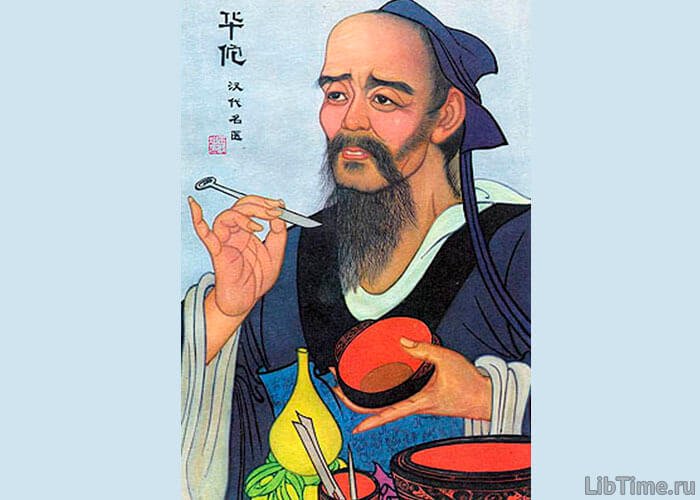
It is worth noting that the priority in the discovery of anaesthesia belongs to China. According to fairly reliable surviving accounts, the ancient physicians Bian Que and Hua Tuo performed abdominal operations, but the closely guarded knowledge of their methods and anaesthetic agents was lost in the medieval era. Always exceptionally attentive and receptive to anything useful, and willing to draw on the experience of others, China's physicians never remained indifferent to the successes of colleagues abroad; between the 1850s and 1880s they began studying European medicine intensively. The physician Ho Xi, working from 1850 to 1859, translated European textbooks on internal medicine, paediatrics, obstetrics, and gynaecology into Chinese, and the first European-style teaching institutions were established.
Popular uprisings and the Boxer Rebellion
Foreign domination and Qing weakness together triggered a wave of internal rebellions and peasant uprisings that shook the empire to its foundations. The most devastating was the Taiping Rebellion (1850–1864), a massive religiously inspired revolt that claimed tens of millions of lives and nearly toppled the dynasty. Later, the Boxer Rebellion (1899–1901) turned popular fury against foreigners and Chinese Christians alike; when the Qing court sided with the Boxers, an eight-nation foreign coalition intervened militarily, and the resulting settlement imposed further indemnities and concessions that left the dynasty more discredited than ever.
The reign of the Empress Dowager Cixi
The Empress Dowager Cixi dominated Qing government for nearly half a century from behind the throne, ruling in the names of the Tongzhi Emperor and later the Guangxu Emperor. A concubine of the Xianfeng Emperor who rose to become the empire's most powerful figure, Cixi controlled court politics through a period of mounting foreign pressure and internal revolt. Her rule became a symbol of the dynasty's inability to reform in time.
Cixi's role in the failure of China's modernisation
Empress Dowager Cixi is widely blamed for China's failure to modernise as Japan did. When the Guangxu Emperor attempted sweeping reforms in 1898, Cixi crushed the movement, placed him under house arrest, and reasserted conservative control. Funds that might have strengthened the navy were reportedly diverted to rebuilding the Summer Palace, and the Qing government's resistance to change stands in sharp contrast to Japanese modernisation of the same era — a contrast made brutally clear by defeat in the First Sino-Japanese War (1894–1895), which ended with the loss of Taiwan and confirmation of Japan's dominance in the region.
Chinese migration in the mid-to-late 19th century
The turmoil of the 19th century drove millions of Chinese to emigrate, producing one of the great population movements of the age. Economic collapse, war, and famine combined with soaring demand for labour abroad to send Chinese workers across the Pacific and throughout Southeast Asia, where they faced both opportunity and harsh discrimination.
The economic causes of migration and the shortage of land
Economic pressure and land scarcity were the primary engines of Chinese emigration. With farmland exhausted by population growth and rents crushing rural households, migration became a survival strategy: some left as economic migrants seeking wages, while others fled war and rebellion outright in patterns of flight migration. Men predominated among those who left, travelling to earn money and sending remittances home to support the families and villages they had left behind.
Worker recruitment and chain migration
Labour demand from colonial plantations, mines, and construction projects pulled Chinese workers abroad through organised recruitment. Migrants laboured on railroads, in goldfields, and on sugar and rubber estates, often under contracts that bordered on indenture and amid intense discrimination in their host countries. Once established, early migrants sponsored relatives and fellow villagers in a process of chain migration, so that a single departure could seed an entire community overseas, held together by kinship networks and continued remittances.
The end of dynastic rule and the proclamation of the republic
Dynastic rule in China ended in 1912, when the Xinhai Revolution swept away the Qing and with it more than two thousand years of imperial government. Foreign imperialism, military defeat, and repeated failures of reform had steadily eroded the dynasty's authority — in traditional terms, the Qing had lost the Mandate of Heaven, the belief that legitimate rulers governed with cosmic approval that could be withdrawn.
From the fall of the Qing to the founding of the People's Republic
The Xinhai Revolution, inspired by Sun Yat-sen, ended the Qing dynasty and established the Republic of China; the last emperor, the child Puyi, abdicated in 1912. The republic soon fractured into warlord rule and civil war, with Chiang Kai-shek's Nationalists eventually contending against the Communists led by Mao Zedong. After the upheavals of the ensuing decades, the Communist victory in 1949 brought the founding of the People's Republic of China, closing the era of foreign domination and internal fragmentation.
Modern China: development after the Cultural Revolution
After the turmoil of the Cultural Revolution, China embarked under Deng Xiaoping on the market reforms that transformed it into a global economic power. Special economic zones such as Shenzhen spearheaded a manufacturing boom, GDP expanded to rank among the largest in the world, and rapid urbanisation reshaped the country — even as tools like the hukou residency system continued to govern internal migration. The distance travelled from the treaty-port humiliations of the 19th century to contemporary China measures the full sweep of the nation's modern transformation.
Under conditions of colonial plunder Chinese national medicine had been driven to the margins, yet it endured. Chinese medicine lacked a broad scientific base grounded in the natural sciences, and this held back the further development and systematic generalisation of its rich practical experience. Nor could much growth be expected during the long period of economic and cultural stagnation imposed by the harsh historical circumstances of the preceding centuries. Anyone who judges the scientific validity of Chinese folk medicine without regard to the historical conditions of its origin and development misreads it fundamentally.

Medicine, one of the oldest branches of knowledge, is the product of humanity's millennia-long struggle to preserve health and prolong life; it is not the product of any single epoch or class. Chinese folk medicine healed people of many illnesses over thousands of years and continues to do so today, though the conditions for its development have now changed profoundly, opening boundless possibilities for its further refinement. European medicine, built on modern natural science, is in that sense more advanced — yet to deny the positive role of Chinese folk medicine is a deliberate distortion of reality.
Even after the victorious completion of the people's revolution, some officials sought to dismiss Chinese medicine as unscientific, claiming it lacked a modern scientific basis. That view — advanced most prominently by a former deputy minister of health — was groundless and profoundly harmful, running against the interests of a population that then had only about 50,000 credentialled doctors for 600 million people while relying on some 500,000 folk practitioners, 80 percent of whom worked in the villages. Expanding and strengthening the ranks of doctors of Chinese folk medicine, and directing their work toward serving the people, became a matter of particular concern, alongside a policy of uniting the practitioners of national and European medicine.
Chinese medicine recognises more than 2,000 kinds of remedies, of which 300 to 400 are in constant use, yet almost none of this vast national pharmacopoeia was included in the pharmacopoeia issued in 1953 — an omission that later reformers worked to correct. The eventual aim was mutual enrichment: to draw the best from the national folk tradition and from foreign science alike, and gradually to merge the two into a new, modern national medicine.
The merging of the two medicines in China
In line with this course, the relations between practitioners of Chinese folk medicine and European medicine were rebuilt on an entirely new basis. Ever larger numbers of European-trained physicians began to study the national tradition, while folk practitioners were drawn increasingly into the work of medical institutions. Many hospitals came to employ practitioners of both medicines side by side, collaborating in clinical practice and research. In treating serious illnesses, diagnosis and "treatment by the means of Chinese medicine, with the participation and under the observation of European physicians" produced strong results — for example in the treatment of schistosomiasis, epidemic encephalitis B, and other diseases. Such is the path travelled by Chinese medicine from the 19th century to the present day.