The Life and Early Years of Aristotle of Stagira
 libre
libre
Aristotle of Stagira was born in 384 BCE, more than two thousand three hundred years ago, into the household of the Greek physician Nicomachus, and he grew into one of the most influential thinkers in the history of Western thought. His life spans a childhood in Macedonia, two decades of study at Plato's Academy in Athens, a period tutoring Alexander the Great, and the founding of his own school, the Lyceum, where he shaped logic, biology, ethics, and metaphysics for centuries to come.
A short overview of the life of Aristotle of Stagira
Aristotle lived from 384 to 322 BCE and reshaped nearly every field of knowledge that existed in Ancient Greece. Born in the small town of Stagira on the northern Aegean coast, he studied philosophy in Athens under Plato, spent years observing nature in Asia Minor, served at the Macedonian court as tutor to the young Alexander, and finally established the Lyceum. His collected lecture notes became the foundation of subjects ranging from formal logic to zoology, and his methods still echo in modern science, ethics, and literary criticism.
Birth and origins in Stagira
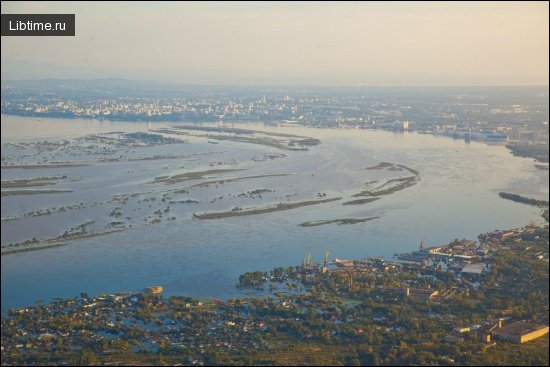
Aristotle was born in Stagira, a Greek settlement near the mouth of the channel that links Lake Bolbe (then Bezikia) to the Strymonian Gulf of the Aegean Sea, today known as the Gulf of Orfani. Following the custom of the time, he received the epithet "the Stagirite" from his birthplace, a name that would follow him through history.
Early years in Macedonia
Aristotle spent his earliest childhood in the Macedonian capital, where his father served the royal court, before the family settled in Stagira. Macedonia lay on the northern edge of the Greek world, and Aristotle's ties to it would later shape his career, drawing him into the household of King Philip II and, eventually, into the education of Alexander the Great.
His father Nicomachus and the family profession of medicine
Aristotle's father, Nicomachus, was the court physician of Amyntas, king of Macedon, and lived in the Macedonian capital of Edessa. When Amyntas died, Nicomachus moved to Stagira, where Aristotle was born. Medicine was a hereditary calling in the family, passed from father to son, and this early exposure to the healing arts helps explain Aristotle's lifelong fascination with the living body and the natural world.
Aristotle's childhood and life among slaves
From his earliest years Aristotle saw that slaves were silent, poorly dressed people who worked without rest.

His father, like all free men, never did any household work himself; he only gave orders, managed affairs, and supervised the labor of the slaves. In his leisure Nicomachus read a great deal or received guests, who exchanged news, discussed events in Greece, Persia, and Macedonia, joked, laughed, held cheerful feasts, and sang songs.
When Aristotle was fifteen his father died, and a guardian took charge of the boy's upbringing. Yet the order of the household did not change in the slightest: the slaves worked, and the free people did as they pleased.
The society of Ancient Greece: the free and the enslaved
Ancient Greek society was divided into the free and the enslaved, and no adult ever told the young Aristotle that slavery was unjust. On the contrary, everyone insisted that the Greeks were a free and noble people who existed in order to command, while all other peoples were barbarians fated to serve them. Aristotle later learned that not only foreign prisoners of war but even Greeks could become slaves: if a poor man owed a wealthy one more money than he could repay, he, his wife, and his children became that rich man's property. Such was the arrangement of the ancient world, and Aristotle grew up believing it could be no other way — a conviction he never abandoned, defending slavery as just and natural to the end of his days.
The "school of leisure" in Aristotle's biography
At the age of seven Aristotle entered a school opened in Stagira by an impoverished man who had come from Athens — the largest Greek city, famed for its beauty and the learning of its citizens. Aristotle remained in that school for ten years.
What the word "schole" meant to the ancient Greeks
Among the ancient Greeks the place of an activity and the activity itself were often called by the same word. The Greek word "schole," from which our word "school" descends, meant both a place where children studied and, at the same time, rest and occupation at leisure. Only the children of wealthy slaveholders could attend the schole; they had no need to perform dirty or heavy work, for they were meant to learn how to command and how to amuse themselves.
The gymnastic school and instruction in the sciences
In the Greek schole children were taught to spend their time without boredom — to sing, to play, and to listen to the tales of adults, along with music and the recitation of verses by Homer, Hesiod, and other early Greek poets. When boys reached the age of twelve they began attending a gymnastic school, learning to run, jump, wrestle, swim, throw the javelin and discus, and ride horses, while also picking up the rules of counting and writing.
Aristotle, however, had to study a little more than the other children, because in his family the honored profession of physician passed by inheritance from father to son. His guardian impressed upon the boy that he must live up to the name his father had given him — Aristotle means "noble purpose" — and become a physician as renowned as Nicomachus had been. Aristotle studied the properties of healing herbs and read widely, with his father's library, unusually large for the age, at his disposal.
Plato's Academy
At seventeen Aristotle traveled to Athens to enter a public school — a gymnasion that trained future public figures — and chose the one called the Academy, becoming a pupil of the celebrated philosopher Plato. The Academy stood in the northeastern part of Athens, in a grove planted in honor of the legendary Greek hero Academus, from whom the school took its name.
Study under Plato and the years in Athens
Aristotle spent twenty years at Plato's Academy, and he studied far more than medicine, pursuing every branch of knowledge that then existed: philosophy, mechanics, zoology, botany, and history. Aristotle wanted to know everything, and the lessons of Plato alone were not enough for him. He also befriended another teacher of the young, Isocrates, who ran his own school and was regarded as one of the most learned men in Athens — so respected that the city council invited him to its meetings and listened with reverence to the unhurried, wise speech of the aged rhetorician, then more than ninety years old.
Over his twenty years at the Academy Aristotle gained thorough knowledge of every field of the science of his day, surpassing in the depth and breadth of his learning not only his fellow students but many of his teachers. He was, in later assessments, the most encyclopedic mind among the philosophers of Ancient Greece. Yet despite his great education, Aristotle remained a convinced defender of slavery, holding it to be a just and natural feature of communal life until the end.
Divergence from Plato's idealism
Aristotle broke sharply with the idealism of his teacher Plato, rejecting the theory that eternal Forms exist in a separate realm apart from physical things. Where Plato located true reality in abstract, unchanging ideas, Aristotle insisted that form and matter are inseparable, a view known as hylomorphism: every real thing is a unity of matter and the form that shapes it. This grounding in the observable world turned Aristotle toward empirical study — especially of living creatures — and made him the ancestor of a scientific tradition rooted in careful observation rather than pure abstraction, a contrast captured in the tension between essentialism and Aristotelian teleology, the idea that natural things develop toward a purpose or end.
Journey to Asia Minor and the study of nature
In 347 BCE, when Plato died, Aristotle left the Academy, wishing to broaden his education with extensive travel. He sailed to Asia Minor and settled in the Greek city of Atarneus on the eastern shore of the Aegean, in the region ruled by his friend and host Hermias. There he married Pythias, and he spent his years along the coast and on the nearby islands examining the natural world at first hand.
Research in natural history
On the island of Lesbos, in the lagoons around Eresos, Aristotle carried out the marine and biological observations that laid the groundwork for zoology as a systematic study. He described the anatomy of fish, mollusks, and other sea creatures, dissected animals to compare their internal structures, and recorded the development of chick embryos by opening eggs at successive stages — pioneering work in comparative anatomy and embryology. These field studies, more than any library, confirmed his conviction that knowledge of nature must begin with direct observation.
Aristotle as tutor to Alexander the Great
By this time the fame of Aristotle's learning had spread far beyond Greece, and King Philip II of Macedon — who had known Aristotle since childhood, when the boy accompanied his father to the Macedonian capital and played alongside the young prince — summoned him to educate his son Alexander, the future great conqueror. Aristotle's service at the Macedonian court lasted only a little over three years, for Philip soon drew Alexander into the affairs of state and the young man had no more time for study. Yet Athens still called to Aristotle, home to the finest scholars of the age, where he could devote himself wholly to science.
The founding of the Lyceum
In 335 BCE Aristotle left the Macedonian court and founded his own school in Athens, housed in a gymnasion and called the Lyceum because it stood in a suburban grove planted in honor of Apollo Lyceios. The forty-nine-year-old scholar threw himself with delight into the work he had dreamed of for many years.
The method of teaching and the Peripatetic school
Aristotle at first held his lessons while strolling with his students through the grove, which is why the Athenians nicknamed them the Peripatetics — "those who walk about" — a name that clung to his pupils and followers for many centuries. Later he adopted a different method and resolved to write textbooks for all the sciences then in existence, completing part of that vast undertaking. Many disciplines trace their beginnings to Aristotle: by ordering the scattered knowledge the Greeks had about the natural world, he laid the foundations of the science of nature, which he called physics. His writings contain many sound ideas — he explained, for instance, that an echo is reflected sound that "bounces off a wall the way a ball does," and he mocked scholars who claimed that people see because special "visual rays" issue from the eyes, replying that if sight depended on light streaming out of the eye like a lantern, we would see as well by night as by day.
Aristotle's philosophical legacy
Aristotle's philosophical legacy underlies much of Western thought, spanning logic, natural science, ethics, politics, metaphysics, rhetoric, and poetics. He organized human knowledge into theoretical, practical, and productive sciences, and worked out a "four causes" account — material, formal, efficient, and final — to explain why anything exists or changes. His works on ethics, above all the Nicomachean Ethics, and his treatises Physics and Metaphysics remain touchstones of philosophy to this day.
Logic and the Organon
Aristotle founded formal logic, and his logical writings were later gathered under the title Organon, meaning "instrument" of reasoning. At its heart lies the syllogism, a form of deductive argument in which a conclusion follows necessarily from two premises. Aristotelian logic dominated the discipline for more than two thousand years and remained the standard framework of valid reasoning across the medieval, Islamic, and early modern worlds.
Contributions to biology and zoology
Aristotle devoted an enormous part of his effort to living things, and his emphasis on empirical biology set him apart from more abstract predecessors. He examined hundreds of species, compared their anatomy, and treated careful observation as the starting point of understanding — an approach so thorough that Charles Darwin later regarded him as one of the greatest observers of nature who ever lived.
Classification and taxonomy of species
Aristotle built the first systematic classification of animals, grouping them by shared characteristics into a ranked scheme that anticipated later taxonomy. He distinguished, for example, blooded animals from bloodless ones and sorted creatures by their mode of reproduction and habitat. This effort to define the essence of each kind of living thing made him a founder of biological classification and of the essentialist idea that species have fixed defining natures.
The theory of generation and reproduction
Aristotle developed a detailed theory of generation and reproduction, studying how living beings pass on their form to offspring. Through his examination of chick embryos he traced the gradual emergence of organs, and he held that in reproduction the male contributes form while the female contributes matter — an application of his broader doctrine of form and matter to the mystery of how new life arises.
The doctrine of the four elements and geocentrism
Aristotle taught that the sublunary world is composed of four elements — earth, water, air, and fire — each with a natural place and motion, while the heavens were made of a fifth, incorruptible substance. He placed a motionless Earth at the center of the cosmos, with the sun, moon, planets, and stars revolving around it. This geocentric picture and the theory of elements shaped European and Islamic understanding of the physical universe until the scientific revolution overturned it.
Views on society, children, and ethics
Aristotle held that human beings are by nature political animals and that the highest good is happiness, achieved through the practice of virtue — the core of his virtue ethics as set out in the Nicomachean Ethics. He also wrote extensively about the household and the raising of children, discussing the care of infants, the bonds of maternal and paternal love, and the practices surrounding early childhood. In keeping with the harsh customs of his age, he expressed views on the exposure of deformed newborns and the limits of family size that modern readers find deeply troubling, and he defended slavery as a natural institution throughout his writings.
The collected works and lecture notes
Most of what survives of Aristotle is not polished books but lecture notes intended for use within the Lyceum, which is why the Aristotelian corpus can be dense and difficult to interpret. After his death the Lyceum continued for several centuries under the leadership of his pupils, who completed nearly all the books their teacher had begun and spread them throughout the ancient world. The organization and later editing of these texts explain much of the challenge scholars face in reconstructing his exact arguments.
Relationships with contemporaries and students
Aristotle's closest successor was Theophrastus of Eresos, who took over the direction of the Lyceum and carried forward his research, especially in botany. During his years in Athens Aristotle worked alongside and against the leading intellectuals of the day, from his teacher Plato to the aged orator Isocrates, and his intellectual lineage reached back through Plato to Socrates. As tutor to Alexander the Great he forged a bond with the most powerful figure of the coming age, a connection that both aided and endangered him.
The final years and death of Aristotle
Aristotle died in 322 BCE, the year after Alexander the Great, having withdrawn from Athens amid a surge of anti-Macedonian feeling that made his close ties to the Macedonian court dangerous. He retired to Chalcis on the island of Euboea, his mother's homeland, where he died of natural causes. The Lyceum he founded outlived him by generations, guided by his students, who ensured that his teaching endured.
Aristotle's influence on Western philosophy
Aristotle's influence on Western philosophy is difficult to overstate, for his logic, ethics, and natural science framed intellectual life for nearly two millennia. His works were preserved and transmitted through Byzantine copyists and, decisively, through Islamic scholars who translated, commented on, and expanded them before they returned to medieval Europe to become the backbone of university learning. Even today his methods inform education, ethics, biology, and literary criticism, and much of Aristotle's biography remains rich with intriguing episodes, some of which are, unfortunately, still unknown to us.