Ancient Chinese Medicine: Origins, Herbs, and Traditional Healing Practices
 libre
libre
Traditional Chinese Medicine (TCM) traces its documented beginnings to the 14th–15th centuries BCE, and the wider history of China itself spans roughly four thousand years, as attested by written records. What began as ancient healing among the tribes of the Yellow River has grown into a complete medical system — encompassing acupuncture, herbal medicine, cupping, massage and mind-body exercise — that is now studied, regulated and practised worldwide alongside conventional Western medicine.

What are the origins and chronology of ancient Chinese medicine?
Ancient Chinese medicine emerged as an unbroken tradition tied to the development and succession of social and economic structures and the culture of the Chinese people. Rather than being the invention of isolated geniuses, it grew out of the accumulated experience of countless anonymous healers across successive eras. The earliest medical descriptions can be dated to the second millennium BCE, and the practice matured steadily through the Shang and Zhou periods into the systematic body of knowledge recognisable in later classics.
The oldest text and the birth of the civilisation
The oldest text known to humanity dates to 2059 BCE, by which time a highly developed civilisation already existed on the territory of China. The passage describes the taming of the rivers and the tribute brought to the emperor from the provinces:
"Yu led the Yellow River south of Qingzhou through the Longmen gorge to Mount Hua. Then he made it flow east along the Mengqing tributary... In the north-west the soil is yellow and loose. The land is the most fertile... The inhabitants bring the emperor jade and other rare minerals as tribute. To carry them to the capital, they float their boats downstream. The nomadic tribes in that region are subject to them.
They bring cloth and furs from the very mountains of Kunlun. In the east, between Mount Taishan and the sea, lies the province of Qin. Here runs the border within which the permanent coastal population lives. The soil of this province is white and dense... The inhabitants bring the emperor a special tribute: salt, various gifts of the sea, lead, rare minerals, and yarn. The people of the Lai region are herding nomads. They bring the emperor wild-silkworm silk."
How did medicine take shape in ancient China?
The formation of ancient Chinese medicine unfolded in inseparable connection with the changing economic order and culture of the Chinese people. For a long time this history was recorded reign by imperial reign, in isolation from the true development of production and the life of society's classes. Such a framework obscured the role of the people and of the countless folk physicians who actually built the national medical tradition, focusing instead only on a handful of court-affiliated scholars.
The breakdown of the primitive communal order and the emergence of social classes led, in the early slave-owning state of Yin (also called Shang) in the second millennium BCE, to the rapid growth of craft production alongside agriculture, herding, hunting and fishing. These material advances created the conditions in which practical medical knowledge could accumulate and spread.
Medicine of the Yin (Shang) state
The Shang dynasty settled in the middle valley of the Yellow River around 1400 BCE and built numerous cities there. In one of them, in what is now Anyang county, archaeologists in 1899 discovered tortoise shells bearing inscriptions. When deciphered, these oracle bones revealed strikingly detailed information, including material of a medical nature — one of the earliest windows into Shang dynasty practices anywhere.
Tortoise shells and the first descriptions of disease
The inscribed tortoise shells from Anyang show that diseases were already being described and classified in the Shang era. Ailments of the tongue, teeth, eyes and ears, along with several epidemic conditions, were recorded — twenty-two distinct types of illness in all. This makes the oracle bones one of the oldest surviving catalogues of named diseases in human history.
Carriers of medical knowledge: the "zhe-guan" sorcerer-healers
The carriers of medical knowledge at that time were slave sorcerer-healers, the so-called "zhe-guan" ("those who drive out disease"), and the principal "methods" of treatment were prayers, incantations and spells. Yet alongside these mystical practices, medicinal plants and other remedies began to be used ever more widely, marking the slow shift from magic toward empirical treatment.
Toward the end of the Yin period (13th century BCE), healers began to appear from among free people, and even distinguished figures took up the practice.

His tomb with a temple has survived to this day in Xia county, Shanxi province. From 1122 BCE begins the period known in Chinese historiography as the Zhou. According to the "Shijing", physicians of this era were able to apply many medicines, chiefly of plant origin.
The first physicians of the Zhou period
The first true physicians, called "tan-guan", replaced the sorcerer-healers, with the earliest references dating to the 12th century BCE. Chronicles of the early Zhou state (1122–770 BCE) mention physicians who specialised in "inflammations of the stomach", and around fifty forms of these disorders and their remedies were described. Instead of spells and prayers, these practitioners already used medication, surgical treatment and certain forms of diet.
The medical knowledge accumulated by the 8th century BCE was set down as a dedicated chapter in the code of laws "Zhou-li", compiled by the dignitary Zhou Gong. The chapter described surgical conditions (abscesses, tumours, ulcers, arrow wounds, bone fractures) and infectious ones (scab, malaria) together with methods of treatment. The "Zhou-li" also records the physicians who served the imperial court: two dieticians, eight internists, eight surgeons, four veterinarians and two apothecaries.
Within the Zhou state existed many more or less independent kingdoms that arose across the vast territory of ancient China at the start of the first millennium BCE. Some of them (Qi, Jin, Lu, Wei, Qin, Chu, Song) rose to considerable power, contending for supremacy. This era (8th–5th centuries BCE) is known as Chunqiu ("Spring and Autumn"), or Lego ("The Divided Kingdoms"). The spread of iron tools improved agriculture, raised yields and supported irrigation, crafts and trade — and the exchange of goods carried medical experience across regions. Where stone needles had once been used only in the east, medicines in the west, metal needles in the south and massage in the centre, by mid-Zhou all these instruments and methods had become known to physicians throughout China and were applied together.
What were the diagnostic methods of ancient Chinese medicine?
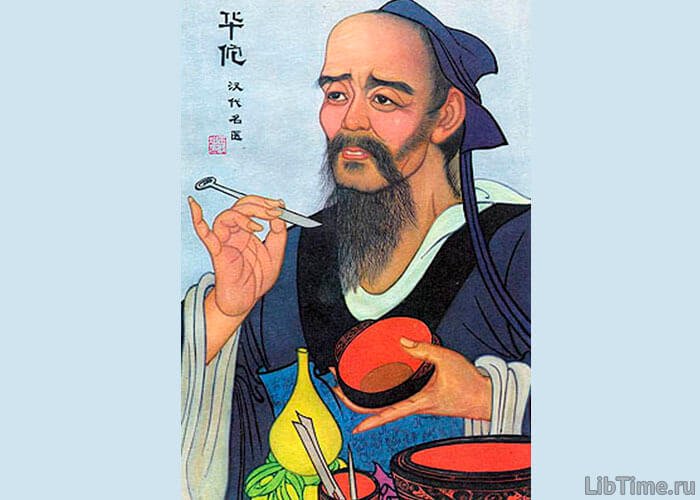
Ancient Chinese medicine developed diagnosis based on close observation rather than incantation, and the greatest physician of antiquity, Bian Que, systematised it. Because travelling healers wandered the country in search of practice, they observed a great variety of illnesses and constantly exchanged knowledge with other folk physicians, enriching their command of empirical medicine.
Bian Que emerged from this popular milieu as the outstanding physician of ancient China, of whom the great chronicler Sima Qian wrote in his "Historical Records":
"He laid the foundations of medicine; his brilliant principles could not be shaken by the learned physicians of later generations."

Before Bian Que, more than a hundred kinds of medicines were already known in China, and methods that survive to this day — acupuncture, moxibustion, massage and others — already existed, yet no one before him had generalised, reasoned through and grounded this experience so thoroughly. Trained for over ten years by the noted physician Chang Sanjun, Bian Que travelled all across China, building ties with famous physicians of the various principalities and absorbing everything valuable from their practice. He remained accessible to ordinary people even at the height of his fame and never refused medical help. Calling himself in turn an internist, a surgeon, a gynaecologist, an ophthalmologist-otologist or a paediatrician, he simultaneously applied medicines, acupuncture, moxibustion and massage.
Bian Que attached great importance to early treatment and, still more, to the prevention of disease. He not only summarised and organised the rich experience of many generations before him but himself deeply developed such fields as pulse diagnosis and acupuncture, to a degree that his findings remain relevant to Chinese folk medicine even now, two and a half thousand years later. For diagnosis he also used questioning, listening, observation of breathing, of the colour of the skin, of the character of the voice and of the odour emanating from the patient — the germ of the syndrome-differentiation approach that later TCM would formalise. Some sources record that he dissected corpses to study pathological processes, and that when operating he first used strong wine and later narcotic drugs to reduce pain, allowing him to operate even on the chest. Many historians consider Bian Que the author of the classic "Neijing" — the Inner Canon of the Yellow Emperor (Huangdi Neijing), the foundational text of Chinese medicine. His enduring achievement was to generalise the empirical experience of recognising and treating disease at the turn of the sixth and fifth centuries BCE, and above all to develop pulse diagnosis, an objective method of examining the patient by which Chinese medicine far outpaced the medicine of other countries. To this day, temples and monuments honour him across many provinces, and each year on 8, 18 and 28 April China marks a day of remembrance for the great physician.
What are the philosophical foundations of Chinese medicine?
The philosophy of Traditional Chinese Medicine rests on the idea that the body is a single, self-regulating whole in dynamic balance with nature. Health is understood as the free, harmonious flow of vital energy, and disease as a disturbance of that balance. Rather than isolating a symptom, TCM aims to treat the root cause by restoring equilibrium to the whole person — a holistic, individualised model that distinguishes it sharply from the reductionist approach that shaped Western science after figures such as Sir Isaac Newton.
The concept of Qi (Chi) and the meridians
Qi (Chi) is the life-force energy that, in TCM theory, circulates through the body along channels called Meridians. Illness is thought to arise when this flow of Qi is blocked, deficient or excessive, and many treatments — above all Acupuncture — are designed to restore its smooth movement. Modern anatomical study has not identified the meridians as physical structures, and their existence remains one of the central points of scientific debate, yet the meridian map continues to guide where practitioners place needles and apply pressure.
Yin and Yang in the theory of health
Yin and Yang describe two complementary, opposing qualities whose balance underlies health in Chinese medicine. Yin represents the cool, dark, receptive and internal; Yang the warm, bright, active and external. Neither is "good" or "bad" — disease is understood as their imbalance, and the goal of treatment is to return the body to a state in which Yin and Yang are in harmony. This principle informs everything from herbal formulas to dietary advice, where foods are classified as warming or cooling to correct an underlying excess or deficiency.
The concept of Shen: soul and wisdom
Shen is the Chinese medical concept of the spirit or consciousness, traditionally divided into aspects associated with the soul and with wisdom. Shen governs mental clarity, emotional life and the vitality visible in a person's eyes and expression, and disturbances of Shen are linked in TCM to insomnia, anxiety and depression. Because body and mind are treated as one system, therapies aimed at calming or nourishing Shen are applied to what Western medicine would classify as mental-health conditions.
The doctrine of the Five Elements
The Five Elements theory classifies natural phenomena and bodily functions into five phases — wood, fire, earth, metal and water — that generate and restrain one another. Each element is linked to an organ system, an emotion, a season and a constitutional type, so that a practitioner may describe a patient's tendencies and personality traits in elemental terms. The five-element framework provides the logic by which TCM connects a symptom to an underlying pattern and chooses which organ system to support or sedate.
What are the main treatment methods of Chinese medicine?
The five main practices of Traditional Chinese Medicine are acupuncture, herbal medicine, cupping and gua sha, tui na massage, and mind-body exercise such as Tai Chi and Qi Gong. Together they form a toolkit aimed at regulating the flow of Qi, restoring the balance of Yin and Yang, and prompting the body's own capacity for self-repair. Practitioners select and combine them according to an individualised diagnosis rather than applying a single fixed remedy.
Acupuncture: technique and points of stimulation
Acupuncture treats illness by inserting very fine needles into specific acupoints located along the meridians. A session begins with diagnosis — pulse reading, tongue inspection and questioning — after which the practitioner places needles at points chosen to release blockages and rebalance the flow of Qi. Related acupoint-stimulation techniques include moxibustion (warming points with burning mugwort), electro-acupuncture and acupressure, all working on the same map of channels. Because it is invasive, acupuncture in most countries may be practised only by trained, licensed clinicians.
How acupuncture works: mechanisms of action
From a scientific standpoint, acupuncture is thought to act by stimulating nerves, muscles and connective tissue, prompting the release of endorphins and other neurochemicals and modulating pain signalling in the nervous system. This physiological explanation differs from the traditional account of unblocking Qi, and research into where needle insertion measurably changes nerve activity is central to verifying the reality of acupoints. Institutions such as the National Center for Complementary and Integrative Health (NCCIH), part of the National Institutes of Health (NIH), fund studies aimed at clarifying these mechanisms.
Conditions treatable with acupuncture
Acupuncture is most commonly used for pain, and the strongest evidence supports its role in chronic pain management, including back and neck pain, osteoarthritis and the prevention of headache and migraine. It is also applied to:
- Postoperative pain and nausea, and chemotherapy-induced nausea and vomiting;
- Depression, anxiety and other mental-health complaints;
- Certain neurological conditions and post-stroke rehabilitation;
- Insomnia and stress-related disorders;
- Improving quality of life during and after cancer treatment.
Clinics such as the UCLA Center for East-West Medicine, staffed by physicians including Dr. Katie Hu, offer acupuncture as part of an integrative approach alongside conventional care.
Safety and possible complications of acupuncture
Acupuncture is generally safe when performed by a qualified practitioner using sterile, single-use needles. The most common side effects are minor — soreness, small bruises or slight bleeding at needle sites — while serious complications such as infection or organ injury are rare and almost always linked to untrained providers. Special populations, including pregnant women and people taking anticoagulants, need particular care. Credentialing bodies such as the National Certification Commission for Acupuncture and Oriental Medicine in the United States, and, in Australia, the Chinese Medicine Board of Australia under the Australian Health Practitioner Regulation Agency, set the licensing standards that protect patients; the Australian Acupuncture & Chinese Medicine association represents practitioners there. In many countries acupuncture is covered, at least in part, by health insurance, and practitioners bill for it accordingly.
Chinese herbal medicine and medicinal plants
Chinese herbal medicine prescribes individualised combinations of plant, mineral and sometimes animal substances to correct the pattern of imbalance identified in diagnosis. Formulas are tailored to the patient and adjusted over time rather than dispensed as fixed drugs. The tradition is vast: the sixteenth-century Compendium of Materia Medica, compiled by Li Shizhen, catalogues nearly two thousand substances and remains a landmark reference for Chinese herbal products to this day.
Prescription and safety of herbal preparations
Herbal preparations should be prescribed by a qualified practitioner because they carry real risks of interaction with prescription medicines and are contraindicated in certain conditions. Two documented safety problems recur with imported Chinese herbal products: contamination with heavy metals and toxins, and the illegal use of endangered-species ingredients, which links parts of the trade to wildlife smuggling and conservation harm. In Australia, the Therapeutic Goods Administration regulates herbal medicines, and buyers should choose products from regulated sources. Patients on any conventional drug should tell both their doctor and their herbalist before combining treatments.
Efficacy of Chinese herbal remedies
The evidence for Chinese herbal remedies is mixed and still developing, with some compounds showing genuine pharmacological activity and others lacking robust support. Berberine, an alkaloid found in several traditional herbs, has attracted research for its effects on blood glucose and lipids, illustrating how an individual constituent can be isolated and tested. Standardising complex, individualised formulas so that trials can be repeated remains a major methodological challenge, which is why systematic reviews such as those in the Cochrane Database of Systematic Reviews often call for higher-quality studies.
Moxibustion, massage and other methods
Beyond needles and herbs, Chinese medicine uses several hands-on and heat-based therapies:
- Cupping Therapy places heated or suction cups on the skin to draw blood to the surface, aiming to relieve muscle tension and pain; the circular marks it leaves were made famous when swimmer Michael Phelps appeared with them at the Olympics.
- Gua Sha involves scraping the lubricated skin with a smooth-edged tool to improve circulation and ease stiffness.
- Tui Na is a therapeutic bodywork massage that manipulates acupoints and meridians; it is used for musculoskeletal complaints and, in TCM practice, for insomnia and stress.
- Moxibustion warms acupoints by burning mugwort near or on the skin to stimulate Qi.
- Dietary therapy and lifestyle counselling classify foods by their warming, cooling and elemental properties to support treatment.
How is chronic pain managed with Chinese medicine?
Chronic pain is the area where Traditional Chinese Medicine has its widest use and its strongest supporting evidence, chiefly through acupuncture but also through cupping, tui na and mind-body movement. Rather than only masking pain, TCM approaches it by treating what is diagnosed as the underlying pattern — for example a blockage of Qi or an organ imbalance — which is why practitioners emphasise addressing the root cause rather than the symptom alone. For long-standing back, neck and joint pain, acupuncture is frequently combined with conventional care within an integrative plan.
Improvements in balance and mobility
Tai Chi and Qi Gong, the gentle mind-body exercises of Chinese medicine, measurably improve balance, mobility and muscle strength, which makes them valuable for older adults. A well-documented benefit of Tai Chi is fall prevention in the elderly: its slow, controlled, weight-shifting movements train stability and coordination, and clinical research has linked regular practice to fewer falls and better quality of life. Qigong offers similar benefits through coordinated posture, breathing and focused attention.
What is the scientific evidence for the effectiveness of Chinese medicine?
The scientific evidence for Traditional Chinese Medicine is uneven: some practices, notably acupuncture for certain pain conditions and Tai Chi for balance, are supported by reasonable clinical data, while many herbal and theoretical claims remain unproven or are regarded as pseudoscience. Critics point out that concepts such as Qi and meridians have no confirmed physical basis, and that the individualised, non-standardised nature of TCM makes rigorous, repeatable trials difficult. Supporters counter that empirical results in pain and function are real regardless of the mechanism, and this tension defines the ongoing controversy over TCM effectiveness.
Clinical research and empirical validation
Modern evaluation of Chinese medicine relies on registered clinical trials and systematic reviews, searchable through resources such as ClinicalTrials.gov, PubMed and the Cochrane Database of Systematic Reviews. Government and research institutions play a large role: in China the China Academy of Chinese Medical Sciences and Guanganmen Hospital conduct studies, while in the United States the National Center for Complementary and Integrative Health (NCCIH) funds research initiatives into safety and efficacy. Journals such as Hepatobiliary Surgery and Nutrition publish work on integrative applications. The priority for future research is methodological — standardising interventions, improving trial quality and controlling the composition of herbal products so that findings can be repeated and trusted.
How does Chinese medicine compare with Western medicine?
Chinese and Western medicine differ most in their underlying models: TCM is holistic, individualised and focused on restoring balance to the whole person, whereas Western medicine is analytic, standardised and focused on identifying and treating specific disease mechanisms. Western practice excels at acute care, surgery, diagnostics and pharmacology; TCM offers a long tradition of managing chronic, functional and quality-of-life complaints. Increasingly the two are combined in Integrative Medicine, where evidence-based conventional treatment is paired with therapies such as acupuncture — an approach championed by centres including the UCLA Center for East-West Medicine at the David Geffen School of Medicine at UCLA and Mount Sinai Doctors–Concierge Care at Hudson Yards, with physicians such as Dr. Neema Shakibai and Dr. Wenliang Lv working across both traditions. The comparison also runs the other way: Western drugs such as Sildenafil began as targeted single-molecule treatments, while immunotherapy, in stimulating the body's own defences, echoes TCM's emphasis on strengthening internal self-regulation.
Comparison with other traditional medicine systems
Traditional Chinese Medicine is one of several long-established traditional systems, and scholars such as Charles Leslie and Nathan Sivin have studied how it compares with counterparts like Ayurveda and Unani medicine. Like them, TCM predates modern biomedicine, is grounded in a philosophy of balance and vital energy, and is transmitted through classical texts and apprenticeship — for example the commentaries of the physician Hua Shou, and the scholarship of historians such as Dr. Kan-Wen Ma. What distinguishes TCM is the specific framework of Qi, meridians, Yin and Yang and the Five Elements, together with a diagnostic method centred on pulse and tongue examination that Bian Que first systematised.
How were Eastern practices adopted in the West?
Eastern medical practices spread to the West gradually through migration, cultural exchange and, in the twentieth century, deliberate government promotion within China. Under Mao Zedong, and despite the upheavals of the Cultural Revolution, the Chinese state standardised and actively promoted Traditional Chinese Medicine, exporting a codified version that helped it gain a foothold internationally across the Sinosphere and beyond. Public endorsements by athletes and celebrities — most visibly Michael Phelps and his cupping marks — accelerated Western interest, and today acupuncture and related therapies are offered in mainstream hospitals, regulated by bodies such as the National Certification Commission for Acupuncture and Oriental Medicine, and integrated into research programmes at institutions like the National Center for Integrative Medicine. For readers interested in how such traditions are preserved and transmitted over time, the broader story of medicine and its history shows how ancient empirical knowledge continues to inform modern care.