Types of Love, Jealousy, and Conflicts: Understanding Passion and Intimate Harmony
 libre
libre
Jealousy and conflict in relationships
Jealousy is a cluster of emotions and thoughts that arises when a person perceives a threat — real or imagined — to a valued relationship, and it is one of the most common triggers of conflict between partners. It lives in the mind of the person who feels it rather than being caused by anything the partner actually does. Understanding jealousy means treating it as both a feeling and an interpretation: the perceived threat, the appraisal of that threat, and the behavioural response it produces are separate links in a chain that couples can learn to recognise and interrupt.
This page explains what jealousy is, how attachment styles shape it, why it drives sexual and relational conflict, how it shows up in controlling and manipulative behaviour, and — most importantly — how partners can regulate and communicate through it so that jealousy stops corroding trust. The material draws on evolutionary psychology, attachment theory, communication research and clinical practice to give a rounded, practical picture.
What is jealousy: definition and psychological essence
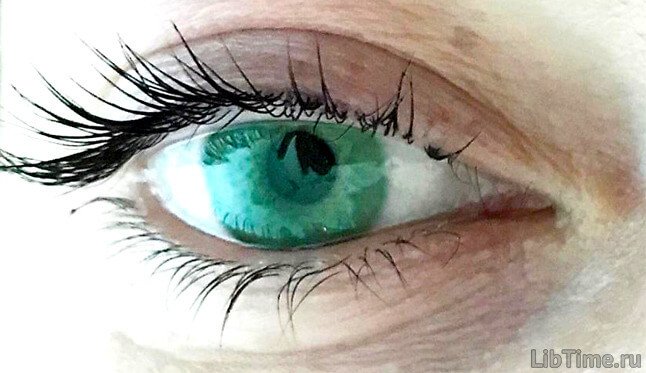
Jealousy is the emotional and cognitive reaction to a perceived threat to a valued relationship posed by a real or imagined rival. Merriam-Webster traces the English word to the Old French jalousie, itself rooted in the same source as "zeal" — an intensity of feeling that can tip into suspicion. William Shakespeare famously called it the "green-eyed monster" in Othello, an image that still captures how jealousy consumes the person who harbours it. The New Testament frames jealousy in moral terms and, in its worst forms, tradition has linked possessive envy to the figure of Satan, underscoring how long human cultures have wrestled with the emotion.
Jealousy differs from envy, though everyday speech blurs them. The philosopher and psychologist Gerrod Parrott drew the standard distinction: envy involves two parties and a desire for something another person has, while jealousy involves three parties and the fear of losing something — usually a relationship — to a rival. Envy says "I want what you have"; jealousy says "I'm afraid of losing what I have to you." Recognising which emotion is actually in play changes how a couple should respond.
Jealousy is best understood as having a dual nature. It carries negative appraisals — threat, loss, inadequacy — but researchers such as Mark Travers, writing in Forbes, note that partners often read a measure of jealousy as evidence of investment and care. That ambivalence is central: the same emotion can signal love or foreshadow control, which is why jealousy is one of the hardest feelings to interpret in a relationship.
Erotic (romantic, sexual) jealousy
Erotic jealousy is the complex of experiences triggered by the actual or suspected infidelity of a loved person, and it has a notably intricate psychological structure. It combines varied emotional reactions and states — envy, hatred, anxiety, anger, despair, a thirst for revenge, passion — with doubts and suspicions, disturbances in the intellectual and volitional spheres, and a range of behaviours that are frequently socially dangerous. Erotic jealousy tends to appear less among newlyweds and more among couples who have been married for a long time, and it often refuses to obey the logic of common sense.
Evolutionary psychology offers one account of why romantic jealousy is so powerful. On this view jealousy evolved as a mate-retention mechanism, guarding against threats to a pair bond and, ultimately, to reproductive success. A recurring finding in this literature is that men, on average, report more distress over a partner's sexual infidelity, while women report more distress over emotional infidelity — a divergence between sexual jealousy and emotional jealousy that researchers continue to test and debate.
In its most severe expression, jealousy is entangled with intimate partner violence. Historically, most jealousy-driven killers have been men and their victims predominantly women, though men can also be harmed. Alcohol use worsens the picture: among people who abuse alcohol, jealousy appears more frequently and is characterised by monotony, brutality and, not rarely, aggressive acts up to and including murder. Jealousy that ignores the law — including jealousy toward someone who is no longer living — signals a pathological, not a normal, response.
The psychological structure of jealous experience
The intensity of jealous suffering rises when the jealous person feels unable to protect the relationship. In the deepest states of jealousy the subject is held in great tension, because they cannot defend themselves; only when it becomes obvious that any hope of love is wholly lost does the tension collapse, leaving pain or hatred behind. This trajectory — mounting tension, then flat despair — helps explain why unaddressed jealousy so often escalates before it exhausts itself.
Jealousy also feeds off a wider psychology of rivalry and comparison. Repeated failures, combined with the experience of one's own weakness and defeat, generate envy toward everyone who seems luckier. That envy may be shown openly or hidden — masked by anxiety, or disguised as contempt for others — and it intensifies existing hostility and turns anxiety into fear. The result is a closed loop: heightened feelings of inferiority breed more hostility and more anxiety, which breed more jealousy.
Attachment styles and their link to jealousy
Attachment style is one of the strongest individual predictors of how much and how destructively a person experiences jealousy. Attachment Theory, developed from the work summarised by writers such as Saul McLeod and Olivia Guy-Evans at Simply Psychology, holds that early bonds with caregivers form internal working models that shape adult intimacy. Even developmental research on jealousy in infants shows the emotion emerging early, supporting the idea that jealousy has deep roots in the attachment system.
Attachment theory: the basics
Attachment theory describes several enduring patterns of relating that carry over from childhood into adult love. The broad categories are secure attachment, anxious (preoccupied) attachment, avoidant (dismissive) attachment, and disorganised (fearful-avoidant) attachment. These styles are not fixed destinies, but they strongly influence how a person reads closeness, distance and threat inside a partnership. Family background and childhood experiences — including parental support, the balance of overprotection and under-protection, and exposure to parent–child physical aggression — leave patterns that adults tend to reproduce in their own relationships.
How attachment styles shape susceptibility to jealousy
Anxiously attached people are the most prone to intense, frequent jealousy because their internal model expects abandonment; small ambiguities read as threats, and reassurance never quite settles. Avoidantly attached people may suppress jealous feelings and withdraw rather than confront, while securely attached people are better able to voice concern without accusation and to accept a partner's reassurance. Understanding your own attachment style is often the single most useful step toward loosening jealousy's grip, because it reframes the feeling as a pattern to work with rather than a verdict about the partner.
Character also matters alongside attachment. Jealous people are frequently described as fanatical, gripped by fixed ideas, poor at compromise and quick to quarrel. In such people suspicion turns rapidly into accusation, after which the whole surrounding reality is interpreted in the light of a verdict that has already, in effect, been signed. Recognising this cognitive tilt — where evidence is bent to fit a foregone conclusion — is essential to breaking the cycle.
A scientific taxonomy of the kinds of love
Different levels of the human personality take part in forming these patterns: traits set down by the genetic code, psychological characteristics, the conditions of upbringing and the accepted forms of communication. Contemporary psychology offers a scientific taxonomy of the kinds of love, and jealousy features unevenly across them.

- Love-passion — a high emotional charge in which intellectual qualities recede, suffering is shadowed by fear of loss, jealousy and at times hatred; sexual-erotic relations are not primary and the motive of sexual pleasure is secondary.
- Love-eros — an enthralment in which a person seeks full physical possession of the beloved and longs to dissolve into them.
- Love-game — a shallow emotional contact that leaves easy room for betrayal.
- Good, reliable love — closer to friendship, with sex secondary and emotional closeness paramount.
- Prudent love — easily controlled and, at its core, a marriage of convenience.
- Love-mania — the same as love-passion but without the element of hatred.
- Love-as-giving — selfless love, which can become the foundation of strong, lasting marital relations.
Love-passion, love-mania and the role of jealousy
Jealousy is most tightly woven into love-passion and love-mania, the two forms in which emotional charge overwhelms judgement. In love-passion, fear of loss and jealousy are structural features, sometimes shading into hatred; love-mania preserves the same consuming intensity but strips away the hatred. By contrast, love-as-giving and good, reliable love leave little foothold for jealousy because they rest on trust and emotional security rather than on possession. This is why it is naive to expect harmonious intimate relations to fall into place immediately between spouses. Only after repeated contact, and given mutual striving, can harmony be reached: partners need not match in temperament, upbringing or sexual style, but it is vital that they complement one another and work toward mutual satisfaction.
Models of sexual conflict
Despite everything said above, sexual conflicts arise, and they fall into recognisable models. Distinguishing them matters because the surface argument is frequently not the real dispute.
Surface breaches of mutual consent
The first group of conflicts consists mainly of surface-level, not fully antagonistic breaches of mutual agreement, in which sexual relations are merely a pretext for quarrels or are used as an instrument of aggression. In the latter case one spouse, avoiding intimacy, uses sexual motives as a weapon of defence or attack — yet the true substance of the conflict lies outside sexual relations altogether.
Conflicts rooted in sexual dysfunction
The second group consists of conflicts in which sexual-erotic relations, or more precisely dysfunction in this sphere, generate psychological tension and settled neurotic states. Against that background come general irritability and a poorly concealed sense of dissatisfaction with the partner, so that almost any incident can become the occasion for a quarrel while the real driver remains the underlying sexual distress.
Pathology of the marital couple as a cause of conflict
A third category treats certain problems as the pathology of the marital couple rather than the fault of either partner. Impotence, frigidity and childlessness are frequently cited causes of family conflict, and all of them should be regarded as a pathology of the couple as a unit — approached with treatment and shared responsibility rather than blame.
Behavioural expressions of jealousy in relationships
Jealousy shows up on a spectrum that runs from subtle, easily-missed signs to open, forceful possessiveness. Aggressive behaviour here means words and actions calculated in advance to produce negative changes in another person — changes that may touch the target's emotions and mood or the state of their body. Learning to read these behaviours early, while they are still subtle, is what keeps jealousy from hardening into control.
Controlling and clingy behaviour
Controlling and clingy behaviours are the most common behavioural output of jealousy and the clearest warning sign that it has turned unhealthy. They include:
- monitoring a partner's phone, messages or location;
- demanding constant reassurance and check-ins;
- restricting who the partner may see, especially opposite-sex friends;
- isolating the partner from friends and community;
- framing surveillance as concern or love.
The crucial distinction is between genuine love and controlling behaviour. Genuine love enlarges the other person's freedom; control shrinks it. When one partner tries to cut off the other's friendships — bonds that are often more stable than the marriage itself — the attempt can become genuinely dangerous to the relationship, because it attacks a source of the partner's identity and support.
Boundary violations and the erosion of trust
Every act of jealous surveillance is a boundary violation, and repeated violations erode the trust that the jealous person is trying to protect. Trust is built through reassurance and accountability offered freely, not extracted under pressure. When suspicion turns into interrogation, the partner learns that honesty is punished, which paradoxically increases secrecy and confirms the jealous person's fears — the closed loop again, now running through behaviour rather than emotion.
Emotional manipulation and provoking jealousy
Some partners do the opposite of controlling: they deliberately induce jealousy as a strategy. Jealousy induction is the intentional attempt to make a partner feel jealous in order to gain attention, test commitment, extract benefits or exert power. Research on close relationships treats it as a cost-inflicting behaviour, and the sociodemographic correlates of such tactics — studied through datasets like the Toledo Adolescent Relationships Study by researchers including Wendy D Manning, Peggy C Giordano, Monica A Longmore and Angela M Kaufman-Parks at Bowling Green State University — link them to lower relationship quality among young adults.
Tactics for deliberately eliciting a partner's jealousy
Deliberate jealousy-induction tactics tend to cluster into a few recognisable moves, and none of them build lasting security:
- mentioning or exaggerating attention from third parties, drawing on the well-documented effect that outside interest can raise perceived attractiveness;
- flirting visibly, or fostering ambiguous opposite-sex friendships, to provoke a reaction;
- counter-jealousy induction — answering a partner's jealousy by making them jealous in return;
- withdrawing warmth or affection to signal the availability of alternatives.
The consistent finding is that inducing jealousy backfires: rather than deepening commitment it lowers trust, raises conflict and predicts ambivalent feelings and poorer long-term outcomes. What reads in the moment as proof of desirability functions over time as a corrosive, benefit-inflicting rather than benefit-provisioning behaviour.
Cognitive and emotional regulation of jealous reactions
Managing jealousy begins inside the jealous person, with the regulation of the feeling before it becomes a behaviour. Clinical work — for example the cognitive approach associated with Dr. Robert Leahy — treats jealousy as a set of thoughts that can be examined and challenged rather than obeyed. The task is to separate the emotion (the felt alarm) from the appraisal (the story about what it means) and from the response (what one does about it).
Mechanisms for coping with and suppressing jealousy
People cope with jealousy in ways that range from healthy regulation to unhelpful suppression. Suppression — pushing the feeling down or masking it as contempt or indifference — offers short-term relief but leaves the underlying appraisal untouched, so the emotion resurfaces, often as passive-aggressive communication. Avoidant partners are especially prone to this pattern, withdrawing rather than naming the fear, which starves the relationship of the information it needs to reassure.
Healthy ways of working through jealousy
Healthier processing of jealousy relies on self-soothing and emotional regulation before conversation begins. Practical steps include:
- naming the feeling accurately — "I feel jealous," not "you did something wrong";
- tracing the fear back to its source, often an attachment pattern rather than the partner's conduct;
- questioning the automatic interpretation before treating it as fact;
- self-soothing the physiological arousal so the nervous system settles;
- choosing a response from love rather than from fear.
The frame of love versus fear energy is useful here: jealousy driven by fear grasps and controls, while a response grounded in security seeks connection and clarity. Vulnerability researchers such as Brené Brown argue that admitting the fear — rather than armouring against it — is what actually restores closeness. Terrence Real's Relational Self-Awareness framework similarly asks each partner to notice their own contribution to the dynamic instead of policing the other's.
Communication as a tool for overcoming jealousy
Communication is the mechanism that turns a private jealous feeling into either repair or damage, depending on how it is done. Communication researchers Laura Guerrero and Peter Andersen have mapped the range of communicative responses to jealousy, from destructive accusations and surveillance to constructive, integrative conversation. The response chosen matters more to the relationship's future than the intensity of the jealousy itself.
Communication techniques for discussing jealousy
Effective techniques for raising jealousy share a common shape: they own the feeling and invite a partner in rather than putting them on trial. Useful methods include:
- using "I" statements that describe your own experience;
- choosing a calm moment rather than the heat of suspicion;
- asking for a specific, doable reassurance instead of demanding surveillance;
- listening to the partner's perspective without treating a defence as a confession;
- agreeing together on boundaries and definitions for the relationship stage you are in.
Practitioners such as Timothy Muehlhoff and Chris Grace, who host the Art of Relationships podcast at Biola University's institute on relationships, emphasise that clarity of expectations does far more than vigilance to reduce jealous flare-ups. Naming, together, what counts as a boundary — around opposite-sex friendships, time apart, or contact with an ex — removes much of the ambiguity that jealousy feeds on.
Cooperative versus confrontational communication style
The single biggest predictor of whether a jealousy conversation helps or harms is whether the style is cooperative or oppositional. Cooperative communication treats jealousy as a shared problem to solve — "how do we both feel secure?" — while confrontational communication treats the partner as the adversary to be exposed. John Gottman's research on couples shows that the oppositional pattern, marked by criticism, defensiveness and contempt, corrodes relationships regardless of the original grievance. Direct, honest expression works when it is cooperative; indirect, passive-aggressive expression fails even when the underlying concern is legitimate.
Resolving conflict in relationships
Resolving jealousy-driven conflict rests on a paradox: security grows from freedom, not from control. The partner who feels chosen freely, rather than held by surveillance, has far less to prove and less to fear. This is why the healthiest couples pair honest accountability with genuine autonomy.
Building healthy relationships through choice and freedom
Healthy relationships are built when each partner remains in the relationship by ongoing choice rather than by obligation or fear. A relationship experienced as freely chosen removes the very scarcity that fuels jealousy. This is also where community matters: friendships and social belonging outside the couple, far from threatening the bond, stabilise it. Deep friendships are more nourishing than shallow ones, and married couples who keep real friendships and stay integrated in a community — rather than isolated within the couple — tend to be more resilient. Marriage groups and community support give partners a wider base of belonging so that no single relationship has to carry every emotional need.
Autonomy versus responsibility in partnership
A durable partnership balances autonomy against responsibility, so that individual freedom and shared commitment reinforce rather than undermine each other. Life in any group is, in a sense, inherently conflictual: a person seeks to keep their freedom yet must continually trade some of it to reach shared goals. The philosopher John Rawls's idea that fair arrangements are those we would accept without knowing our own position is a useful lens here — partners who negotiate boundaries as if either of them might occupy either side tend to land on rules both can live with. Individual hobbies and personal growth, a balance of shared activities and separate interests, and respect for introversion or extroversion in each partner's friendships all protect autonomy without abandoning responsibility.
Achieving harmony in intimate relationships
Harmony in intimate relationships is achieved gradually, through repeated shared experience and deliberate investment of time, not through matching temperaments. Marriage educators offer concrete targets: William Harley's His Needs, Her Needs tradition of divorce-proofing a marriage stresses meeting a partner's core needs so that no rival becomes attractive, and Gottman's "magic of five hours a week" of intentional couple time — small rituals of connection, appreciation and affection — reliably deepens closeness. The "Golden Equation of Love," in which love-as-giving grounds lasting commitment, captures the same truth: harmony is a practice, built by complementary partners who keep choosing to satisfy each other rather than to score points.
Cultural and sociological perspectives on jealousy
Whether jealousy is universal or culture-specific is a long-running debate, and the honest answer is "both." The capacity for jealousy appears across human societies, which argues for a universal, evolved core, yet what counts as a threat, and how much jealousy is deemed acceptable, varies sharply between cultures. Comparative work across places such as the United States, the United Kingdom and the Netherlands shows that norms around opposite-sex friendship, monogamy and public displays of possessiveness differ enough to reshape how the same underlying emotion is expressed and judged.
Romanticism and cultural narratives about jealousy
Cultural narratives frequently romanticise jealousy, teaching that a jealous partner is a loving partner — and this is one of the most damaging myths in relationships. Literature and art, from Shakespeare's "green-eyed monster" onward, have dramatised jealousy as proof of passion, and modern romantic scripts echo the idea. Writing in outlets such as Forbes, Mark Travers has documented how partners still read jealousy as a sign of investment, which lends the myth staying power. Naming the narrative for what it is — a story that reframes control as devotion — helps couples resist it and choose trust over possessiveness.
Conclusion: not letting jealousy destroy the relationship
Jealousy need not wreck a relationship, provided it is treated as a signal to understand rather than a command to obey. The feeling begins in the jealous person, is shaped by attachment history and cultural myth, and becomes destructive only when it is expressed through control, manipulation or oppositional communication. The alternative is a sequence any couple can practise: regulate the emotion, question the story, communicate cooperatively, and rebuild trust through freely given reassurance and genuine freedom.
The practical takeaways are compact:
- jealousy lives in the mind of the person who feels it, not in the partner's conduct;
- attachment style and cultural narratives, not the rival, usually set its intensity;
- controlling behaviour and deliberate jealousy induction both lower trust and predict worse outcomes;
- self-soothing plus cooperative, "I"-based communication turns jealousy into repair;
- freedom, friendship and community strengthen a bond that possessiveness only weakens.
Handled this way, jealousy stops being the green-eyed monster and becomes information — an uncomfortable but honest report about what a person fears and values, and an invitation to build a relationship secure enough that the fear no longer needs to shout.