Human Hands: Anatomy, Bones, and Evolution Explained
 libre
libre
The human hand is the most versatile motor instrument in the natural world. Even the forelimb movements of apes, which so closely resemble our own, cannot compare with the truly virtuosic dexterity of human hands. This single organ lets a person write, cut, saw, throw, catch, and shoot — an inventory so long it would fill a book on its own.
A quick way to appreciate the reach of the hand is to open an ordinary dictionary and look at the verbs. A large share of them describe actions carried out with the hands: to write, to cut, to saw, to throw, to catch, to shoot. The vocabulary of doing is, to a surprising degree, a vocabulary of the hands, and that fact reflects how central manual skill is to human life.

What makes the human hand uniquely capable?
The human hand outperforms every other primate limb because of a rare combination of an opposable thumb, independent finger control, and dense sensory feedback. Humans can bring the pad of the thumb to meet the pad of every finger — a precision grip — while also closing the whole hand into a powerful clamp. This dual capacity for delicacy and force is what allows a person to thread a needle one moment and swing a hammer the next.
The opposable thumb is the decisive feature. Its saddle joint at the base rotates the thumb across the palm so it can press against the fingertips, producing the pinch that tool use depends on. Without an opposable thumb, the fine manipulation behind writing, sewing, and toolmaking would be impossible.
How do human hands compare with ape hands?
Human hands differ from ape hands mainly in thumb proportion and finger shape, which is why humans manipulate objects with far greater precision than chimpanzees. In apes the fingers are long and curved for hanging and swinging through branches, while the thumb is short and weak; in humans the thumb is longer and more muscular relative to the fingers, and the fingers are straight, giving a firm, controlled pinch.
Other animals show partial versions of this ability. A koala has two opposed digits for gripping branches, and a raccoon uses sensitive forepaws to handle food, but neither approaches the range of grips a human hand commands. Among primates, chimpanzees come closest — the bonobo Kanzi famously learned to strike stone flakes — yet their tool use remains crude beside the human capacity for mechanical precision.
What is the anatomy and structure of the hand?
The human hand is built from 27 bones, more than 30 muscles, and a network of tendons, ligaments, and nerves packed into a compact frame. Anatomists divide it into three regions: the wrist (carpus), the palm (metacarpus), and the fingers (phalanges). Bone itself is a living composite of collagen and mineral, rigid enough to bear load yet light enough for rapid movement — a balance that makes the hand both sturdy and quick.
The carpal and metacarpal bones
Eight carpal bones form the wrist, arranged in two rows that let the hand bend, extend, and rock side to side. Beyond them, five metacarpal bones make up the body of the palm, one leading to each finger. Together the carpal bones and metacarpal bones form the flexible arches of the hand — a longitudinal arch running from wrist to fingertip and a transverse arch across the palm — which allow the palm to cup around objects of almost any shape.
The fingers themselves are made of phalanges: three in each finger and two in the thumb, fourteen in all. Small sesamoid bones, embedded within tendons near the base of the thumb, act like tiny pulleys that improve leverage. Every joint between these bones is an articulation lined with cartilage, and the carpal tunnel — a narrow passage on the palm side of the wrist — protects the tendons and median nerve that pass into the hand.
The muscles and tendons of the fingers
Most of the power that moves the fingers comes not from the hand but from the forearm. Long flexor and extensor muscles in the forearm connect to the fingers through tendons that run across the wrist, which is why the hand can be strong yet slim. The flexor pollicis longus muscle, for instance, bends the thumb and gives the pinch grip its force. Smaller intrinsic muscles inside the palm handle fine spreading and precise positioning of the fingers.
How do the fingers achieve such fine control?
Independent finger control comes from a dedicated network of nerves and an oversized share of the brain's motor cortex. Three main nerves supply the hand: the median nerve, the ulnar nerve, and the radial nerve, each governing sensation and movement in a different zone. The fingertips are among the most sensitive areas of the body, crowded with touch receptors that let a person judge texture, temperature, and pressure without looking.
This sensitivity is what makes the fingers true instruments of manipulation. Reading Braille, tuning a knot, or feeling a coin's edge all depend on the density of nerve endings in the pads. The hand does not merely act on the world; it constantly reports back, feeding the brain a stream of tactile information.
The biomechanics of grip and force
The hand applies force through two basic grip patterns: the power grip, in which the fingers and palm wrap an object and the thumb clamps over them, and the precision grip, in which the thumb opposes the fingertips. The arches of the palm let the hand transfer force efficiently while adapting its shape, so the same hand can crush a walnut or steady a fine brush. This mechanical versatility is the physical foundation of human toolmaking.
How did the hand evolve in the human lineage?
The modern human hand is the product of millions of years of evolution driven by the shift from tree-dwelling to ground-based, tool-using life. As Charles Darwin argued, freeing the hands from locomotion made toolmaking possible, and toolmaking in turn reshaped the hand. Fossils across the human lineage record a gradual change: fingers grew straighter, the thumb grew stronger, and the whole hand became better suited to gripping and shaping objects.
Climate change set the process in motion. Millions of years ago the world cooled, vast glaciers pushed down from the north, and the tall tropical trees retreated southward. The ape-like ancestors of humans were forced to come down from the branches to the ground in search of food.
Australopithecus hand anatomy and its development
The hands of Australopithecus already blended ape-like and human-like features, marking a key transitional stage. Australopithecus afarensis — the species of the famous fossil skeleton known as Lucy — still had somewhat curved fingers suited to climbing, but the wrist and thumb were shifting toward a human pattern. Australopithecus sediba, studied by paleoanthropologist John Hawks of the University of Wisconsin–Madison, showed a surprisingly long, powerful thumb alongside curved fingers, suggesting a hand that could both climb and grip tools with some precision.
How labour shaped the human being
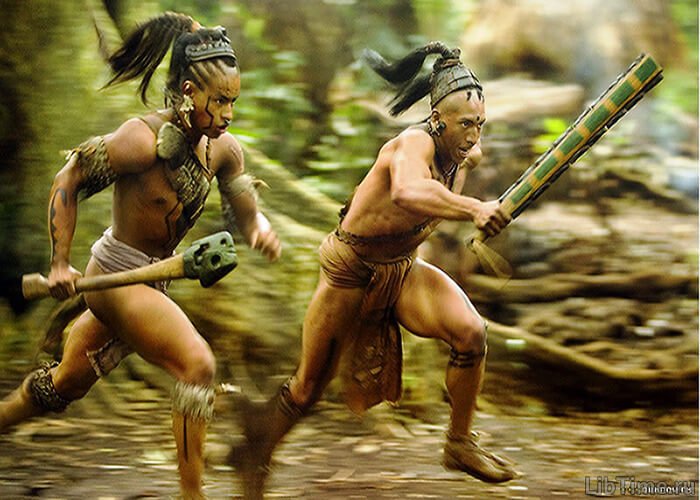
Labour shaped the human body, and nowhere more clearly than in the hand. At first our ancestors moved on all fours. Gradually, over many hundreds of generations, they rose onto their feet — at first unsteadily, then more and more firmly. As they stood upright, the hands were "set free" from the work of walking, and this freedom opened the way for everything the hand would later achieve.
Mastering the simplest tools
Many thousands of years passed before the earliest tools were mastered. The first were the simplest imaginable: a stone to crack a nut or a hard shell, to kill game at a distance, or to frighten off an enemy, and a stick to lift a weight more easily or to defend against attack. Crude as they were, these objects marked the beginning of a technological history that never stopped accelerating.
Making and dating the earliest stone tools
The earliest deliberately manufactured stone tools date back roughly 2.5 to 3 million years, and their manufacture required real mechanical skill. To strike sharp flakes from a core, a toolmaker had to control the angle and force of each blow — evidence of the precision grip at work. Archaeologists date these tools through the geological layers in which they are buried, giving a timeline for the growing dexterity of early human hands.
Archaeological evidence of tool-using species
The clearest fossil evidence links early stone tools to Homo habilis, whose name means "handy man." Homo habilis was discovered at Olduvai Gorge in Tanzania by Louis Leakey and Mary Leakey, and the species was formally described with the help of anatomist Phillip Tobias. The hand bones found nearby showed a mix of gripping strength and dexterity consistent with making and using the stone tools scattered through the same layers. Much later, Neandertals and early modern humans left behind ever more refined toolkits, tracing the recent chapters of hand and tool evolution.
Why are hand development and brain development linked?
The development of the hand and the development of the brain advanced together, each pushing the other forward. Every movement, and every signal from the internal organs or the surrounding environment, is registered by the central nervous system. As the muscular system grew more refined, the human brain grew and refined in step with it.
The improvement of movement demanded better control of that movement by the brain, and this in turn drove the growth of human thinking. This link between mental development and motor development is an essential condition for the all-round improvement of the organism. Indeed, labour created the human being not only by shaping the hand but by shaping the mind that guides it.
How the motor cortex controls the hand
The hand claims a disproportionately large territory in the brain's motor cortex, far more than its size would suggest. This heavy neural investment reflects how many fine, independent movements the fingers must perform. The tighter the loop between the motor cortex and the hand, the greater the cognitive development that accompanied it — the reason human cleverage over tools grew alongside human intelligence.
What role do hands play in communication and gesture?
Hands are a primary channel of human communication, carrying meaning long before and alongside spoken words. Pointing is one of the earliest gestures a child makes, appearing before language and helping to build the shared attention on which words depend. Body language, from a wave to a clenched fist, conveys emotion and intent across cultures, and sign language shows that a full, grammatical language can be built entirely from the movements of the hands.
Cave paintings and hand stencils
Among the oldest human artworks are hand stencils — outlines of hands sprayed with pigment onto cave walls tens of thousands of years ago. These prints, found in caves across continents, are some of the earliest signs of self-expression and identity. A hand pressed to stone was, in effect, an ancient signature, evidence that people have long recognised the hand as a mark of the individual.
The cultural and linguistic significance of hands
The hand runs deep through human culture and language, appearing in gestures, rituals, and everyday expressions. A handshake seals an agreement; a raised hand asks for silence. In Roman tradition the outcome of gladiatorial combat could turn on the gesture of the crowd or the emperor — figures such as Julius Caesar wielded such signals as public authority. The ring finger carries its own legend: the belief in a Vena Amoris, a "vein of love" running from that finger straight to the heart, is why the wedding ring is worn there in many cultures.
How fingerprints identify individuals
Every fingerprint is unique, which makes the hand a natural means of identification. The looping ridges on the fingertips form during fetal development and never exactly repeat, even between identical twins. Because fingerprints stay stable throughout life, they remain a foundation of forensic identification and, increasingly, of everyday security systems that verify a person by touch alone.
What can hands reveal about the body's health?
The hands often signal wider health conditions before other symptoms appear, which is why doctors examine them closely. Changes in the nails, skin, and joints can point to nutritional deficiencies, circulatory problems, or systemic illness. Reading these signs is a long-standing part of medical assessment.
Nails as an indicator of deficiency
Fingernails grow about three to four millimetres a month and take roughly six months to replace themselves fully, so they preserve a slow record of the body's condition. Brittle, ridged, or discoloured nails can indicate deficiencies in iron, protein, or vitamins, while spoon-shaped nails may point to anaemia. Because a nail takes months to grow out, a disturbance in its surface can mark an illness that occurred weeks earlier.
Congenital differences and hand conditions
Some people are born with congenital hand differences, and human achievement shows how fully these can be overcome. The pianist Lee Hee-Ah was born with only two fingers on each hand yet became a celebrated concert performer, a striking example of human accomplishment despite physical limitation. Her story stands alongside the wider truth that skill lives in the brain and the will as much as in the anatomy of the hand.
Other hand conditions arise from overuse or disease rather than birth. Musician's cramp, a form of task-specific focal dystonia studied by the neurologist Eckart Altenmüller, disrupts the fine control of the fingers during performance. The composer Robert Schumann famously lost the use of his hand for the piano — a decline variously blamed on a mechanical training device and on the effects of syphilis and its mercury treatment — and turned instead to composition; his teacher Friedrich Wieck had warned against the very training that may have caused the damage. When such problems strike, hand therapy and rehabilitation, offered by services such as Desert Hand Therapy, combine occupational and physical therapy — and sometimes hand surgery — to restore function.
How does modern comfort reduce muscular activity?
Modern civilisation removes much of the muscular effort the human body evolved to perform, and this ease carries a hidden cost. As society developed, the conditions of life and work changed. People invented machines and learned to build houses. Physical labour, which once demanded large amounts of muscular energy, increasingly turned into mental labour — and mental labour could no longer physically strengthen the body the way manual work once did.
It is not only work processes that changed. Civilisation created many conveniences: lifts, trolleybuses, taxis, trains, and aeroplanes. It occurs to no one to walk from home to the stadium, the theatre, or a friend's house — you board a trolleybus or a bus and arrive in fifteen or twenty minutes. No one climbs the stairs even to the third or fourth floor if a lift is available.
The comfort that creates discomfort
Technical improvements, the automation of production, and the comfort of modern homes deprive people of the muscular movement they need. Comfort, as doctors put it, creates discomfort — an abundance of conveniences begins to harm the body. The blacksmith was once thought the strongest man in the village, swinging a heavy hammer with ease and bending a horseshoe with his bare hands. His working conditions have changed beyond recognition: today a massive mechanical hammer is set in motion by the light press of a button.
The same shift shows in construction. In old textbooks — the kind your parents once studied from — you can see drawings of buildings going up in a way utterly unlike today's. There were no cranes, bulldozers, or excavators. Labourers trudged from floor to floor along narrow, swaying planks with heavy loads of bricks on their backs. The hod once used to carry bricks has passed into legend and become a museum exhibit. Cranes, obedient to any turn of a lever, now lift not only bricks but whole prefabricated rooms, and a building rises almost by the hour.
Why does this happen, and what does it mean?
Work has grown easier for the worker, but harder on the human body as a whole. The reason is simple: the hand and the muscular system were shaped by millions of years of active use, and they still need that activity to stay healthy. When machines take over the movements the body once made, the muscles, joints, and even the mind lose a stimulus they depend on.
The lesson of the hand's long history is therefore a practical one. The organ that made humans what they are — through gripping, making, and doing — thrives on use and weakens without it. Preserving deliberate physical movement in an age of comfort is not nostalgia but a way of honouring the biology that built us, keeping the ancient partnership of hand and brain alive.