Main Types of Plantings in Landscaping: Lawns, Flower Beds, and Vertical Greenery
 libre
libre
Landscape plantings on green-space sites fall into several types with different structures: planar elements — lawns, glades of turf, and areas set aside for flower beds — and volumetric elements, meaning trees and shrubs. Understanding these types of plantings is the foundation of any garden design and layout planning, whether you are shaping a residential courtyard, a public square, or a private plot.
Main types of plantings on green-space sites
The main types of plantings combine flat, ground-covering features with three-dimensional woody masses, plus a distinct category known as vertical greening. This classification mirrors the way landscape design basics are taught in resources such as Landscaping 101, where planners first separate what covers the ground from what rises above it before deciding how the two relate.
Ratio of planar and volumetric planting elements
A set proportion is maintained between planar and volumetric planting elements on a well-planned site. A large share of the territory is given to lawn — roughly 58–70% — while flower beds account for only 0.5–1.5% of the total area. The path-and-walkway network occupies about 20%, and the remainder is dedicated to trees and shrubs. Holding to these ratios keeps a green space balanced rather than crowded, and it is a core principle of landscaping fundamentals.
Vertical greening as a special type of planting
Vertical greening is a special type of planting recommended for decorating building entrances, façades, rest areas (pergolas), and fences around sports grounds. It uses both herbaceous and woody climbing plants — morning glory, nasturtium, runner bean, five-leaved (Virginia) creeper, round-leaved bittersweet, honeysuckle (caprifole), and others.

Climbing plants are set out according to their biological habit — those that scramble, cling, or twine — with or without supports; supports make it possible to train and shape the plants. Because vertical greening turns walls, screens and trellises into green surfaces, it is one of the most effective tools for small space and urban gardening, letting a courtyard gain greenery where there is no room for a tree. Living walls of this kind are a common feature on shows like Gardeners' World and HGTV, which regularly demonstrate how climbers transform tight urban plots.
Lawns
Lawns are a fundamental element of greening across every category of planting, serving as the open background against which trees, shrubs and flower beds are read.

Sanitary-hygienic and psychophysiological role of lawns
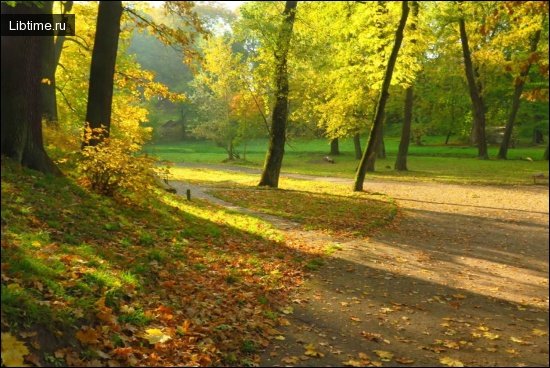
The green surface of a lawn has a calming, restorative effect on people, exerting a positive psychophysiological influence. A lawn is the most important part of the composition and unites the principal elements of the layout. Open lawn areas alternating with semi-enclosed pockets of planting form the garden-and-park landscape of a residential territory.
Types of lawns
Lawns are divided into the following types:
- parterre lawns;
- ordinary lawns;
- park lawns;
- sports lawns (football pitches);
- special lawns (on slopes and embankments).
Parterre lawns
Parterre lawns are laid on the most prominent sites of a district — at the entrances to cinemas and clubs, on the approaches to administrative and public buildings, and in formal squares. They are sown from one or two grass species with good tillering and comparatively low growth, uniform structure and colouring of the above-ground part. A parterre lawn must have an even surface and demands constant mowing together with systematic care such as irrigation and feeding.
Ordinary and park lawns
Ordinary and park lawns take the largest share of greening in residential districts and are planned for courtyards, the gardens of housing groups, and boulevard strips. They must be resistant to trampling, so various seed mixtures are used to build a dense, durable turf. These lawns need constant care — mowing, fertilising, and both routine and major repair.
Sports lawns
Sports lawns within a residential area are designed chiefly for school football pitches. Their turf must meet high demands: resistance to trampling and mechanical damage, the ability to withstand heavy loads, and, in a number of cases, drainage that ensures rapid water run-off. Special seed mixtures of hardy grasses (Kentucky bluegrass, fescue, bentgrass) are used, and the base must be multi-layered, composed of crushed stone, coarse sand, peat and similar materials.
Special lawns
Special lawns are created on slopes and treated as an essential part of stabilising them. The turf of such lawns anchors the embankments, prevents water erosion of the soil layer, and guards against weathering.
Technology of creating and caring for a lawn
Creating a lasting lawn depends on matching the seed mixture to its intended use and then keeping to a steady maintenance rhythm. Grasses form the core plant group here, and a healthy sward calls for regular mowing, aeration, feeding and, above all, correct watering. During a heatwave, water deeply but less often — early morning or evening — so moisture reaches the roots rather than evaporating; shallow daily sprinkling in the heat of the day encourages weak, surface-rooted turf. In dry climates, pairing a lawn with rain harvesting and water conservation measures, such as a water butt collecting roof run-off, reduces reliance on mains supply during summer drought.
Soil preparation and composting before sowing
Soil preparation and composting before sowing determine how well a lawn or bed establishes. Work the ground to a fine, level tilth, remove perennial weeds, and incorporate well-rotted compost to improve structure, moisture retention and fertility. Composting garden and kitchen waste yields a free, nutrient-rich soil conditioner: layer green material (grass clippings, vegetable scraps) with brown material (dry leaves, cardboard), keep the heap moist and turn it to speed decomposition. Enriched, free-draining soil gives grass seed — and later flowers, herbs and vegetables — the best possible start.
Flower beds
Flower beds enrich the landscape of a residential district, which matters greatly amid typical mass housing. They may be resolved as formal beds (clumps), ribbon borders (rabatki), or as grouped and single plantings.

Types of flower beds
Formal beds (clumbs)
Formal beds are laid out in strict geometric outlines and are the most architectural, geometric expression of flower planting. They suit prominent, framed positions where a clear, symmetrical pattern reinforces the surrounding design, and their changing seasonal displays keep such focal points colourful through the year.
Ribbon borders (rabatki)
Ribbon borders are flowering strips up to 0.8 m wide, placed along paths, pavements and at building entrances. The ratio of a border's length to its width should be no less than 3:1. Beds of this type are multi-row plantings of one or several annual species, giving a continuous band of colour that guides the eye along a route.
Grouped and single plantings
Grouped and single plantings are picturesque clusters or solitary specimens set on lawns, beside paths and squares. Their edges may take regular geometric shapes, but a beautiful natural outline is usually preferable. The palette is chosen from the most decorative flowering herbaceous plants, predominantly perennials such as Dahlia, Phlox and Hortensia, and these plantings are reserved for the most important parts of a district. For annual beds the fertile soil layer should be at least 25 cm deep, and for perennials no less than 40 cm; sites must be sheltered from strong winds, well lit, and dry, with the water table no higher than 1.5 m. Under modern design requirements the form and pattern of a flower bed should be restrained and simple, fitting organically into the landscape, with plants matched by colour, height and flowering time — the strongest effect coming from uniform groups.
Trees and shrubs as volumetric elements
Trees and shrubs are the principal material of residential greening and the main volumetric elements of the composition. When placing them, the key biometric indicators must be considered — a plant's height, crown width, crown height and crown density — with height taken as that reached at maturity under the best growing conditions. Shrub gardens design and maintenance follows the same logic on a smaller scale, using massed woody plants to define spaces and screens.
Six height classes of woody plants are distinguished:

- first magnitude — over 20 m;
- second — 10–20 m;
- third — 5–10 m;
- fourth — 2–5 m;
- fifth — 1–2 m;
- sixth — up to 1 m.
Crown width is defined by the spread of branches in metres: wide — over 10, medium — 5–10, narrow — less than 5. Crown height is counted as a percentage of the tree's total height. For shrubs the important measure is the width of the above-ground part: wide — over 2 m, medium — 1–2 m, narrow — less than 1 m.
Crown density (openness) must also be weighed at the design stage, measured by the percentage of gaps in the crown: dense — less than 10%, medium density — 20–40%, and airy — more than 40%. Growth rate matters too: fast-growing trees add 50–70 cm a year on average, moderate growers 20–50 cm, and slow growers less than 20 cm. Light demand, shade tolerance, soil requirements, drought resistance and frost hardiness all feed into the plant selection guide for a site.
The basic ways of arranging trees and shrubs are:
- single specimens (solitaires);
- groups;
- avenue plantings;
- rows.
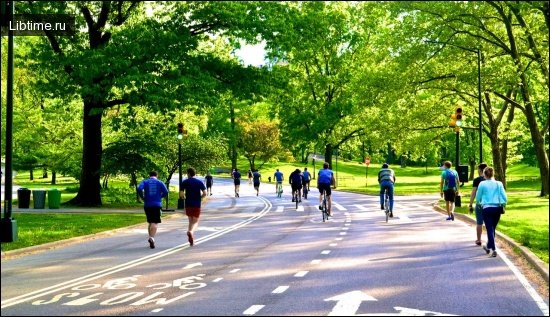
In some cases larger units are set apart: curtains (large groups of 70–100 trees) and massifs (across the body of a garden). Single trees are placed on open stretches of lawn, both near squares and at a distance; at path crossings, on glades and beside water bodies, weeping willow, silver birch, silver maple and horse chestnut serve well as solitaires.
Groups of trees contain from 2–8 up to several dozen trees and shrubs. In residential greening single-species groups of 2–5–8 trees (lilac, maple, birch) work best near squares and on glades, while southern districts can carry groups or curtains of several dozen trees of one or two species. By structure, groups are simple (one species), mixed (two or more), or complex (trees together with shrubs); one species should dominate, and the chosen kinds must harmonise both aesthetically and biologically — the law of simplicity holds that a single-species group looks most striking.
Rows are provided along drives and straight paths, most often as avenues of one species; several species are permitted with correct alternation, and avenues can be formed from "bouquet plantings" of lime or maple. Hedges are classified by height as high (over 2 m), medium (1–2 m), low (0.5–1.0 m) and edging borders (up to 0.5 m): high hedges enclose service yards and refuse points, medium ones ring children's play areas, and low borders run along streets, drives and paths. Sustainable plantings should rest on 3–5 local or well-acclimatised species raised in urban nurseries, with a small number of decorative introduced species reserved for the most prominent spots.
Planting density and the designed ratio of woody plants to lawns and flower beds play a large part in the result. Density per hectare depends on climate, the density of building, underground utilities, drive widths, parking, the path network, and the size and placement of squares. Only large planting stock delivers a real decorative and sanitary-hygienic effect, so the greatest share should go to large trees moved with a root ball. Mid-sized deciduous saplings of groups I–II (GOST 24909-81) stand up to 2.5 m tall with a 2.5 cm stem diameter; large deciduous stock of groups III–IV is planted with a soil ball (group III: ball 1.0 × 1.0 × 0.6 m, height up to 4.0 m; group IV: ball 1.3 × 1.3 × 0.6 m, height up to 5 m). Conifers, valued for winter decorative effect, are set at 7–10% of the total number of trees, using large saplings up to 2.5 m tall with a soil ball 0.8 m across and 0.4 m deep.
Planning and composing different types of plantings
Planning brings lawns, flower beds, trees, shrubs and vertical greening into a single coherent whole rather than a scattered collection of features. Good garden design and layout planning starts by deciding the balance of open and enclosed space, then places volumetric elements to frame views and planar elements to rest the eye. The dictionary sense of a garden, as defined by the Merriam-Webster Dictionary, is simply a plot of ground where plants are cultivated — but the way those plants are composed is what separates a plan from a mere planting.
Principles of landscape design and geometric planning
Architectural, geometric garden design relies on symmetry, straight axes, clipped hedges and regularly shaped beds to impose a clear, formal order. This approach suits parterres and the prominent entrance zones described above, where restrained geometry reinforces the surrounding buildings. Hardscaping — paths, edging and structures — sets the geometric framework, and repeated forms such as bordered rabatki and matched avenue trees carry the pattern through the space.
Natural (English) garden design philosophy
The English garden natural design philosophy rejects rigid geometry in favour of flowing outlines, informal drifts of planting and views that unfold gradually. Curved bed edges, mixed perennial groups and specimen trees placed as if self-sown create a landscape that looks unforced yet is carefully composed. Historic estates such as Landgoed de Wiersse are celebrated for blending formal structure near the house with a naturalistic parkland beyond — the very layering of open glade and semi-enclosed grove that defines this style.
Plantings for biodiversity and attracting pollinators
Plantings can be designed to support biodiversity and wildlife conservation as well as to look attractive, and doing so strengthens the whole garden. Choosing pollinator-friendly plants and bee gardens rich in nectar — Lavender, Roses, Marigolds and Sunflowers among them — keeps bees and other beneficial insects fed through the seasons. Botanical gardens and community plant events, such as the Ambachtelijke Plantenmarkt, encourage growers to include native and pollinator species so private plots add up to a wider habitat network.
Butterfly and beneficial-insect gardens
A butterfly garden attracts pollinators by combining nectar plants for adults with food plants for caterpillars, so the whole life cycle is supported on site. Butterfly bushes are a classic magnet for adult butterflies, while informal wildflower gardens — mown only once or twice a year — sustain a broad mix of insects. Beneficial insects also help with pest and plague management: encouraging ladybirds, lacewings and predatory beetles keeps aphids and slugs in check without chemicals. Where wasps become a problem, organisations such as the Wespenstichting advise on safe handling, and the spread of the invasive Asian hornet (Aziatische hoornaar), which preys on honeybees, is now monitored closely by beekeepers and conservation groups.
Specialised types of plantings
Beyond lawns, beds and woody plantings, several specialised planting types serve particular purposes — from kitchen crops to sensory herb corners and self-supporting plant partnerships. Vegetable growing and kitchen gardens, often on raised beds, let households grow their own produce such as Pumpkins in a compact, well-drained space, and raised bed gardening improves drainage, warms the soil earlier in spring, and makes tending easier on the back. Rock gardens, fairy gardens and tire gardens built from recycled materials show how small or unusual spaces can be turned into productive, characterful plantings.
Herb and aromatic plantings
Herb garden cultivation groups culinary and aromatic plants — Basil, Thyme, Oregano, Sage and Lavendel — where they catch the sun and are easy to harvest near the kitchen. Most herbs prefer free-draining soil and full sun, dislike waterlogging, and reward regular light pruning that keeps them bushy and productive. Many, such as Lavender and Sage, double as pollinator plants, so a herb bed feeds both the cook and the bees.
Companion planting techniques
Companion planting techniques pair species that help one another — deterring pests, attracting pollinators, or improving growth. Marigolds interplanted among vegetables are a well-known example, their scent discouraging some pests while their flowers draw beneficial insects. Thoughtful companions reduce the need for intervention, complementing composting, mulching and good watering as part of a low-input, resilient garden.
Hard paving and site amenity elements (hardscaping)
Hardscaping covers all the non-living structural parts of a garden — paths, paving, steps, walls, edging, pergolas, greenhouses and other built features. In the planting ratios above, the path-and-walkway network alone claims around 20% of a green space, which shows how decisive hardscaping is to how a garden is used and read. Greenhouses act as climate-control structures that extend the growing season and shelter tender crops, and other structures — trellises, screens and raised-bed frames — give climbers and cultivated plants the support they need.
Garden tools and care of plantings
Reliable garden tools and a seasonal maintenance routine keep every planting type healthy across the year. Core equipment includes a spade and fork for soil work, secateurs and loppers for pruning, a hoe for weeding, a rake for levelling and clearing, and a watering can or hose for irrigation. Pruning techniques vary by plant: shrubs and Roses are cut to shape and encourage flowering, while trees are pruned to remove dead or crossing wood and to lift or thin the crown. A simple seasonal checklist — soil preparation and sowing in spring, watering, feeding and pest control in summer, pruning and clearing in autumn, and protecting tender plants over winter — turns scattered jobs into a manageable rhythm and gives lawns, beds, herbs, vegetables and woody plantings the ongoing care each type requires.