Growing Vegetables in Ukraine: Planting Tips and Seasonal Crops
 libre
libre
Vegetable prices in Ukraine are shaped by seasonality, the ongoing war, weather, and the country's deep ties to export and import markets. As of early 2026, the Ukrainian vegetable market continues to show sharp weekly swings — young cabbage, cucumbers, and tomatoes move in price by tens of percent within a single season, while imported fruit tracks the hryvnia exchange rate. This page explains what drives those prices, lists current figures for the main vegetables and fruits, compares wholesale and retail levels against European markets, and — for growers wanting to cut their own grocery bill — keeps a full practical guide to sowing and tending vegetables. 
Vegetable prices in Ukraine: market overview
The fresh vegetable market in Ukraine is a buyer-and-seller marketplace where prices form daily from the balance of domestic supply, imports, seasonality, and logistics costs. Ukraine is a significant agricultural producer: according to FAOSTAT and the State Statistics Service, the country harvests millions of tonnes of vegetables annually across root crops, leafy and cruciferous types, and greenhouse produce. Trade is classified under Harmonized System Code 07 for vegetables, the code used in UN Comtrade data to track Ukraine vegetable exports by volume and value.
Wholesale price discovery happens largely at regional trading platforms, the largest being the Lvov Shuvar wholesale market operated by Shuvar in the Lviv region. Market intelligence organisations such as EastFruit, along with outlets like Agrotimes, UA.NEWS, UNN, and Media Center Ukraine, publish daily and weekly market price updates that traders use for price comparison and monitoring. The All-Ukrainian Agrarian Council, whose deputy head Denys Marchuk frequently comments on food prices, is a regular source of commodity pricing announcements.
Globally, Ukraine is a mid-tier vegetable exporter rather than a leader. The top global vegetable exporters by value are China, Spain, Mexico, the Netherlands, Canada, Italy, France, Germany, Belgium, and Poland — countries against which Ukrainian produce competes on European wholesale markets. Trade analytics firms such as Selina Wamucii aggregate farmgate and export pricing across these origins for produce price comparison by origin.
Factors influencing the cost of vegetables in Ukraine
Ukrainian food prices are driven by a mix of internal and external factors: seasonality, weather, fuel and logistics, the war, exchange rates, and the structure of export-import trade. Understanding which factor dominates in a given week is the key to interpreting market data and anticipating price changes.
Seasonality and its effect on prices
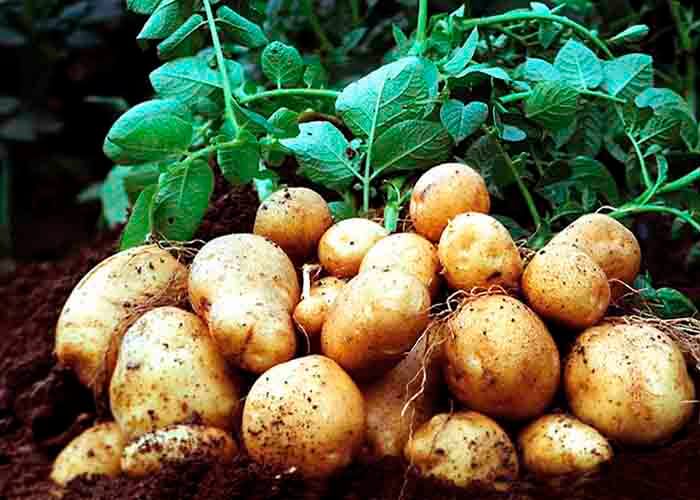
Seasonality is the single biggest driver of vegetable price dynamics in Ukraine. Early-season "young" vegetables — new potatoes, young cabbage, the first cucumbers and tomatoes — command high prices because supply is thin, then fall sharply as field harvests arrive. New potato prices in early 2026, for instance, start several times higher than the price of stored old-crop potatoes and converge as the main harvest begins. The same pattern governs strawberries, sweet cherries, and other seasonal produce: peak prices at the start of availability, steep declines at the supply peak.
- Young cabbage typically surges in spring as old-crop stocks run out and new heads are scarce, then drops once volumes build.
- Cucumbers rise in the early summer market when greenhouse supply gives way to field crops, with prices varying by variety and retail location.
- Tomatoes follow a long decline through summer as table and cherry tomato volumes climb.
- Berries — strawberries first, then sweet cherries, then blueberries and raspberries — each spike at the opening of their short window.
The impact of the military conflict on food security
Russian military aggression has reshaped Ukrainian vegetable production and food security since 2022, reducing planted area in front-line and occupied regions, raising input and fuel costs, and disrupting logistics. The vegetable industry's resilience during wartime has nonetheless kept domestic shelves supplied, a point researchers from the Uman National University of Horticulture — including Iryna Korman and Olha Semenda — have examined in the International Science Journal of Management, Economics & Finance, analysing agricultural adaptation to economic and social changes and marketing strategies for agricultural enterprises in unstable conditions.
War-driven volatility means supply chains and prices can move on factors unrelated to harvest size: blocked routes, energy shortages, and labour constraints all feed into the final shelf price. This makes vegetable market analysis in conflict conditions distinct from peacetime forecasting, and it explains why weekly figures can diverge sharply from seasonal norms.
External factors and export-import relations
External factors — exchange rates, European wholesale prices, and import flows — set a floor and ceiling on Ukrainian produce. Imported fruit price stability depends heavily on the hryvnia: bananas, citrus, and other tropical fruit are priced in foreign currency, so a weaker hryvnia pushes their shelf price up regardless of local conditions. The Ministry of Finance Ukraine exchange-rate movements therefore feed directly into imported produce pricing.
On the export side, Ukraine ships vegetables and fruits to neighbouring EU markets, competing with Poland, Spain, and the Netherlands. Year-over-year price and export changes in this trade reflect both domestic harvest size and demand in those destination markets, making export-import relations a permanent background influence on domestic prices.
Current prices for the main vegetables
Current vegetable prices in Ukraine differ by variety, region, and whether you buy per kilogram at a market or in bulk packaging from a supermarket. The figures below describe the typical direction and spread reported in recent weekly market analysis; exact hryvnia values change daily, so always check a live source such as EastFruit or the Lvov Shuvar market for the current day.
Cucumber prices by variety and retail location
Cucumber prices in Ukraine's summer market vary widely by variety and where you buy. Smooth-skinned greenhouse cucumbers and short bumpy field varieties carry different prices, and the gap between an open-air market stall and a supermarket shelf can be substantial. Early-summer cucumber price increases are common as greenhouse supply tapers before field volumes arrive, after which prices ease.
Rising prices for tomatoes and eggplant
Tomato prices generally decline through the season as volumes grow, but cultivation costs — heated greenhouses, fertiliser, and labour — keep early tomatoes expensive. Cherry tomatoes and premium table tomatoes sell at a premium over standard field tomatoes. Eggplant prices, volatile at the start of the season, tend to stabilise once supply broadens. Sweet pepper prices often drop in the same window as field harvests peak.
Prices for cabbage, beetroot, and carrots
Root and cruciferous vegetables — cabbages, carrots, beetroot, and onions — form the storable backbone of the market, with prices that climb through winter and spring as stored stocks deplete. Onion price increases are a recurring late-season feature once domestic stores empty. Young cabbage commands a steep premium in spring before field supply pulls the price down. Garlic and other aromatic vegetables hold relatively firm prices year-round.
Prices for seasonal fruits and berries
Fruit and berry prices rise sharply at the opening of each crop's short window. Spring frost damage to stone-fruit crops — apricots, peaches, and nectarines — has repeatedly caused shortages and price spikes, with apricot supply especially sensitive to frost. Strawberry and sweet cherry price movements set the early-season tone, followed by blueberries and raspberries. Apple inventory management keeps apple pricing relatively stable across varieties, while pear prices and the pricing of nuts and dried fruits track storage and import costs.
Wholesale and retail prices: what's the difference
The difference between wholesale and retail vegetable prices reflects logistics, handling, packaging, and retailer margin. Wholesale prices at platforms like the Lvov Shuvar market are set in bulk, per large lot, while supermarkets add the cost of sorting, packing into per-kilogram or pre-packaged units, refrigeration, and shelf space. This is why the same cucumber or tomato costs noticeably more in a supermarket than at a wholesale market or open-air stall — and why price differences between markets and supermarkets are a standard part of any price comparison.
Processed, boiled, pre-packaged, and organic vegetable products carry further premiums over loose fresh produce, reflecting added processing and certification costs.
Comparison with European wholesale markets
Ukrainian wholesale vegetable prices generally sit below those in Western European markets, which is what makes exports to Poland, Germany, and the Netherlands viable. Price comparison across European countries shows Ukrainian farmgate and wholesale levels undercutting EU averages for many lines, though logistics and quality standards narrow the gap at the border. EastFruit and Selina Wamucii data allow direct produce price comparison by origin across these markets.
How to grow vegetables and cut your shopping costs
Growing your own vegetables is the most direct way to insulate yourself from market volatility, and on Ukrainian soil a home plot can yield well across three sowing windows — under winter, early spring, and summer. The practical guide below covers sowing, depth, spacing, timing, and crop care. For broader growing topics, see our Agronomy section.
Let's talk about Ukraine's vegetables and growing them
On Ukrainian territory many garden crops can be sown under winter, in early spring, and in summer to give a good harvest. In early spring, for example, without waiting for frosts to end, you should sow carrots, radish, lettuce, sorrel, parsley, dill, and spinach. Knowing how to grow these crops well is the foundation of a productive plot.
Sowing vegetable crop seeds
Before sowing vegetable crop seeds the soil must be dug over and harrowed. To keep rows straight, stretch a cord between pegs on both sides of the plot and score a furrow with a pointed stick. Moisten the plot well. Scatter the seeds on the bottom of the furrow and cover them in with a light rake.
If the soil turns out lumpy, it is better to pour a 0.5–1 cm layer of loose, clod-free earth over the seeded beds, then carefully close the furrows with a rake. Better still, top the rows with a 1–2 cm layer of humus to protect the soil from drying out. In the first ten days of April sow peas, beans, and beetroot, plant out early cabbage seedlings, and sow tomato seed into open ground.
In the last ten days of April or the first ten days of May, once the danger of frost has passed, sow cucumbers, French beans, watermelons, melons, and pumpkins, and plant out seedlings of tomatoes, eggplant, and peppers. In the first half of June you can still sow cucumbers, plus carrots, beetroot, dill, radish, garden peas, and spinach. When autumn stays warm for long, later sowing dates succeed well.
Mid-August is the time to sow cabbage seed as a winter crop, using varieties such as Derbentskaya, Apsheronskaya, or Bull's Heart. In autumn, under winter, you can sow parsley, dill, spinach, and carrots, and plant garlic. 
Seed sowing depth
Seed sowing depth deserves special attention. Beginner gardeners as a rule plant seeds too deep, so they die or give patchy, thin stands.
The smallest seeds — sorrel and lettuce — must not be covered with more than 0.5–1 cm of soil; medium-fine seeds (onion, tomato, cabbage) 2–3 cm; medium-large (beetroot, cucumber, spinach) 3–4 cm; and large seeds (pumpkin, maize, peas, beans) 4–5 cm.
Sowing and planting layouts
Vegetable growing uses several sowing and planting layouts. In single-row spacing, large plants such as tomatoes, cucumbers, and cabbage grow in one row. Specialised farms have recently begun arranging them in two-row bands, with 40–50 cm between rows and 90–120 cm between bands.
The most suitable layout for home gardens is wide-band sowing, with a band width of 6–8 cm. This suits carrots, bulb and set onions, lettuce, spinach, dill, and parsley. They can also be sown in seven- or ten-row bands up to 1–1.2 m wide, leaving a 0.5 m path between them; in that case reduce the row spacing to 8 cm.
To plant seedlings along a cord, make furrows with a hoe or spade and water the holes and furrows generously. Carry your own seedlings with their root ball carefully to the planting spot, lower them in, firm the soil, and tidy the hole or furrow again. Purchased seedlings should be dipped at once into a clay-and-water slurry and only then planted. Seedlings must be set into the soil up to the lower leaves, so the root system enters the ground to a depth of 10–12 cm.
Do not plant deeper. There the soil warms poorly and is less active. For this reason overgrown tomato seedlings should be laid in the furrow or hole at an angle, but no deeper than 12 cm. Transplant to open ground in cloudy weather, or in the evening if it is sunny. Watering after transplanting is essential.
Crop care operations
High, reliable yields require a large set of crop care operations: weeding, loosening between rows, mulching, earthing up, and thinning. Care also includes feeding, removing side shoots and pinching, pest and disease control, and watering. The number and timing of hand weedings depend on how weedy the plot is — up to 5–6 times over the summer. The rows between are loosened at the same time, while within the row crops are weeded by hand, without a hoe.
Hand weeding
Hand weeding also breaks up the soil crust. To stop weeds seeding themselves, destroy them on the verges of nearby paths and along the plot's boundaries. The depth of loosening between rows should vary.
Beds with just-emerged beetroot must not be loosened deeper than 4–5 cm. Once the plants grow, the loosening depth can be increased to 12 cm. On seedling plantations the first loosening is done to 9–10 cm and later ones to 12–15 cm.
Mulching
When mulching, cover the soil with a 2–3 cm layer of humus, sawdust, leaves, or special black film. This suppresses weeds, preserves soil structure, and retains moisture. If materials are short, cover only the rows rather than the whole area.
Earthing up
Earthing up encourages extra roots to form and gives plants greater stability. Carry it out after watering or rain; using dry soil for this is pointless. Potatoes, cabbage, and tomatoes are earthed up to three times, to a height of 12–15 cm.
Thinning
Thinning should be done right after emergence. Because seeds must be sown 2–3 times more thickly than needed — as insurance against bad weather and seed failure in the soil — the stand comes up too dense.
Carrots, onion (black-seed), parsley, radish, and others are sown at especially high rates. Thin the seedlings as soon as they appear, keeping the best specimens and removing the weak ones. At the second thinning of carrots, onions, and other crops, the pulled plants are used as marketable produce.
Watering

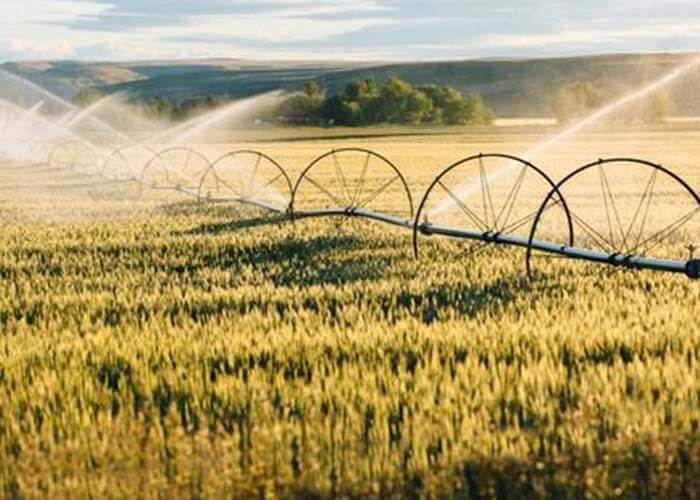
This group includes direct-sown eggplant, watermelons, and melons. Even so, without a minimum of moisture these too must be watered. Any water can be used: from irrigation canals, mains, rivers, lakes, ponds, rainwater collected in pools and barrels, or artesian wells. But remember: the water must not be too cold.
If the water cannot be warmed, it is better to run it along the furrows at night. Sprinkler watering is permissible by day but at reduced intensity. You should also have a rough idea of the water's chemical composition. Send a sample to a laboratory for analysis, or use the old method: if frogs live in the water, it is fit for irrigation.
Vegetable crops' need for moisture
The moisture needs of vegetable crops and potatoes differ across their life stages. The largest volume is used while heads, fruits, tubers, and roots are forming. During this period do not give too much water, or tomato flowers and set fruit may drop and cabbage may fail to form a proper head. The need falls sharply at flowering and seed ripening.
The choice of time of day for watering deserves a separate note. Most handbooks advise doing it in the evening or early morning, citing sun-scorch from daytime watering.
In many years of experiments by the author of these lines on irrigation regimes for vegetable crops, no harmful effect of sunlight on the leaves during daytime sprinkling was found; what was noticed is that water use on sunny days is somewhat higher, owing to increased evaporation.
As for water consumption and intervals between waterings, much depends on the soil's physical properties and the weather. On sandy-loam soils, for instance, water every 2 days at 15–20 l per 1 m²; on loams every 3–4 days at 20–30 l. As soon as the soil has absorbed the moisture, cover the holes and furrows with earth. The next day they should be hoed or loosened.
Feeding vegetables
Among care operations, feeding vegetables holds an important place. The first feed is recommended 10–15 days after emergence, at 10–12 g ammonium nitrate, 7–10 g superphosphate, and 4–5 g potassium per 1 m²; the second at the start of productive-organ formation, at 5–6 g each of ammonium nitrate, superphosphate, and potassium salt per 1 m².
Scatter them over the plot surface so the fertiliser does not land on the leaves, then work the granules in with a light watering. Feeding with organic fertilisers — poultry manure, mullein, slurry — is more involved. First place them in a container, such as barrels or film-lined boxes, add water, and leave several days to ferment. Then dilute this mix 1:6–8 and apply at 1–2 l per 1 m².
Foliar feeds are also worthwhile. The recommended formula: for tomatoes — 80 g ammonium nitrate, 150 g superphosphate, and 70 g potassium; for cabbage — 150 g ammonium nitrate; for cucumbers — 60 g superphosphate, 30 g potassium, and 1.3 g boric acid, per 10 l of water and per 100 m² of crop.
Tomatoes are fed at bud formation and at the start of fruit set, cucumbers before flowering and during fruit set, and cabbage two weeks after planting out and again after 8–10 days. Experienced growers, for instance, pinch out the surplus side shoots on tomatoes; when this crop flowers late into autumn, the flowering shoots are pinched too. These small surgical operations speed up fruit formation and ripening and help the crop escape dangerous frosts.
Forecast for vegetable prices in Ukraine
Future price predictions for seasonal produce in Ukraine point to the usual seasonal pattern in 2026: high early-season prices for young vegetables giving way to declines as field harvests arrive, with weather and the war remaining the main wildcards. Seasonal vegetable market predictions for the autumn typically expect storable crops — potatoes, cabbage, carrots, onions — to ease at harvest then climb again through winter. Spring frost risk continues to threaten stone-fruit supply and pricing. Analysts at EastFruit and the All-Ukrainian Agrarian Council, including Denys Marchuk, regularly publish such forecasts based on planted-area and yield metrics.
Expectations for the dairy segment and related products
Beyond vegetables, the dairy segment, meat, and bread are expected to see continued upward pressure on prices, driven by feed, energy, and labour costs. Dairy pricing expectations for 2026 lean toward gradual rises, and meat and bread price forecasts follow the same cost-driven logic. These adjacent staples matter for the household food basket alongside vegetable and fruit prices, and they respond to the same external factors — exchange rates, fuel, and wartime disruption — that move produce.