Transpiration in Plants: Definition, Process, and Importance
 libre
libre
Transpiration is the loss of water from a plant as water vapour, mostly through tiny leaf pores called stomata. It is both a physical process — liquid water in the air spaces of the leaf turns to vapour and diffuses out into the atmosphere — and a physiological one, because the rate is controlled by the plant's own anatomy and living cells. This dual nature is why the evaporation of water from a plant is given its own name rather than being treated as plain evaporation.
What is transpiration in plants?
Transpiration is the evaporation of water from the aerial parts of a plant, principally the leaves, and its release as water vapour into the surrounding air. Water taken up by the roots travels up through the plant, reaches the leaf air spaces (intercellular spaces) where it evaporates from the surface of mesophyll cells, and the vapour then diffuses out through the stomata. A large plant such as an oak tree can release hundreds of litres of water a day, and corn over its life cycle moves enormous volumes from soil to atmosphere this way.
The physical and physiological process of water evaporation
Evaporation of water by a plant is a physical process because water in the intercellular spaces of the leaves passes into a vapour state, and the resulting vapour then diffuses through the stomata into the surrounding space. It is at the same time a complex physiological process, because it is tied to the anatomical and physiological features of the plant. For this reason — to distinguish it from purely physical evaporation — the physiological evaporation of water by a plant is called transpiration.
Types of transpiration: stomatal, cuticular and lenticular
Transpiration occurs through three routes, named for the surface the water vapour escapes from: stomatal, cuticular and lenticular. Stomatal transpiration through the leaf pores accounts for the large majority of water lost. Cuticular transpiration passes through the waxy cuticle covering the whole leaf surface. Lenticular transpiration is the small amount of water that escapes through lenticels — loose pores in woody stems and bark — and is the least significant of the three.
The mechanism of transpiration and the movement of water
Transpiration drives a continuous column of water from roots to leaves, powered by the water lost at the leaf surface. As water evaporates from the leaf cells, a suction (a negative water potential) develops that is transmitted down through the xylem to the root hairs, which in turn absorb water from the soil. This unbroken pull is what carries water and dissolved nutrients up through even the tallest plants.
The suction force and the pulling action of transpiration
Water moves up the stem because transpiration creates a suction force in the leaf cells, which is transmitted from them down to the root hairs that absorb water from the soil. If a cut branch or a whole plant is placed in a vessel of water, the plant does not wilt for a long time, which demonstrates the pulling (sucking) action of transpiration.
The Cohesion-Tension theory and water potential
The Cohesion-Tension theory explains how transpiration lifts water to the top of a tree without any pump. Evaporation at the leaf generates tension (negative pressure) in the water-filled xylem; water molecules cling to one another through cohesion (hydrogen bonding) and to the xylem walls through adhesion, so the whole column is pulled upward as a continuous thread. Water always moves from a region of higher water potential (the soil) to one of lower water potential (the drier air around the leaf), and it is this water-potential gradient between soil, plant and atmosphere that ultimately powers the flow.
The transpiration stream and the ascent of sap through the xylem
The ascent of sap is the upward movement of water and minerals through the xylem, known as the transpiration stream. Driven by the tension generated at the leaves, the transpiration stream carries soil water and the mineral ions dissolved in it from the roots to the shoots and leaves, supplying every living cell on the way. Because the column is continuous, water lost at the top is immediately replaced by water drawn in at the roots.
Capillary forces and the role of the xylem
Capillary action helps hold and raise water within the fine conducting vessels of the xylem. In narrow tubes, the attraction between water molecules and the vessel walls, combined with surface tension, draws water upward — a contribution that supports, though it cannot by itself fully account for, the height water reaches in tall trees. The number and width of the conducting vessels are among the structural factors that influence how readily a plant transpires.
Cavitation and the blockage of xylem vessels
Cavitation is the formation of air or vapour bubbles inside a xylem vessel, which can break the water column and block the flow of sap. Under severe water stress the tension in the xylem becomes so great that the continuous thread of water snaps and an embolism forms, disabling that vessel. Plants limit the damage by isolating affected vessels and routing water through neighbouring ones, but extensive cavitation reduces a plant's ability to move water and can contribute to wilting and dieback.
The significance of transpiration for plants
Transpiration matters because it moves nutrients through the plant and keeps the leaf cool. Its significance lies in the following:
- the mineral elements taken up by the plant travel through it together with the water in the transpiration stream;
- transpiration lowers the temperature of the leaf and protects it from overheating.

Mineral transport and cooling of the leaf
Transpiration both delivers minerals to growing tissues and protects leaves from heat damage through evaporative cooling. As water evaporates from the leaf, it carries away heat, in the same way that sweating cools the skin. In greenhouses and hotbeds, where the air is humid and transpiration is suppressed, leaves can be scorched by the sun's rays precisely because this cooling is reduced. Transpiration also creates a slight water under-saturation in the protoplasm colloids, which favours normal fruiting and ripening, since synthetic processes proceed under those conditions.
Drawbacks and limitations of transpiration
The main drawback of transpiration is that it is, in part, an unavoidable cost rather than a benefit. Because stomata must open to admit the carbon dioxide needed for photosynthesis, water is inevitably lost at the same time, and a plant may lose far more water than it actually needs. Under drought this loss becomes dangerous: when water leaves the cells faster than the roots can replace it, the cells lose turgor pressure, the plant wilts, and prolonged loss past the permanent wilting point causes death. Excessive transpiration is therefore a constant liability that plants in dry habitats must continually manage.
Factors affecting the rate of transpiration
The rate of transpiration and its daily course are governed by environmental conditions, expressed through the action of the following factors:
- light;
- air temperature;
- wind (air movement);
- the degree of saturation of the air with water vapour (humidity).

The effect of light and sensitivity to blue light
Light promotes the opening of the stomatal slits and increases the permeability of the protoplasm of the evaporating cells to water. Chlorophyll energetically absorbs the sun's rays, which raises the temperature of the leaf and intensifies evaporation; the increased transpiration in turn lowers leaf temperature so that the evaporating leaves do not overheat. Even diffuse light raises transpiration by 30–40% compared with transpiration in the dark. According to Wiesner's data, 100 cm² of corn leaf evaporates 97 mg of water in darkness, 114 mg in diffuse light, and 785 mg in direct sunlight. Stomata are especially responsive to blue light, which is detected by pigments in the guard cells and triggers them to open even at low intensity — one reason stomata begin to open at dawn before full sun.
The effect of air temperature
Air temperature around the plant also affects transpiration. As temperature rises, transpiration increases, because the movement of water molecules and the rate of diffusion of water vapour from the surface of the cell-wall colloids both speed up. Warmer air also holds more moisture, widening the vapour pressure deficit between the moist leaf interior and the surrounding atmosphere, which is the driving force for water loss.
The effect of wind and air movement
Wind can play a twofold role in transpiration. The role of wind comes down to replacing the humid layers of air above the leaves with dry air — that is, wind influences only the second phase of transpiration, the exit of vapour from the leaf's intercellular spaces. A strong wind, however, buffets the leaves, which causes the stomatal slits to close and thereby reduces transpiration.
The effect of the boundary layer on water loss
The boundary layer is a thin film of still, humid air that clings to the leaf surface and slows the escape of water vapour. In calm conditions this layer becomes saturated and acts as a brake on transpiration. Wind strips the boundary layer away, replacing it with drier air and so steepening the vapour gradient at the leaf surface; this is the precise mechanism by which moving air increases water loss. Leaf shape, size and surface hairs all alter the thickness of the boundary layer and therefore the rate of transpiration.
The degree of air saturation with water vapour (humidity)
The degree to which the air is saturated with water vapour has a large influence on transpiration. The drier the air, the more intensely transpiration proceeds, and the reverse — high relative humidity slows it. Humidity acts by changing the vapour pressure deficit: when the surrounding air is already near saturation, there is little gradient to drive vapour out of the leaf, so transpiration falls.
Cellular and anatomical factors in transpiration
Beyond the weather, transpiration depends on the plant's own structure and internal state. It is governed by:
- the number and size of the conducting vessels;
- the number of stomata;
- the thickness of the cuticle;
- the state of the colloids of the protoplasm;
- the concentration of the cell sap, and other causes.
The structure and thickness of the cuticle
The cuticle is the waxy, water-resistant layer covering the leaf epidermis, and its thickness strongly affects how much water escapes. A thick cuticle, as found on many evergreen and drought-adapted plants, sharply reduces cuticular water loss, whereas young leaves with a poorly developed cuticle lose proportionally far more. The permeability of the cuticle rises sharply once it is wetted, which is why leaves should not be wetted when watering plants on hot days.
The number and size of stomata
The number of stomata per unit of leaf area is a key anatomical control on transpiration, and it varies widely between species. Herbaceous plants have 100–300, and sometimes up to 1000, stomata per mm²; woody plants such as birch and aspen have about 160 and 290 per mm² respectively. Even though the total area of the stomatal openings is only about 1% (no more than 2%) of the leaf surface, diffusion through them is very rapid, because by Stefan's law evaporation from small pores is proportional to their combined diameter rather than their area.
Stomata: structure, function and how they open and close
Stomata are pores in the leaf epidermis, each bounded by two guard cells, that open and close to regulate water loss and gas exchange. The leaf is covered on its upper and lower sides by epidermis, the outer wall of which bears the cuticle, and the stomata are set into this layer.
Guard cell structure and the mechanism of opening and closing
Stomata are controlled by two guard cells whose changing shape opens or closes the pore. Unlike the other epidermal cells, the guard cells contain chloroplasts and are capable of photosynthesis. The thickness of their walls is uneven: the walls next to the pore are thickened, so when the guard cells swell, the outer walls stretch and pull the inner walls apart, opening the stomatal slit; when the cells shrink, the walls straighten and the slit closes. In grasses the guard cells are differently built — straight, with very thick-walled middle sections and thin, swollen ends; as turgor rises, the swollen ends expand and push the thick middle sections apart, opening the pore.
Guard cell turgidity, signalling and the sugar–starch conversion
Stomatal opening and closing rest on changes in guard cell turgor, classically linked to the conversion of sugar into starch and back. In the morning photosynthesis begins in the guard cells, producing osmotically active sugars that do not convert to starch in the light; the osmotic pressure in the guard cells rises, their suction force increases, and they draw water from neighbouring epidermal cells, so their volume grows and the slit opens. In darkness the sugar turns to starch, osmotic pressure falls, the neighbouring cells pull water back out, the guard cells shrink and the slit closes. Modern research adds a molecular layer to this picture: the hormone abscisic acid, released under water stress, signals the guard cells to close, while ion movements driven by blue-light sensing open them. Much of this signalling has been mapped in the model plant Arabidopsis thaliana, including genetic mutants whose stomata fail to respond normally.
Stomatal movement also depends on many other factors: the viscosity of the guard-cell protoplasm, the water content of the mesophyll cells, the osmotic pressure of the cell sap, temperature and other causes.
Stomatal versus cuticular transpiration
Transpiration is divided by the route the water takes into stomatal and cuticular transpiration. Stomatal transpiration is the evaporation of water from the surface of the mesophyll cells into the leaf's intercellular spaces and the diffusion of the resulting vapour out through the stomata; its intensity depends on the number of stomata per unit of leaf area.
Cuticular transpiration is the evaporation of water through the cuticle over the whole leaf surface, and it depends on a set of conditions: leaf temperature, wind speed, air humidity and the thickness of the cuticle. In young leaves with a poorly developed cuticle, cuticular transpiration can amount to half of total transpiration; in mature leaves it is 10–20 times weaker than stomatal transpiration. It is considerable in shade-tolerant plants, reaching almost half of all transpiration.
How plants regulate transpiration
Plants control transpiration in two ways: stomatal regulation and non-stomatal (extra-stomatal) regulation. Stomatal regulation controls the exit of water vapour, since the stomata can open and close. Non-stomatal regulation governs the formation of vapour from water in the leaf's intercellular spaces: as cell walls lose water, they hold the remaining water more tightly, so vapour formation is held back and transpiration falls. When the osmotic potential of the soil solution is high, water enters the plant only slowly; the plant then closes its stomata and risks carbon starvation. A plant with well-developed non-stomatal regulation can keep its stomata open under unfavourable conditions without harm, maintaining photosynthesis.
The daily course of transpiration
Over the course of a day, transpiration follows the environmental factors. In the morning hours transpiration is weak; as the sun rises higher, the air temperature climbs and the water-vapour content of the air falls, transpiration increases. Towards evening it decreases, and during the night it drops to a minimum — though stomata are not always fully closed, and a small amount of nighttime stomatal conductance can persist.
A regular daily course of transpiration is seen only under a cloudless sky. Very often the daily course has two peaks; the dip in transpiration usually falls on the hottest hours around midday, linked to dehydration of the plants and closure of the stomata.
Indicators of transpiration
Transpiration in plants is described by several quantitative indicators:
- intensity of transpiration;
- relative transpiration;
- transpiration coefficient;
- transpiration productivity.
Intensity of transpiration and the transpiration coefficient
The intensity of transpiration is the amount of water evaporated per unit of time by a unit of leaf surface, and it is the standard measure for comparing plants. It differs between species over the course of a day: by day, most plants reach 15–250 g per hour per m², and at night 1–20 g. To gauge the speed of water loss, this is compared with the rate of evaporation from an open water surface, giving the relative transpiration, which ranges from 0.01 to 1.0.
The transpiration coefficient shows how many grams of water a plant spends while accumulating 1 g of dry matter. Determining it correctly requires accounting not only for the dry weight of the leaves but also of the stems and roots. It varies between species and even within one species depending on growing conditions.
The transpiration coefficient is fairly accurately known for annual plants; its average value for herbaceous plants is 300–400 g. To a certain degree it characterises a plant's water requirement and can be used when calculating the quantity of irrigation water to apply.
Transpiration productivity is the number of grams of dry matter a plant accumulates while transpiring 1 kg of water. It ranges from 1 to 8 g and averages about 3 g. Knowing the transpiration coefficient, it is easy to calculate transpiration productivity, and vice versa.
Adaptations of plants in arid regions for conserving water
Plants of dry regions survive by combining structural and physiological adaptations that cut water loss. Cacti and succulents store water in thick tissues and reduce their leaf area, sometimes to spines, to minimise the surface from which water can escape. Many use CAM photosynthesis, opening their stomata at night when the air is cooler and more humid to take in carbon dioxide, then keeping them closed by day — a strategy that achieves far higher water-use efficiency than ordinary daytime carbon fixation. Thick cuticles, dense surface hairs and few stomata further restrict cuticular and stomatal loss.
Features of desert plants (xerophytes)
Xerophytes are plants structurally adapted to live with very little water, and one of their hallmark features is sunken stomata. By placing the pores at the bottom of pits, often lined with hairs, the plant traps a pocket of humid, still air over each stoma, thickening the boundary layer and so slowing diffusion. Combined with reduced leaf surface area, a heavy cuticle and the ability to keep stomata closed through the hottest hours, these adaptations let desert plants endure prolonged drought that would kill less specialised species.
Transpiration and the water cycle in nature
Transpiration is a major pathway by which water moves from the ground into the atmosphere, making it an essential part of the hydrologic cycle. Plants draw water from the soil through their roots and release it as vapour from their leaves; this vapour rises, cools, condenses into clouds and eventually returns as precipitation. Over vast vegetated regions such as the Amazon rainforest, the water cycled back to the air by plants is enormous, helping to generate rainfall and shape regional climate, which is why transpiration features in climate modelling and weather prediction.
Evapotranspiration: definition and significance
Evapotranspiration, abbreviated ET, is the combined loss of water to the atmosphere from plant transpiration and from direct evaporation off soil and water surfaces. Hydrologists distinguish potential evapotranspiration — the amount that would occur given unlimited water — from actual evapotranspiration, which is constrained by how much water is really available. Evapotranspiration is a core variable in water-balance accounting and hydrologic simulation modelling, used to estimate consumptive water use in landscapes and to plan irrigation.
Direct evaporation of water from the soil
Direct soil evaporation is the part of evapotranspiration in which water leaves the ground surface without passing through any plant. After rain or irrigation, water held near the soil surface evaporates straight into the air, while water that drains downward is lost from the root zone through percolation, and water that flows off the surface is lost as runoff. The balance between these pathways and plant transpiration determines how much of the applied water is actually used by the crop, a calculation central to efficient irrigation.
How transpiration affects crop yield and plant survival
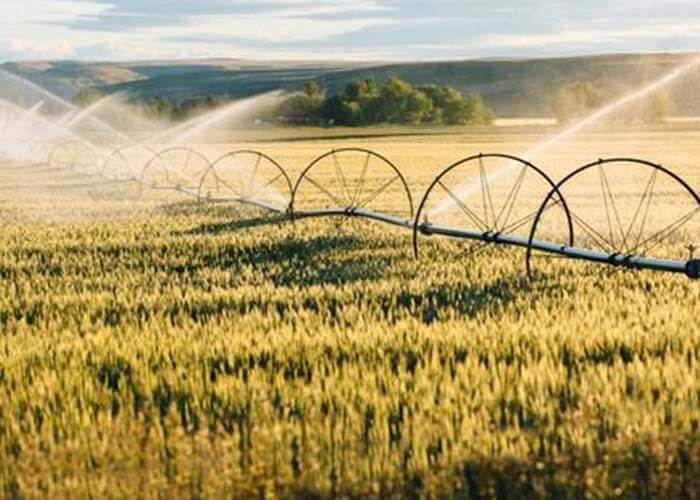
Transpiration directly shapes both crop yield and a plant's chances of survival, because it is inseparable from the carbon dioxide uptake that feeds growth. When water is plentiful, open stomata allow strong photosynthesis and high productivity; when water is short, the plant closes its stomata to conserve water but simultaneously cuts off its carbon supply, slowing growth and reducing yield. Sustained water stress past the point where cells cannot regain turgor leads to wilting and, eventually, death. Managing this trade-off — supplying enough water to keep stomata open without waste — is the central challenge of irrigation in agriculture, forestry and controlled environments such as indoor cannabis grow rooms, where humidity, temperature and airflow are tuned to hold transpiration in a productive range.