Soybean: The Versatile Grain Legume Crop and Its Many Uses
 libre
libre
Soybean is the most versatile grain legume in agriculture, used as a food, medicinal, fodder, technical, and agrotechnical crop, as well as raw material for industry. No other legume matches the breadth of its applications across the food, manufacturing, and farming sectors.
 Soybean — a grain legume
What is soybean used for?
Soybean serves food, industrial, and agricultural purposes simultaneously, which is why it has become one of the world's most important crops. Its seeds yield flour, oil, protein, and a range of derived products, while the plant itself enriches the soil for crops that follow it.
In the kitchen and food industry, soybean is processed into a wide list of products:
- Flour for confectionery and baked goods.
- Oil used directly in cooking and for producing margarine.
- Sauces, soy milk, and soy cheese (tofu).
- Drinks and sweets in the confectionery industry.
- A meat substitute, thanks to its high plant-protein content.
In industry, soybean oil is used to manufacture soap, while soy protein is turned into glue, artificial wool, and similar materials. These technical uses make the crop valuable well beyond the dinner table.
In agronomy, soybean is widely grown as a high-protein component in mixed sowings with maize. As a legume, it is a valuable predecessor for many farm crops, because it fixes nitrogen and improves soil fertility for the next planting.

How old is soybean as a cultivated crop?
Soybean is an ancient crop, cultivated in China, India, Japan, and Korea long before our era. Today it leads the world in vegetable oil production — more cooking oil is made from soybean than from any other plant source.
Global soybean acreage has expanded dramatically over the last century. Before the Second World War the world sowing area was 13.5 million hectares; by 1970 it had reached about 30 million; and by 2015 it stood at 118.14 million hectares.
The United States now holds the largest share of the world's soybean sowing area. By harvest volume in 2015, the top ten producing countries ranked as follows:
- United States
- Brazil
- Argentina
- China
- India
- Paraguay
- Canada
- Ukraine
- Uruguay
- Bolivia
Yields vary widely between producing countries. In 2015 the United States achieved about 3.1 t/ha, while India recorded one of the lowest figures at 0.9 t/ha — a gap driven by differences in climate, irrigation, and farming technology.
On the territory of the former USSR, soybean cultivation began in the early 20th century, with the main sowing areas concentrated in the Far East. In the 1970s the crop occupied over 600,000 hectares in the Amur region alone, and high yields later spread to the south-western regions of Ukraine, the North Caucasus, Moldova, Transcaucasia, and other districts. Total sowing area across the region in the 1970s was around 900,000 hectares.
Ukraine in particular has seen steady growth in soybean planting. State variety-testing plots reached 25–30 centners per hectare, and leading collective farms harvested 15–20 c/ha over large areas. The acreage rose sharply over time: from 73,000 hectares in 2001, to 714,000 hectares in 2006, and to 1.8 million hectares in 2015.
Botanical and biological features of soybean
Soybean is represented worldwide by more than 40 species spread across the tropical regions of Africa, America, and Asia. In production, only one species was historically grown — bristly soybean (Glycine soja), which has six subspecies.
Three subspecies were once widespread in cultivation: Manchurian, Japanese, and Chinese, with most varieties belonging to the Manchurian subspecies. Modern farming has shifted to contemporary varieties that meet specific novelty criteria, typically bred within the previous ten years.
What does the soybean plant look like?
The soybean plant has an erect, hairy, branching stem reaching 50 to 80–100 cm in height. Its flowers sit on short stalks gathered into clusters of 3–5, and occasionally up to 8.

Soybean is a typical self-pollinator, producing pods that each contain 2–4 seeds, though in many varieties the pods crack open as they ripen. The leaves are trifoliate — rarely of a five-part type — and covered with fine hairs; this hairiness distinguishes soybean from the common bean, whose leaves and stems are smooth. Seeds may be yellow, green, brown, or black, with a typical 1,000-seed weight of 150–200 g.
Agrotechnical requirements for growing soybean
Soybean has clear temperature thresholds at every stage of growth. The minimum germination temperature is plus 6–8°C, while the formation of reproductive organs requires 15–18°C. The plant tolerates spring frosts down to minus 2°C without harm, but the same temperature in autumn kills the plants. Optimal development occurs at 20–25°C.
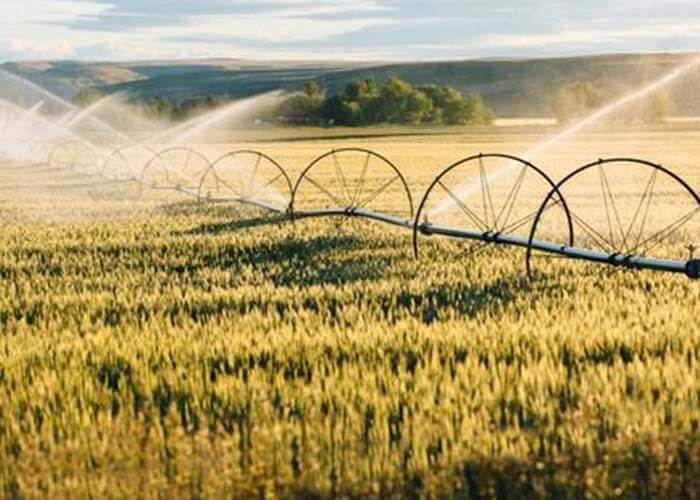
Soybean is demanding of moisture, especially during flowering and seed formation, with a transpiration coefficient of 400–700, which is why it responds strongly to irrigation. On Ukrainian fields in favourable years the grain yield averages 25–30 c/ha, and green-mass yield reaches 270–290 c/ha.
What soil is best for soybean?
The best soils for soybean are sandy-loam and loamy chernozems (black earth). The crop draws heavily on soil nutrients: a 20 c/ha grain harvest removes about 142 kg/ha of nitrogen, 32 kg/ha of phosphorus, and 35 kg/ha of potassium, so fertility planning must account for these withdrawals.
Best predecessors for soybean
The best predecessors for soybean are maize, winter wheat, sugar beet, and potato. The autumn (stubble) tillage system for soybean is the same as for other spring crops, and in spring, before sowing, growers usually carry out two or three cultivations combined with harrowing to prepare a clean, level seedbed.
How does soybean respond to fertilizers and inoculation?
A key biological feature of soybean is its high responsiveness to nitrogen fertilizers compared with phosphorus and potassium. An effective way to raise yield is treating seeds with nitragin (rhizobial inoculant), which can increase the harvest by about 5 c/ha.
Nitragin treatment is carried out on the day of sowing — not only on fields where soybean has never been grown before, but also on repeat sowings. Against a background of inoculation, mineral fertilizers work more effectively, so the two practices are best combined.
How to sow soybean
Sowing should begin when the average daily soil temperature reaches plus 10–12°C at the seeding depth and the danger of spring frosts has passed. Spacing depends on moisture availability:
- In zones with sufficient moisture, sow by the wide-row method with 45 cm row spacing.
- In steppe districts with limited soil moisture, widen rows to 60 cm.
- Set seeding depth at 4–6 cm, and roll the soil afterwards with ring (Cambridge) rollers.
To destroy the soil crust and weed seedlings, harrow the sowings 5–6 days after planting — as soon as the seeds begin to sprout — using light or medium harrows across the rows. To control weeds during the first growth period, before the first trifoliate leaf forms, harrow the emerging seedlings with mesh or light harrows across the rows.
A second harrowing can follow 5–6 days after the first, but no later than the appearance of the second trifoliate leaf. In addition to harrowing, two or three lengthwise cultivations are carried out during the season.
How is soybean harvested?
Soybean is harvested either by direct combining during the full maturity of all pods, or by the separate (windrow) method when the stems and pods turn yellow. During threshing, reduce the drum speed to 500–600 rpm to avoid cracking the seeds, and ensure seed moisture does not exceed 12% before storage.