Photosynthesis and Crop Yield: How Plants Build Dry Matter
 libre
libre
Photosynthesis and crop yield are directly linked: the organic matter that ultimately becomes harvestable produce is first created during photosynthesis, when plants convert light, water, and carbon dioxide into sugars. However, you cannot judge the final accumulation of biomass by photosynthetic intensity alone, because not all photosynthetic products are retained in the plant body. Raising and stabilising the productivity of photosynthesis is the foundation for higher yields, and it can be approached through crop management, breeding, and — increasingly — genetic engineering.
What photosynthesis is and its role in plant life
Photosynthesis is the process by which green plants use sunlight to convert carbon dioxide and water into organic compounds (chiefly sugars) and release oxygen. It is the primary source of the organic matter that builds plant tissue and, through the food chain, feeds nearly all life on Earth. The fossil fuels we burn today are themselves ancient stores of energy that plants once captured through photosynthesis, which underlines just how central this single biochemical process is to the planet's energy economy.
Photosynthesis requires five basic inputs working together: sunlight, carbon dioxide, water, a suitable temperature, and mineral nutrients. Light is absorbed by chlorophyll inside the chloroplasts; carbon dioxide enters through the leaf's stomata; water arrives from the roots; and nutrients such as nitrogen supply the building blocks for the enzymes and pigments that drive the reaction. If any one of these factors is in short supply, it becomes the limiting factor that holds back the whole process — and, with it, crop growth.
The overall process divides into two linked stages. The light-dependent reactions take place in the thylakoid membranes of the chloroplast, where chlorophyll captures light energy and the electron transport chain converts it into the chemical energy carriers ATP and NADPH, splitting water and releasing oxygen along the way. The light-independent reactions — the Calvin Cycle, also called the Calvin-Benson-Bassham (CBB) cycle — then use that ATP and NADPH to fix carbon dioxide into sugars, with the enzyme Rubisco catalysing the first step of carbon capture.
The formation of organic matter during photosynthesis
The formation of organic matter is the direct outcome of photosynthesis: carbon dioxide drawn from the air is combined with water and the energy of sunlight to build the carbohydrates that form the bulk of plant dry matter. This is the raw material from which stems, leaves, roots, grain, and fruit are constructed. Chlorophyll's role is to absorb the light energy — particularly within the photosynthetically active radiation (PAR) band — that powers this synthesis.
The role of respiration in accumulating organic mass
Respiration determines how much of the organic matter created by photosynthesis the plant actually keeps. The total amount of organic matter accumulated over a given period depends not only on photosynthesis but also on respiration, which runs continuously and consumes some of the organic compounds the plant has produced. The biomass a plant retains is therefore the difference between what photosynthesis builds up and what respiration burns away.
The productivity of photosynthesis
The productivity of photosynthesis is the net daily gain of dry matter per unit of leaf area, and it is the practical measure of how effectively a crop converts sunlight into retained biomass. Accumulated organic matter represents the difference between the substance produced during photosynthesis and the substance spent on respiration. The daily increase in dry matter, expressed per unit of plant area, is what agronomists call the productivity of photosynthesis.
The greater the productivity of photosynthesis, the higher the resulting crop yield tends to be, which is why this indicator sits at the heart of crop physiology.
The formula for calculating photosynthetic productivity
Photosynthetic productivity (Ф) is calculated with a straightforward formula that relates the gain in dry mass to the average leaf area over the measurement period: Ф = (В2-В1)/[1/2(Л1+Л2)Т] (g/m2·day), where: В2-В1 is the increase in the dry mass of the crop over Т days, with the plants weighing В1 at the start of the accounting period and В2 at the end; 1/2(Л1+Л2) is the average leaf area of those same plants over Т days, where leaf area is Л1 square metres at the start and Л2 square metres at the end.
Net photosynthetic productivity
Net productivity reflects the formation of organic matter during photosynthesis together with the uptake of mineral substances from the soil, minus the losses to respiration and the dying-off of plant organs. In practice, the productivity of photosynthesis usually amounts to 4–6 g per day per square metre of leaves, but it can be considerably higher — 8–10 and even 12–15 g. The central task in crop production is therefore to increase photosynthetic productivity and make it stable rather than fluctuating with conditions.
Dry matter accumulation and crop growth rate
Dry matter accumulation is the foundation of crop growth rate, which scientists express as radiation use efficiency — the dry matter gained per unit of intercepted light. Two efficiencies multiply together to set the total: how much of the incoming radiation the canopy intercepts (radiation interception efficiency) and how efficiently the intercepted light is converted into biomass. To raise yield, growers must therefore both capture as much light as possible and convert it well, which means increasing leaf area and arranging plants so the canopy intercepts the maximum amount of sunlight at the highest possible efficiency.
Photosynthetic intensity as the basis of high yields
Photosynthetic intensity is the rate at which leaves fix carbon, and although its link to final yield is complex, it remains the underlying basis for achieving high harvests. When growing crops, this must be taken into account, and every measure should be taken to ensure leaves absorb the maximum amount of the sunlight falling on them and use it with the highest possible efficiency. Practically, this means increasing the leaf area of the plants and positioning them correctly across the field. The intensity of photosynthesis is the basis for obtaining high yields
The link between photosynthetic intensity and yield size
The relationship between photosynthetic intensity and yield size is intricate, and only occasionally is there a direct, proportional dependence between the two. The harvest index — the share of total biomass that ends up in the harvested grain or fruit — and the duration of the seed-filling period often matter as much as the raw rate of photosynthesis. This is why a leaf that photosynthesises faster does not automatically deliver a bigger harvest unless the extra sugars are directed into the parts of the plant that are actually harvested.
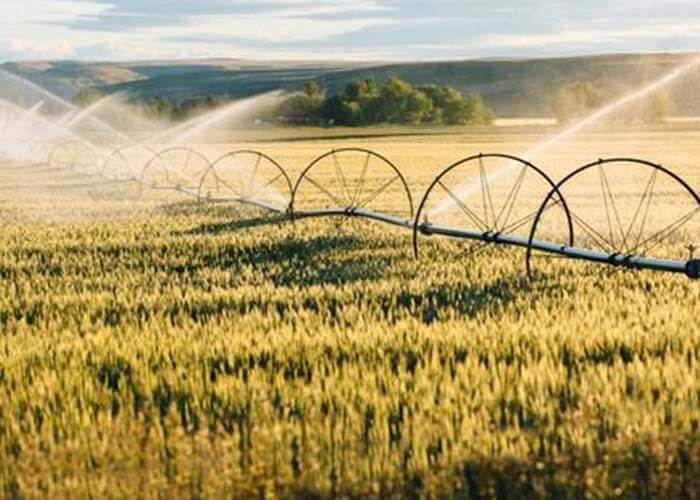
That said, all measures which boost photosynthesis should lead to higher yields: correct sowing patterns and row orientation, improved water supply, sprinkler irrigation and watering in irrigated regions, carbon dioxide feeding, and the proper application of fertilisers (for more detail see How external factors affect the process of photosynthesis). Beyond management, varieties with heightened photosynthetic intensity, adapted to different climatic conditions, are also needed.
Types of photosynthesis: C3 and C4 plants
Plants fall into two main photosynthetic categories — C3 and C4 — distinguished by how they first capture carbon dioxide. C3 plants, which include wheat, rice, soybean, and barley, fix carbon directly through Rubisco in a single cell type, and they make up the majority of the world's food crops. C4 plants, such as maize (corn), sorghum, and millet, add an extra carbon-concentrating step that pumps carbon dioxide to Rubisco, suppressing wasteful photorespiration.
Differences in efficiency between C3 and C4 photosynthesis
C4 photosynthesis is generally more efficient than C3 photosynthesis under hot, bright, and dry conditions because its carbon-concentrating mechanism raises the carbon dioxide level around Rubisco, largely eliminating photorespiration — the process that can waste a substantial fraction of fixed carbon in C3 crops. The key efficiency differences are:
- Photorespiration: high in C3 plants, especially when temperatures rise; suppressed in C4 plants.
- Water-use efficiency: C4 plants typically lose less water per unit of carbon fixed, giving them an edge in drought-prone climates.
- Nitrogen-use efficiency: C4 plants generally achieve more photosynthesis per unit of leaf nitrogen because they need less Rubisco.
- Temperature response: C4 photosynthesis peaks at higher temperatures, while C3 photosynthesis is competitive in cooler, moister conditions.
Because so many staple crops are C3, improving C3 efficiency — closing the gap with C4 performance — is one of the most promising routes to raising global food production.
Photosynthetic features of major crops
Different crops respond to light, water, and nutrients in their own way, so photosynthetic management must be crop-specific. Understanding these responses helps growers match irrigation, fertilisation, and canopy structure to each species.
Photosynthesis in wheat, soybean, and rice
Wheat, soybean, and rice are all C3 crops, which means each carries the photorespiratory inefficiency typical of the C3 pathway and stands to gain from improvements that boost C3 photosynthesis. Their individual traits differ in important ways:
- Wheat is a cool-season cereal whose yield depends heavily on canopy duration and the photosynthetic capacity retained during grain filling.
- Soybean is a legume in which photosynthesis must also support nitrogen fixation, and its source–sink balance strongly governs how many seeds fill and how completely.
- Rice, including paddy rice grown under flooded conditions, has been a focus of efforts to overexpress Rubisco and otherwise re-engineer carbon capture for higher productivity.
External factors affecting photosynthesis and yield
External factors set the ceiling on photosynthesis, because the process can run no faster than its most limiting input allows. Carbon dioxide, water, nutrients, light, and temperature each act as a potential bottleneck, and managing them in balance is what turns photosynthetic potential into harvested yield.
Carbon dioxide: CO2 levels and delivery to the leaf
Carbon dioxide is the raw carbon source for photosynthesis, and getting it to Rubisco efficiently is one of the central challenges of leaf physiology. CO2 enters through the stomata, whose conductance the plant regulates, then diffuses through the leaf interior — a path governed by mesophyll conductance — before reaching the chloroplast. Because Rubisco in C3 crops is only partly saturated at today's atmospheric CO2 concentration, the rate at which carbon dioxide can be delivered into the leaf is a direct limit on photosynthetic rate; stomatal and mesophyll conductance therefore sit at the heart of the relationship between carbon supply and productivity.
Water supply, irrigation, and sprinkling
Water availability strongly limits photosynthesis because the same stomata that admit carbon dioxide also lose water through transpiration. Under water stress, plants close their stomata to conserve moisture, which simultaneously cuts off carbon dioxide and depresses photosynthesis and yield. In irrigated regions, well-timed irrigation and sprinkling keep stomata open and the canopy hydrated, sustaining the carbon fixation on which dry matter accumulation depends. Drought resilience — maintaining function under limited water — is consequently one of the most valuable traits in crop improvement.
Fertilisers and carbon dioxide feeding
Nutrient balance, and nitrogen in particular, directly governs photosynthetic capacity, because nitrogen is the chief building block of Rubisco and chlorophyll. Adequate soil fertility and the proper application of fertilisers raise the leaf's photosynthetic potential, while nitrogen-use efficiency describes how much photosynthesis each unit of nitrogen delivers. In enclosed environments such as greenhouses, carbon dioxide feeding combined with good ventilation can lift the CO2 level above ambient and accelerate photosynthesis, a controlled-environment version of the CO2 limitation seen in the open field.
Climate change and rising atmospheric CO2
Rising atmospheric carbon dioxide is reshaping the photosynthetic environment, with mixed consequences for crops. Elevated CO2 can stimulate photosynthesis in C3 crops by partially relieving Rubisco's carbon limitation — a so-called fertilisation effect — but the accompanying rise in temperature can increase photorespiration and water stress, offsetting those gains. The net environmental feedback on yield therefore depends on how heat, water, and carbon dioxide interact in a given region, which makes climate resilience a central concern for future food security.
Canopy structure and leaf architecture
Canopy structure and leaf architecture determine how much sunlight a crop intercepts and how evenly that light is shared among leaves. A well-designed canopy spreads light so that upper leaves are not saturated and wasteful while lower leaves sit in deep shade, maximising whole-stand photosynthesis rather than the rate of any single leaf.
Optimising leaf area and plant arrangement
Optimising leaf area and plant arrangement is the most direct way a grower can raise light interception. Increasing the leaf area of the plants and arranging them correctly across the field lets the canopy close quickly and cover the ground, capturing radiation that would otherwise fall on bare soil. The aim is enough leaf area to intercept nearly all available light without so much mutual shading that lower leaves respire more than they photosynthesise.
Canopy photosynthesis
Canopy photosynthesis is the sum of all the leaves' photosynthesis across the whole stand, and it behaves differently from a single leaf measured in isolation. Within a canopy, light is distributed unevenly: sunlit upper leaves may be light-saturated while shaded lower leaves are starved, so leaf angle, distribution, and shade adaptation all influence the total. Improving how light penetrates and is used throughout the canopy can raise productivity even when individual-leaf rates are unchanged.
Diurnal changes in photosynthesis within a crop stand
Photosynthesis within a crop stand varies through the day in a diurnal pattern driven by changing light, temperature, and water status. Rates typically climb through the morning, may dip around midday when high light and heat trigger stomatal closure or photoprotective downregulation, and recover in the afternoon. Capturing these diurnal canopy patterns is essential for accurately predicting daily dry matter gain, which is why modern crop models simulate photosynthesis hour by hour rather than as a single daily average.
Modern methods of increasing photosynthetic productivity
Modern methods of increasing photosynthetic productivity go beyond crop management to re-engineer the process itself, targeting the specific bottlenecks that limit how efficiently leaves convert light into biomass. Current field crops capture only a small percentage of the available solar energy — far below the theoretical maximum of photosynthesis — and this gap between theoretical and field efficiency is precisely what researchers aim to close. Major international efforts, including the RIPE project (Realizing Increased Photosynthetic Efficiency) funded by the Bill & Melinda Gates Foundation, the US Department of Energy Office of Science and others, are pursuing exactly this goal.
Optimising the Calvin-Benson-Bassham cycle
Optimising the Calvin-Benson-Bassham (CBB) cycle targets the carbon reactions, where the rate of carbon fixation can be capped by the supply of certain enzymes. By identifying which steps of the Calvin Cycle act as bottlenecks and boosting the enzymes that catalyse them, researchers such as Xinguang Zhu and colleagues have used computational modelling to predict how to redistribute the cycle's resources for faster carbon capture. Accelerating these carbon reactions is one pillar of photosynthetic metabolism optimisation.
A second pillar addresses photoprotection. When light is excessive, leaves dissipate the surplus energy as heat through nonphotochemical quenching (NPQ), a protective mechanism that guards the photosynthetic apparatus against reactive oxygen species. The drawback is that recovery from this protective state is slow, so a leaf moving back into shade keeps wasting energy. Work led by researchers including Krishna Niyogi, Johannes Kromdijk, and Katarzyna Glowacka showed that speeding up photoprotection recovery in tobacco — a model alongside Arabidopsis — raised plant productivity by around 15% in field trials, a result published in Science.
Rubisco overexpression and protein engineering in rice
Rubisco overexpression in rice aims to increase the amount of the carbon-fixing enzyme so the leaf can capture more carbon dioxide. Because Rubisco is both the gateway enzyme of carbon fixation and a relatively slow catalyst, raising its abundance — demonstrated in rice varieties including Notohikari — is one route to lifting photosynthetic capacity. This kind of protein engineering, achieved by inserting gene cassettes to create transgenic plants, illustrates how targeted genetic intervention can address a specific molecular limit on yield.
Yield gains from genetic modification of photosynthesis
Genetic modification of photosynthesis has already produced measurable yield gains in field trials, moving these ideas from theory into demonstrated practice. Transgenic crops engineered for faster photoprotection recovery, improved carbon metabolism, or stronger sink strength have shown double-digit productivity increases in replicated field experiments. Trehalose metabolism offers another lever: the enzyme trehalose phosphate phosphatase influences sink strength and the source–sink balance, helping ensure that extra photosynthate is actually directed into grain. Responsible development of such crops requires attention to genetic-modification safety and the regulatory framework, and several programmes intend to license the resulting technology royalty-free to smallholder farmers in developing countries — though realistic timelines for adoption typically span a decade or more from proof of concept to the field.
Varieties with heightened photosynthetic intensity
Varieties with heightened photosynthetic intensity, adapted to different climatic conditions, remain a goal that combines conventional breeding with the newer genetic tools. Plant breeders have long selected for higher yield by improving the harvest index and stress tolerance, and they continue to exploit the natural variation in photosynthetic performance found among crop accessions and wild relatives. Pairing this selection with engineered improvements offers a path to cultivars that fix carbon more efficiently and hold up across diverse environments.
Modelling photosynthesis and predicting yield
Modelling links the molecular detail of photosynthesis to the field-scale outcome of yield, allowing researchers to test which changes are worth pursuing before committing years to breeding or engineering. Cross-scale frameworks connect what happens inside a single leaf to the productivity of an entire crop, and they are validated against field experiments across many environments.
Crop biomass and yield prediction models
Crop biomass and yield prediction models simulate how a stand accumulates dry matter from emergence through harvest, integrating light interception, photosynthesis, respiration, and the partitioning of biomass into grain. Agricultural systems simulators such as APSIM, developed with institutions including QAAFI and researchers such as Graeme L. Hammer, allow scientists to test how genetic and management changes would play out under real weather and soil data. Validating these models against diverse field trials is what gives them the credibility to guide breeding and agronomy.
Computational modelling from leaf to yield
Computational modelling from leaf to yield uses high-performance computing to bridge scales that no single experiment can span. Tools such as the Diurnal Canopy Photosynthesis Simulator (DCaPST) connect biochemical leaf models to whole-canopy, day-long behaviour, and analyses run on resources like the National Center for Supercomputing Applications let researchers explore thousands of scenarios. This systems approach — championed by scientists including Stephen P. Long and Xinyou Yin and reported in journals such as Nature, Frontiers in Plant Science, and the journals of the American Society of Plant Biologists and Oxford University Press — identifies the genetic targets most likely to raise yield and predicts the gains before they are attempted in the field.
Crop resilience and stress management
Crop resilience determines how much of a crop's photosynthetic potential survives the stresses of a real growing season, so managing stress is inseparable from managing yield. Drought, heat, excessive light, and nutrient shortage each suppress photosynthesis, and a resilient crop is one that maintains carbon fixation when conditions turn against it. Practical stress management combines several lines of defence:
- Water management: matching irrigation to demand to keep stomata open and limit transpiration-driven losses during drought.
- Photoprotection: tolerating high light through efficient NPQ and rapid recovery, minimising damage from reactive oxygen species.
- Nutrient balance: maintaining nitrogen and overall soil fertility so photosynthetic capacity is not nutrient-limited.
- Adapted varieties: deploying cultivars selected for the local combination of heat, water, and pest pressures.
- Pest and disease control: protecting leaf area so the canopy keeps intercepting and converting light.
Together these measures protect the source–sink balance and the harvest index, ensuring that the carbon a stressed crop does fix still reaches the grain. Measuring how leaves perform under such conditions relies on instruments like infrared gas-exchange analysers and handheld photosynthesis systems, alongside fluorescence imaging that reveals photoprotective and stress responses directly.
Conclusion: how to raise yield through photosynthesis
Raising yield through photosynthesis means working on every scale at once — from the single enzyme to the whole canopy and the broader cropping system. Because the link between photosynthetic intensity and final harvest is indirect, gains come not from one intervention but from a stack of complementary ones. The most effective levers include:
- Management: correct sowing patterns and row orientation, optimised leaf area, balanced fertilisation, good water supply, and carbon dioxide feeding in protected environments.
- Breeding: selecting for higher harvest index, stress tolerance, and the natural variation in photosynthetic capacity.
- Engineering: faster photoprotection recovery, optimised CBB-cycle enzymes, Rubisco overexpression, and improved sink strength through trehalose metabolism.
- Modelling: using cross-scale simulators and high-performance computing to target the changes most likely to pay off in the field.
Sustainable agricultural productivity ultimately rests on making photosynthesis both more productive and more stable, so that crops convert more of the sun's energy into food while withstanding a changing climate. That combination — higher efficiency held steady across diverse conditions — is the surest route to meeting global food security in the decades ahead.