The Importance of Respiration in Plant Life and Metabolism
 libre
libre
Plant respiration is the metabolic process by which plants break down sugars to release the energy they need to live, grow, and build new tissue. The energy captured during photosynthesis is stored in the products of primary synthesis — mainly carbohydrates — and these carbohydrates then serve as the substrate that respiration oxidizes to power every other physiological process in the plant.
Importance of respiration in plants
Respiration matters because it is the only process that releases usable energy from the glucose plants make in photosynthesis. Without respiration there is no protein synthesis, no growth, no nutrient uptake, and no repair — it is the engine that converts stored carbon into living, functioning tissue. Every cell of a plant respires continuously, day and night, in leaves, stems, roots, flowers, and seeds.
Plant respiration is fundamental to development at every stage. Germinating seeds draw on respiration to mobilise stored reserves; expanding leaves and elongating roots depend on it to fuel cell division; and maturing fruits and storage organs respire throughout, which is why post-harvest handling is essentially a problem of slowing respiration down. The rate of respiration in a tissue is one of the clearest indicators of how metabolically active that tissue is.
Respiration and the metabolism of living organisms
Respiration is woven into the whole metabolism of the plant, not an isolated reaction. It is a complex, multi-stage process of oxidation in which energy is released and used in small portions, and it connects directly to the synthesis of proteins, fats, and many secondary compounds. It is a process without which life is impossible.
Energy transformation during respiration
The energy transformation in respiration converts the chemical energy of organic matter into the high-energy bonds of ATP (adenosine triphosphate), the currency the cell spends on building proteins and other substances and on numerous physiological processes. During the complex, multi-step breakdown of organic matter, part of the released energy is captured in these macroergic bonds of ATP, while a portion is lost as heat.
Respiration also generates a series of intermediate products that act as the starting material for building diverse chemical compounds. Because of this, respiration is tightly linked to the synthesis of proteins and fats: the intermediates formed during the breakdown of pyruvic acid supply the building blocks for those syntheses.
Connection between respiration and protein synthesis
Respiration supplies the carbon skeletons from which amino acids, and therefore proteins, are assembled. From pyruvic acid the plant forms alanine; from α-ketoglutaric acid, glutamic acid; and from fumaric and oxaloacetic acids, aspartic acid. By transamination of these primary amino acids the plant produces the other amino acids needed to build a protein molecule.
Phosphate compounds carrying energy-rich bonds — ATP — take part in the synthesis of amino acids, in their transamination, and in the synthesis of proteins themselves. This is a direct illustration of why a tissue actively building protein also respires intensely: the two processes share both energy and intermediates.
Connection between respiration and fat synthesis
Respiration is also tightly bound to the formation of reduced compounds such as fats. The same intermediates and reducing power generated as carbohydrates are oxidised feed into the synthesis of fatty material, which is why seeds rich in oil show characteristic patterns of respiratory activity as they mature and again as they germinate.
Formation of reduced compounds: terpenes, rubber, and sterols
Beyond fats, respiration provides the precursors for terpenes, rubber, and sterols — all of them reduced compounds. Taken together, this means respiration is a strictly coordinated, multi-stage oxidation that is connected to every aspect of the organism's metabolism. The carbon intermediates it releases at each step are continually drawn off to build the plant's structural and defensive chemistry.
Cellular respiration: biochemical processes
Cellular respiration proceeds in three stages — glycolysis, the tricarboxylic acid (TCA) cycle, and oxidative phosphorylation via the electron transport chain — which together extract energy from glucose and store it as ATP. The early stage occurs in the cytoplasm and the later stages inside the mitochondria, the organelles that carry out most of a plant cell's energy production.
Aerobic respiration in plants
Aerobic respiration is the oxygen-dependent pathway that yields the most ATP from each glucose molecule, and it is the dominant form of respiration in healthy, well-aerated plant tissue. Its three stages run in sequence:
- Glycolysis splits glucose into two molecules of pyruvic acid in the cytoplasm, producing a small amount of ATP and reducing NAD+ to NADH.
- The TCA cycle (also called the Krebs cycle, citric acid cycle, or Citric Acid cycle) oxidises pyruvate-derived acetyl groups inside the mitochondrial matrix, releasing carbon dioxide and reducing NAD+ to NADH and FAD to FADH2.
- Oxidative phosphorylation passes the electrons from NADH and FADH2 along the electron transport chain to oxygen, the final electron acceptor, driving the bulk of ATP synthesis.
Oxygen (O2) is essential at the final step: it accepts the spent electrons so the chain can keep turning. This is why root respiration depends so heavily on soil aeration — roots have no chlorophyll and cannot make their own oxygen, so they must absorb it from air in the soil pore space.
Anaerobic respiration and fermentation
Anaerobic respiration is the fallback pathway plants use when oxygen is scarce, and it yields far less energy because the electron transport chain cannot operate. When tissue is deprived of oxygen, pyruvate from glycolysis is converted by fermentation into ethanol or lactic acid, regenerating NAD+ so that glycolysis can continue, but extracting only a fraction of the energy locked in glucose. Aerobic versus anaerobic respiration is therefore a contrast in efficiency: aerobic respiration captures many times more ATP per glucose than anaerobic respiration.
Chemical equations for respiration and photosynthesis
The chemical equations for respiration and photosynthesis are near mirror images of one another. Aerobic respiration can be summarised as:
- Respiration: C6H12O6 + 6 O2 → 6 CO2 + 6 H2O + energy (ATP)
- Photosynthesis: 6 CO2 + 6 H2O + light energy → C6H12O6 + 6 O2
Respiration consumes the glucose and oxygen that photosynthesis produces and releases the carbon dioxide and water that photosynthesis consumes, which is the chemical basis of the balance between the two processes.
Comparison between photosynthesis and respiration
Photosynthesis and respiration are complementary opposites: photosynthesis stores energy in glucose, while respiration releases it. Photosynthesis takes place in the chloroplasts, uses chlorophyll to capture light, fixes carbon dioxide with the enzyme Rubisco, and produces oxygen; respiration takes place largely in the mitochondria, consumes oxygen, and produces carbon dioxide. The relationship between respiration and photosynthesis defines the plant's carbon and energy economy.
| Feature | Photosynthesis | Respiration |
| Organelle | Chloroplasts | Mitochondria |
| Energy | Stored (in glucose) | Released (as ATP) |
| Gases | CO2 in, O2 out | O2 in, CO2 out |
| Occurs | In light only | Day and night |
| Tissue | Green, chlorophyll-bearing | All living cells |
A crucial difference is timing: photosynthesis runs only in the light, whereas respiration continues day and night. During the day a leaf's gas exchange reflects the net of both processes, and the leaf can appear to release oxygen overall; at night, with photosynthesis switched off, the plant only respires and releases carbon dioxide. Gas exchange in both processes passes through the stomata, the adjustable pores in the leaf whose guard cells open and close to balance gas movement against water loss through transpiration. A related complication is photorespiration, in which Rubisco reacts with oxygen instead of carbon dioxide and, with the help of peroxisomes and mitochondria, runs a wasteful cycle that consumes energy.
Carbon balance and respiration in plant growth
The carbon balance of a plant is the difference between the carbon fixed by photosynthesis and the carbon lost through respiration, and that difference is what becomes new biomass. Respiration is commonly partitioned into two functional categories: growth respiration, which powers the construction of new tissue, and maintenance respiration, which keeps existing tissue alive. Understanding this split is central to predicting how fast a crop will accumulate dry matter.
Biomass accumulation and respiration scaling
Biomass accumulation depends on keeping respiratory losses below photosynthetic gains, and respiration tends to scale with the metabolic activity and size of the plant. As a plant grows larger, the proportion of its mass devoted to maintenance respiration rises, which is one reason growth rates slow with age. Theoretical frameworks such as WBE theory attempt to describe how metabolic rate scales with plant size across species.
Crop respiration and CO2 emissions
Crop respiration returns a significant share of fixed carbon to the atmosphere as carbon dioxide, so respiratory efficiency directly affects yield. Of all the carbon a crop fixes during the day, a large fraction is respired back, much of it at night and much of it by the roots. Reducing unnecessary maintenance respiration — through breeding or management — is one route to raising the harvestable carbon left over for the grower.
Temperature effects on plant respiration
Temperature is the single most powerful external factor controlling the rate of respiration: within the physiological range, respiration roughly doubles for each 10 °C rise. This sensitivity is why temperature management dominates the storage of living plant material and why warm nights can erode the day's photosynthetic gains by accelerating respiratory loss.
The rate climbs with temperature only up to a point. Beyond the optimum, the rate falls again as enzymes are destroyed and cells are damaged — the same ceiling seen in stored grain, where intensity rises with warmth until heat injury sets in. Both intrinsic factors (the tissue's enzyme content, substrate availability, and developmental stage) and external factors (temperature, oxygen, and water status) jointly set the respiratory rate at any moment.
Water stress and drought also reshape respiration. Under mild water deficit a plant may respire more as it produces defensive and osmotic compounds, while severe drought eventually suppresses respiration as overall metabolism shuts down. The nutrient supply matters too: nitrogen is needed for the enzymes that drive every respiratory step, phosphorus is built into ATP itself, and micronutrients act as cofactors throughout — so any deficiency in these constrains how efficiently a plant can respire.
Importance of respiration in storing seeds and vegetables
When storing seeds and vegetables, dry weight can fall sharply through intensified respiration if the basic storage conditions — temperature, humidity, and so on — are not maintained. Storage conditions must therefore be arranged so that respiration is reduced to a minimum. Temperature and the water content of the stored grain, vegetables, or fruit have the greatest influence on respiration, so these two factors are the ones that are controlled: grain storage is regulated through moisture, while vegetable and fruit storage is regulated through temperature.
Storing grain: moisture and respiration intensity
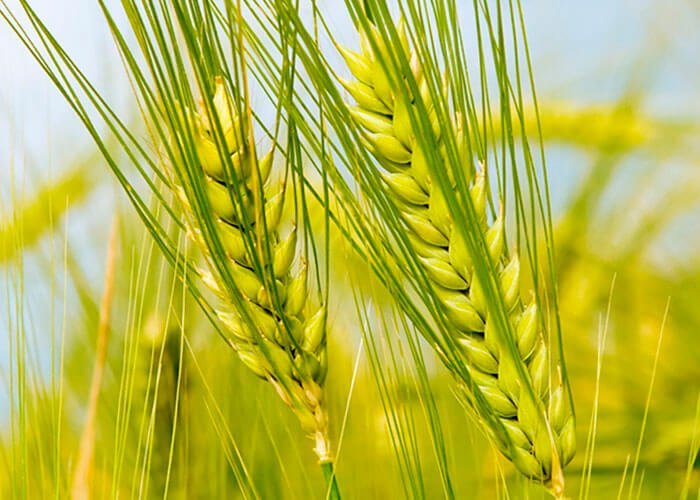
Grain should hold 10–12% water, because at that level its respiration intensity is negligible. As grain moisture rises, respiration intensity increases, and this is especially pronounced when the temperature also rises — there is a direct dependence of respiration on both the moisture content of the grain and the temperature. At low grain moisture (14%) a rise in temperature plays no significant role and the amount of CO2 released is small.
When moisture increases to 18%, and especially to 22%, raising the temperature to 50–55° causes respiration intensity to climb sharply, so that 100 g of dry matter releases about 200 mg CO2 over 6 hours. The decline in respiration intensity at still higher temperatures is explained by the destruction of enzymes and damage to the cells.
It is clear from these data that the main condition for preserving grain is its moisture content, which should not exceed 12% of the dry weight. At higher moisture, respiration intensifies and the grain loses part of its reserve substances.
Storing potatoes: temperature and loss of dry matter
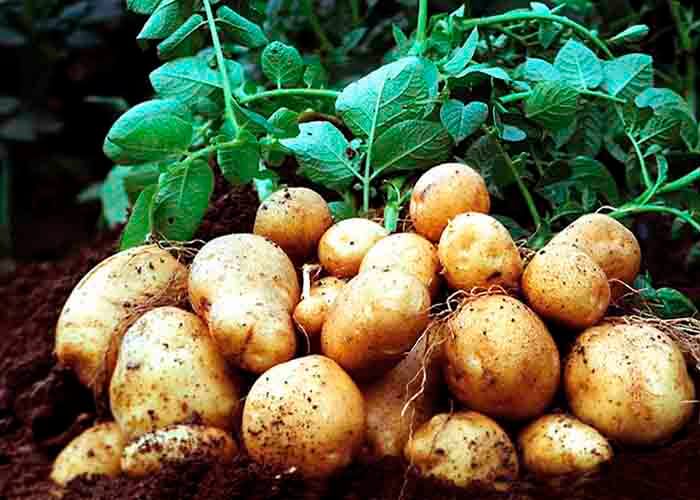
Potato storage shows directly how temperature drives the loss of both water and dry matter. The table below gives the loss of dry matter and water over 4.5 months at different storage temperatures for potato (as a percentage of the tuber's initial weight).
| Storage temperature (degrees) | Loss | ||
| water | dry matter | total | |
|
0 2,5 5,0 13,0 |
3,86 6,22 7,82 10,05 |
0,43 0.88 2,06 6,85 |
4,29 7,10 9,88 16,90 |
Quite different conditions must be observed when storing fruit and vegetables, because their water content reaches 75–90%. Regulating respiration by reducing water content is impossible here, as it would destroy their commercial usability, so the storage temperature is controlled instead.
At 0° respiration is very weak, increasing gradually with temperature and reaching high values at 16°. This intensified respiration causes large weight loss, which shows that vegetables and fruit cannot be stored at that temperature. The relationship between the loss of dry matter and water and temperature for potato is shown in the table. In practice, potatoes in clamps should be stored at 2–3° and no more than 4°, cabbage at 0 and −1°, and fruit and other vegetables at 0 to +1°. Modern facilities extend this further with Modified Atmosphere Packaging, which lowers oxygen around the produce to slow respiration even more.
Self-heating in stored grain and hay
Self-heating happens when respiratory heat cannot escape from a large mass of stored material and the temperature spirals upward. Because grain lies in a large bulk, the heat released by respiration cannot disperse into the surrounding space, so the mass warms up, which further intensifies respiration. As a result the grain darkens and loses its viability. The same self-heating is seen when poorly dried hay is stored in stacks.
Aerial versus subterranean respiration
Plants respire both above and below ground, but the conditions differ sharply: aerial parts meet abundant oxygen, while subterranean roots must extract it from a far poorer supply in the soil. Roots have no chlorophyll, do not photosynthesise, and so depend entirely on oxygen reaching them from soil air — which is why waterlogged and compacted soils, where oxygen cannot diffuse in, are so damaging to plants.
Anaerobic soil conditions and plant toxins
When soil becomes waterlogged and oxygen runs out, roots switch to anaerobic respiration and accumulate toxic by-products such as ethanol, while the surrounding anaerobic soil favours pathogens. Oxygen-starved roots are far more vulnerable to water-borne diseases caused by organisms like Pythium and Phytophthora, which thrive in poorly aerated, waterlogged conditions. This is the agronomic reason that drainage and soil aeration are central to root health.
Alternative oxidase function and regulation
Alternative oxidase is a respiratory enzyme that lets plants run an alternative branch of the electron transport chain, bypassing part of the usual ATP-generating route. This pathway releases more of the energy as heat and helps the plant manage Reactive Oxygen Species (ROS) under stress, providing a safety valve when the main chain is overloaded. Its activity is finely regulated and rises under conditions such as cold, drought, and nutrient imbalance.
Cacti and succulents: alternative gas exchange strategies
Cacti and succulents use an altered timing of gas exchange to survive where ordinary stomatal behaviour would lose too much water. Instead of opening their stomata during the hot day, they open them at night to take in carbon dioxide, storing it for use in photosynthesis once light returns — an adaptation that drastically cuts transpiration. Woody plants meet a different challenge: their bark would otherwise block gas exchange, so they respire through lenticels, small pores in the bark, while gases also move internally through xylem vessels.
Respiration and the global carbon cycle
Plant respiration is a major flux in the global carbon cycle, returning a large part of the carbon dioxide that photosynthesis removes from the atmosphere. At the scale of an ecosystem, the carbon budget is the balance between photosynthetic uptake and respiratory release by plants, roots, and soil microbes; whether a forest or field is a net carbon sink or source depends on which side of that balance wins. Soil microbes contribute heavily, respiring as they convert organic matter and release nutrients back to plants.
Perennial and woody plants such as Betula (birch), the Beech Tree, Prunus, and Grapevine lock carbon away for decades in their long-lived stems and roots, making them important long-term carbon stores. The standing biomass of a forest represents years of photosynthesis that exceeded respiration, which is why protecting and expanding such vegetation is treated as a tool for climate change mitigation.
Climate change mitigation through respiratory efficiency
Improving respiratory efficiency could help mitigate climate change by leaving more fixed carbon in the plant rather than venting it as carbon dioxide. Because warming itself accelerates respiration, there is concern that rising temperatures may push ecosystems to respire more carbon, weakening their role as carbon sinks. Researchers including Danielle A Way (Western University) and others studying respiration's temperature response have highlighted this feedback as a key uncertainty in projecting the global carbon budget.
Computational modeling of plant respiration
Computational and systems-biology models now let researchers predict how respiration responds to genetics and environment, guiding efforts to engineer more efficient plants. Work by groups such as A Harvey Millar at the University of Western Australia on mitochondrial metabolism and oxidative phosphorylation, and modelling by Zoran Nikoloski at the University of Potsdam and the Max Planck Institute of Molecular Plant Physiology, illustrates how high-throughput measurement and metabolic engineering are converging. Findings in journals like Plant Physiology, published by the American Society of Plant Biologists, point toward synthetic-biology approaches that could one day reroute respiratory substrates to raise yield. For more background on the wider subject, browse our Agronomy articles.