How External Factors Affect Photosynthesis Rate in Plants
 libre
libre
External factors shape the rate of photosynthesis primarily through four conditions: light, temperature, carbon dioxide concentration in the air, and the plant's water supply. Each one can speed up or slow down the process of photosynthesis, and at any given moment the factor in shortest supply sets the overall ceiling on how fast a plant can convert light, water and carbon dioxide into organic matter.
External Factors Affecting Photosynthesis
The external factors affecting photosynthesis are the environmental conditions outside the plant: light intensity, temperature, the carbon dioxide content of the surrounding air, and the availability of water. These four conditions act on the leaf from the environment and can be measured and manipulated independently of the plant's own biology.
- Light intensity — supplies the energy driving the light-dependent reactions.
- Temperature — controls the speed of the enzyme-catalysed reactions.
- Carbon dioxide — provides the carbon assimilated into sugars.
- Water — a raw material and the medium that keeps stomata open and the cytoplasm hydrated.
External vs Internal Factors
External factors differ from internal factors, which are properties of the plant itself such as chlorophyll content, leaf age, enzyme activity and chloroplast distribution. In practice the two groups interact: light and temperature, for example, jointly govern whether a leaf reaches its maximum assimilation rate, and the most favourable external conditions cannot lift the rate beyond what the plant's internal machinery allows. This page concentrates on the external conditions and how each one limits or accelerates photosynthesis, a topic central to the secondary school biology curriculum and to applied fields such as agronomy.
The Concept of Limiting Factors in Photosynthesis
A limiting factor is the environmental condition that, being in shortest supply, restricts the rate of photosynthesis no matter how favourable the other conditions are. On a bright but cold morning, temperature limits photosynthesis; in a warm, well-lit greenhouse at midday, carbon dioxide often becomes limiting because the plants draw it down faster than it is replenished. Identifying which factor is limiting at any moment is the foundation of every attempt to raise photosynthetic output.
Blackman's Law of Limiting Factors
Blackman's law of limiting factors, formulated by the British plant physiologist F. F. Blackman in 1905, states that when a process depends on several factors, its rate is set by the one nearest its minimum value. Blackman framed photosynthesis as a chain of distinct reactions — light-driven and temperature-driven — whose slowest step paces the whole sequence. The law explains why raising any single condition produces gains only while that condition is the one in shortest supply, and why those gains halt abruptly once a different factor takes over as the constraint.
How to Identify the Limiting Factor
Identifying the limiting factor is the practical key to raising photosynthetic rate, because increasing a factor that is not limiting brings no benefit. Adding more carbon dioxide under dim light, for instance, does nothing and may even act toxically, since the leaf cannot process it into organic compounds quickly enough. Only when the current limiting factor is relieved does the next one in line begin to constrain the process, so growers raise factors in sequence, watching for the point at which each ceases to give a response.
Light and Its Effect on Photosynthesis
Light intensity strongly influences photosynthesis, but the relationship is not a straight line. As light grows brighter photosynthesis accelerates, yet the increase tapers off, and beyond a certain point extra light yields no further gain. The exact shape of the response differs from species to species, depending on whether a plant is adapted to open sunlight or to shade.
Light Intensity and Photosynthetic Rate
By their response to light intensity plants fall into two groups, sun-loving and shade-tolerant. Sun-loving species thrive in open, brightly lit places and their photosynthesis keeps rising as illumination increases. Shade-tolerant species grow in shaded sites and their photosynthesis stays roughly level once a modest light level is reached, reaching their maximum rate at lower light intensity than sun-loving plants do.
Sun-Loving vs Shade-Tolerant Plants
Sun-loving and shade-tolerant plants differ in both anatomy and physiology. The leaves of sun-loving plants have a thicker blade, a well-developed mesophyll, several layers of palisade parenchyma, a thicker cuticle, more stomata and more vascular bundles — for more detail see (the process of photosynthesis in plant leaves). Their cells are small, their chloroplasts small too, and they contain less chlorophyll than shade-tolerant plants.
Shade-tolerant plants have a thin leaf blade, a single layer of palisade parenchyma, a poorly developed network of veins and few stomata. Their cells are large and their chloroplasts large as well. These structural features are adaptive: the abundant stomata, efficient conducting system and elevated transpiration of sun leaves prevent overheating in bright light and deliver water quickly, while the high chlorophyll content of shade leaves lets them photosynthesise at low light intensity.
Moving a shade-tolerant plant into bright sunlight quickly kills it. Its high chlorophyll content absorbs a great deal of light, transpiration rises sharply, and because the conducting system is weakly developed water reaches the leaves too slowly to compensate. The degree of sun-loving or shade-tolerance also shifts with where a plant grows; changes linked to geographic latitude depend not only on light but also on temperature and water supply. These inter-specific and intra-specific variations mean a single species can grow sun-type leaves in the open and shade-type leaves in deep shade.
Photosynthesis–Irradiance (Light) Curves
A photosynthesis–irradiance curve plots assimilation rate against light intensity and reveals three regions. At low light the curve rises almost linearly, light being the limiting factor; in the middle the slope flattens as another factor takes over; at high light the curve reaches a plateau of light saturation. Sun leaves saturate at high irradiance and have a steep, high plateau, whereas shade leaves saturate early at low light and level off well below the rate sun plants can achieve.
Light Compensation and Saturation Points
The light compensation point is the light intensity at which the organic matter produced by photosynthesis exactly equals the amount consumed in respiration, so net gain is zero. Shade-tolerant plants combine low respiration with relatively high photosynthesis under weak light, so their compensation point sits lower than that of sun-loving plants. As a result, shade-tolerant species and understory plants can accumulate organic matter at light levels at which sun-loving plants, with their intense respiration, have not yet reached compensation. The light saturation point lies at the other end of the curve — the irradiance beyond which extra light no longer raises the rate, far higher in sun leaves than in shade leaves.
Light Quality and Wavelength Effects
Light quality — the wavelengths a leaf receives — matters as much as raw intensity, because chlorophyll and the accessory pigment systems absorb most strongly in the blue–violet and red parts of the spectrum. Plants grown under artificial illumination from ordinary electric light take on the signs of etiolation, because such light lacks enough of the blue–violet rays that govern morphogenesis.
Chlorophyll content itself depends on the light conditions a plant has grown in, and shade-tolerant species generally hold more of it. Within a single tree crown there are always sun-type leaves on the periphery and shade-type leaves on the shaded inner side. The figures below compare chlorophyll in several conifers under good light and under light deficiency.
Chlorophyll content (in g/kg of fresh weight) according to light conditions
| Plant | Chlorophyll content | |
| in light | under light deficiency | |
| Larch | 1.77 | 0.06 |
| Pine | 2.24 | 0.47 |
| Spruce | 3.89 | 1.28 |
The figures show that spruce, a shade-tolerant tree, contains twice as much chlorophyll in the light as the sun-loving larch. Under light deficiency the gap between spruce and larch widens to a factor of 21, illustrating how shade-tolerant species invest far more in light-harvesting pigment when illumination is scarce.
Protective Mechanisms Against Excess Light
Leaves protect themselves from excess light through several mechanisms that dissipate or avoid surplus energy. Paraheliotropism is a movement response in which the leaf turns its blade edge-on to intense sunlight, reducing the radiation it intercepts and limiting overheating and water loss; the legume species that fold and angle their leaflets at midday are familiar examples.
At the molecular level, surplus light energy that the photosystems cannot use is dissipated as heat through the xanthophyll cycle, in which carotenoid pigments such as the xanthophylls are reversibly converted to forms that quench excitation, aided by the PsbS protein. When these defences are overwhelmed, photoinhibition sets in — direct damage to the D1 reaction-centre protein of Photosystem II — which lowers photosynthetic efficiency until the damaged components are repaired.
Cells add a further line of adjustment through chloroplast movement and cytoplasmic streaming. In weak light the chloroplasts spread along the cell walls facing the light to capture as much as possible; in strong light they move to the side walls, edge-on to the beam, to avoid photodamage. This repositioning is carried along by cytoplasmic streaming, the flowing movement of the cytoplasm that also distributes the products of photosynthesis, and it acts as a short-term protective and optimising mechanism that complements paraheliotropism and the xanthophyll cycle.
Temperature and Its Effect on Photosynthesis
Temperature has a strong influence on photosynthesis because the process depends on enzyme-catalysed reactions. Raising the temperature by 10°C roughly doubles the rate of photosynthesis, but this enhancement continues only up to about 30–35°C; further warming reduces photosynthesis, and at 40–45°C it stops altogether.
Optimal Temperature Range for Photosynthesis
The optimal temperature range for photosynthesis in many plants is 20–25°C, where assimilation is most intense. Below this band the enzyme reactions run too slowly to use all the available light and carbon dioxide, while above it the rate begins to fall as heat starts to inactivate the photosynthetic machinery. This optimum is why greenhouse heating systems aim to hold the air within the 20–25°C window, and why the same band recurs across so many crops grown in temperate conditions.
Enzyme Denaturation at High Temperatures
High temperatures suppress photosynthesis because they denature the enzymes that drive it. As F. Blackman explained, the bell shape of the temperature–rate curve arises because the progressive acceleration of chemical reactions with warming is opposed, above the optimum, by processes that inactivate the chloroplasts. Beyond roughly 40°C the catalytic proteins lose their three-dimensional structure irreversibly, and assimilation ceases. Because these enzymes need a hydrated environment, water availability and temperature together determine how efficiently the catalytic machinery operates — RuBisCO, the central carbon-fixing enzyme, works faster as the leaf warms toward its optimum but fails once heat unfolds it.
Temperature Response in C3 and C4 Plants
C3 and C4 plants respond differently to rising temperature because of how each handles photorespiration. In C3 plants, warming increases the rate at which RuBisCO reacts with oxygen instead of carbon dioxide, so photorespiration climbs and net assimilation falls back earlier as temperature rises. C4 plants, which concentrate carbon dioxide around RuBisCO, suppress photorespiration and therefore keep their photosynthetic rate climbing to higher temperatures, which is why C4 crops such as maize outperform C3 crops in hot, bright conditions.
Carbon Dioxide Concentration and Photosynthesis
Carbon dioxide concentration is one of the external factors governing photosynthetic intensity, and it is usually the one in shortest supply. The atmosphere contains on average about 0.03% carbon dioxide by volume, and this level stays nearly constant: any local deficit is quickly made good by carbon dioxide rising from the soil as microorganisms break down organic matter.
CO2 Concentration Curves and Saturation
Raising the carbon dioxide concentration increases photosynthesis, though not in direct proportion, tracing a curve that rises then saturates much as the light curve does. Photosynthesis rises steadily as the carbon dioxide content climbs to about 0.06%, and under strong light it continues to rise up to 1.5–2.0% before levelling off at saturation. Below the normal level, when carbon dioxide grows very scarce, RuBisCO reacts with oxygen instead of carbon dioxide, triggering photorespiration, which consumes energy and releases previously fixed carbon, lowering net assimilation.
CO2 as a Limiting Factor in Greenhouses
Carbon dioxide frequently becomes the limiting factor in greenhouses and conservatories during the morning, when photosynthesis is intense and the gas is drawn down quickly. The carbon dioxide content falls below the normal 0.03% and the plants effectively starve, which is why enriching the air to 1–2% has become standard practice under glass. Raising carbon dioxide is ineffective when light is weak, however, because the gas cannot be converted into organic compounds fast enough and instead acts toxically; only when light intensity is increased at the same time does the higher carbon dioxide translate into a higher rate of photosynthesis — a clear illustration of two limiting factors operating together.
C3 and C4 Photosynthetic Pathways
Plants fix carbon by different biochemical routes, the most common being the C3 and C4 pathways. C3 plants — including wheat (Triticum aestivum), rice (Oryza sativa) and soybean (Glycine max) — fix carbon dioxide directly with RuBisCO and lose efficiency to photorespiration when carbon dioxide is scarce or temperatures are high.
- C4 plants, such as maize (Zea mays), concentrate carbon dioxide around RuBisCO using a special leaf structure called Kranz anatomy, which suppresses photorespiration and lets them photosynthesise efficiently in hot, bright conditions.
- CAM plants, including cacti and other succulents, open their stomata at night to capture carbon dioxide and conserve water in arid habitats.
Water Supply and Its Effect on Photosynthesis
The water content of a plant and its water supply are of enormous importance for photosynthesis, since organic substances are synthesised from water and carbon dioxide and the cytoplasmic colloids must stay saturated with water.
Water as a Raw Material and Stomatal Regulation
Water serves both as a raw material for photosynthesis and as the agent that keeps the stomata open for gas exchange. When water is short the stomata close, slowing the entry of carbon dioxide into the leaf, which in turn reduces photosynthesis. Under inadequate water supply the cell walls of the mesophyll bordering the intercellular spaces dry out, holding back the movement of carbon dioxide to the chloroplasts. Water is also needed for the normal work of the enzymes involved in photosynthesis and for the subsequent processing of its products. Stomatal behaviour thus links water status directly to carbon gain, opening to admit carbon dioxide when water is plentiful and closing to conserve it when it is not.
Effects of Water Stress and Drought
Water stress lowers photosynthetic rates well before any visible wilting appears. Temporary wilting depresses photosynthesis, and the effect lasts longer and bites harder the more prolonged the dehydration. Salt stress acts similarly by making soil water harder to take up, so plants on saline ground experience a physiological drought even when water is present. Xerophytes — drought-tolerant plants of dry habitats — meet these challenges with adaptations such as reduced leaf area, thick cuticles, sunken stomata and water-storage tissues. Cacti are extreme xerophytes that combine succulence with the water-saving CAM pathway, allowing them to keep their stomata shut through the heat of the day.
Flooding Effects and Aerenchyma Development
Excess water harms photosynthesis too, because waterlogging can close the stomata and bar carbon dioxide from entering the leaf, while flooded roots are starved of oxygen. Many plants cope by developing aerenchyma, a spongy tissue of large air channels that conducts oxygen from the shoots down to submerged roots. Woody stems supplement this with lenticels — pores in the bark through which oxygen is absorbed directly from the air.
Plants of permanently flooded ground show further specialised adaptations to oxygen shortage. Mangroves, which grow in waterlogged coastal mud, produce pneumatophores — aerial roots that grow upward out of the water and take in oxygen through lenticels, supplying the submerged root system. Combined with internal aerenchyma, pneumatophores let mangroves maintain root metabolism, and hence whole-plant photosynthesis, in soils where ordinary roots would suffocate. Floating-leaved plants such as water lilies solve the same problem with long air-filled petioles that ferry oxygen between the floating leaves and the rooted base.
Internal Factors and Dynamic Photosynthesis
Internal factors affecting photosynthesis are properties of the plant itself, and they determine how fully it can exploit favourable external conditions. The most important are chlorophyll content, the age and maturity of the leaf, the activity of photosynthetic enzymes, the number and behaviour of stomata, and the distribution of chloroplasts within the cell.
- Chlorophyll content — sets how much light a leaf can absorb; higher in shade-adapted leaves.
- Leaf age and maturity — young expanding leaves and very old senescing leaves photosynthesise more slowly than fully mature ones.
- Enzyme activity — RuBisCO and the other enzymes cap the speed of carbon fixation.
- Stomatal regulation — controls the trade-off between carbon dioxide intake and water loss.
- Nitrogen nutrition — chlorophyll and RuBisCO are nitrogen-rich, so nitrogen supply strongly affects photosynthetic performance.
- Genetic and circadian factors — inherited differences between and within species, and the internal circadian clock, shape how leaves respond to changing light over the day.
Under naturally fluctuating light, photosynthesis is dynamic rather than steady. When a sunfleck strikes a shaded leaf, assimilation does not reach full rate immediately — there is a lag, called photosynthetic induction, while stomata open and the carbon-fixing enzymes activate. When the light dims again, a brief post-irradiance carbon burst continues for a short time. These induction and lag responses, studied in model species such as Arabidopsis thaliana and Quercus serrata, mean that real-world crop yields can suffer measurable losses from the constant changes in light that a steady-light measurement would miss.
Measuring the Rate of Photosynthesis
Photosynthetic rate is measured by tracking the gases the process exchanges or the matter it produces. The classic classroom method counts the oxygen bubbles released by an aquatic plant such as pondweed under different light intensities, giving a direct, visible measure of how a factor changes the rate. The main approaches include:
- Oxygen evolution — counting or collecting the oxygen bubbles released by a submerged plant.
- Carbon dioxide uptake — using an infrared gas analyser to record how fast a leaf draws carbon dioxide from the air.
- Chlorophyll fluorescence — measuring light re-emitted by Photosystem II to gauge the efficiency of the light reactions and detect photoinhibition.
- Dry-matter accumulation — weighing the biomass a plant gains over time.
Research on dynamic photosynthetic carbon assimilation under changing light draws on these methods. Work published by groups including researchers such as Marek Zivcak, Hui-Yuan Gao, Zi-Shan Zhang, Yu-Ting Li and Lorenzo Ferroni — affiliated with institutions such as Shandong Agricultural University and its State Key Laboratory of Crop Biology, and appearing in MDPI journals like Plants (Basel) under the Creative Commons Attribution License — has clarified how stomatal behaviour, air temperature and humidity influence assimilation when light fluctuates.
Interaction of External Factors
The external factors never act alone — at any moment the rate of photosynthesis reflects how light, temperature, carbon dioxide and water combine, with whichever is in shortest supply setting the ceiling. Relieving one factor simply hands control to the next, so the practical task is to keep all four near their optimum together rather than maximising any single one.
How Light and Temperature Act Together
Light and temperature act together because light provides the energy and temperature sets the speed of the enzyme reactions that use it. Bright light is wasted on a cold leaf whose enzymes work too slowly to consume the energy, while a warm leaf in dim light lacks the energy to drive its fast-running enzymes. The same coupling links carbon dioxide and light: enriching the air with carbon dioxide raises photosynthesis only when light is strong enough to fix the extra gas, which is the principle behind combining supplementary lighting with carbon dioxide enrichment under glass.
Practical Applications
Putting limiting-factor theory to work means managing light, temperature, carbon dioxide and water together so that none is left holding back the crop. The techniques range from field-scale sowing patterns to fully controlled greenhouses and indoor light culture, and they all share one aim: keeping every external factor near its optimum at the same time.
Optimizing Environmental Conditions for Crop Yield
Maximising crop yield comes down to managing the limiting factors so that light, carbon dioxide, temperature and water are all near their optimum together. Agronomic techniques developed for this purpose start with plant spacing and row direction: overly dense sowing shades individual plants and depresses photosynthesis, so sun-loving crops are grown in wide-row plantings that ensure good illumination and a larger feeding area.
Supplying carbon dioxide also raises yield. Adding manure, peat and other organic matter to the soil enriches the air layer near the ground with carbon dioxide released as microorganisms decompose it; humus-rich soils give off as much as 100–250 kg of CO₂ per hectare per day, and organic fertiliser improves soil structure as well. In industrial regions, carbon dioxide that is a by-product of manufacturing can be piped to nearby fields to enrich the air over the crop.
Greenhouse Farming and CO2 Enrichment
Greenhouse technology lets growers control every photosynthetic factor at once, which is why supplementary carbon dioxide is especially important under glass, where at midday it can be almost absent. Enriching greenhouse air with carbon dioxide can raise the harvest by 2–2.5 times.
Growing plants under artificial light is called light culture. With no sunlight at all the illumination should reach 50,000–100,000 erg per square centimetre per second, while for supplementary lighting 50 erg per square centimetre per second is enough. Light culture is valuable for the early forcing of leafy greens, for raising seedlings of tomatoes (Solanum lycopersicum), cucumbers and radishes, and for quickly producing tree seedlings for ornamental gardening, making it possible to supply the population with fresh vegetables all year round — the same logic now applied in urban farming, where stacked indoor systems grow crops close to where people live.
Irrigation and Water Management
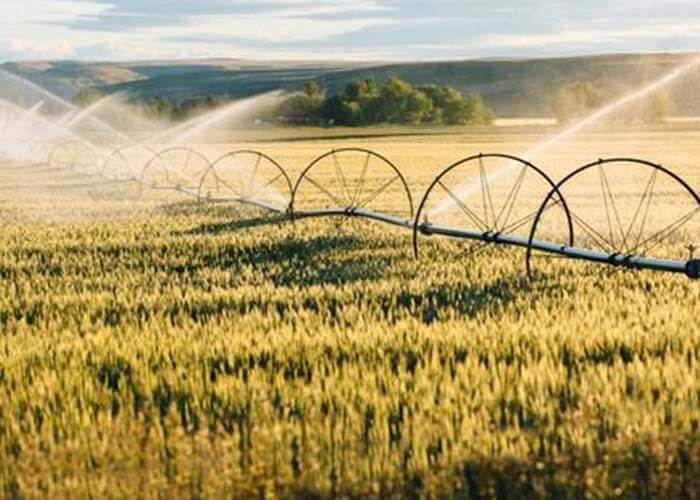
Irrigation systems complete the picture by keeping water — the factor that opens stomata and hydrates the enzymes — at its optimum. For normal growth under light culture, plants must be provided not only with light but also with carbon dioxide, mineral nutrition and a correct water supply. Coordinating irrigation with light, temperature and carbon dioxide enrichment means no single factor is left limiting, so the crop converts the maximum possible energy into yield.
Summary of External Factors
The four external factors — light, temperature, carbon dioxide and water — together determine the rate of photosynthesis, and at any moment the one in shortest supply governs the whole process under Blackman's law of limiting factors. Light supplies the energy, temperature paces the enzymes, carbon dioxide furnishes the carbon, and water both feeds the reaction and keeps the stomata open.
- Light — drives the light reactions; sun and shade plants differ in their saturation and compensation points.
- Temperature — accelerates enzyme reactions up to an optimum of 20–25°C, then denatures them above about 40°C.
- Carbon dioxide — limits photosynthesis at the atmosphere's low 0.03%, especially in greenhouses, where enrichment to 1–2% boosts yield.
- Water — closes stomata and slows assimilation when scarce; flooding starves roots of oxygen, driving adaptations such as aerenchyma and pneumatophores.
Understanding these factors and their interactions turns plant biology into practical advantage, from sowing patterns in the field to fully controlled greenhouses and indoor farms. Readers exploring related growing topics can find more in the agronomy section.