Chemical Composition of Plant Cells: Elements and Building Blocks
 libre
libre
The chemical composition of plant cells closely mirrors that of animal cells and tissues, a similarity that points to the common origin of all living organisms. Plant cells are built from the same elements found in non-living matter — oxygen, carbon, hydrogen, nitrogen and a long tail of minerals — yet they assemble those elements into organic compounds unique to life: proteins, nucleic acids, carbohydrates, lipids and organic acids. This page works through that composition element by element and compound by compound, moving from the raw chemistry to the large biological molecules.
What elements make up plant cells?
Plant cells contain roughly 60 of the 104 elements of the periodic table, with just a handful accounting for almost all of the mass. Oxygen, carbon and hydrogen dominate, followed by smaller amounts of nitrogen, calcium and phosphorus. The table below gives the elemental composition as a percentage of fresh (wet) matter.
| Element | % content | Element | % content |
| Oxygen | 65.0 | Chlorine | 0.10 |
| Carbon | 18.0 | Sodium | 0.03 |
| Hydrogen | 10.0 | Magnesium | 0.02 |
| Nitrogen | 3.0 | Iron | 0.01 |
| Calcium | 2.0 | Zinc | 0.0003 |
| Phosphorus | 1.0 | Copper | 0.0002 |
| Sulphur | 0.2 | Iodine | 0.0001 |
| Potassium | 0.16 | Fluorine | 0.0001 |
The fact that plant cells contain the very same elements as inanimate bodies demonstrates the underlying unity of living and non-living nature. What separates the living from the non-living is not the elements themselves but the way they are combined: organisms contain a vast number of compounds found only in life, which is why these are called organic.
Carbon, hydrogen, oxygen, nitrogen and, in part, phosphorus and sulphur make up the organic substances of the cell. Sulphur, potassium, chlorine, sodium, magnesium and iron occur only in tenths and hundredths of a percent, while zinc, copper and others are present in even smaller traces. These remaining elements exist either as ions or in combination with organic compounds.
What are proteins and the other nitrogenous compounds?
Proteins are the nitrogen-containing compounds that form the structural and functional backbone of the plant cell. They are chemically complex and built from a consistent set of elements:
- carbon 51–55%,
- hydrogen 17%,
- oxygen 21–24%,
- nitrogen 15–18%,
- sulphur 0.9–2.3%;
- some proteins also contain phosphorus.
Proteins are high-molecular-weight polymers whose chain consists of several hundred monomers — amino acid residues. Because their molecules are so large, proteins display clearly expressed colloidal properties. The molecular weight of different proteins varies enormously, from tens of thousands to several million, and each protein molecule is assembled from a number of amino acids joined to one another with the removal of water.
An amino acid is an amphoteric compound: it carries both an amino group, –NH2, and a carboxyl group, –COOH, so it can react as either a base or an acid. The COOH group of one amino acid joins the NH2 group of another with the release of water, forming the peptide bond — the principal linkage in a protein molecule.
- С - N - II I O H
What are amino acids?
The amino acids that make up proteins are all α-amino acids, in which the CH2 group sits next to the carboxyl group — alanine is a typical example:
СН2 - СН - СООН I NH2
Amino acids may carry two or more amino groups (diamino acids) or two carboxyl groups (dicarboxylic acids). More than 90 different amino acids are now known, around 50 of them discovered in the middle of the twentieth century, but plant proteins contain up to about 20 different amino acids.
The chemist Emil Fischer attempted to synthesise a protein molecule by linking amino acids together — first in pairs, then in threes, and so on — eventually joining 18 to 19 of them. Fischer named the resulting compounds peptides, classifying them by the number of joined amino acids as dipeptides, tripeptides and polypeptides.
How do proteids and proteins differ?
Proteins differ from one another not only in the number of amino acids in the molecule but also in their selection and order of arrangement, and they fall into two broad classes: complex proteins (proteids) and simple proteins (proteins proper). A proteid is a protein molecule bonded to some substance of non-protein character, known as a prosthetic group.
The nature of that prosthetic group gives each proteid its name. Combined with a high-molecular-weight carbohydrate, a protein forms a glucoproteid; with phosphoric acid, a phosphoproteid; with lipoids, a lipoproteid; with nucleic acid, a nucleoproteid. Complex proteins containing a metal such as iron (Fe) or copper (Cu) are called metalloproteids, and this group includes proteins with enzymatic properties.
When a protein combines with chlorophyll or haemoglobin, chromoproteids are produced. Complex proteins form part of the protoplasm and the nucleus and are described as constitutional, with nucleoproteids being especially abundant in both. Simple proteins, or proteins proper, act as reserve nutrients and are classified by solubility:
- albumins — soluble in water,
- globulins — soluble in weak solutions of neutral salts,
- prolamins — soluble in 60–80% alcohol,
- glutelins — soluble only in weak alkali solutions.
All of these proteins occur in plants.
What role do nucleic acids play?
Nucleic acids are complex, high-molecular-weight polymeric compounds with high physiological activity, and they play a decisive role in the life of the organism. Protein synthesis, the transmission of hereditary traits, growth and reproduction all depend on the participation of nucleic acids.
Nucleic acids are concentrated in organs and tissues rich in nuclear material and marked by intensive protein synthesis. They are abundant in seed embryos, in the eyes of potato tubers, in pollen and in root tips — within the nuclei, plastids, mitochondria and ribosomes.
In leaves and stems the content of nucleic acids is low, amounting to 0.1–1% of the dry weight. Nucleic acids are built from nucleotides, each composed of a nitrogenous base, a pentose sugar and phosphoric acid; the nucleotides differ only in their nitrogenous bases.
There are four types of nucleotide — adenine, guanine, cytosine and thymine — usually denoted by their initial letters as A, G, C, T nucleotides. Two kinds of nucleic acid exist: deoxyribonucleic acid (DNA), which contains the sugar deoxyribose, and ribonucleic acid (RNA), which contains ribose.
The DNA molecule consists of two polynucleotide chains twisted into a spiral. The chain length exceeds 5 µm, whereas a protein chain is only about 0.1 µm long, and the DNA chain is a polymer built from nucleotide monomers.
The nucleotides are arranged in a definite order, and different DNAs differ in the sequence in which they alternate. The average molecular weight of a nucleotide is 330 and that of DNA is 10,000,000, so each DNA chain contains roughly 15,000 nucleotides — a figure that makes clear how enormous the number of possible DNAs is.
The two DNA chains differ in nucleotide composition, yet the composition of one chain corresponds strictly to that of the other. Where an A nucleotide stands on one chain, a T nucleotide stands opposite it; opposite a G nucleotide there is always a C nucleotide. In one pair A always combines with T, and in the other G with C.
This means that if one stretch of a DNA chain carries G, C, T, A nucleotides, the complementary chain carries C, G, A, T — a mutual arrangement known as the principle of complementarity. During cell division new DNA molecules are synthesised by doubling the existing molecules while preserving their structure exactly.
In this process the spiral DNA chain splits in two from one end, and on each chain a new strand assembles from free nucleotides according to the principle of complementarity — T opposite A, G opposite C, and so on. As a result, a single DNA molecule yields two molecules of the same nucleotide composition as the original.
The division of a DNA molecule is called replication — doubling — and it proceeds with the help of a special enzyme, DNA polymerase. Ribonucleic acid (RNA) is likewise a polymer, but made of a single chain. Its monomers are nucleotides, three of which are identical to those of DNA (adenine, guanine, cytosine); in place of thymine, RNA contains uracil (U), which is similar to thymine in its properties. The RNA chain is shorter than the DNA chain and its molecular weight is lower.
What are carbohydrates and how are they built?
Carbohydrates occur in every plant cell and make up more than half of the plant's entire dry matter. This dominance comes from two facts: cell walls are built from the carbohydrate cellulose, and reserves are stored as starch and similar substances such as inulin. Carbohydrates consist of just three elements — carbon, hydrogen and oxygen.
The group takes its name from the ratio of hydrogen to oxygen, which matches that found in water (CnH2nOn). Carbohydrates divide into simple sugars (monosaccharides, or monoses) and complex ones (polysaccharides). Joining two monose molecules forms a disaccharide, releasing a molecule of water (2C6H12O6 → C12H22O11 + H2O).
Polysaccharides form when six or more monose molecules combine with the removal of water: (C6H12O6)n − nH2O → (C6H10O5)n. Complex carbohydrates are therefore polymers, whose molecule is a long chain in which one and the same simple structure — the monomer — is repeated many times. In complex carbohydrates the monomers are simple sugars.
Among the simple carbohydrates, the hexoses are the most widespread in plants — glucose and fructose, each with six carbon atoms. Glucose is found in the berries of the grape, in apples and pears, while fructose occurs in many fruits and bulbs.
Among the pentoses — simple sugars with five carbon atoms — ribose and deoxyribose are especially important. These sugars do not occur free in the plant but form part of nucleic acids, ATP and other compounds. Monosaccharides dissolve readily in water and move easily through the plant, and they are usually not reserve substances.
Where are sucrose and maltose found?
Sucrose and maltose are the disaccharides commonly found in plants. Disaccharides are made of two monomers and so are called dimers; sucrose, the most widespread in plants, consists of one glucose molecule and one fructose molecule.
In some plants the reserve nutrients are stored as sucrose — sugar beet, sugar cane, sugar maple and onion. Sucrose is especially abundant:
- in the roots of sugar beet (16–25%),
- in the stem juice of sugar cane (14–25%);
and these plants are used to produce dietary sugar. Maltose is a breakdown product of starch and usually does not accumulate in plants. Of the polymers, starch is the most widespread in plants. Starch is not a uniform substance but a mixture of two polysaccharides — amylose and amylopectin — with starch typically containing 15–25% amylose and 75–85% amylopectin. The molecular weight of amylose is 100,000–600,000 and that of amylopectin about 1,000,000.
How does starch store energy in plants?
Starch is the principal carbohydrate reserve substance, a polymer made of many glucose monomers. It differs from other polymers in having a branched rather than an extended chain. Its abundance varies sharply between organs and species:
- rice seeds contain 60–80% starch,
- maize seeds 65–75%,
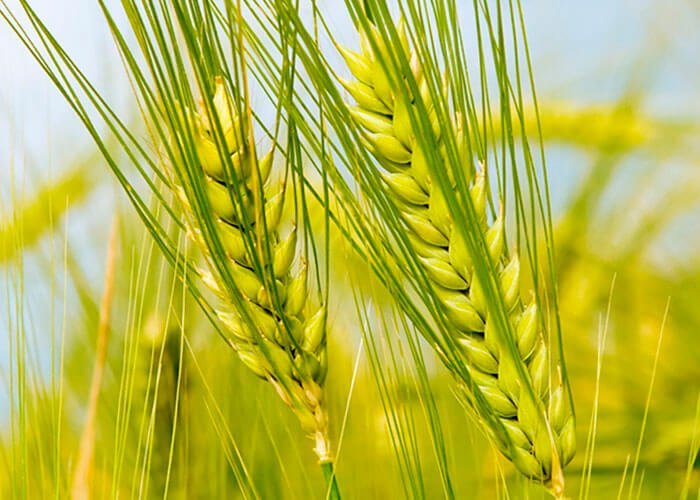
- wheat seeds 60–70%,
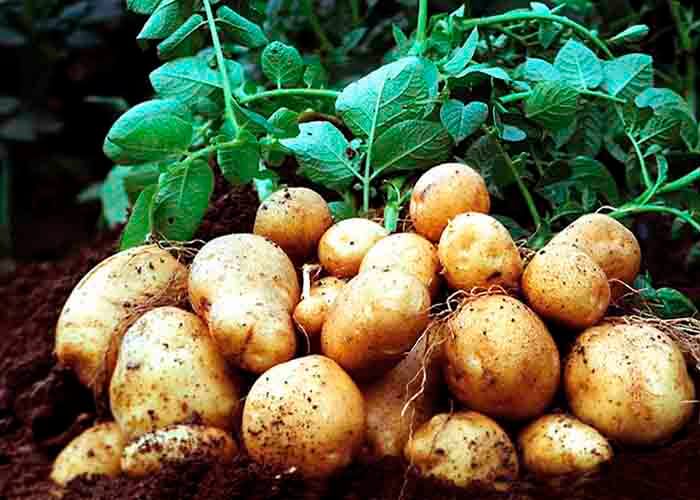
- potato tubers 19–20%.
Primary starch forms in the chloroplasts during photosynthesis, while secondary starch is laid down as reserves in tubers, rhizomes and fruits. It takes the form of layered grains that differ in size and shape from one plant species to another.
- Starch grains of the potato,
- starch grains of the pea,
- starch grains of the oat,
- starch grains of wheat.
Starch does not dissolve in cold water but forms a colloidal solution when heated. Cellulose, by contrast, is an extended, elongated polymer also built from glucose residues; it is insoluble in water and can be hydrolysed only by the action of strong acids. Cellulose is not a reserve substance and in most cases cannot be reused.
A substance closely related to cellulose is hemicellulose, built from pentose monosaccharides. Unlike cellulose, hemicellulose is a reserve nutrient and occurs in the endosperm of seeds and in thickened cell walls.
What are lipids and why do plants store them?
Lipids comprise fats and fat-like substances called lipoids, and they serve plants both as a reserve fat and as a structural component of cell protoplasm. Reserve fat acts as an energy material, while protoplasmic fats are a permanent constituent of cells and are present in a constant amount.
Lipoproteids — combinations of lipids with proteins — together with the lipids themselves help to build the cell membranes that regulate how permeable cells and cell structures are to various substances. Fats extracted from seeds always contain some impurities, and for each plant species the composition of fatty acids is fairly constant, with closely related species having a similar fat composition.
Growing conditions can change both the composition and the quantity of fatty acids. In plants of the south, such as cacao and the coconut palm, solid fats with a high melting point predominate, whereas plants of temperate climates — flax, hemp, sunflower — yield liquid fats, or oils.
Fats are exceptionally widespread in plants as reserve nutrients: 90% of plants have oily seeds. As reserves, fats hold several advantages over carbohydrates. Because hydrophobic groups (CH3, CH2, CH) predominate in the fat molecule, fats are insoluble in water and so hold no hygroscopic water.
Fats also contain very little oxygen, so their oxidation releases far more energy — oxidising 1 g of fat liberates 9.3 calories, against 4 calories from 1 g of carbohydrate. The amount of reserve fat in seeds varies widely between species:
- rye, wheat and barley 2–3%,
- cotton and soybean 20–30%,
- flax, hemp and sunflower 30–55%,
- poppy and castor bean 60–65%.
Plants also contain aromatic essential oils.
What organic acids occur in plants?
Organic acids occur frequently in plants, most often as di- and tribasic acids, and may be present either in free form or as salts. The most common are oxalic acid (HOOC–COOH), malic acid (HOOC–CH2CHOH–COOH) and succinic acid (HOOC–CH2–CH2–COOH). Among the tribasic acids, citric acid is widespread:
СН2-СООН I НО - С-СООН I СН2-СООН
Ripening fruits are rich in organic acids. Dissolved in the cell sap, these acids account for its acidic reaction, and they are closely tied to respiration, during which they are formed.
Organic acids play a leading part in the oxidation–reduction processes that make up respiration and in the synthesis of the amino acids that build proteins. Through organic acids, therefore, the metabolism of carbohydrates is linked to that of proteins.